
 Worksheets
KS3 SCIENCE ULTIMATE QUIZ 2022
Total questions: 183
Worksheet time: 2hrs 43mins
Select the best description of digestion from the following:
The absorption of nutrients into the body.
The swallowing and absorption of food.
The breaking down of food into smaller molecules that can be absorbed by the body.
The enlargement of the stomach to attract butterflies and repel evil forces from conquering our innocent minds.

What is organ B?
(a)
What is organ F?
(a)
What is organ C?
(a)
What is organ D?
(a)
What is organ G?
(a)
What is organ I?
(a)
What is organ H?
(a)
What is organ E?
(a)
What is organ J?
(a)
What is organ A?
(a)
Food that we eat passes through the organs in this sequence:
mouth --> W --> X --> small intestine --> Y --> rectum --> Z
What is W?
(a)
Food that we eat passes through the organs in this sequence:
mouth --> W --> X --> small intestine --> Y --> rectum --> Z
What is X?
(a)
Food that we eat passes through the organs in this sequence:
mouth --> W --> X --> small intestine --> Y --> rectum --> Z
What is Y?
(a)
Food that we eat passes through the organs in this sequence:
mouth --> W --> X --> small intestine --> Y --> rectum --> Z
What is Z?
(a)
This organ breaks down food physically and contains amylase to digest starch.
small intestine
rectum
mouth
gallbladder
The process that involves muscle contractions to push food through the alimentary canal.
photosynthesis
paralysis
peristalsis
hypostasis
Name of the muscular tube that connects the mouth to the stomach.
(a)
Which of the following are true about the stomach.
(2 answers)
It is where babies grow.
Bacteria is killed there by hydrochloric acid.
It is where bile is produced.
It is one of the organs where protein is digested.
This is where food is digested and absorbed into the bloodstream.
large intestine
small intestine
stomach
liver
What is the function of amylase?
to make the food softer
to digest starch into smaller sugar molecules
to digest protein
it absorbs nutrients
What is the function of organ I?
to kill bacteria
to absorb excess water
to absorb digested food into the bloodstream
to store faeces before it is released from the body

What is the function of the organ shown in the image?
digestion and absorption of food into the bloodstream
to break down starch into amylase
to produce hydrochloric acid to kill harmful bateria
to absorb excess water
Which of the following best describes the function of digestive enzymes?
To kill harmful bacteria.
To absorb nutrients from the bloodstream.
To break down food into smaller molecules to be absorbed by the body.
To release nutrients into the bloodstream.
After the food has passed through the large intestine, it is stored in the ___________ before it is released through the ___________.
anus, rectum
rectum, anus
oesophagus, mouth
mouth, oesophagus
What is the function of the pancreas?
Produces enzymes
Produces hydrochloric acid
Produces bile
Produces starch
The muscular tube that begins at the mouth and ends at the anus is known as the...
oesophagus
small intestine
large intestine
alimentary canal
Digestion is all about...
releasing nutrients from the body into the environment.
killing harmful bacteria in the food that enters our body.
producing starch for good health.
breaking food down into smaller molecules that can be absorbed by the body.
Which of the following best describes adaptation shown by living organisms?
a process of reproduction
the way an organism lives its life
features developed for an organism to better suit its environment for survival
characteristics of an organism that makes it attractive
"White appearance, thick layers of fat and fur."
These are likely adaptations for organisms __________
in the desert
in a tropical rainforest
in cold climate
at a white-sand beach

Which of the following are correct adaptations shown by elephants? (Multiple answers)
long trunk to propel themselves into the air like organic helicopters
they are large sized to discourage other wild animals from attacking them
they flap their large ears to help themselves stay cool
they move in herds to protect their young
Which of these are adaptations shown by carnivorous animals? (Multiple answers)
Eyes in front of the head to better judge distance.
Have large and sharp canine teeth.
Have bright colours so that they stand out.
Able to move silently.

This squirrel is feasting on an insect. What does this tell you about squirrels? They are...
Herbivores
Carnivores
Omnivores
Detritivores

Which of the following are true about this hare? (Multiple answers)
It is using camouflage.
It has large ears to keep its body cool.
It is trying to prevent itself from being detected by predators.
It has thick fur to keep warm.

What are some adaptations shown by a cactus in its dry environment? (Multiple answers)
It has a thick waxy covering to prevent water loss.
Deep and extensive roots.
Small spines instead of leaves to reduce water loss.
Large, smelly flowers to trap flies.
Bears and bats eat a lot in the autumn so that... (multiple answers)
they can go into hibernation.
they can go into aestivation.
they have enough energy to sleep through winter without any food.
they have enough energy to go on a rampage in winter.
Crocodiles can bury itself in mud and go into a deep sleep during the hot and dry season (aestivation). When they do this, their breathing rate and heart rate slows down so that...
the body produces more water
they conserve more energy
they only need to eat a little during that period
they keep themselves warmer
Camels have thick padded feet. This is an adaptation to which feature of its habitat?
Temperature
Wind speed
Acidity
Air pressure
Having large movable ears and eyes at the side of the head are typical characteristics exhibited by...
Herbivores
Carnivores
Omnivores
Vorvores
Which of the following are true about deciduous trees?
They lose their leaves during winter.
They stay green throughout the year.
They die in winter.
Their leaves turn yellow during autumn.
Why is biological adaptation important?
For the survival of the various species in the world.
For the elimination of harmful organisms.
To prevent climate change.
To accelerate ozone depletion.
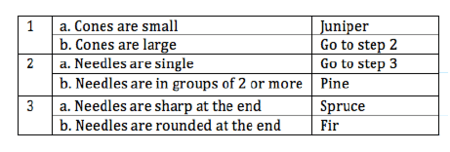

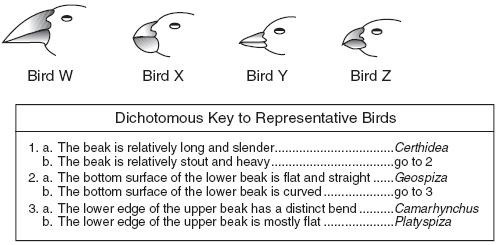
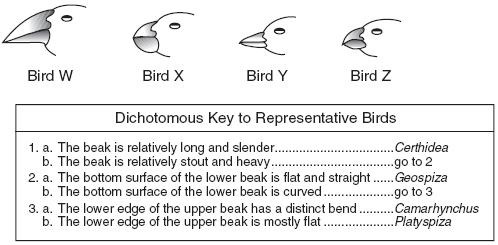
Choose the 3 steps that need to be taken for selective breeding.
Breed the selected varieties together.
Allow the species to adapt naturally over several generations.
Choose the offspring with the desired traits and breed them together.
Repeat the process for several generations.
You are a farmer with 4 tomato plant varieties.
Which two varieties will you choose to cross breed to produce a new variety that is profitable?
Variety A: Large size and sour
Variety B: Medium size and salty
Variety C: Small size and sweet
Variety D: Small size and bitter
The purpose of selective breeding is to
get bigger animals
get smaller animals
create animals with desirable traits
create animals with bad traits
The following is the word equation for photosynthesis.
Z + H ⟶ M + B
What is Z and M?
Z: carbon dioxide, M: water
Z: water, M: oxygen
Z: glucose, M: water
Z: oxygen, M: carbon dioxide
Photosynthesis is the process in which chlorophyll absorbs ____________ to combine ____________ with water to produce ___________ in the leaves.
sunlight, oxygen, glucose
sunlight, carbon dioxide, glucose
water, carbon dioxide, starch
water, oxygen, starch
What is the name of the gas produced in photosynthesis?
(a)

Boiling Water
Conduction
Convection
Radiation

Curling Iron
Conduction
Convection
Radiation

Weather Patterns
Conduction
Convection
Radiation

Sun Bathing
Conduction
Convection
Radiation

Feet on Hot Sand
Conduction
Convection
Radiation
Which of the following are key points about heat transfer through a solid?
Convection
Particles absorb heat and vibrate faster
Conduction
Hot air rises, cold air sinks
Vibration is transferred from one particle to another.
Which of the following are key points about heat transfer through a fluid?
Convection
Hot air is less dense than cold air
Conduction
Hot air rises, cold air sinks
Vibration is transferred from one particle to another.
Which of the following are key words about heat transfer that does not involve particles?
Convection
Involves waves
Radiation
Vibration of particles
Infrared
What are the characteristics of a good absorber and good radiator of infrared radiation?
shiny
dull
glossy
dark coloured
What are the characteristics of a good reflector and poor absorber of infrared radiation?
shiny
dull
glossy
white
Based on the particle theory of matter, when liquid water is heated up to the boiling point, the water particles will ____________ heat energy, become more energetic and move ____________. When the energy that is absorbed by the particles overcomes the forces of ______________ between the water particles, the bonds between water particles will _____________ and the water particles will escape into the air as water vapour (gas).
Write your answers separated by commas without spaces in between.
Example for how to write your answers:
xxx,yyy,zzz,ggg,hhh
(a)
Based on the particle theory of matter, when liquid water is cooled down to the freezing point, the water particles will ____________ heat energy, become ___________ energetic and move ____________. The particles then begin to move ___________ to one another due to the attractive forces between the particles and form ___________ to become ice (solid).
Write your answers separated by commas without spaces in between.
Example for how to write your answers:
xxx,yyy,zzz,ggg,hhh
(a)
Copper + Sulfuric acid → (a) + Hydrogen
Magnesium + Hydrochloric acid → (a) + Hydrogen
Zinc + Hydrochloric acid → Zinc chloride + (a)
Iron + (a) → Iron sulfate + Hydrogen
Lithium + Oxygen ⟶ (a)
When a metal reacts with an acid, a salt and (a) gas is produced.
Potassium carbonate + Hydrochloric acid → (a) + Carbon dioxide + Water
Calcium carbonate + Sulfuric acid → (a) + Carbon dioxide + Water
Lead sulfate + Sodium →
Lead + Sulfate + Sodium
Sodium sulfate + Lead
Lead Sodium + Sulfate
Lead sulfate sodium
Zinc chloride + Magnesium →
Magnesium chloride
Magnesium zinc + Chloride
Magnesium chloride + Zinc
Magnesium + Zinc + Chloride

Calcium chloride + Lead → No reaction
Why is there no reaction?
Lead is more reactive than chlorine.
Chlorine is more reactive than lead.
Lead is more reactive than calcium.
Calcium is more reactive than lead.
Tin sulfate + Aluminium →
No reaction
Aluminium sulfate
Aluminium sulfate + Tin
Tin aluminium + Sulfate
Potassium nitrate + Iron →
No reaction
Iron nitrate
Iron nitrate + Potassium
Potassium iron + Nitrate

The image shows a distance time graph of a car journey. How many times did the car stop during this journey?
Once
Twice
Three times
The car didn't stop. Checkmate!
The image shows a distance time graph of a car journey. How far did the car travel in km after 9 minutes?
9 km
0 km
8 km
10 km
The image shows a distance time graph of a car journey. What is the speed of the car in km/minutes in the first 4 minutes of its journey?
1 km/min
2 km/min
3 km/min
4 km/min
The image shows a distance time graph of a car journey. At which period was the car travelling the fastest?
0 - 4 minutes
4 - 7 minutes
7 - 10 minutes
5 - 8 minutes

The image shows a distance time graph of John's journey. At which point was John on his way back to where he started?
A
B
C
D

The distance-time graph shows the graphs of three boys.
Gerald: Green line
Billy: Blue line
Rando: Red line
Between Billy and Rando, who reached the 40 metre mark first?
Billy
Rando
The distance-time graph shows the graphs of three boys.
Gerald: Green line
Billy: Blue line
Rando: Red line
Who did not reach the 100 m finish line?
Gerald
Billy
Rando
The distance-time graph shows the graphs of three boys.
Gerald: Green line
Billy: Blue line
Rando: Red line
Who stopped and ran back to the starting line?
Gerald
Billy
Rando
Choose two correct applications that exert high pressure.
Tractors have big and wide wheels
Press a thumbtack into a plank
Studs on the sole of football boots
Shoulder pad for a school bag
Choose two factors that affect air pressure
mass
volume
area
temperature
What pressure will be exerted by a 10 N box that has equal sides of 1 meter?
1 Pa
2 Pa
5 Pa
10 Pa
20 Pa
The higher the temperature, the .................................. the movement of air particles.
slower
faster
neither
same
Which factors affect the rate of a reaction?
temperature
concentration
size
pressure
catalyst
Why does a higher concentration increase the rate of reaction?
it increases the amount of reactants
it lowers the activation energy
it increases the energy of reactant particles
it increases the frequency of collision
Grinding an effervescent tablet into powder increases the rate of reaction due to increase of
concentration
total surface area
temperature
size
Why does breaking up a solid reactant increase the rate of reaction?
it creates more solid
it creates more energy
it increases the total surface area
it increases the concentration
Why does a higher concentration increase the rate of reaction?
it increases the amount of reactants
it lowers the activation energy
it increases the energy of particle collisions
it increases the frequency of collisions
Which of the following is the function of the circulatory system in animals?
For respiration.
To conduct photosynthesis more efficiently.
Transport substances throughout the body using blood as a medium.
To prevent constipation.
Which of the following are substances transported by the circulatory system?
oxygen
nutrients
carbon dioxide
waste materials
Humans use the ______________ circulatory system.
Open
Single
Double
Triple
Insects use the ____________ circulatory system, while fish usually use the ____________ circulatory system.
single, double
double, single
single, open
open, single
Name the type of blood vessel that transports blood away from the heart.
vein
artery
capillary
vena cava

Name blood vessel B.
(a)
Name the organ where gaseous exchange occurs.
(a)

Which of the following is an artery?
P
Q
R
None of them
The _________ is the largest artery that transports blood to ____________.
pulmonary artery, heart
pulmonary artery, lungs
aorta, heart
aorta, the different parts of the body
Which of the following is a capillary?
P
Q
R
None of them
Name the type of blood vessel that transports blood to the heart.
vein
artery
capillary
aorta
The type of blood that flows in the aorta has:
high concentration of oxygen
low concentration of oxygen
high concentration of carbon dioxide
low concentration of carbon dioxide
Which of the following has valves in them?
P
Q
R
All of them

Which of the following is the aorta?
1
2
3
4
5

What is E?
(a)
The type of blood that flows to the lungs has:
high concentration of oxygen
low concentration of oxygen
high concentration of carbon dioxide
low concentration of carbon dioxide
Name blood vessel A.
(a)

What is the name of the part labelled '5'?
(a)
Which of the following is a vein?
P
Q
R
None of them
Which of the following are true about capillaries?
They are where substances diffuse between the blood and body tissues.
They have valves.
They have very thin walls.
They have thick muscular walls.
Why do arteries have a thicker muscular wall compared to veins? (2 answers)
blood is pumped through it to reach all over the body
it transports a lot of blood to the lungs
to withstand the high pressure
it is a strong pump
Name blood vessel C.
(a)
Which of the following can a pulse be felt?
P
Q
R
None of them

What are valves in veins for?
to ensure that blood stops flowing.
to ensure that blood can flow in all directions.
to ensure that blood only flows in one direction.
to ensure that blood flows backwards.

Why do arteries have a thicker elastic wall compared to veins?
to prevent blood from flowing backwards.
to pump blood throughout the body.
so that they can stretch and allow a pulse.
to ensure that blood only flows in one direction.

What is the DEPENDENT variable (effect) in this experiment?
"Does eating breakfast improve test scores?"
eating breakfast or not
the grade you got on the test
what time you get up in the morning
how tasty the breakfast is

You are testing how the amount you water a plant affects its growth. What would be the INDEPENDENT VARIABLE in this experiment.
They type of pot you put the plants in.
The amount you water each plant.
The amount of sunlight the plants get.
The amount the plant grows.

A scientist is testing which flavor of ice cream melts the fastest. What would his controlled variables be? (choose ALL that apply)
The flavor of ice cream
the kind of cone the ice creams are in
the place in the room where the ice cream is
the size of the scoop
the time it takes to melt

Sadie is testing how the age of a seed affects how fast plants grow. Look at the picture to see if you can figure out what makes her experiment unfair. Mark all that apply.
She used different types of seeds/plants.
The plants are in different kinds of pots.
She did not plant very many plants.
Seed age might not make a difference.

What is the DEPENDENT variable (effect that is measured) in this experiment?
"Do tall people jump further than short people?"
height of the person
weight of the person
how fast the person runs
how far the person jumps
Complete the word equation:
lithium + silver nitrate →
lithium + silver nitrate
lithium + silver nitrite
silver + lithium nitrate
silver + lithium nitrite
Aluminium is more reactive than ....
Calcium and Zinc
Sodium and Gold
Magnesium and Copper
Lead and Iron

What type of circuit is show in the image?
Series Circuit
Parallel Circuit

What kind of circuit is this?
series
parallel
In which of the following circuits will all of the remaining light bulbs go out if bulb 3 burns out?


What can you say about the current in the series circuit?
it splits across the components
it changes constantly
it is different in different places
it is the same everywhere
If the ammeter says the current is 5A, what is the current flowing through one bulb?
2.5A
10A
5A
0
If one bulb was broken, what would happen?
current would no longer flow, so everything would be off
the ammeter would measure a current from the other bulb
the switch would keep the current flowing
the cell would burn out and catch fire
What is the name of the device which measures current?
(a)
What causes a decrease in current?
Adding another bulb
increasing resistance
decreasing voltage from the supply
decreasing the resistance
If the current flowing through the cell is 2A, what is the ammeter reading?
5A
1A
6A
2A
Sound is caused by (a) . (answer without punctuation)
Sound needs a ________________ to be transmitted.
mantle
median
medium
mountain
Sound cannot travel through a (a) . (answer without punctuation)
Sound can travel through....
solid
liquid
gas
outer space
Sound waves are caused by the vibration of p (a) . (answer without punctuation)
What is the function of an oscilloscope?
It is like a telescope but for ears.
It allows us to listen to low frequency sounds.
It allows us to see sound waves.
It functions like a speaker.
Which of the following best describes how sound travel from one place to another?
Sound floats from one place to another.
From the vibration of particles that form a sound wave.
Sound flies from one place to another.
From the electrical pulses of sound.
The lower the amplitude, the ___________ the sound.
louder
softer
higher pitched
lower pitched
The higher the frequency, the ___________ the sound.
louder
softer
higher pitched
lower pitched

Both sound waves P and Q shown were recorded in the same period of time (1 second). Which of the following are true about them?
P and Q have the same frequency.
P and Q have the same amplitude.
P has lower frequency.
Q has a higher amplitude.
P sounds softer.

Both sound waves X and Y shown were recorded in the same period of time (1 second) with the same loudness. Which of the following are true about them?
X and Y have the same frequency.
X and Y have the same amplitude.
X has lower frequency.
Y has a higher amplitude.
Y has a higher pitch.

Both sound waves A and B shown were recorded in the same period of time (1 second). It was observed that B has higher crests (peaks) than A. Which of the following are true about them?
A and B have the same frequency.
B is louder than A.
A has a lower pitch.
B has a frequency of 10 Hz
A has a frequency of 2 Hz

Lee looks at different sound traces with an oscilloscope. Describe what is happening to the sound from A to B. The pitch of the sound ________________
increases
decreases
stays the same
Lee looks at different sound traces with an oscilloscope. Describe what is happening to the sound from A to B. The frequency of the sound ________________
increases
decreases
stays the same
Lee looks at different sound traces with an oscilloscope. Describe what is happening to the sound from A to B. The volume of the sound ________________
increases
decreases
stays the same
Lee looks at different sound traces with an oscilloscope. Describe what is happening to the sound from A to B. The amplitude of the sound ________________
increases
decreases
stays the same

Which of the following is the most accurate description of how we hear with our ears?
The ear receives the sound waves and deciphers the sound.
The ear receives the sound waves and it causes the brain to vibrate.
The ear converts sound vibrations into nerve impulses to be deciphered at the brain.
The ear receives the sound waves and digests it.

Why is it important for us to have two ears?
So that we look balanced.
So that sound waves can pass through the head easily.
So that water can pass through easily.
So that we can detect where a sound is coming from.
What is the name of the device that enables us to see sound waves?
sounderscope
ampliscope
oscilloscope
organoscope
The number of vibrations per second is called _______________ and it is measured in _________________.
frequency, decibels (dB)
frequency, Hertz (Hz)
amplitude, decibels (dB)
wavelength, centimeter (cm)
Which of the following is caused by light dispersion?
swimming pool looking shallower than it really is
pencil that looks bent in a cup of water
rainbow
seeing reflection in the mirror
When we combine the colours of the rainbow, we get ___________ light.
indigo
red
violet
white
Which of the following are true about light dispersion?
it involves refraction
it involves reflection
different wavelengths of light have different colours
different wavelengths of light changes speed differently when entering a medium
Which of the following are true about light?
White light consists of all the primary colours.
Visible light with the longest wavelength is violet
Visible light with the longest wavelength is red
Visible light with the shortest wavelength is red
Visible light with the shortest wavelength is violet
Light with longer wavelength bends less than light with shorter wavelength when it enters a denser medium.
True
False
Tiny water droplets in the sky act like ___________ that disperse the white light from the sun into a rainbow.
mirrors
torchlights
prisms
glass blocks
Which of the following are primary colours?
red
yellow
blue
green
purple
Which of the following are secondary colours?
red
yellow
blue
magenta
cyan
Which colours add up to give magenta?
red
yellow
blue
green
Which colours add up to give cyan?
red
yellow
blue
green
Which colours add up to give yellow?
red
yellow
blue
green

Why does a blue coat look blue to us?
It reflects blue colour.
It absorbs blue colour.
It reflects all colours except for blue.
It absorbs all colours except for blue.

Why does a red cloth look red to us?
It reflects red colour.
It absorbs red colour.
It reflects all colours except for red.
It absorbs all colours except for red.

Why does a magenta ball look magenta to us?
It reflects red colour.
It reflects blue colour.
It absorbs red colour.
It absorbs blue colour.
it reflects green colour.

Why does a yellow sword look yellow to us?
It reflects red colour.
It reflects blue colour.
It absorbs red colour.
It absorbs green colour.
It reflects green colour.
If white light is shone past a cyan filter and a green filter, what coloured light emerges at the end?
blue
green
cyan
red
no light
If white light is shone past a cyan filter and a red filter, what coloured light emerges at the end?
blue
green
cyan
red
no light
If white light is shone past a yellow filter and a magenta filter, what coloured light emerges at the end?
blue
green
cyan
red
no light
If white light is shone past a yellow filter and a cyan filter, what coloured light emerges at the end?
blue
green
cyan
red
no light
If white light is shone past a green filter and a magenta filter, what coloured light emerges at the end?
blue
green
white
red
no light
If white light is shone past a green filter and a blue filter, what coloured light emerges at the end?
cyan
magenta
yellow
white
no light
If white light is shone past a green filter and a yellow filter, what coloured light emerges at the end?
blue
green
yellow
white
no light

