wayground logo

Free Printable Worksheets

Font size

S
M
L
XL
Worksheets

8th Grade STAAR Review

Total questions: 186

Worksheet time: 3hrs 6mins

Name
Class
Date
1.
What is the acceleration of a 50 kg object pushed with a force of 500 newtons?
a)
100 m/s2
b)
25,000 m/s2
c)
10 m/s2
d)
25 m/s2
2.
Forces that have a net force of zero 
a)
Balanced force
b)
Unbalanced force
3.
The sum of all forces acting on an object.
a)
Contact Force
b)
Balanced Force
c)
Unbalanced Force
d)
Net Force
4.
What will cause an object to move?
a)
Applied forces
b)
Balanced forces
c)
Unbalanced forces
5.
a)

the mother moves forward, and the daughter moves backward with a greater acceleration

b)

both move forward, but the mother moves with greater acceleration

c)

the mother moves backward, and the daughter moves forward with a greater acceleration

d)

both move backward, but the daughter moves with a greater acceleration

6.

The diagrams show forces acting on a toy car as it moves to the right. Which diagram shows the toy car that will most likely accelerate to the right based on these conditions?

a)
b)
c)
d)
7.

A large rock is motionless on a flat sidewalk. Which statement best explains why the rock remains motionless?

a)

there are no forces acting on the rock

b)

the only force acting on the rock is directed toward the sidewalk

c)

the forces acting on the rock are all balanced

d)

the sidewalk exerts an unbalanced force on the rock

8.

A pitcher throws a ball toward a player holding a softball bat. The player uses the bat to hit the ball. The bat applies a 10 newton force to the ball. Which statement correctly describes the reaction force between the bat and the ball?

a)

the reaction force is the force that causes the ball to move toward the bat

b)

the reaction force is the force applied to the bat by the player holding the bat

c)

the reaction force is the force that pulls the ball toward the ground

d)

the reaction force is the force of the ball on the bat

9.
a)
b)
c)
d)
10.

a)

moving at a constant speed

b)

accelerating

c)

moving toward the north

d)

stopped

11.
At what point on a roller coaster does the train have the highest kinetic energy? 
a)
at the bottom of the first drop
b)
at the top of the second hill
c)
when the train first leaves the loading station 
d)
at the top of the first drop 
12.
Samuel kicks a soccer ball across a grassy field and it eventually comes to a stop. If Newton’s law of inertia is true, why did the ball stop? 
a)
Newton’s law only applies to objects at rest. 
b)
The mass of the ball is not great enough to have inertia. 
c)
Friction with the grass applies a net force on the ball causing it to decrease its speed. 
d)
Gravity slowed the ball until it came to a stop. 
13.

A ball at the top of a hill has ________ ________ because if pushed it will roll down the hill.

a)

Mechanical Force

b)

Unbalanced Energy

c)

Potential Energy

d)

Unbalanced Force

14.

When a student runs and kicks a ball, they have applied an ___________ force to move the ball.

a)

Balanced

b)

Magnetic

c)

Spring

d)

Unbalanced

15.

Standing in line is an example of a ________ ________ since you are not moving forward, backward, or sideways.

a)

negative acceleration

b)

balanced force

c)

unbalanced force

d)

1st law of motion

16.

Which is newtons 3rd law

a)

for every thing there is reaction

b)

for every reaction there is a unusual action

c)

For every reaction there is an equal and opposite reaction

d)

for every reaction there is an good action

17.

Which is newtons 2nd law

a)

Acceleration is a change in speed

b)

Acceleration is a change in action

c)

Acceleration is a change in name

d)

Acceleration is a change in velocity

18.

Newton's third law states that any action will have a(n) _______ and ______ reaction

a)

equal and same

b)

equal and opposite

c)

equal and equal to

19.

What are the appropriate units to describe acceleration?

a)

m/p

b)

m/h

c)

m/s

d)

m/s square

20.

The tendency of objects to resist a change in motion is called:

a)

Friction

b)

Inertia

c)

Gravity

d)

Velocity

21.

Which statement best describes the motion of the object plotted in the graph?

a)

The object accelerated because the distance traveled increased at a steady rate.

b)

The object traveled at a constant speed because of forces acting on the object.

c)

The object accelerated because it traveled in the same direction throughout the investigation.

d)

The object slowed down as it traveled uphill because of the forces acting on the object.
22.
Which of the following shows an energy transformation from chemical energy to electrical to light energy?
a)
A bolt of lightning lights the night sky.
b)
A candle glows brightly in the dark.
c)
A fire in a fireplace lights up a room.
d)
A battery causes a flashlight to shine.
23.
People get energy from the food that they eat and transform that energy as they move. Which energy transformations occur as a student rapidly rubs the palms of his hands together?
a)
mechanical to thermal to electrical
b)
chemical to mechanical to thermal
c)
mechanical to chemical to sound
d)
chemical to sound to electrical
24.
Which of the following devices transforms electrical energy into mechanical energy?
a)
An e-reader
b)
a fan
c)
a manual pencil sharpener
d)
ipod
25.
A television works by transforming electrical energy into what other kinds of energy?
a)
Light, thermal, and sound
b)
Thermal, chemical, and solar
c)
Sound, mechanical, and electrical
d)
Light, chemical, and mechanical
26.
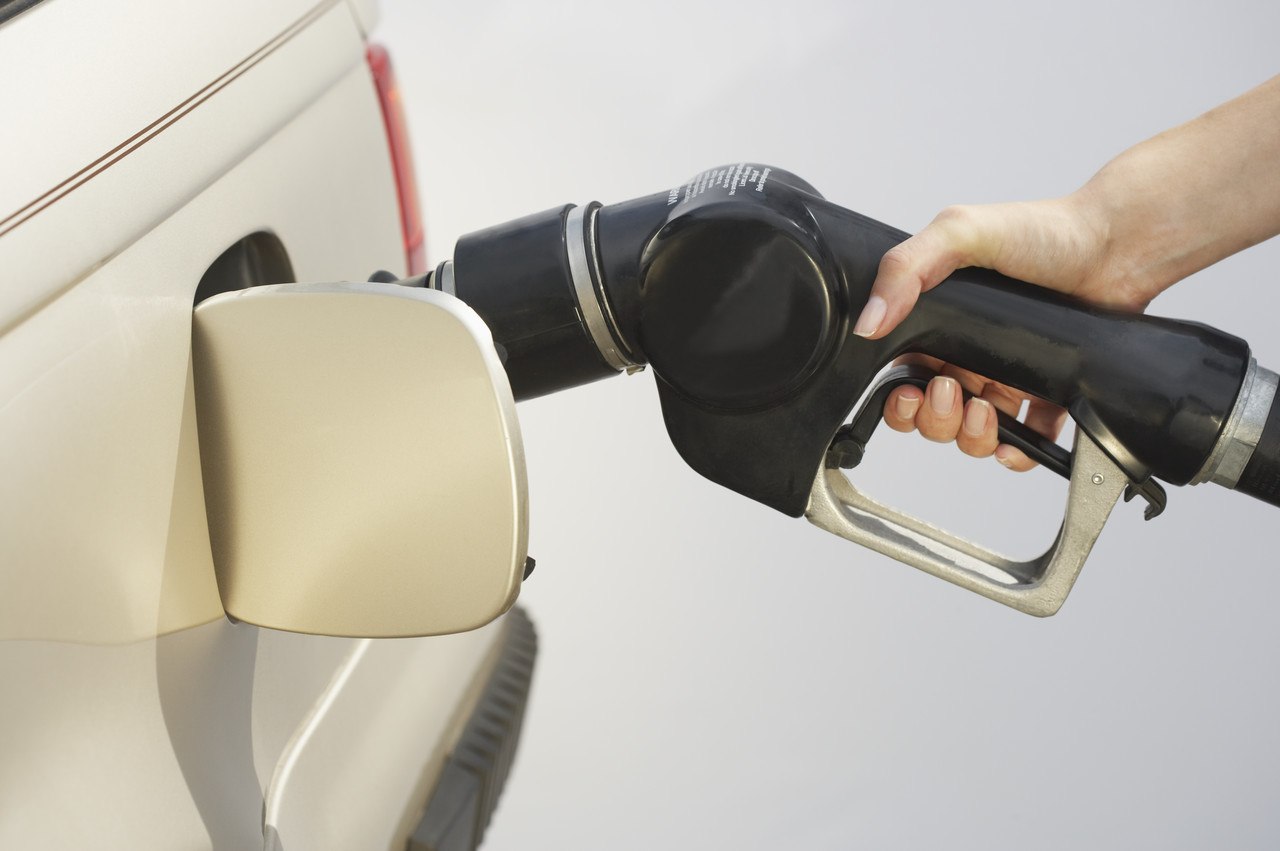
Which energy conversion is taking place when you put gasoline in a car?
a)
thermal -> electrical
b)
mechanical -> electrical
c)
chemical -> mechanical
d)
mechanical -> electromagnetic
27.
Energy transformations occur when...
a)
energy is created through conduction
b)
energy changes from one form to another
c)
two forces slide together that are touching
d)
a chemical reaction takes place
28.
The space, conditions, and all the living and nonliving things around an organism
a)
water cycle
b)
environment
c)
photosynthesis
d)
respiration
29.
all of the interacting members of the same species in an area 
a)
overpopulation
b)
community
c)
population
d)
environment
30.
an inherited characteristic that provides a specific advantage to individuals that have it and becomes more common or pronounced in a population because of the advantage it providese
a)
migration
b)
adaptation
c)
impact
d)
interact
31.
An organism that consumes dead or nonliving biomass without need for internal digestion
a)
Scavenger
b)
Consumer
c)
Decomposer
d)
Producer
32.

A fire destroys all of the trees and plants in the forest. How might this affect the birds in the area?

a)

The birds will plant seeds and grow new trees.

b)

The birds will have more food to eat.

c)

The birds will plant seeds and grow new trees.

d)

The birds will have no place to build their homes.

33.

When a population thrives, it means that-

a)

the number of organisms is decreasing.

b)

it is growing strong and reproducing.

c)

the number of organisms is increasing.

d)

the number of organisms stays the same.

34.

When changes to an environment happen, animals-

a)

move.

b)

perish.

c)

adapt.

d)

all of the above

35.

How might cutting down the trees in a rainforest

environment affect the animals that live there?

a)

All of the animals that live there will perish rapidly.

b)

Animals will move to new areas to meet

their needs.

c)

The animals will make their homes

under ground.

d)

Animals that eat tree leaves

will become carnivores.

36.
a)
Soil
b)
Sunlight
c)
Water
d)
Oxygen
37.
When change occurs, organisms will:
a)
only adapt.
b)
adapt, migrate, or die.
c)
migrate or die.
38.
A foreign insect is introduced into the Texas. It eats a lot of leaves, and trees start to become leafless. Many different animals feed on the new insect, but even they cannot control its numbers. Eventually, trees begin to die. Why would a rapid increase of the new insect population cause certain species of herbivores to vanish or be fewer in number?
a)
They would not have enough to eat. 
b)
They would not have enough space to live.
c)
They would not have tree bark to eat.
39.
Scientists are concerned about overfishing of shark populations. Sharks feed on rays and rays feed on scallops. Without sharks, rays consume all the scallop beds. This situation demonstrates that: 
a)
humans can improve an ecosystem by removing predators.
b)
humans can upset an ecosystem by removing species.
c)
reducing the shark population increases the quantity of scallops that can be taken.
d)
sharks are not important for the stability of the ecosystem.
40.
What does biodiversity mean?
a)
Only one species in an area.
b)
The different amount of species in an area
c)
All abiotic life
d)
Nitrogen fixation
41.
Which statement best explains how natural selection occurs?
a)
when adaptations help an organism reproduce and survive.
b)
when organisms are geographically isolated.
c)
when an organism’s offspring grow vestigial structures.
d)
when characteristics from the parent organism are inherited.
42.
Which organism do the owl and the weasel compete for in the food web?
a)
Hawk
b)
Spider
c)
Grasshopper
d)
Shrew
43.
Which of the following is a herbivore?
a)
cricket
b)
frog
c)
hawk
d)
shrew
44.
How many carnivores are shown in this food web?
a)
6
b)
4
c)
5
d)
3
45.
What might happen if you remove a primary consumer from the ecosystem?
a)
There would be more food for secondary consumers.
b)
The number of primary consumers would increase.
c)
The number of plants would increase.
d)
The number of secondary consumers would increase.
46.
Which of the following would be the most likely effect, if there were a sudden increase in the cricket population?
a)
There would be a decrease in the small bird population.
b)
There would be a decrease in the grass/flowers population.
c)
There would be a decrease in the mice population.
d)
There would be an increase in the grass/flowers population.
47.
A frog eats a fly. The frog and fly are demonstrating ________.
a)
mutualism
b)
competition
c)
predator/prey
d)
parasitism
48.
A tapeworm inside a dog is
a)
competition
b)
predation
c)
commensalism
d)
parasitism
49.
A symbiotic relationship that involves species having to fight for something they both need or want
a)
competition
b)
predation
c)
commensalism
d)
parasitism
50.
Example of a decomposer
a)
fungus
b)
mouse
c)
plants
d)
frogs
51.
A tree is a ....
a)
composer
b)
decomposer
c)
producer
52.
Humans are considered...
a)
consumers
b)
decomposers
c)
producers
53.
Frogs are considered...
a)
consumers
b)
decomposers
c)
producers
54.
Grass is considered a ...
a)
consumer
b)
producer
c)
decomposer
55.
What is a herbivore?
a)
an animal that gets energy from eating other animals
b)
an organism that gets energy from eating only plants
c)
an animal that gets energy by eating both plants and other animals
d)
an animal that eats only herbs
56.
A connection of food chains with many food energy paths in an ecosystem is a ____________
a)
ecosystem
b)
food web
c)
environment
d)
population
57.
An animal that gets energy from eating both plants and animals is a 
a)
herbivore
b)
carnivore
c)
omnivore
d)
autotroph
58.
Where do all life forms get their energy?
a)
Earth's Core
b)
Water
c)
Plants
d)
The Sun
59.
What percentage of energy is passed on to each tropic level?
a)
10%
b)
50%
c)
90%
d)
100%
60.
Which is NOT an abiotic factor:
a)
soil
b)
air
c)
bacteria;
d)
water
61.
What might happen if you remove a primary consumer from the ecosystem?
a)
There would be more food for secondary consumers.
b)
The number of primary consumers would increase.
c)
The number of plants would increase.
d)
The number of secondary consumers would increase.
62.
How do producers obtain energy?
a)
They conduct photosynthesis.
b)
They consume plants.
c)
They consume primary consumers.
d)
They consume secondary consumers.
63.
A consumer that hunts is called:
a)
a producer.
b)
an omnivore.
c)
a predator.
d)
a herbivore.
64.
Where do decomposers go in your food chain?
a)
at the beginning
b)
they don't belong in a food chain
c)
at the end
d)
at every level
65.
A food web can be broken down into several seperate
a)
food chains
b)
food pyramids
c)
producers
d)
consumers
66.
relationship in which two species live closely together
a)
resource
b)
mutualism
c)
succession
d)
symbiosis
67.
diagram that shows the energy available to each trophic level in an ecosystem; 10% is passed on to upper levels, the rest is lost as heat
a)
succession 
b)
cellular respiration
c)
energy pyramid
d)
biochemical cycle
68.
largest number of individuals of a population that the environment can support  
a)
carrying capacity
b)
primary succession 
c)
denitrification
d)
mutualism
69.
symbiotic relationship in which one organisms benefits and the other organism is not affected
a)
invasive (non-native) species
b)
mutualism 
c)
nitrogen fixation
d)
commensalism
70.
Step in the food chain, food web, or ecological pyramid
a)
trophic Level
b)
abiotic factors
c)
community 
d)
ecosystem
71.
A large area that has a specific type of climate and certain types of plant and animal communities 
a)
ecosystem
b)
habitat
c)
niche
d)
biome
72.
Where an organism lives
a)
habitat
b)
niche 
c)
heterotrogh
d)
biosphere
73.
what is the gaseous layer of our Earth called?
a)
lithosphere
b)
biosphere
c)
atmosphere
74.
How many layers does the atmosphere have that I need you to know
a)
5
b)
3
c)
4
75.
The Thermosphere is the ____________ sphere above the Earth
a)
3rd
b)
4th
c)
1st
76.
The stratosphere is the ____________ layer above the Earth
a)
3rd
b)
2nd
c)
1st
77.
The sphere that burns up meteorites is
a)
the thermosphere
b)
The stratosphere
c)
The mesosphere
78.
What keeps our water in a liquid form for humans to use
a)
energy from the sun
b)
the jet stream
c)
meteoroids
79.
Which gas is most found in our atmosphere
a)
Nitrogen
b)
Oxygen
c)
Carbon dioxide
80.
Which is the most dense layer in our atmosphere filled with many air molecules
a)
Thermosphere
b)
Troposphere
c)
Hydrosphere
81.
Mass is the amount of what in an object
a)
volume
b)
space
c)
matter
82.
Mass is measured with
a)
a graduated cylinder
b)
a triple beam balance
83.
The density of water is
a)
1.0
b)
.1
c)
1.01
84.
This never changes
a)
the volume of an object
b)
the density of an object
85.
if something is _________ __________than 1.0 it will float in water.
a)
more dense
b)
less dense
86.
When you touch something hot ... heat is transferred through
a)
Radiation
b)
Conduction
c)
Convection
87.
When heat is transferred through the blowing winds it is known as heat transfer through
a)
Radiation
b)
Conduction
c)
Convection
88.
The ozone is found in what sphere
a)
Mesosphere
b)
Stratosphere
c)
Troposphere
89.
Satellites  are found in what sphere
a)
Troposphere
b)
Thermosphere
90.
This is the amount of space an object takes up
a)
Mass
b)
Volume
91.
This protects us from getting to much radiation from the sun
a)
Thermosphere
b)
Ozone Layer
c)
Conduction
92.
Which way to the global winds blow in each hemisphere?
a)
east to west in Northern Hemisphere and west to east in the Southern Hemisphere
b)
west to east in Northern Hemisphere and east to west in Southern Hemisphere
c)
North to south in the Northern Hemisphere and south to north in Southern Hemisphere
d)
south to north in the Northern Hemisphere and north to south in the Southern Hemisphere
93.
Why are there global winds?
a)
because the cold air sinkes from the poles to the equator
b)
because the earth is rotating from east to west
c)
because the sun heats the air at the equator more than anywhere else on earth
94.
What is the Coriolis Effect and how does it effect global winds?
a)
Curving of winds due to rotation of earth curves wind counterclockwise in Northern Hemisphere and clockwise in the Southern Hemisphere
b)
Movement of ocean currents caused by earth rotation' counterclockwise in Northern Hemisphere and clockwise in Southern Hemisphere
c)
curve of global winds caused by global rotation clockwise in Northern Hemisphere and counterclockwise in Southern Hemisphere
95.
How does the Coriolis Effect influence hurricanes and cyclones
a)
determines how powerful they will be
b)
determines where they will go
c)
determines where they form
d)
determines the direction of the wind rotation
96.
Where do hurricanes form?
a)
In the pacific off South America
b)
In the Atlantic off South America
c)
In the Atlantic off Africa
d)
In the Gulf of Mexico
97.
The two most important things to hurricanes are
a)
high pressure and cool water
b)
low pressure and cool water
c)
low pressure and warm water
d)
high pressure and warm water
98.
In the Northern Hemisphere, hurricane winds blow
a)
harder than in the Southern Hemisphere
b)
counterclockwise
c)
clockwise
d)
less than in the Southern Hemisphere
99.
A __________ is the lines between air masses.
a)
low pressure system
b)
high pressure system
c)
front
100.
Food of almost any kind can be traced back to what?
a)
the sun
b)
animals
c)
plants
d)
soil
101.
This diagram is a model of which of these?
a)
food web
b)
food pyramid
c)
food chain
d)
life cycle
102.
Which of these is an example of a producer?
a)
snake
b)
worm
c)
human
d)
grass
103.
Where do zebras fit into the food web?
a)
middle
b)
bottom
c)
top
d)
side
104.
Which of these is a consumer?
a)
sun
b)
human
c)
trees
d)
plants
105.
Which of these keeps prey populations under control?
a)
apex predator
b)
zebra
c)
producer
d)
decomposer
106.
When a millipede breaks down dead and decaying material, it is acting as what?
a)
a decomposer
b)
an apex predator
c)
a producer
d)
prey
107.
Which animal is the apex predator in this food web?
a)
eagle
b)
mouse
c)
spider
d)
snake
108.
Which of these does most of the decomposing on Earth?
a)
bacteria and fungi
b)
millipedes
c)
worms
d)
roaches
109.
What might happen if there were no apex predators in this ecosystem?
a)
zebra population would grow fast
b)
other animals wouldn't have enough grass to eat
c)
the food web would be out balance
d)
all of the above
110.

A producer is something that:

a)

Eats plants

b)

Makes its own food

c)

Eats animals

d)

Eats plants and animals

111.

Producers are always at the __________ of a food chain

a)

Beginning

b)

Middle

c)

End

d)

Producers are not part of the food chain

112.

Consumers...

a)

Make their own food

b)

Go through photosynthesis

c)

Eat other organisms

d)

Breathe in carbon dioxide

113.

Which of these things is NOT a consumer

a)

Human

b)

Whale

c)

Tree

d)

Chicken

114.

What do the arrows show in this food chain:


plant → grasshopper → bird → snake → owl.

a)

The arrow points from the organism being eaten to the organism that eats it.

b)

The arrow points from the organism that eats it to the organism that is being eaten.

c)

The arrow points from biggest animal to smallest animal.

d)

The arrow points from the consumers to the producers.

115.

What is the producer in this food chain?


phytoplankton → krill → fish → shark

a)

Phytoplankton

b)

Krill

c)

Fish

d)

Shark

116.

As you move through a food chain, the amount of energy stored....

a)

Increases

b)

Decreases

c)

Stays the same

d)

It depends on the ecosystem

117.

How much energy does trophic level 2 store from trophic level 1? (and so on..)

a)

1%

b)

10%

c)

50%

d)

100%

118.

Arrows in a food web show the flow of

a)

energy

b)

protein

c)

nutrients

d)

glucose

119.

Multiple food chains that interact together is called a ....

a)

Spider Web

b)

Food Spider

c)

Food Web

d)

Web of Food

120.

What do decomposers eat?

a)

Dead things

b)

Living things

121.

An autotroph is another word for a ________, meaning it needs to ________

a)

Consumer, eat other animals

b)

Consumer, eat other plants

c)

Producer, make its own food

d)

Producer, survive without water

122.

An heterotroph is another word for a ________, meaning it needs to ________

a)

Consumer, eat other organisms

b)

Consumer, go through photosynthesis

c)

Producer, make its own food

d)

Producer, survive without water

123.

Mushroom (Fungus)

a)

Decomposer

b)

Producer

c)

Consumer

124.

Trees

a)

Decomposers

b)

Consumers

c)

Producers

125.

Falcon

a)

Decomposer

b)

Consumer

c)

Producer

126.

Cactus

a)

Abiotic

b)

Biotic

127.

What are the two REACTANTS in photosynthesis?

a)

Carbon dioxide and oxygen

b)

Water and sunlight

c)

Water and carbon dioxide

d)

Glucose and sunlight

128.

What are the PRODUCTS in photosynthesis?

a)

Sunlight and water

b)

Carbon dioxide and water

c)

Glucose and carbon dioxide

d)

Glucose and oxygen

129.

What does an ecosystem NEED to survive?

a)

Sunlight

b)

Oxygen

c)

Carbon Dioxide

d)

All of the above

130.
Which of these is a property of metals?
a)
It's malleable
b)
It can't conduct electricity
c)
They are used in food
d)
It's very brittle
131.
Which of these grouping of elements could have the characteristic of brittle?
a)
Metal
b)
Nonmetal
132.
Which of the following is a good conductor of heat?
a)
Metal
b)
Nonmetal
c)
Metalloid
133.
Some characteristics of a metal are that it is malleable and ductile.
a)
TRUE
b)
FALSE
134.
Iron is a good conductor, malleable and magnetic. What type of element is Iron? 
a)
Metal
b)
Nonmetal
c)
Metalloid
d)
Pretty
135.
Which elements are found on the left to middle of The Periodic Table? 
a)
Metals
b)
Nonmetals
c)
Metalloids
d)
Candles
136.
Silicon is a semiconductor and has properties of both metals and nonmetals. What type of element is Silicon? 
a)
Metal
b)
Nonmetal
c)
Metalloid
d)
Pretty
137.
Which elements are found on the right side of The Periodic Table?
a)
Metals
b)
Nonmetals
c)
Metalloids
d)
Water
138.
Which element is a metalloid?
a)
Titanium
b)
Selenium
c)
Potassium
d)
Polonium
139.
Anytime you see the word SEMICONDUCTOR - what substance do you have?
a)
Metal
b)
Nonmetal
c)
Metalloid
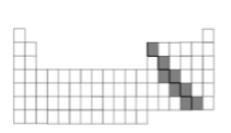
140.

Elements in the shaded area can best be described as -

a)

Malleable

b)

Brittle

c)

Dull

d)

Insulators

141.

Elements in the shaded area can best be described as -

a)

Shiny and brittle

b)

Insulators

c)

Good conductors

142.
Look at the periodic table that is provided. Where would nonmetals be located? 
a)
to the left of the table 
b)
to the right of the table 
c)
in the zigzag line 
143.
Look at the periodic table that is provided. Where would metals be located? 
a)
to the left of the table 
b)
to the right of the table 
c)
in the zigzag line 
144.

Fill in the blank: Nonmetals have a ___________ surface, and they do not conduct heat or electricity.

a)

electricity

b)

dull

c)

changed

d)

luster

e)

metals

145.

Which body system protects the organs of the body?

a)

digestive

b)

respiratory

c)

skeletal

d)

muscular

146.

This organ is part of the digestive system.

a)

lung

b)

heart

c)

brain

d)

stomach

147.

What is the function of the respiratory system?

a)

To digest your food

b)

To remove waste from the body

c)

To take in oxygen and remove carbon dioxide

d)

To fight disease

148.

What is the function of the digestive system?

a)

It transports blood and oxygen to your cells

b)

It breaks down food so the nutrients can be absorbed by your body

c)

It helps you breathe by taking in oxygen and transporting carbon dioxide out of your body

d)

It helps you move

149.

Which system in the human body includes the heart, blood, arteries, and veins?

a)

cardiovascular

b)

muscular

c)

digestive

d)

respiratory

150.

Which statement best describes the relationship between the nervous system and the muscular system?

a)

The nervous system controls the muscular system.

b)

The muscular system controls the nervous system.

c)

The nervous system provides nutrients for the muscular system.

d)

The muscular system provides nutrients for the nervous system.

151.

In what way are the digestive and circulatory systems alike?

a)

Both protect organs in the body.

b)

Both control movement of the body.

c)

Both absorb gases or nutrients into the body.

d)

Both provide structural support for the body.

152.

Which two body systems work together to support the body and allow the body to move?

a)

circulatory and respiratory

b)

digestive and nervous

c)

skeletal and muscular

d)

circulatory and digestive

153.
This system includes the skin, hair, and nails.
a)
integumentary
b)
nervous
c)
skeletal
d)
muscular
154.
This system filters and removes liquid wastes from the body.
a)
endocrine
b)
digestive
c)
circulatory
d)
excretory
155.
This system receives and proccesses information.
a)
respiratory
b)
immune
c)
nervous
d)
endocrine
156.
This system is the body's defense against attack.
a)
endocrine
b)
excretory
c)
muscular
d)
immune
157.
This system secretes chemical messages (hormones) to different parts of the body.
a)
excretory
b)
endocrine
c)
digestive
d)
immune
158.

Which of the following is a component of the circulatory system?

a)

heart

b)

blood vessels

c)

blood

d)

all answers

159.
The three types of muscles are 
a)
skeletal, smooth, and cardiac. 
b)
skeletal, voluntary, and cardiac. 
c)
smooth, cardiac, and involuntary. 
d)
skeletal, cardiac, and ridged. 
160.
Which of the following is a function of both the excretory system and the digestive system? 
a)
regulating metabolism 
b)
eliminating wastes 
c)
regulating other organ systems 
d)
maintaining homeostasis 
161.
From the smallest functional units to the largest, the body is organized as follows: 
a)
cell, system, organ, tissue, body. 
b)
organ, cell, tissue, system, body. 
c)
system, organ, tissue, cell, body. 
d)
cell, tissue, organ, system, body. 
162.
Which one of the following systems DO NOT absorb nutrients or get rid of wastes?
a)
Respiratory System
b)
Digestive System
c)
Nervous System
d)
Circulatory System
163.
What function do the endocrine system and nervous system have in common?
a)
Both relay messages to cells throughout the body.
b)
Both produce electrical signals that are carried by neurons
c)
Both produce hormones which are chemical messengers
d)
both remove wastes and toxins from the body
164.
A woman running in a marathon requires a constant supply of oxygen to her muscles.Which cells carry oxygen to muscle tissue?
a)
nerve cells
b)
lung cells
c)
red blood cells
d)
artery cells
165.
What weather instrument measures air pressure?
a)
barometer
b)
thermometer
c)
rain gauge
d)
wind vane
166.
What kind of weather instrument is used to measure wind speed?
a)
barometer
b)
anemometer
c)
thermometer
d)
rain gauge
167.
A high pressure system means we might have this weather.
a)
Snow blizzard
b)
Sunny and dry
c)
Rain storm
d)
Tornado
168.
A low pressure system means we might have this weather.
a)
Sunny 
b)
A clear sky
c)
Dry day
d)
Stormy or wet
169.
They are low in the sky and look soft and fluffy. 
a)
Cirrus
b)
Cumulonimbus
c)
Cumulus 
d)
Stratus
170.
What is an air mass? 
a)
A place where weather always changes in an extreme way.
b)
Air that is wet and freezing
c)
A cloud that produces rain, snow, sleep, or hail.
d)
A large body of air with the same moisture and temperature throughout.
171.
Which type of front can be seen here?
a)
cold front
b)
occluded front
c)
stationary front
d)
warm front
172.
What water cycle process results in plants releasing water vapor from their leaves?
a)
precipitation
b)
crystallization
c)
transpiration
d)
collection
173.
This tool measures relative humidity.
a)
barometer
b)
anemometer
c)
wind vane
d)
sling psychrometer
174.
rapidly moving cold air  mass runs into a warm air mass the cold air slides under the warm air. This is called a  .....
a)
cold front
b)
warm front
c)
stationary front
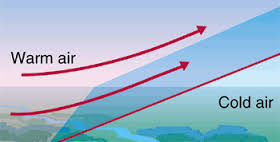
175.
Which type of front is pictured?
a)
Cold front
b)
Warm front
c)
Occluded front
d)
Stationary front
176.
A front is
a)
where warm air is cooling at earth's surface
b)
a line where hot and cold air are separating
c)
a line where two different air masses meet
d)
where cold air is rising and forming rain clouds
177.
Warm air rises and the cool air sinks demonstrates this type of heat transfer. 
a)
conduction
b)
convection
c)
radiation
d)
Insolation 
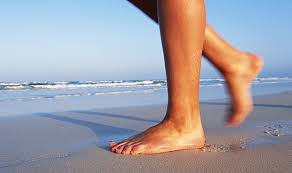
178.
Walking on the warm sand sand with your bare feet demonstrates this type of heat transfer. 
a)
conduction
b)
convection
c)
radiation
179.
A group of friends gather around a fire to stay warm.
a)
conduction
b)
convection
c)
radiation
180.
A narrow belt of strong winds that blow in the upper troposphere. 
a)
Jet Stream
b)
Coriolis Effect
c)
Convection Currents
d)
Surface Stream
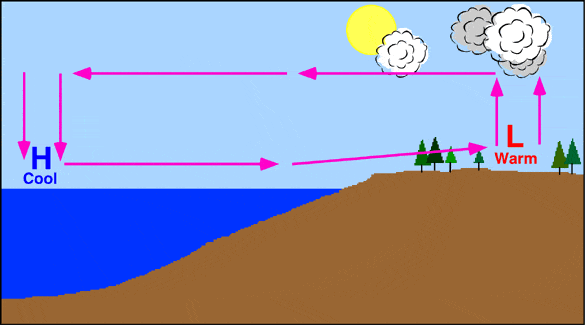
181.
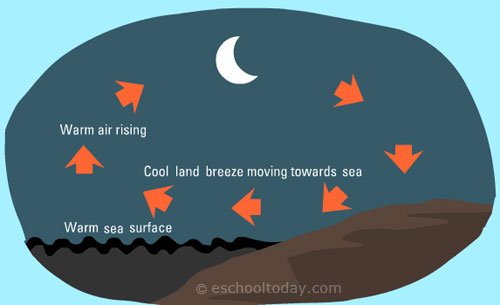
Is this a land or a sea breeze?
a)
land breeze
b)
sea breeze
182.
Is this a land or a sea breeze?
a)
land breeze
b)
sea breeze
183.
Where does the majority of electrical energy come from in Oregon?
a)
Hydroelectric
b)
Natural Gas
c)
Wood
d)
Wind
184.
Which of the following best describes the motion of the squirrel between 5 s and 8 s? 
a)
The squirrel's speed increased.
b)
The squirrel's speed decreased.
c)
The squirrel's speed did not change.
d)
The squirrel moved backward.
185.
On which day was the number of sugar cookies made at the bakery greater than the number of chocolate cookies?
a)
Monday
b)
Tuesday
c)
Thursday
d)
Saturday
186.
Based on the graph shown on tomato height, what limiting factors may have contributed to the height growth of Plant C compared to Plant's A & B?
a)
temperature, amount of water, nutrient levels, light exposure
b)
lack of copper and zinc in soil
c)
excessive light exposure and amount of water
d)
none of the above