
 Worksheets
REVIEW for Forensics Exam Fall 25
Total questions: 78
Worksheet time: 51mins
Applying science concepts and skills to matters of the law is the definition of which of the following?
Perception
Forensic Science
Courtroom Testimony
Deductive Reasoning
Deductive Reasoning can best be described as....
the process of reaching a conclusion about an event based on information & clues
Using eyewitness accounts to convict a criminal
Sharing your opinions about a criminal event
Making good observations
A person who has information or knowledge about an event and can give a first-hand description of the event because they were present.
Forensic Investigator
Eyewitness
Forensic Scientist
A news watcher
Something that is known or proven to be true.
Fact
Opinion
Perception
Theory
Using information to detect patterns, conduct testing and interpret data means that a person has good...
hair
opinions
analytical skills
brain power
Which of the following is an example of physical circumstantial evidence?
witness statement
footprints
testimony given in court
a signed ransom note
Which forensics pioneer (The father of forensics) is known for founding the first-ever crime lab and developing "The Exchange Principle"?
Leone Lattes
Walter McCrone
Edmond Locard
Alphonse Bertillon
Which of the following is an example of circumstantial evidence?
DNA samples
signed ransom note
toxicology report
cell phone records
Small but measurable amounts of physical or biological material found at a crime scene
individual evidence
direct evidence
class evidence
circumstantial evidence
Material that connects an individual or thing to a certain group
circumstantial evidence
direct evidence
class evidence
individual evidence
Evidence that (if true) proves an alleged fact, such as an eyewitness account of a crime
individual evidence
class evidence
direct evidence
circumstantial evidence
Video and eyewitness evidence is ___
circumstantial evidence
direct evidence
biological evidence
physical evidence
The two types of circumstantial evidence are ___ & ___
direct and indirect
class and individual
physical and biological
biological and individual


The innocence project was created by which two individuals?
Watson & Crick
Barry Bonds & Peter Fonda
Dean Lewis & Jerry Martin
Barry Schenk & Peter Neufield
None of these
Choose all that apply
The purpose of the Innocence Project is?
To examine post-conviction cases.
To exonerate those that are wrongly convicted.
To provide the unreliability of eyewitness testimony
To make sure a conviction is secured for anyone who goes to trial.
The innocence project uses DNA evidence to provide conclusive proof of guilt/ innocence.
TRUE
FALSE
The innocence project has re-evaluated just under 300 cases.
TRUE
FALSE
87% of the cases re-evaluated by the innocence project have been wrongful convictions.
TRUE
FALSE
Eyewitness accounts are considered "scientific evidence."
TRUE
FALSE
Studies have shown that eyewitnesses often give faulty information (most of the time unintentionally).
TRUE
FALSE
The justice system favors convictions based solely on eyewitness accounts.
TRUE
FALSE


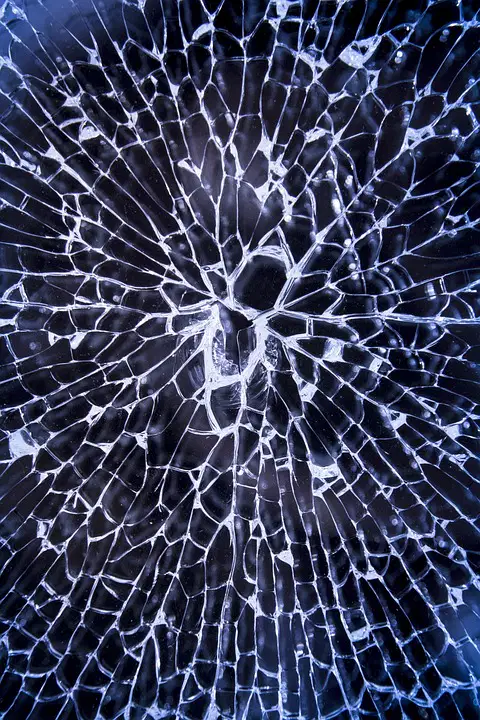
Broken glass?
Class Characteristics
Individual Characteristics

Choose all that apply
Evidence can....
Help investigators solve a crime.
Prove a crime has been committed.
Link a suspect to a crime.

In a crime investigation, why might eyewitness testimony be considered unreliable?
Witnesses' testimonies are always consistent and never contradictory.
Witnesses are trained to recall every detail accurately.
Witnesses may be influenced by external factors or biases.
Witnesses often have photographic memories of the incident.
When conducting a forensic investigation, what is the purpose of using deductive reasoning?
To determine the motive behind the crime
To establish the credibility of eyewitnesses
To link suspects to the crime scene
To draw logical conclusions based on available evidence.
Which of the following is an argument FOR the use of eyewitness testimony in crime scene investigation?
Eyewitness testimony can be bias and unreliable.
Eyewitness testimony provides direct evidence of the crime.
Eyewitness testimony is never influenced by external factors.
Eyewitness testimony is unnecessary with modern forensic techniques.
All of the following are ways to improve our observational skills EXCEPT ____.
Be sure to look at the entire area of a crime scene
Observe everything, no matter how big or small
When collecting evidence, record only those things that you are sure are important.
Write down and photograph everything you find
Why is it important to properly package and seal forensic evidence with evidence tape?
To prove there was no tampering of the evidence.
Because judges like to see a nicely wrapped lab sample.
To make sure the evidence can be cataloged correctly.
Whenever two objects are in contact, some transfer of material may occur. This is known as __.
The First 48 Law
The Frye Standard
The Daubert Ruling
Locard's Exchange Principle
True or False?
Good observation skills come naturally to investigators, they do not need to be trained.
True
False
True or False?
If a witness remembers seeing something happen, we can trust that it happened just as they remembered.
True
False
True or False?
The Innocence Project is an organization, established in 1992, that seeks to exonerate wrongfully convicted people.
True
False
True or False?
First responding officers must identify the extent of a crime, secure the scene, and dictate/record who enters and leaves the scene.
True
False
True or False?
Forensic scientists find, examine and evaluate evidence from a crime scene and provide expert testimony in court.
True
False
True or False?
Eyewitness accounts are always accurate.
True
False
The Innocence Project found that mostly faulty convictions were based on ______.
Out of date investigating equipment
Untrained C.S.I.
Inaccurate eyewitness accounts
Officers not following the 7 S’s of C.S.I.
Which of the following C.S.I. team member is responsible for declaring the cause of death when a homicide occurs?
Detective
Crime Scene Investigator
Medical Examiner
First Responder
In the 7's of Crime Scene Investigation, which of the following is completed during “seeing the scene?”
Evidence is marked
Evidence is collected
Evidence is analyzed
Evidence is photographed
According to the Chain of Custody, which of the following must be done when working with evidence?
Sealed evidence must be opened at a location other than the sealed/signed edge.
Sealed evidence must remain in its container for 7 days
Sealed evidence must never be opened by more than one person.
Sealed evidence must be carefully opened at the sealed/signed edge.
When packaging evidence, which of the following is NOT a procedure that should be followed?
The evidence should be approved by a judge
The evidence must be dried if it’s wet
The evidence must be placed in a bindle if it’s really small
The evidence must include a signature from the person who recovered it
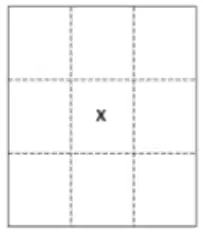
An important part of handling evidence is shown below. The “X” represents the location of small evidence. What does this picture represent?
Casing
Chain of Custody
Bindle
Diagram
The documented and unbroken transfer of evidence is known as ____.
Locard’s Exchange Principle
Chain of Custody
Frye Standard
Daubert Ruling
Which of the following best describes the difference between circumstantial evidence and direct evidence?
Direct evidence can lead to the conviction of a suspect, while circumstantial evidence cannot.
Direct evidence is not admissible in court; however, circumstantial evidence is admissible with the approval of a judge.
Direct evidence is used to imply a fact, while circumstantial evidence proves an alleged fact.
Direct evidence proves an alleged fact, while circumstantial evidence is used to imply a fact.
A crime-scene sketch should include all of the following EXCEPT ___.
A scale of distance
A North direction
Date and location of crime scene
The type of search pattern that was used.
Choose all that apply
Correct collection of evidence requires which of the following?
Documenting the location where the evidence was found.
Correct packaging of the evidence.
Maintaining proper Chain of Custody.
Collecting evidence before photographing and sketching.
The reason that it is important to separate witnesses at a crime scene is to__.
Prevent contamination of the evidence
Prevent fighting among witnesses
Prevent the witnesses from talking to one another
Protect them from the perpetrator.
Locard’s Exchange principle implies all of the following except:
Fibers can be transferred from one person to another.
Blood spatter is used to identify blood type.
Cat hair can be transferred to your pants.
Soil samples can be carried from the yard into your home.
Whenever two objects come in contact with one another, there is an exchange of materials between them. This phenomenon is known as ______.
Locard’s Preservation Principle
Locard’s Exchange Principle
Locard’s Law
Locard’s Law of Evidence Transfer
Which of the following types of evidence establishes a fact? Examples include eyewitness statements, confessions, video footage, etc.
circumstantial
class
physical
direct
Which type of evidence would be considered class evidence?
tire tread patterns
fingerprint
DNA
hair (with the root intact)
It is the responsibility of the first-responding officer to ensure that the safety of individuals is first priority. Preservation of evidence is second priority. First responders must restrict all unauthorized persons from entering a crime scene and must account for everyone that enters the scene.
This part of crime scene investigation takes place during which step?
seeing the scene
securing the scene
scanning the scene
securing and collecting evidence
Which of the following statements is true of accurate crime scene processes?
Wet evidence must be packaged immediately upon retrieval.
An evidence seal must be secure and signed by the collector.
Eyewitnesses should not be questioned until all evidence is collected.
Only direct evidence can be presented in court. All other forms of evidence are not admissible.
Which of the following is considered physical evidence?
a wool fiber from a jacket
DNA found on a victim
an unknown hair found on the seat of a victim’s car
a lip print found on the rim of a glass
Who is known as the father of forensics?
Dr. Alec Jeffreys
Calvin Goddard
Dr. Edmond Locard
Dr. William Bass
Which of the following people most likely would NOT be at a crime scene?
judge
crime scene investigator
first responders
medical examiner
A special packaging that is used for really small evidence - also known as a druggist fold
luminol
envelope
chain of custody
bindle
In order for evidence to be admissible in court, which of the following must occur?
A complete record of chain of custody must be kept for the evidence.
Proper handling of the evidenced should be maintained.
Proper packaging should be used to ensure the evidence is not compromised.
ALL of these
NONE of these
Read the following scenario:
A suspect is linked to a kidnapping by the presence of a hair (with the root) found on seat of his car. Additionally, a neighbor of the victim described the suspect in detail and was able to provide home video surveillance of the suspect’s license plate. Upon searching the suspect’s home, small shoe prints were found in the mud outside the back door and a small nylon jacket was found inside the home.
Q: In the scenario above, which evidence would be considered class evidence?
the hair
the small shoe prints
the video surveillance
All of these
None of these
Read the following scenario:
A suspect is linked to a kidnapping by the presence of a hair (with the root) found on seat of his car. Additionally, a neighbor of the victim described the suspect in detail and was able to provide home video surveillance of the suspect’s license plate. Upon searching the suspect’s home, small shoe prints were found in the mud outside the back door and a small nylon jacket was found inside the home.
Q: In the scenario above, which evidence would be considered individual evidence?
the hair
the small shoe prints
the video surveillance
the nylon jacket
Read the following scenario:
A suspect is linked to a kidnapping by the presence of a hair (with the root) found on seat of his car. Additionally, a neighbor of the victim described the suspect in detail and was able to provide home video surveillance of the suspect’s license plate. Upon searching the suspect’s home, small shoe prints were found in the mud outside the back door and a small nylon jacket was found inside the home.
Q: In the scenario above, which evidence would be considered direct evidence?
the hair
the small shoe prints
the video surveillance
the nylon jacket
Read the following scenario:
A suspect is linked to a kidnapping by the presence of a hair (with the root) found on seat of his car. Additionally, a neighbor of the victim described the suspect in detail and was able to provide home video surveillance of the suspect’s license plate. Upon searching the suspect’s home, small shoe prints were found in the mud outside the back door and a small nylon jacket was found inside the home.
Q: In the scenario above, which evidence would be considered circumstantial evidence?
the hair
the small shoe prints
the nylon jacket
All of these
None of these
Read the following scenario:
A suspect is linked to a kidnapping by the presence of a hair (with the root) found on seat of his car. Additionally, a neighbor of the victim described the suspect in detail and was able to provide home video surveillance of the suspect’s license plate. Upon searching the suspect’s home, small shoe prints were found in the mud outside the back door and a small nylon jacket was found inside the home.
Q: In the scenario above, which evidence would be considered biological evidence?
the hair
the small shoe prints
the nylon jacket
the video surveillance

