wayground logo

Free Printable Worksheets

Font size

S
M
L
XL
Worksheets

Earth Science Chapter 15, 16 Summative test 2nd Q Review

Total questions: 94

Worksheet time: 2hrs 6mins

Name
Class
Date
1.
The ________ belt between Mars and Jupiter
a)
Comet
b)
Asteroid
c)
Meteor
d)
Star
2.
rocky metallic objects that orbit the sun but are too small to be considered planets
a)
Asteroid
b)
Meteor
c)
Comet
d)
Star
3.
When a meteor hits Earth, what is it called?
a)
meteorite
b)
comet
c)
asteroid
4.
A ball of ice and rock whose orbit is usually a long, narrow ellipse.
a)
Comet
b)
Meteor
c)
Planet
d)
Moon
5.
I am a rock entering a planet's atmosphere.
a)
meteor
b)
planet
c)
asteroid
d)
comet
6.
This gas makes up 21% of the atmosphere
a)
ozone
b)
oxygen
c)
nitrogen
d)
water vapor
7.
What unique substance covers 70% of Earth's surface?
a)
Water
b)
Gases
c)
Land
d)
Atmosphere
8.
The condition of the earth's atmosphere at a particular time and place is called ___________________
a)
troposphere
b)
climate
c)
stratosphere
d)
weather
9.
An envelope of gases that surrounds the planet is called________________________
a)
geosphere
b)
atmosphere
c)
hydrosphere
d)
biosphere
10.
What percentage of air is made of nitrogen and oxygen?
a)
21%
b)
78%
c)
70%
d)
99%
11.
Pollutants are harmful substances in the air, water, or soil.  
a)
Some air pollution occurs naturally.
b)
Some air pollution is caused by human activities.
c)
Motor vehicles cause almost half of the air pollution from human activities.
d)
All of the above. 
12.
The brown haze that forms over cities___________________.
a)
smog
b)
fog
c)
photochemical smog
d)
CFCs
13.
What are gases in the air called that are found in very small amounts?
a)
invisible
b)
trace
c)
particle
d)
atmospheric
14.
When gasoline is burned, it releases the gas __________________. 
a)
carbon dioxide
b)
oxygen
c)
nitrogen
d)
helium
15.
Air pressure at sea level is _____________ than air pressure at the top of a mountain.
a)
lower
b)
higher
c)
the same
16.
The amount of mass in a given volume of air is its ___________________. 
a)
density
b)
weight
c)
altitude
d)
temperature
17.
__________________ is the result of the weight of a column of air pushing on an area.
a)
Velocity
b)
Air pressure
c)
Weather
d)
Density
18.
A __________________ is an instrument used to measure air pressure.
a)
thermometer
b)
compass
c)
barometer
d)
anemometer
19.
__________________ is the distance above sea level.
a)
Velocity
b)
Density
c)
Mass
d)
Altitude
20.
As you go up through the atmosphere, the density of the air __________________. 
a)
decreases
b)
increases
c)
stays the same
21.
_________________ is the most abundant gas in our atmosphere.
a)
Argon
b)
Oxygen
c)
Carbon Dioxide
d)
Nitrogen
22.

What is climate?

a)

What's happening in space at a time and place.

b)

What's happening in our atmosphere at a time and place

c)

The average weather over many years

d)

The average amount of rain over many years.

23.
Antarctica is cold all the time. What is it's climate?
a)
Tropical
b)
Polar
c)
Arid/Dry
d)
Temperate
24.

The seasons are caused by___________?

a)

The tilt of the Earth on its axis

b)

Tropical Storms

c)

Changes in the moon

d)

The Earth's rotation

25.
What are the 3 major climate zones in order from equator to the poles?
a)
polar, temperate, tropical
b)
tropical, temperate, polar
c)
temperate, polar, tropical
26.
The temperature of a tropical climate is?
a)
consistently warm
b)
consistently cool
c)
consistently moderate
d)
warm and cool
27.
A polar climate is?
a)
warm and cool
b)
consistently moderate
c)
consistently cool
d)
consistently warm
28.
A temperate climate is?
a)
consistently cool
b)
consistently warm
c)
consistently moderate
d)
warm and cool
29.
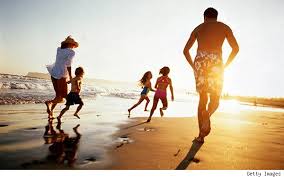
The sun shines down on this family as the play on the beach.
a)
conduction
b)
convection
c)
radiation
30.
A group of friends gather around a fire to stay warm.
a)
conduction
b)
convection
c)
radiation
31.
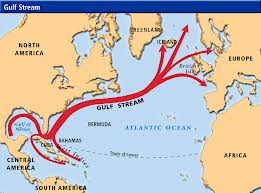
The Gulf Stream is a current that brings warm ocean water from the south to the north.
a)
conduction
b)
convection
c)
radiation
32.
Walking on the warm sand sand with your bare feet.
a)
conduction
b)
convection
c)
radiation
33.
Blow drying your wet hair.
a)
conduction
b)
convection
c)
radiation
34.
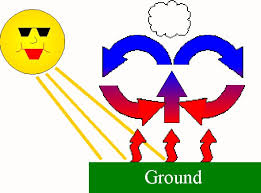
Warm air rises and the cool air sinks.
a)
conduction
b)
convection
c)
radiation
35.
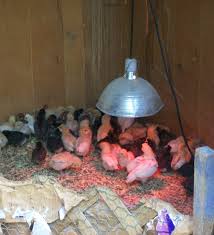
The baby chickens are kept warm from the heat lamps.
a)
conduction
b)
convection
c)
radiation
36.
In some cultures, walking on fire is the ultimate sign of strength.
a)
conduction
b)
convection
c)
radiation
37.
In this experiment, the WARM red dye and the COLD blue dye was placed in the water at the same time. The warm red dye rose to the top while the cold blue dye sank to the bottom.
a)
conduction
b)
convection
c)
radiation
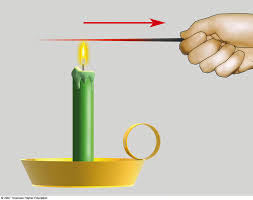
38.
The candle will slowly heat the metal and transfer the heat directly to the mans hand.
a)
conduction
b)
convection
c)
radiation
39.

Electromagnetic waves are waves that _______ matter to move.

a)

do need

b)

do not need

c)

sometimes needs

40.

When Earth’s surface is heated, it radiates most of the energy back into the atmosphere as

a)

infrared radiation

b)

ultraviolet light

c)

visible light

41.

Why is the sky blue?

a)

scattered light looks blue

b)

sunlight is blue

c)

light is absorbed by the ocean

42.

What effect does the sun have on surface water?

a)

It causes it to boil

b)

It causes it to rain

c)

It causes it to sink

d)

It causes it to evaporate

43.

When water vapor is cooled and forms droplets of liquid water

a)

Condensation

b)

Evaporation

c)

Transpiration

d)

Runoff

44.
When water turns into a gas
a)
condensation 
b)
evaporation
c)
precipitation
45.
What is water that flows in rivers and streams into the oceans and lakes?
a)
evaporating
b)
condensing
c)
precipitating
d)
runoff
46.

The process when plants release water vapor from their leaves is called _____________.

a)

precipitation

b)

evaporation

c)

transpiration

d)

condensation

47.

What step of the water cycle does this picture show?

a)

Condensation

b)

Runoff

c)

Precipitation

d)

Evaporation

48.
What source of energy evaporates the most water from Earth’s surface?
a)
volcanoes
b)
the sun
c)
lightning
d)
wind
49.
Which of these is an example of precipitation?
a)
snow
b)
air
c)
clouds
d)
vapor
50.
The changes to water when it cycles the earth is called
a)
the moon cycle
b)
the sun cycle
c)
the water cycle
d)
the wind cycle
51.
Water in lakes and rivers that does not contain salt-
a)
recycled water
b)
new water
c)
salt water
d)
fresh water
52.
Forms of precipitation are-
a)
only sleet and snow
b)
rain, sleet, hail, and snow
c)
only dew and rain 
d)
only snow and rain
53.

An underground layer of sand, gravel or rock that stores and carries water

a)

water table

b)

water cycle

c)

aquifer

d)

Infiltration

54.

The process by which water moves through the soil

a)

Precipitation

b)

Percolation

c)

Condensation

d)

Evaporation

55.

Plants giving off moisture and releasing water into the air

a)

Precipitation

b)

Evaporation

c)

Transpiration

d)

Runoff

56.

Water running off the land surface

a)

Evaporation

b)

Sublimation

c)

Transpiration

d)

Run-off

57.

Meteors begin to burn up in the...

a)

stratosphere

b)

thermosphere

c)

troposphere

d)

mesosphere

58.
The ________ is between the mesosphere and troposphere.
a)
stratosphere
b)
thermosphere
c)
troposphere
d)
mesosphere
59.

As you travel higher up in the atmosphere the...

a)

altitude decreases and the temperature increases (gets warmer)

b)

altitude increases and the temperature decreases (gets colder)

60.
Which layer is the lowest layer of the atmosphere?
a)
stratosphere
b)
thermosphere
c)
troposphere
d)
mesosphere
61.
Space shuttles and International Space Station orbit in the...
a)
stratosphere
b)
thermosphere
c)
troposphere
d)
mesosphere
62.
What is found in the stratosphere, forms when exhaust pollutants react with sunlight?
a)
ozone
b)
clouds
c)
meteroids
d)
airplanes
63.

Clouds form when water vapor _______, or changes from a gas to a liquid.

a)

evaporates

b)

condenses

64.

What is the order of the layers of the atmosphere, starting with the layer closest to Earth's surface?

a)

Stratosphere, Troposphere, Exosphere, Mesosphere, Thermosphere

b)

Troposphere, Stratosphere, Mesosphere, Thermosphere, Exosphere

c)

Troposphere, Stratosphere, Mesosphere, Exosphere, Thermosphere

d)

Troposphere, Stratosphere, Thermosphere, Exosphere, Mesosphere

65.

Which layer is hotter?

a)

Stratosphere

b)

Troposphere

66.

The ozone layer is found in

a)

Stratosphere

b)

Thermosphere

c)

Exosphere

d)

Troposphere

67.

Meteors from the space burn in which layer?

a)

Troposphere

b)

Exosphere

c)

Stratosphere

d)

Mesosphere

68.

What layer houses the International Space Station

a)

Exosphere

b)

Mesosphere

c)

Thermosphere

d)

Troposphere

69.

What layer do Thunderstorms take place in?

a)

Troposphere

b)

Mesosphere

c)

Stratosphere

d)

Thermosphere

70.

Very hot and humid most of the year; very high rainfall

a)

Tropical

b)

Arid

c)

Polar

d)

Mediterranean

71.

Warm summers and cold winters; moderate rainfall, with snow in winter

a)

Temperate

b)

Polar

c)

Arid

d)

Coastal

72.

Very low rainfall; big day-to-night and summer-to-winter temperature changes

a)

Tropical

b)

Coastal

c)

Arid

d)

Polar

73.

The thinning of the ozone layer is also known as the

a)

ozone hole

b)

ozone gap

c)

ozone space

d)

ozone void

74.

SUnburn occurs when your skin is exposed to harmful ______ rays

a)

radio

b)

magnetic

c)

ultraviolet

d)

infrared

75.

Acid rain can be traced back to

a)

the burning of fossil fuels.

b)

the use of electrostatic precipitators.

c)

thermal inversions.

d)

the release of particulate matter into the atmosphere.

76.

Chlorofluorocarbons is represented by the abbreviation _________________.

a)

CFC

b)

ChFC

c)

Chl

d)

hydrocarbons

77.
The ozone layer protects us from
a)
UV rays
b)
CFCs
c)
Increased atmospheric heat
d)
Decreased atmospheric heat
78.
The ozone layer is damaged by
a)
CFCs
b)
Increase in greenhouse gases
c)
Increased global temperatures
d)
Sulfuric and nitric acids
79.
The diagram represents solar energy that is absorbed by Earth's land and water surfaces and is changed into heat that radiates back into the atmosphere.What is this process called?
a)
ozone
b)
radiation
c)
greenhouse effect
d)
evaporation
80.

The boundary formed when two air masses meet is called a...

a)

Storm line

b)

Front

c)

Squall Line

d)

Thunderhead

81.

What type of front occurs when a warm air mass and a cold air mass do not have enough energy to move the other one out of the way?

a)

Cold front

b)

Occluded front

c)

Stationary front

d)

Warm front

82.

The tropical winds running from 0 to 30 degrees latitude are called:

a)

Polar Westerlies

b)

Subtropical Westerlies

c)

Polar Winds

d)

Trade Winds

83.

Most of the United States is located in the wind belt known as the...

a)

Polar Easterlies

b)

Prevailing Westerlies

c)

Trade winds

84.

The rotation of the Earth causes winds to bend due to the...

a)

coriolis effect

b)

doldrums

c)

trade winds

d)

prevailing westerlies

85.

Winds that blow from 300 latitude to the equator are called...

a)

prevailing westerlies

b)

polar easterlies

c)

trade winds

d)

horse latitudes

86.

Winds that blow from 300 latitude to 600 latitude are called...

a)

polar easterlies

b)

prevailing westerlies

c)

trade winds

d)

doldrums

87.

Winds that blow from the North and South pole toward 600 latitude are called...

a)

trade winds

b)

westerlies

c)

polar easterlies

d)

horse latitudes

88.

At the equator warm air rises creating a windless area known as the...

a)

doldrums

b)

horse latitudes

c)

prevaililng westerlies

d)

polar easterlies

89.

Cooler air sinks at 300 latitude causing a windless area known as...

a)

doldrums

b)

horse latitudes

c)

polar easterlies

d)

prevailing westerlies

90.

Which global winds move FROM the east to the west?

a)

Doldrums

b)

Horse Latitudes

c)

Prevailing Westerlies

d)

Polar Easterlies

91.

1. Which map best shows the surface movement of winds between 30˚N and 30˚S latitude that affect Ecuador?

a)
b)
c)
d)
92.
What type of global wind flows toward the poles from west to east carrying moist air over the United States?
a)
Prevailing Westerlies
b)
Prevailing Easterlies
c)
Polar Easterlies 
d)
Doldrums
93.
Which statement correctly defines wind?
a)
Wind is the movement of air from areas of low pressure to areas of high pressure
b)
Wind is the movement of air to a colder area in the atmosphere.
c)
Wind is the movement of air from areas of high pressure to areas of low pressure.
d)
Wind is the movement of air pushed around and bouncing off Earth's surface.
94.
Brooklyn is sad that she cannot ride her scooter because it is raining outside. What type of pressure is messing up her day? 
a)
High pressure
b)
Low pressure 
c)
atmospheric pressure
d)
barometric pressure