
Font size
 Worksheets
Biology AA final review
Total questions: 85
Worksheet time: 1hrs 15mins
Which of these contains steps in the right order?
Ask a question, research, state your hypothesis, experiment, analyze, draw a conclusion
State your hypothesis, ask a question, research, experiment, analyze, draw a conclusion
State your hypothesis, ask a question, research, draw a conclusion, experiment, analyze
Ask a question, state your hypothesis, research, experiment, analyze and draw a conclusion, share the results
When you step out into the cold, your body shivers in order to keep its temperature at 98.6F. Which characteristic of life does this represent?
All living things use energy
All living things contain cells
All living things maintain homeostasis
All living things grow
A camel has eyelashes that work to keep the dust and sand out of its eyes. Which characteristic of life does this represent?
All living things adapt to their environment
All living things grow
All living things have cells
All living things use energy
A baby song bird hatches from its egg with both parent songbirds watching. Which characteristic of life does this represent?
All living things reproduce
All living things maintain homeostasis
All living things use energy
All living things grow
The following are all characteristics of life EXCEPT:
made of cell(s)
eat food
respond stimuli
reproduce
Which item listed is NOT a characteristic of life?
adjusting to stimuli
getting and using energy
growing and developing
breathing


What is the smallest unit of an element that has the properties of that element
atom
compound
homogeneous mixture
heterogeneous mixture

A ecosystem is composed of both biotic (living) and abiotic (non-living) factors.
True
False
Which of the following displays the levels of organization INCORRECTLY from smallest to largest?
Atom, Molecule, Organelle, Cell
Organelle, Cell, Tissue, Organ
Community, Ecosystem, Biome, Biosphere
Organ System, Organ, Organism, Population

I use rulers, scales and calculators to make these observations.
Qualitative data
Quantitative data
The mass of the chocolate cake is 250 g.
Qualitative
Quantitative

What are observations made using our five senses called?
Qualitative data
Quantitative data

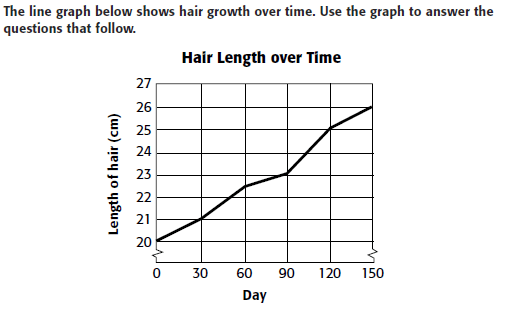


take

The proper technique for smelling chemicals is ______________
keeping your nose close to the glassware
wafting
to sniff only a small amount
Trick question; you never are allowed to smell chemicals in class

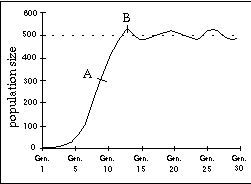

Natural disasters can be considered limiting factors.
true: density independent limiting factors
false; natural disasters are not limiting factors
true: density dependent limiting factors
false: because Mrs. Schaffer said

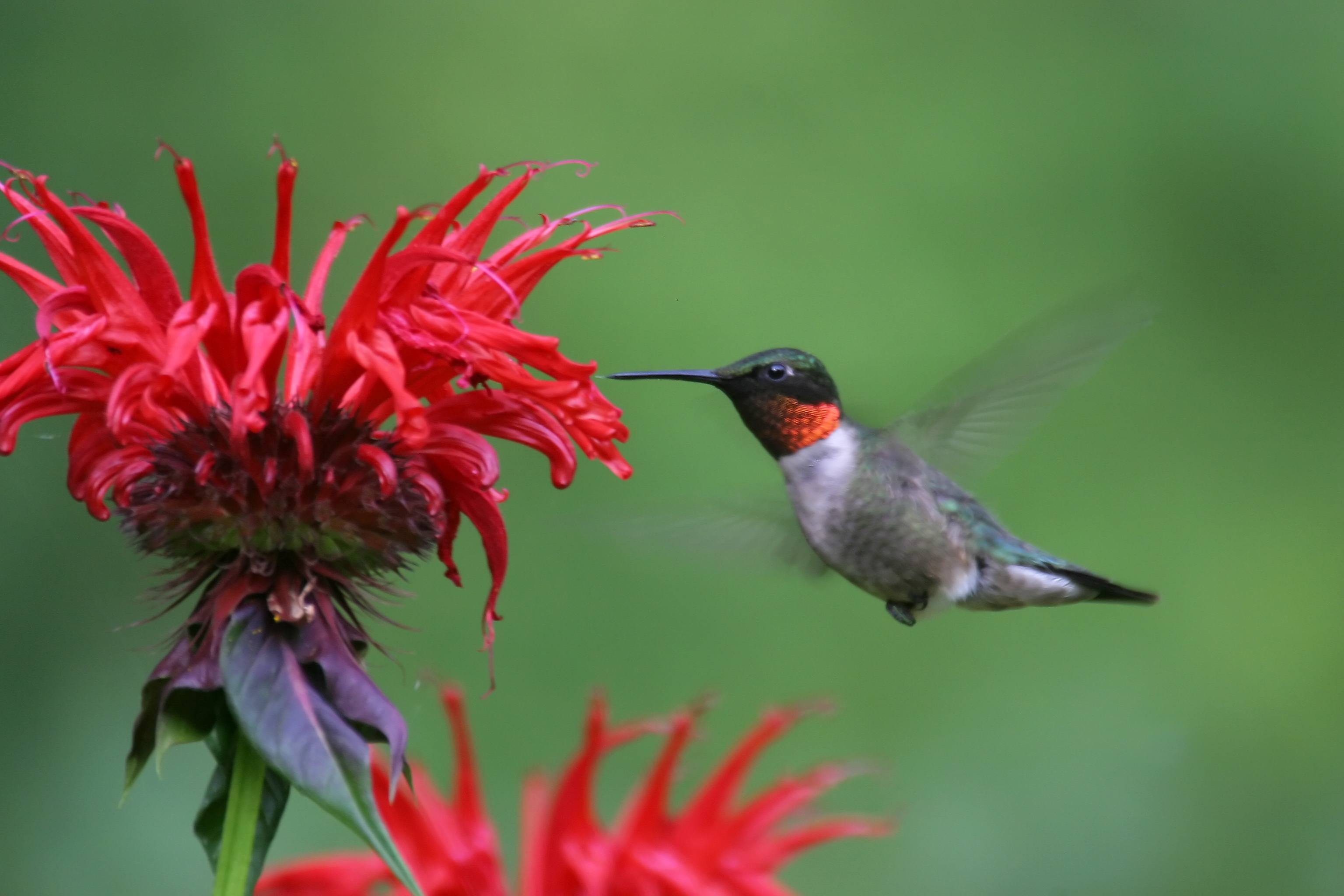
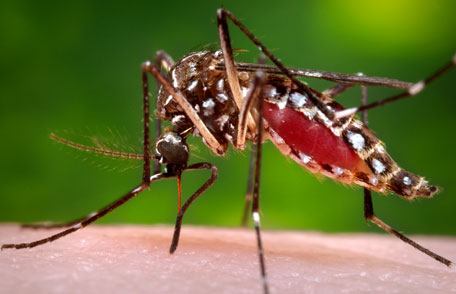
Mark all the organisms that are considered producers


Giraffes have long necks that help them reach leaves high up in trees. They get all the energy they need from plants such as this. What type of consumer are giraffes.
carnivore
omnivore
herbivore
decomposer
Mushrooms often grow around dead plants such as decomposing trees. They break down these dead organisms and put energy that stores in the plant back into the ground for other plants to use. What type of consumer are mushrooms?
carnivore
omnivore
herbivore
decomposer

A connection of food chains with many food energy paths in an ecosystem is a ____________
ecosystem
food web
environment

If an apex predator is removed from an ecosystem, which organisms are affected?
the predator's prey, only
primary and secondary consumers
it is possible that all organisms in the ecosystem will be affected in some way
What is an example of an area that is likely to undergo primary succession? (choose all that apply)
Glaciers retreat and leave exposed rock.
Plants die from drought and decompose.
Land is bulldozed and soil remains.
Igneous rock formation from volcanic lava flow.
Wildfire destroys all trees in a forest.
What is the term that describes a steady and stable community?
peak community
turf community
climax community
disturbed community
Place the following stages in the correct order from early to late succession.
Lichens
Grasses and small plants
Shrubs
Large variety of trees/bushes
Climax community
What is the main difference between primary and secondary ecological succession?
Primary begins without soil; Secondary begins with soil.
Both primary and secondary follow a natural disaster.
Primary builds plant community; secondary builds animal community.
Primary begins with soil; Secondary begins without soil.
Which best describes logistic growth?
Rapid growth of a population that reaches a peak then slowly starts to decline due to lack of resources.
Population growth that is initially rapid, but begins to slow down due to the population approaching its carrying capacity (K).
Population growth that is really fast. The population size doubles each generation
Population growth that is slow, but steadily increases as resources become less and less abundant.
Which of the following defines exponential growth?
When the population explodes in numbers, but then begins to slowly decline due to disease, lack of resources, etc.
When a population grows really fast but then slows down due to environmental resistance.
When a population grows at really fast rates. Doubling in number every generation.
When a population stays steady, not growing or shrinking around the population's carrying capacity.

What type of population growth does this graph show?
Logistic Growth
Exponential Growth
R-Selected Species
Immigration
At high temperatures, the rate of enzyme action decreases because the increased heat......
neutralizes the acids and bases in the system
alters the shape of the active site of the enzyme
increases the concentration of the enzyme
changes the pH of the system

Is this diagram endothermic or exothermic
Endothermic
Exotermic
Exothermic
Endote
Enzymes speed up the rate of chemical reactions by.....
giving you extra oxygen.
absorbing water released when polymers are formed.
lowering the activation energy.
combining with excess hydrogen to form a gas.
The "lock and key" description explain the mechanism of
enzyme specificity
how temperature works
exocytosis
vacuole formation

Both enzymes will have the same amount of activity at 40 degrees Celsius?
True
False

Using the diagram, match the following.
A
Substrate
B
Enzyme
C
Active Site
D
Product
E
Enzyme Substrate Complex
Which of the following is NOT a type of eukaryotic cell?
mushroom cell
leaf cell
bacterial cell
alligator stomach cell
There are three parts to the cell theory. Which is NOT one of those parts?
All organisms are composed of one or more cells.
The cell is the basic unit of structure and organization in organisms.
Cells spontaneously arise from carbon and other nutrients.
All cells come from pre-existing cells.
Which of the following is a true statement about prokaryotic and eukaryotic cells?
Prokaryotic cells have a nucleus, Eukaryotic have chloroplast
Prokaryotic cells have mitochondria, Eukaryotic cells have mitochondria
An example of a prokaryote would be a bacteria, an example of a eukaryote would be a tree
Prokaryotes have all the same thing eukaryotes have.
Which organelle is the site of photosynthesis?
Cell Wall
Chloroplasts
Cytoplasm
Cell Membrane
Which cell parts are not present in animal cells?
cell membrane & cytoplasm
nucleus & chloroplasts
cell wall & chloroplasts
ribosomes & mitochondria
Which organelle is the location of DNA (genetic material)?
mitochondria
ribosomes
nucleus
Endoplasmic Reticulum
Which part of the cell provides structural support?
Cell Membrane
Cell Wall
Cytoplasm
Nucleus

The control center of cell is
cell wall

Which organelle produces the energy a cell needs to carry out its function

What is the function of the Vacuoles
Store food, water and waste
Receive proteins
Assembles amino acids
Found inside the nucleus

This organelle controls what goes in and out of the cell
Nucleus
Cell wall
Cytoplasm
Cell Membrane
This organelle is a rigid outer layer that protects and provides structure for plant cells.
what is the function of a lysosome?
To create energy for the cell
To command the cell what to do
To remove waste using digestive enzymes from the cell
To protect the cell
Which is not a part of the cell theory?
The cell is the most basic (smallest) form of life
Cells cannot be created or destroyed
All cells come from pre-existing (other) cells
All living things are made of cells
What type of microscope do we use in this science classroom?
compound light microscope
scanning electron microscope
tunneling electron microscope
magnifying glass
When observing a specimen using the high-powered objective (40x), what is the total magnification that the specimen is being observed?
400X
40X
100X
4000X
How many objectives do our microscopes have?
3
2
1
10
How should a microscope be transported?
by the arm and the base
arm
base
by the cord
Which knob CANNOT be turned when observing a specimen using the high-powered objective?
coarse adjustment
fine adjustment
nosepiece adjustment
objective adjustment
Which objective lens should you ALWAYS begin your observation with?
low power objective
medium power objective
high power objective
extra high power objective
How should a microscope be stored?
with the low power objective in place
without a dust cover
with the stage fully raised
with microscope slides secured to the stage

