wayground logo

Free Printable Worksheets

NEW

Font size

S
M
L
XL
Worksheets

AP Photosynthesis Review

Total questions: 56

Worksheet time: 27mins

Name
Class
Date
1.
What is the primary function of the light reactions of photosynthesis?
a)
To produce glucose
b)
To produce NADPH and ATP
c)
To use ATP
d)
To produce RuBP
2.

Which of the following molecules is not an input for the Calvin Cycle?

a)
CO2
b)
ATP
c)
NADPH
d)
H2O
3.
The light reactions occur in the ________ and the dark reactions take place in the ________.
a)
Chloroplast / thylakoid membrane
b)
stroma / thylakoid
c)
mesophyl / stomata
d)
thylakoid membrane / stroma
4.
Where is glucose synthesized
a)
Photosystem II
b)
Photosystem I
c)
Calvin Cycle
d)
Glycolysis
5.
When oxygen is released as a result of photosynthesis, it is a direct by-product of
a)
reducing NADP+
b)
splitting water molecules
c)
chemiosmosis
d)
electron transfer in photosystem II and I
6.
What is the primary function of the Calvin cycle?
a)
regenerate ATP for use in the light reactions of photosynthesis
b)
produce carbon dioxide for use in the light reactions of photosynthesis
c)
produce oxygen by oxidizing water
d)
produce simple sugars from carbon dioxide
7.
How many sugar molecules are produced from every six molecules of carbon dioxide that enter the Calvin cycle?
a)
1
b)
3
c)
6
d)
12
8.
The H+ concentration gradient is used to 
a)
make NADPH
b)
split a water molecule
c)
generate ATP
d)
form water
9.

Photosynthesis goal is to

a)

convert light energy into chemical energy in the form of glucose

b)

use light energy to make oxygen gas

c)

convert sugar energy into ATP

d)

convert sugar energy into oxygen gas

10.

If the proton (H+) pump in the thylakoid was not working which molecule could not be made during the light reaction?

a)

NADPH

b)

ATP

c)

Water

d)

Oxygen gas

11.

The NADP+ is

a)

oxidized during the light reaction

b)

reduced during the light reaction

c)

oxidized during the Calvin cycle

d)

reduced during the Calvin cycle

12.

Photosystems are made of

a)

chloroplasts

b)

chromosomes

c)

chlorophyll and proteins

d)

cytoplasm

13.

ATP is made during the light reaction using all of the following EXCEPT

a)

proton pump

b)

hydrogen ion gradient

c)

electron energy from photosystem II

d)

NADPH donating electrons

14.

What is FALSE about the calvin cycle

a)

uses the light reactions products

b)

produces a three carbon sugar (G3P)

c)

produces carbon dioxide

d)

produces NADP+

15.
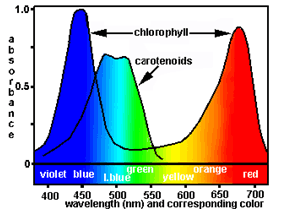
What is one function of the other pigments  besides chlorophyll, in the chloroplast?
a)
to block damaging wavelengths of light
b)
to absorb different wavelengths than the chloroplasts
c)
to provide different colors to the leaves
d)
to transfer energy to a separate photosystem beside the one using chlorophyll a and b.
16.

Plants with the largest amount of which pigment will be best suited for growing conditions where light has a green hue about 510nm

a)
Chlorophyll A
b)
Chlorophyll B
c)
Carotenoids
d)
A combination of all 3
17.

Photosynthesis is a ____ reaction.

a)

catabolic

b)

anabolic

c)

single displacement

d)

organic

18.

What letter is the light reaction?

a)

a

b)

b

c)

c

d)

d

e)

e

19.

Letter H is called the

a)

Glycolysis

b)

Krebs cycle

c)

Calvin cycle

d)

electron transport chain

20.

Plants become more fit when they have

a)

many different forms of chlorophyll to capture light at different frequencies

b)

stay green longer

c)

have only chlorophyll A & B

21.

What letter is PSII?

a)

a

b)

b

22.

What molecules carry electrons?

a)

ATP

b)

NADPH

c)

NADH

d)

ADP

23.

This is a diagram of the

a)

light reactions

b)

dark reactions

c)

CAlvin Cycle

d)

Krebs Cycle

24.

This diagram is of the

a)

Krebs Cycle

b)

CAlvin Cycle

c)

electron transport chain

d)

thylakoid membrane

25.

How many times must the calvin cycle turn for 1 net molecule of G3P

a)

1

b)

2

c)

3

d)

4

e)

6

26.
cluster of chlorophyll and proteins found in thylakoids
a)
photosystem
b)
electron transport chain
c)
ATP synthase 
d)
Calvin cycle 
27.
series of electron carrier proteins that shuttle high-energy electrons during ATP-generating reactions
a)
electron transport chain
b)
photosystem
c)
ATP synthase
d)
Calvin cycle
28.
cluster of proteins that span the cell membrane and allow hydrogen ions (H+/Protons) to pass through it
a)
ATP synthase
b)
photosystem
c)
electron transport chain
d)
Calvin cycle
29.
What does ATP synthase do?
a)
Create ATP in chemiosmosis.
b)
Break down ATP in chemiosmosis.
c)
Break down NADPH. 
d)
Create NADPH.
30.
light independent reactions of photosynthesis in which energy from ATP and NADPH is used to build high-energy compounds such as sugar
a)
Calvin cycle
b)
photosystem
c)
electron transport chain
d)
ATP synthase
31.
Can too much light intensity damage a plant?
a)
yes
b)
no
32.
Plants that have adapted to extremely bright and dry conditions:
a)
C1 and C4
b)
C2 an CAM
c)
C1 and C2
d)
C4 and CAM
33.
Pathway, which requires extra energy; enables photosynthesis to keep working under intense light and high temperatures by first forming a compound containing 4 carbons (corn, sugarcane, and sorghum)
a)
C1
b)
C3
c)
C4
d)
CAM
34.
The photosystems contain pigments that absorb light and pass the energy on to
a)
NADPH
b)
ATP
c)
electrons
d)
ADP
35.
What is the function of NADPH and ATP in the Calvin cycle?
a)
They provide the energy required to build high-energy sugars
b)
They provide the energy to create needed oxygen
c)
They provide the energy required to release water
d)
They provide the energy required to expel CO2
36.
How do CAM plants photosynthesize under bright, hot conditions without drying out?
a)
by allowing small openings in their leaves to admit more carbon dioxide
b)
by lowering the amount of ATP required for the Calvin cycle
c)
by using the C4 pathway
d)
by sealing their leaves against water loss and trapping carbon as organic acids
37.

Stomata are made of specialized cells called ______ which surround a tiny pore/opening

a)

stoma

b)

guard cells

c)

dermal cells

d)

diffusion channels

38.

The main function of stomata is to

a)

capture sunlight

b)

protect leaves from insects

c)

allow gases to move rapidly in/out of leaves

d)

release sugars into the atmosphere

39.

Leaves will have the highest number of stomata open when

a)

temperatures are unusually high and CO2 levels are also high

b)

temperatures are low and CO2 levels are also low

c)

temps are high and CO2 levels are low

d)

temps are low and CO2 levels are high

40.

Main products of the Calvin Cycle

a)

Oxygen, NADP+, ADP

b)

Glucose, CO2, ADP

c)

ADP, NADP+, Glucose

d)

ATP, NADPH, Oxygen

41.

5 carbon sugar that combines with CO2 in the Calvin Cycle

a)

3-PGA

b)

G3P

c)

RuBP

d)

Glucose

42.

Increasing carbon dioxide can increase photosynthesis, but only to a maximum rate because

a)

There are not enough RuBP molecules

b)

Oxygen cannot leave fast enough

c)

Large amounts of CO2 cannot fit in the chloroplast

d)

Calvin cycle can only go as fast as the light reactions

43.

Temperatures that are too high can slow photosynthesis because

a)

stomata stay open

b)

enzymes are ruined

c)

there is not enough CO2

d)

there is too much water

44.
In order to efficiently create 1 glucose molecule, the Calvin Cycle must occur how many times?
a)
3
b)
6
c)
1
d)
12
45.
The 5-Carbon molecules that the Calvin Cycle starts and ends with, is called _____________.
a)
PGA
b)
G3P
c)
RuBP
d)
RuDp
46.
After 12 G3P molecules are created, 10 are used to regenerate _________, while the other 2 are used to create __________.
a)
RuBP, C6H12O6
b)
Glucose, CO2
c)
ATP, Glucose
d)
Glucose, RUBP
47.
The COused in the Calvin Cycle originates from ___________.
a)
The light phase
b)
The breakdown of the remaining G3P's
c)
Diffusion through the stoma
d)
Lumen of the Thylakoid
48.
True or False: The Calvin Cycle returns ADP and NADP to the light dependent phase.
a)
True
b)
False
49.
The enzyme responsible for Carbon Fixation in C3 Photosynthesis is
a)
RuBisCo
b)
PEP Carboxylase
c)
Hexokinase
d)
Pyruvate DeHydrogenase
50.
The molecule that comes out of the Calvin Cycle to produce glucose, and polymers like cellulose is:
a)
RuBP
b)
GP3
c)
3-PG
d)
G3P
51.

Which process in photosynthesis directly uses sunlight to excite electrons?

a)

Krebs cycle

b)

Calvin cycle

c)

Light reactions

d)

Glycolysis

52.

Which pigment is primarily responsible for absorbing blue and red wavelengths of light?

a)

Xanthophyll

b)

Chlorophyll a

c)

Carotenoids

d)

Chlorophyll b

53.

What is the role of stomata during photosynthesis?

a)

To absorb water from the soil

b)

To allow gas exchange between the plant and the atmosphere

c)

To produce ATP

d)

To synthesize glucose

54.

Which process occurs in the thylakoid membrane during photosynthesis?

a)

Light-dependent reactions

b)

Calvin cycle

c)

Glycolysis

d)

Krebs cycle

55.

What is the main role of RuBisCo in photosynthesis?

a)

Transporting electrons

b)

Fixing carbon dioxide into organic molecules

c)

Splitting water molecules

d)

Generating ATP

56.

Which pigment is primarily responsible for absorbing light energy in plants?

a)

Chlorophyll a

b)

Xanthophyll

c)

Carotene

d)

Anthocyanin