
 Worksheets
US History Fall Final Exam Review
Total questions: 108
Worksheet time: 2hrs 41mins
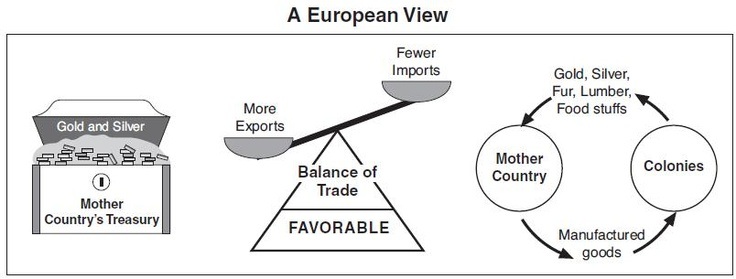
What is mercantilism?
A system where a mother countries gains money and power from natural resources that come from its colonies.
where colonies trade gold and silver with each other.
Wars that start over money.
Plantation colonies trading slaves for money.

The part of the slave’s journey aboard the ship between Africa and the American colonies was known as the _________________ _________________
Triangular Trade Route
Middle Passage
Northwest Passage
Bermuda Triangle
Under the British system of mercantilism, the American colonies served primarily as a
self-sufficient trading partner for other European nations
market for British manufactured goods and a source of raw materials
source of manpower for the British army and navy
buffer to the expansion of French and Spanish colonies
Which group of colonies were defined by villages with town meetings, small farms and commercial fishing, and the first American college?
New England Colonies
Mid-Atlantic Colonies
Southern Colonies
Spanish Colonies
During the colonial period, the economic development of the South was most directly dependent on the labor of
factory workers
wheat farmers
Irish immigrants
enslaved Africans

The House of Burgesses in the Virginia colony represents which of the following?
Royal rule over the North American colonies
Colonial rebellion against Great Britain
Colonial self-government in North America
Royal indifference towards the colonies

Tobacco cultivation was key to the early success of the English colonists in the ______colonies.
Southern
Mid-Atlantic
New England
In the __________ colonies, agriculture was not a dominant part of the economy.
Southern
Mid-Atlantic
New England
Cause: Settlers moved to Virginia in hopes of cultivating tobacco.
Effect:
American Indians were driven off their lands.
settlers fought with each other over land
settlers created self-sufficient farms and refused to sell their crops
settlers got into frequent disagreements with the French over the fur trade
This colony was originally controlled by the Dutch, who welcomed a diversity of settlers.
Massachussetts
Georgia
Virginia
New York

Which region specialized in livestock, grains, and fish?
New England Colonies
Mid-Atlantic Colonies
West Africa
Southern Colonies

What did the Proclamation Line of 1763 declare?
Colonists could not hunt beyond the line.
Colonists stay on the east side of the line, Indians stay to the west of the line.
Indians and colonists could not trade with one another.
The land would be controlled by Indians.
Of the concepts listed, which was the MOST significant cause of American discontent with British control?
too many new immigrants
availability of labor
religious freedom
taxation without representation
What impact did Thomas Paine’s Common Sense have in the colonies during 1776?
It caused many colonists to demand Paine’s trial and conviction.
It forced King George III to repeal all taxes in colonial regions.
It supported arguments of Loyalists living in the colonies.
It contributed to increased support for independence from England.

Which of the following reflects the correct order of these events?
French and Indian War, Proclamation of 1763, Stamp Act
Proclamation of 1763, Stamp Act, French and Indian War
Proclamation of 1763, French and Indian War, Stamp Act
French and Indian War, Stamp Act, Proclamation of 1763
Which of the following reflects the correct order of these events?
Stamp Act, Intolerable Acts, Boston Tea Party
Intolerable Acts, Boston Tea Party, Stamp Act
Boston Tea Party, Stamp Act, Intolerable Acts
Stamp Act, Boston Tea Party, Intolerable Acts
What was important about the Battle of Saratoga?
The British surrender meant the war was finally over.
The Americans won control of New York and Canada.
The British brought over more troops to control most of the colonies.
The French agreed to help the Americans fight the British.
Which of the following answers explains why the Americans won the Battle of Yorktown?
Cornwallis was tired of chasing Nathaniel Greene's army.
Washington surrounded the British, and the French navy blocked the bay.
The Patriots fought the British on open fields of the South.
Francis Marion planned a surprise attack on the British.
Which early colonial leaders are responsible for persuading France to support the Patriots in the Revolutionary War?
George Washington and Paul Revere
Benjamin Franklin and John Adams
Thomas Franklin and William Pitt
Thomas Paine and T-Paine
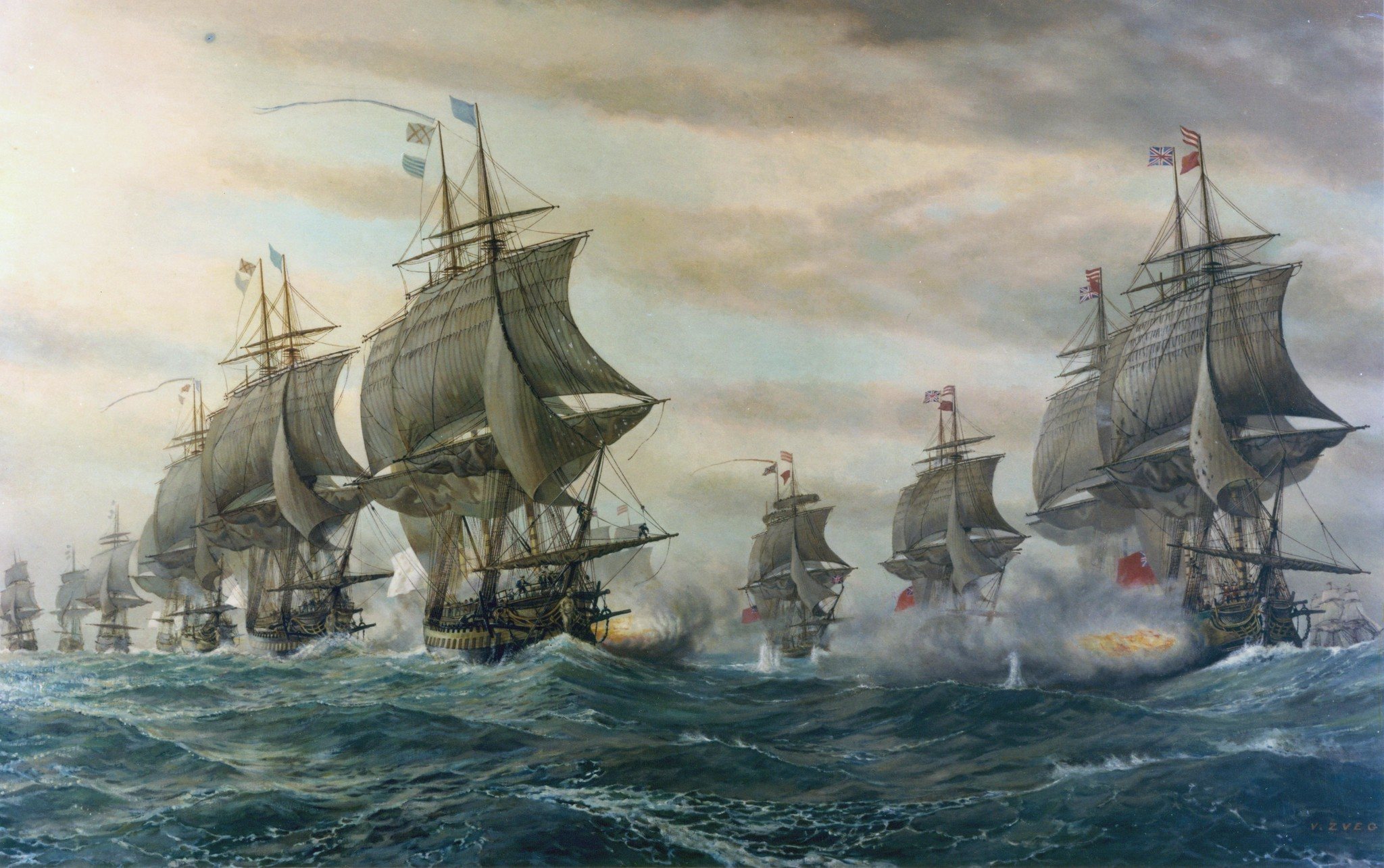
Besides the French army, how else were the French going to help trap the British?
by sailing their warships to the Chesapeake Bay to help surround the British on the water.
by sending nasty messages to Lord Cornwallis
by sailing to England and attacking the British in England
by attacking the British supply ships to stop the British from getting supplies.
What year was the Treaty of Paris ending the American Revolution and forcing Great Britain to recognize the United States as an independent nation signed?
1763
1783
1793
1766
This success of the Articles of Confederation allowed for new territories to apply for statehood and organize themselves politically.
Land Ordinance of 1785
Northwest Ordinance
Shay's Rebellion
The Proclamation Line of 1763
This success of the Articles of Confederation allowed for undeveloped land to be bought and sold while also establishing geographic organization to the United States.
Land Ordinance of 1785
Northwest Ordinance
Shay's Rebellion
The Proclamation Line of 1763
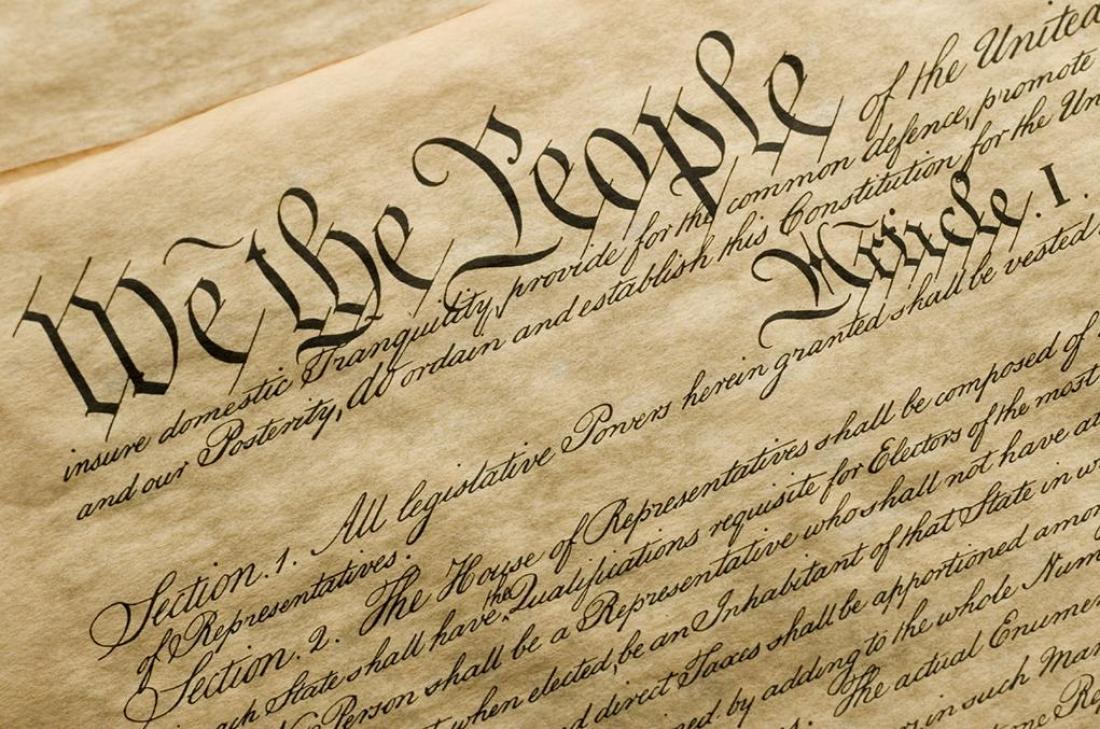
How did the Federalists and Anti-Federalists "compromise" to ratify (approve) the U.S Constitution?
The added the Bill of Rights (First 10 Amendments)
They outlawed cruel and unusual punishment.
Ensured due process of the law.
The Federalists threatened the Anti-Federalists to war.
What things did George Washington warn against in his farewell address
Political Parties
Foreign Alliances
Westward Expansion
Agricultural Economy

Whose economic plan including tariffs, a national bank, and federal spending for roads and canals, known as the "American System"?
John Quincy Adams
James Monroe
Andrew Jackson
Henry Clay
The Nullification Crisis, Indian Removal Act, and Era of the Common Man are all part of which era?
Jacksonian Era
Anti-Federalists Era
Constitution Era
Antebellum Era
How was suffrage (the right to vote) expanded during Jackson's presidency?
Owning property was no longer a qualification to vote
African Americans voted for the first time
women were allowed to vote
White men were no longer the only people who could vote
How did Jackson react to the Worcester v. Georgia Supreme Court case?
He ignored it and allowed the forced removal of Cherokee Nation.
He allowed Cherokee Nation to remain on their lands.
He agreed with the ruling and apologized to Cherokee Nation.
He got into a fist fight with Chief Justice John Marshall

Manifest destiny
Monroe Doctrine
Great Awakening
Louisiana Purchase
What is a belief in the superiority of native-born inhabitants over immigrants, in particular, an anti-immigrant movement that began in the early 1800s in the U.S.?
nativism
racism
discrimination
xenophobia
What was the Temperance Movement?
total ban on the sale and consumption of alcohol
person who wanted to end slavery
organized effort to end alcohol abuse and the problems it created
organized campaign to win property, education, and other rights for women
What river was considered by the United States to be the true border between Texas and Mexico?
Rio Grande
Mississippi
Missouri
Colorado
“Fifty-Four Forty or Fight”! James Polk used as a campaign slogan when he ran for president meant....
the U.S.would get all of Oregon Country up to the 54 o line or the U.S. would go to war
The US would get all land except territory located at the 54th parallel line.
James Polk would be willing to fight 54 of his men to gain territory
All of the Above
What was one of the reasons James K. Polk won the 1844 presidential election?
He was against removing the Native American from their land
He favored the policy of popular sovereignty in the Kansas-Nebraska territory
He was committed to fulfilling the goals of Manifest destiny.
He opposed the extension of slavery west of the Mississippi
Which of the following was established by the Missouri Compromise?
The ability for new territories to vote on whether slavery was legal
The end of the international slave trade in the southern states
boundary between free and slave regions
The end of slavery in the Louisiana Territory and other territories


One advantage and one disadvantage the North had:
More experienced military leaders
More prepared to fight
More manufacturing ability
Better morale because they were defending their property
What was the point of blockading southern ports?
To Cripple the Confederate economy by ending the cotton trade
To stop British ships from importing weapons
To Capture the Capital City of Richmond
To train the new US Navy
Idea was to not just stop the opposing army but to destroy the peoples will to fight. Marched 300 miles toward Savannah and down to Atlanta. 60 mile wide path of destruction.
Antietam
Gettysburg
Shermans March to Sea
Bull Run
Read this sentence from the text.
"With malice toward none, with charity for all, . . . let us strive on to finish the work we are in, to bind up the nation’s wounds, . . . to do all which may achieve and cherish a just and lasting peace among ourselves and with all nations."
What does this quote say Lincoln's goal is for when the Civil War ends?
To reunite the Nation.
To end slavery.
To punish all war criminals and to support justice in America.
To provide first aid and medical care to those wounded in the war.

What Amendment was passed to guarantee African American men the right to vote?
13th
14th
16th
15th

Literacy tests were created as a way to suppress African American voters after the passage of the _______________.
Civil Rights Act of 1964
13th Amendment
14th Amendment
15th Amendment

Presidential Reconstruction following the American Civil War can BEST be described as
a plan to fix the damage to the White House caused by the Civil War.
a desire to rebuild the southern states quickly to help control the economy.
a desire to rebuild the country quickly and without ill feelings following the war.
a desire to punish those southerners responsible for causing and/or prolonging the war.

What group was created in 1865 in Pulaski, Tennessee, for the purpose of preventing both the programs of Reconstruction and laws promoting racial equality?
Freedman's Bureau
Ku Klux Klan
Know Nothing Party
White Circle Council

Which statement describes the attitude of the "Radical Republicans" following the Civil War?
"Southern states should pass the 'Black Codes.' "
"The Southern states have been conquered and should be punished for their actions."
"Former Confederate leaders should be forgiven for their actions during the Civil War."
"The country should follow President Lincoln's plans to reunite the country as quickly as possible."

Which is the BEST description of the southern economy during Reconstruction?
The southern economy was stabilized because of trade relationships with Great Britain and France.
The southern economy was still based on agriculture and cotton, but now depended on sharecropping rather than slave labor
The southern economy was transformed from being based on agriculture to being completely dependent on industry and manufacturing.
The southern economy was completely restored by 1866 and was actually more productive and profitable than the pre- Civil War economy.
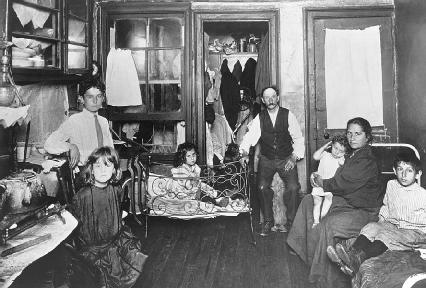
An organization of workers dedicated to protecting members' interests and improving wages, hours and working conditions for all.
Labor Union
Workers Rights
Worker Strikes
Collective Bargaining
Which incident was a result of a Chicago labor disturbance on May 4, 1886, in which people were killed by a bomb thrown during a demonstration?
the Great Railroad Strike
the Haymarket Square Riot
the Homestead Strike
the Pullman Strike

I became rich by working in the steel industry.
Cornelius Vanderbilt
Andrew Carnegie
John D. Rockefeller

I became a wealthy business man by controlling 90% of the oil industry in the United States.
Cornelius Vanderbilt
Andrew Carnegie
John D. Rockefeller

William Jennings Bryan's famous Cross of Gold speech is about...
The acquisition of colonies to increase employment opportunities.
The creation of a national park system
A policy of bimetalism to help farmers with raising crop prices.
Higher tariffs to protect American goods from foreign cometition.
Railroads' high fees for shipping goods to market would eventually lead to....
Farmers organizing the Grange Movement and the Populist party
The government authorizing the use of silver to help farmers
The Populist demand that the government help farmers by raising tariffs
The government demanding that farmers slaughter mivestock to increase prices.
Which Amendment to the U.S. Constitution had to do with women getting the right to vote?
16th
17th
18th
19th
Who was the muckraker that wrote "The Jungle?"
Upton Sinclair
Jacob Riis
Alice Paul
Teddy Roosevelt
The "Jungle" alerted folks what was really going on in the meatpacking industry. What government action did the "Jungle" eventually lead to?
Prohibition
18th Amendment
Pure Food and Drug Act
Minimum Wage
With which amendment to the U.S. Constitution did prohibition take effect?
16th
17th
18th
19th
Which amendment to the U.S. Constitution provided for a graduated income tax?
16th
17th
18th
19th
Which Amendment to the U.S. Constitution allowed citizens to vote directly for their state senators?
16th
17th
18th
19th
Which of these BEST describes the differences between W.E.B. DuBois and Booker T. Washington?
DuBois wanted to negotiate with white leaders, but Washington believed that total segregation was needed.
DuBois wanted immediate equality for blacks, while Washington wanted to use a slower approach for change.
There were no differences between them, both DuBois and Washington wanted equality as fast as possible.
Washington wanted to negotiate with white leaders, but DuBois believed that total segregation was needed.
Which of the following are examples of ways settlers impacted the environment and changed the land out West. (choose 3)
killed buffalo almost to the point of extinction
dug irrigation ditches
plowed and graded (or leveled) land
planted trees to use for houses and fences

