
 Worksheets
H Semester 1 review
Total questions: 83
Worksheet time: 21hrs 45mins

Randy and Mia are looking at organic models. They wonder what if I change the number of neutrons what will happen?
you get an ion
nothing, so they just grab a snack
you get an isotope
you get a different element
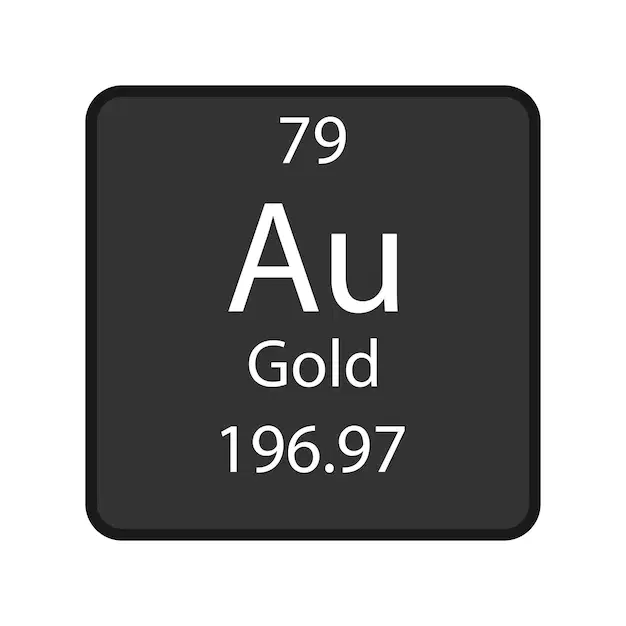
Arjun is learning about elements and their atomic numbers. He asks Marcus, what is the atomic number of an element?
The atomic number of an element is the number of neutrons in the nucleus of an atom.
The atomic number of an element is the number of electrons in the nucleus of an atom.
The atomic number of an element is the number of protons and neutrons in the nucleus of an atom.
The atomic number of an element is the number of protons in the nucleus of an atom.
In a chemistry class, Arjun and Billy are discussing the relationship between the number of protons and the atomic number of an element. What is the correct relationship?
The number of protons in an atom is half of the atomic number.
The number of protons in an atom is greater than the atomic number.
The number of protons in an atom is unrelated to the atomic number.
The number of protons in an atom is equal to the atomic number.
An atom of carbon has 6 protons and 7 neutrons in its nucleus. If the atom is neutral, how many electrons does it have?
0
7
6
13
An atom of iodine has 7 valence electrons. What will an atom of iodine MOST likely do to be stable?
Lose 1 electron
Lost 7 electrons
Gain 1 electron
Neither gain nor lose any valence electrons
How are ionic and covalent bonds alike?
They both form organic molecules.
They both fill outer electron shells.
They both transfer electrons from one atom to another.
They both transfer protons from one atom to another.
What type of bond is formed when atoms share electrons?
Covalent
Ionic
Hydrogen
Polyatomic
An atom of neon has 8 valence electrons. What will an atom of neon MOST likely do to be stable?
Gain 1 electron
Lose 2 electrons
Lose 8 electrons
Neither gain nor lose any valence electrons
The isotope uranium-235 has 92 protons and 143 neutrons. Therefore, its mass number is
92.
235.
143.
impossible to determine.
Which atom will have a +1 charge?
3 protons
4 neutrons
3 electrons
3 protons
4 neutrons
4 electrons
3 protons
4 neutrons
2 electrons
3 protons
3 neutrons
3 electrons

Which of the elements in the picture has correct electron dot notation?
1
2
3
4

Why do carbon, silicon, and tin all react similarly?
They are located in the same period
They have an even atomic number
They have the same number of energy levels
They are located in the same group

What is the valence electron count of the alkaline earth metal family?
-2
-1
2
1

The diagram below is the bohr model of an atom. Which best describes this atom?
it has a full outermost shell
it has 6 valence electrons
it has a positive charge
it has 6 electrons

How many valence electrons are in a neutral atom of nitrogen?
5
3
2
15

which two elements have the same number of valence electrons?
C and O
Cl and F
Ga and Ge
Na and Mg

The alkali metals elements are in the same family in the periodic table because they all have
eight valence electrons
seven valence electrons
two valence electrons
one valence electron
Elements with the same valence electron configuration can be expected to have similar
chemical reactivity
number of protons
number of electrons
atomic mass

The diagram represents an element. Which best describes this element?
10 protons and 9 neutrons in the nucleus
9 protons and 9 neutrons in the nucleus
2 electrons in the first energy level; 8 electrons in the second energy level
2 electrons in the first energy level; 7 electrons in the second energy level
proton
lives in the nucleus & positively charge
electron
lives in the cloud & negatively charge
neutron
lives in the nucleus & no charge
valence electron
lives in the last ring & negatively charge
nucleus
where protons & neutrons are found and largest mass
Label the metals, nonmetals and metalloids
Valence electrons live in the (a) ring of the atomic structure. It tells us how (b) the elements are. Group 1 are the (c) whereas group 18 are the (d)

Is the NaF an ionic or a covalent bond?
ionic
covalent

Is ClO2 ionic or covalent?
ionic
covalent
Why do all bonds form?
so the number of protons equals the number of electrons
so an atom can become unstable
to fill the outermost energy level

What is the correct Lewis Dot Structure for ammonia NH3


Indicate below which elements exist as diatomic molecules
hydrogen
nitrogen
oxygen
fluorine
Avery is working on a chemistry project and needs to determine the charge of iron in the chemical formula FeCl3 used in her experiment. What is the charge of iron?
1+
2+
3+
1-
What is the formula for chromium (II) hydroxide?
CrOH
Cr(OH)1
Cr(OH)3
Cr(OH)2
What is the formula for Calcium Chlorate?
Ca(ClO3)2
CaCl2
CCl
C2H3O2-
acetate
Hydrogen Carbonate
hydroxide
sulfate
NH4+
nitrate
nitrite
phosphate
ammonium
CO32-
carbonate
phosphate
sulfate
hydroxide
CN-
hydroxide
sulfate
cyanide
phosphate
OH-
ammonium
hydroxide
phosphate
sulfite
SO32-
sulfite
nitrite
sulfate
hydroxide
The innermost 1st energy level has a maximum of how many electrons?
1
2
6
8
How many electrons can go in the Second energy level?
2
8
18
32
How would you draw a Lewis dot diagram for Magnesium?


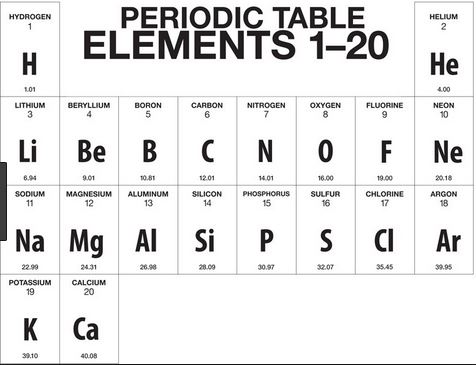
How many valence electrons does Aluminum Have?
1 Valence electron
2 Valence electron
3 Valence electron
4 Valence electron
5 Valence electron

How many energy levels are being shown in total?
1
2
3

This atom has an atomic number of (a) .
This atom has a mass number of (b) .
This atom has an atomic mass of (c) .
This atom has (d) valence electrons.
Match the following

potassium

lithium

magnesium

titanium

sodium
Which side of the periodic table are the nonmetals located?
copper
potassium
strontium
magnesium
carbon
chlorine
nitrogen
argon
helium
silver
Which group is the Halogens?
Which group is the Noble Gases?
Match the following
Alkali Metals
1 valence electron and very reactive
Alkaline Earth Metals
2 valence electrons and very reactive
Halogens
7 valence electrons & highly reactive
Noble Gases
8 valence and completely unreactive
A single carbon can form up to (a) covalent bonds

How many protons does this element have?
20
40
8
2

How many electrons does this element have?
11
23
12
1

How many neutrons does this element have?
45
80
35
7

What element does this bohr model represent?
Si
S
Ni
H

What element does this bohr model represent?
Si
S
Ni
H
Which is the correct molecular structure for carbon dioxide?


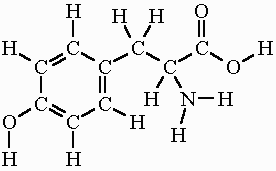
In this molecule, each CARBON makes (a) bonds.
The desire for an element to have 8 electrons around it is called

What is the formula for the ammonia molecule shown below?
NH
NH3
N3H3
N3H
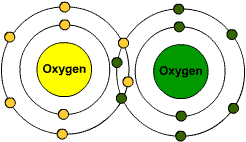
1s22s22p63s23p64s23d10
What is the maximum number of electrons that an S orbital can have?
1 electron
2 electrons
3 electrons
4 electrons
How many electrons can the d sublevel(orbital) hold?
8
10
2
4
Which area on the periodic table represents the electrons in the "d" sublevel?
representative elements
columns 3-8
rare earth elements
transition elements


Match the elements with their electron configuration! (3 minutes)
1s2 2s2 2p3
Nitrogen, N
1s2 2s2 2p6 3s2 3p3
Phosphorus, P
1s2
Helium, He
1s2 2s2 2p6 3s2 3p6
Argon, Ar
1s2 2s2 2p6 3s2 3p6 4s2 3d5
Manganese, Mn

