
 Worksheets
2023 Biology (Fall) Final Exam Review
Total questions: 143
Worksheet time: 3hrs 46mins
How is a quantitative observation different from a qualitative observation?
Quantitative observation involves colors and shapes
Qualitative observation involves measurements and numerical data.
Quantitative observation involves subjective descriptions
Qualitative observation involves objective measurements.
Quantitative observation involves using the senses
Qualitative observation involves using instruments for data collection.
Quantitative observation involves measurements and numerical data
Qualitative observation involves descriptions and characteristics.
Determine if the following is a qualitative or quantitative observation.
Numeric (measurements)
Descriptive, non-numeric (Using your senses)
Colors, textures, smells, tastes, opinions
Length, weight, temperature, time, etc.


Match the following experimental variables
Independent variable
Variable that is manipulated in an experiment
Depenent variable
Variable that is measured or observed in an experiment
Control group
Group in an experiment that does not receive the treatment
Experimental group
Group in an experiment that receives the treatment
Hypothesis
Predicted explanation for a phenomenon
A student is testing the effect of shoe color on running speed.
What is the independent variable in this investigation?
Shoe color
Running speed
Track surface
Weather conditions
A student is testing the effect of shoe sole material on running speed.
What is the dependent variable in this investigation?
Shoe sole material
Running speed
Track surface
Weather conditions

Maya designed an experiment to answer the following question: How does the amount of water given to a lima
bean seed affect how tall it grows?
In this experiment, what variable should Maya CHANGE?
the amount of water
the kind of plant
the type of soil
the amount of sunlight it gets
The variable that is changed by the scientist at the beginning of the experiment
The variable that is observed at the end of the experiment
Organize these options into the right categories
pH
pH < 7
pH = 7
pH > 7


Which macromolecule is shown?
lipid
protein
nucleic acid
carbohydrate
Which macromolecule is used as our main source of energy?
Lipids/Fats
Nucleic Acids
Proteins
Carbohydrates
Which macromolecule stores energy?
Carbohydrates
Proteins
Lipids/Fats
Nucleic Acids
Monosaccharides(sugars) are monomers of


What are the building blocks of proteins?
Amino acids
Nucleic acids
DNA
RNA

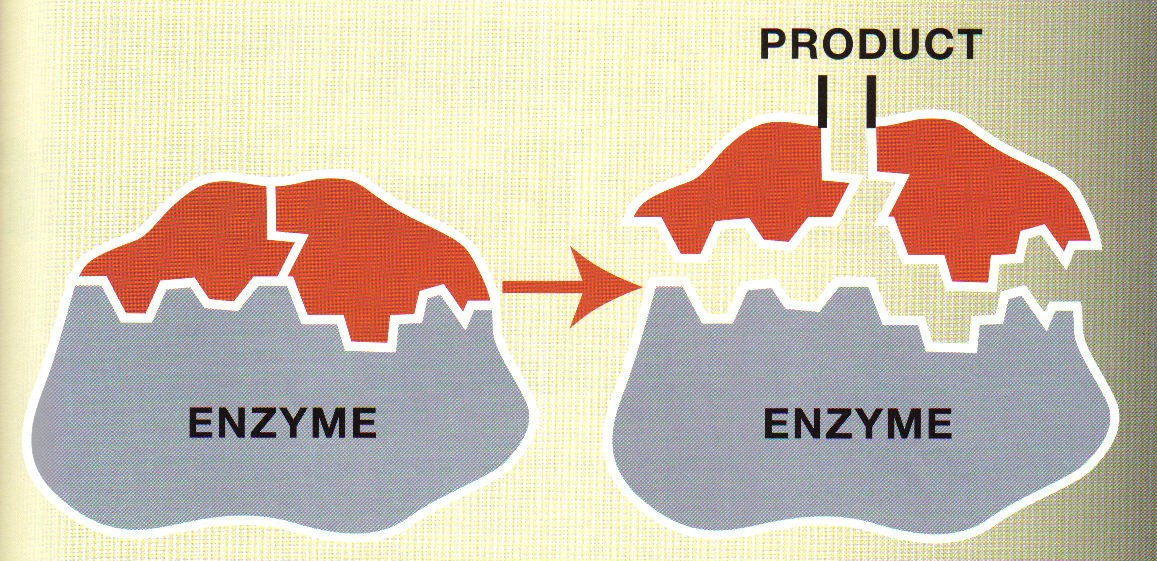
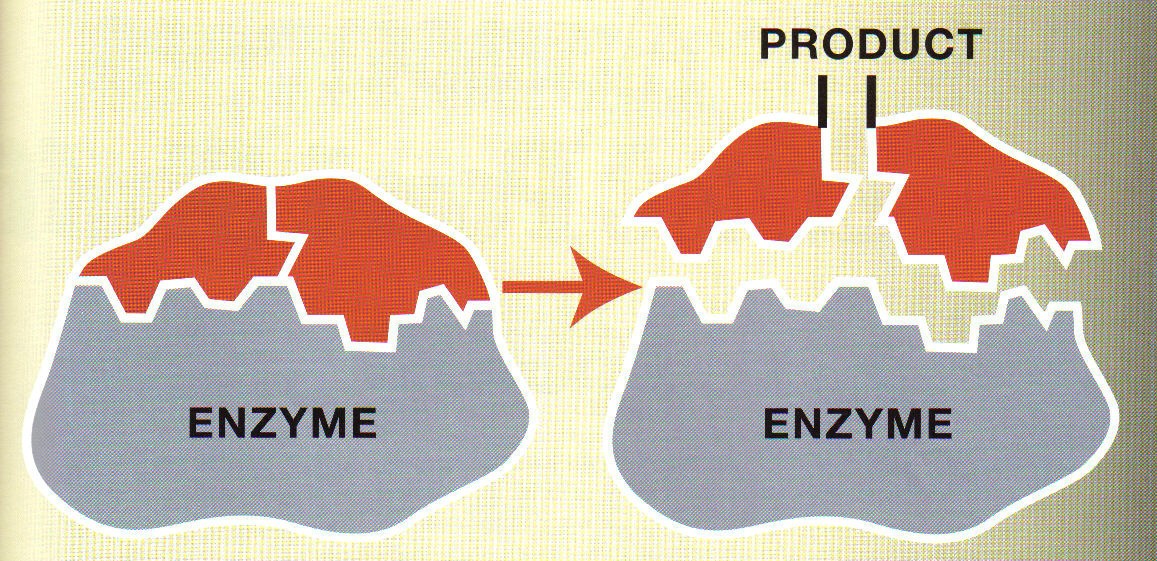
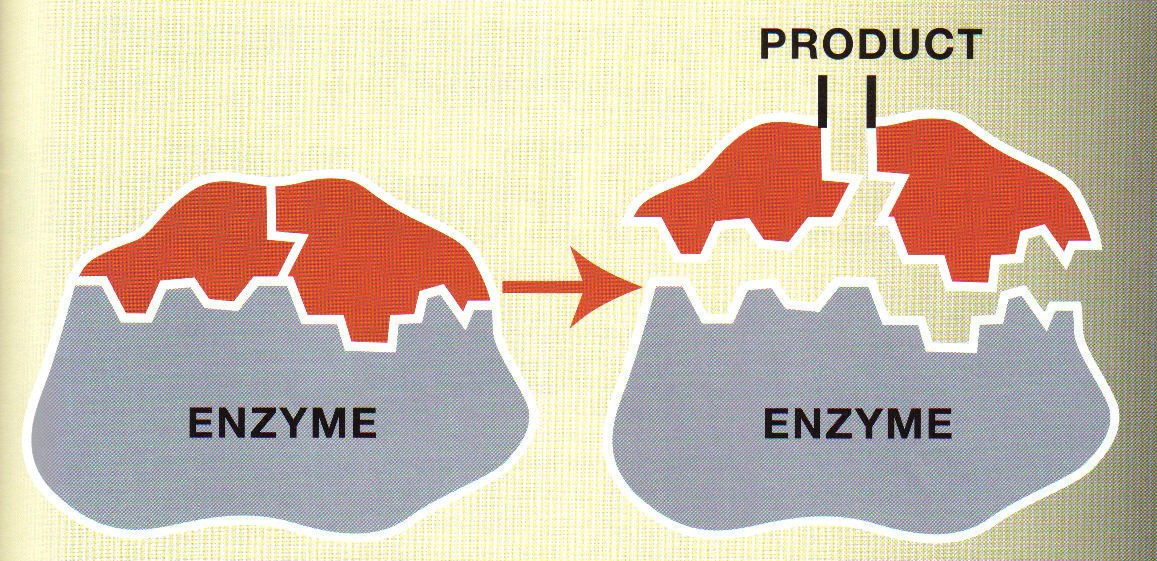
Enzymes are considered to be _________ because they are made of amino acids.
Lipids
Carbohydrate
Protein
Nucleic Acid
Enzymes act as catalysts, meaning they...
Speed up chemical reactions
Slow down chemical reactions
Reverse chemical reactions
Cancel chemical reactions

Which number in the picture represents the enzyme?
1
2
3
4
The "lock and key hypothesis" attempts to explain the mechanism of?
Vacuole formation
any substrate can bind to any enzyme
Sharing of electrons
Enzyme specificity (specific substrate bind to a specific enzyme)

Enzymes are biological (a)
which means they function in (b)
by lowering the (c)

Letter D...
active site
enzyme
substrate
products
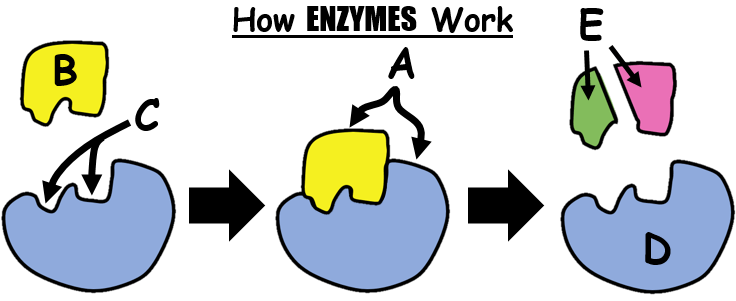
Letter B...
active site
enzyme
substrate
products
Letter c...
active site
enzyme
substrate
products

What is the optimum temperature for this enzyme reaction?
30o C
37o C
45o C

The enzyme amylase (green line) will work best at what pH?
pH 2
pH 7
pH 9
pH 5

Molecules that stick to the same type of molecules.
cohesion
adhesion
hydrophilic
hydrophobic

Capillary action is....
adhesion
cohesion
change in matter (heat of fusion)
both adhesion and cohesion
What is the function of chloroplasts in plant cells?
Protein synthesis
Storing water
Photosynthesis
Cell division
These two organelles are responsible for the capture and release of energy. Match the components to the correct organelle.


Convert solar energy to chemical energy (food)
Convert chemical energy in food to Energy (ATPs)
Photosynthesis
Cellular Respiration
Plants + Animal cells
Plant cells
These organelles are involved in the synthesis of protein. Determine the differences among these organelles.
Site of protein synthesis
Two organelles. One called rough because it contains ribosomes.
Modifies, sorts, and package proteins or lipid for storage or transport out of the cell

Red dots


Which organelle is responsible for storing a cells food, waste and water?
vacuole
cytoplasm
mitochondria
lysosomes
Which organelle is responsible for breaking down worn out cells or worn out cell parts?
cell wall
endoplasmic reticulum
golgi bodies
lysosomes
Which organelle is responsible for holding the cells material and controlling what goes in and out of the cell?
cytoplasm
cell membrane
cell wall
lysosomes
What is found only in plant cells, protects the cell, and gives it shape?
cell membrane
cell wall
cytoplasm
lysosomes
Which organelle is the "power house" of the cell?
nucleus
golgi apparatus
protein
mitochondria
Which organelle is the "brains" of the cell?
mitochondria
nucleus
protein
cytoplasm


gel-like substance where all other organelles are found
it is constantly moving and some cellular reactions can occur here
cytoplasm
vacuole
chloroplast
golgi body

detroys worn-out or damaged organelles
gets rid of waste materials and protects the cell from foreign invaders
found mostly in animal cells
lysosome
vacuole
cell wall
golgi body


when some molecules can cross the membrane while others cannot.
Cell Transport:
Match the following
Selective permeability
Choosing what comes in and out
Passive transport
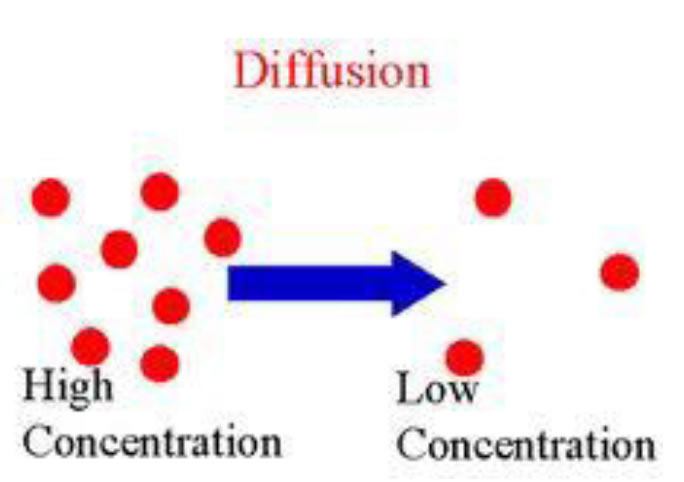
No energy used to move molecules
Active transport
Uses energy to move molecules

Picture of active transport

Picture of passive transport

This is a
cell
cholesterol
lipid
phospholipid

The arrow is pointing to the
hydrophobic head
hydrophilic head
hydrophobic tail
hydrophilic tail

The arrow is pointing to the
hydrophilic head
hydrophobic head
hydrophilic tail
hydrophobic tail

The _______________ of the phospholipids in a cell membrane face inward towards each other.
heads
tails
stems
sticks
Click on the polar hydrophilic head of this phospholipid
Click on the non-polar hydrophobic tails of this phospholipid
Determine if the following discrption is active or passive transport
Requires Energy (ATPs)
No Energy
Goes against the concentration gradient (Low concentration to high concentration)
Go with the concentration gradient High concentration to low concentration)


Simple / Facilitated diffusion

What is NOT a part of cell theory:
all cells come from existing cells
all cells have a nucleus
all living things are made of cells
cells are basic unit of structure and function in living things

The cell theory applies to all organisms, including the five shown. Which of the following statements describes how these organisms are an example of the cell theory?
The organisms have cells that lack a nucleus.
The organisms are made of one or more cells.
The cells of the organisms undergo photosynthesis.
The cells of the organisms are identical to each other.
What is the purpose of cellular respiration?
Cellular energy
Oxygen
Sugar
Protein
What is the sugar that carbohydrates are broken down into?
sucrose
maltose
glucose
lactose
What is the energy molecule produced by cellular respiration?
DNA
ATP
RNA
ADP
What is the process of splitting a glucose molecule into 2 pyruvates (pyruvic acid) called?
synthesis
denaturalization
glycolysis
dissolving
The two types of fermentation are alcohol and _____________ acid fermentation.
lactic
sulfuric
hydrochloric
acetic
What is the correct equation for cellular respiration?
6O2 + C6H12O6 -> 6CO2 + 6H2O + Energy
6O2 + C6H12O6 + Energy -> 6CO2 + 6H2O
6CO2 + 6H2O -> 6O2 + C6H12O6 + Energy
6CO2 + 6H2O + Energy -> 6O2 + C6H12O6
This process releases chemical energy from sugars and other carbon-based molecules to make ATP when oxygen is present.
photosynthesis
light-independent reaction
cellular respiration
light-dependent reaction

The following diagram shows the relationship between photosynthesis and respiration. What products of photosynthesis are the starting materials for cellular respiration?
glucose and oxygen
heat energy and ATP
carbon dioxide and water
light energy and chlorophyll

Which pigment captures/absorbs sunlight?
Stomata
Chlorophyll
Chloroplast
Phloem
What are the products of photosynthesis?
water and carbon dioxide
oxygen and glucose
oxygen and carbon dioxide
oxygen and water
Choose the statement that best describes the light reaction.
It converts CO2 to a sugar molecule
It converts light energy to chemical energy of ATP and NADPH
It takes place in the stroma
Where do light reactions take place?
Stroma
Thylakoid
Cytoplasm
Where does the light-independent reaction take place?
Matrix
Stroma
Thylakoid membrane
Cytoplasm
Label the Diagram of the first stage of aerobic cellular respiration:
Glucose
2 Pyruvate
Glycolysis
2 ATP
Label the Diagram of the second and third stage of aerobic cellular respiration:
32-34 ATP
Krebs Cycle
Electron Transport Chain
2 ATP

How many ATP are produced in aerobic respiration?
2
33
4
36
Organize these options into the right categories
Determine if the following is photosynthesis or cellular respiration

Make food

Make Energy


Organize these options into the right categories
Determine if the following is photosynthesis or cellular respiration


Uses sunlight
Uses Glucose
Make ATPs
Make Glucose
Glycolysis, Kerb cycle, & Electron transport chain
Light dependent and light independent reaction
NADH and FADH2
NADPH and NADP+
What is the most important part of Interphase that leads to Genetic continuity throughout all of cell division?
G1-phase
(Normal cell growth)
G2-phase
(Growth in preparation for division)
M-phase
(Cellular division)
S-phase
(Cell replicates its DNA)
Why do cells go through cell division?
Mitosis is the division of (a) and Cytokinesis is the division of (b) which starts and ends with how many cells? (c)

What is the one main difference between binary fission and mitosis? What is a similarity?
The main difference is that binary fission occurs in prokaryotic cells, while mitosis occurs in eukaryotic cells.
A similarity is that they both involve cell division.
Somatic cells
Gametes
Skin, hair, & muscle cells
Eggs & Sperms
Make diploid cells
Make haploid cells
Ends with 2 genetically identical daughter cells
Ends with 4 unique daughter cells
1 cycle of cell division
2 cycle of cell division
How is haploid cell different from diploid cell?


n
2n
Eggs and Sperms
Body cells
cell contains only one set of chromosomes
cell contains two sets of chromosomes
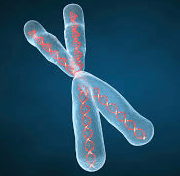
One half of a chromosome is a
sister chromatid
How do we write diploid cell and how do we write haploid cell?
n for diploid cell and 2n for haploid cell
2 for diploid cell and 1 for haploid cell
2n for diploid cell and n for haploid cell
2 for diploid cell and 2 for haploid cell

Which stage of Mitosis is being shown and described:
Chromosomes line up in the middle.
interphase
prophase
metaphase
anaphase

Which stage of Mitosis is being shown and described:
Chromosome pairs are split and tugged to opposite ends of the cell
Prophase
Metaphase
Anaphase
Telophase
Crossing over occurs during
Prophase I
Prophase II
Metaphase I
Anaphase II
Telophase II
Organize these options into the right categories
Determine the phases of Mitosis
Chromatin condenses and becomes visible as distinct chromosomes. Each chromosome consists of two
Chromosomes align at the cell's equator, known as the metaphase plate. The spindle fibers fr
Chrosomes seperated and unwind back to chromatin. Nuclear envelopes re-form.
Sister chromatids are pulled apart. Chromatid pulled to opposite poles of the cell.


Not technically part of mitosis but occurs simultaneously with it.
This is the final step where the cell's cytoplasm and organelles are divided between the two daughter cells.
What are the three parts of cell theory?
1. All living organisms are composed of cells.
2. The cell is the basic unit of life.
3. All cells arise from pre-existing cells.
1. All living organisms are composed of molecules.
2. The cell is the basic unit of matter.
3. All cells arise from inorganic matter.
1. All living organisms are composed of atoms.
2. The cell is the largest unit of life.
3. All cells arise from non-living matter.
1. All living organisms are composed of tissues.
2. The cell is the smallest unit of life.
3. All cells arise from dead cells.

Alleles
Homozygous
DNA
Genetics
Genotype: TT
homozygous dominant
homozygous recessive
heterozygous dominant
Genotype: Aa
homozygous dominant
homozygous recessive
heterozygous dominant

Cross 2 heterozygous tall pea plants. Tall (T) is dominant to short (t). What fraction of the offspring do you predict will be tall?
1/4
2/4
3/4
4/4
Which of the following is a PHENOTYPE for flower color in pea plants?
Pp
PP
Purple

In pea plants, tall (T) is dominant over short (t). If two heterozygous tall pea plants are bred, what is the expected genotypic ratio of their offspring?
3 tall : 1 short
1 TT : 2 Tt : 1 tt

Mendel's Law of Segregation is shown on the outside of a Punnett Square. According to this law, the genes from each parent _____ when gametes are formed.
combine as one
separate
mutliply

In humans, freckles (F) on the skin are dominant to no freckles (f). If a heterozygous parent and a recessive parent conceive, what is the chances of having a child with NO FRECKLES?
0%
50%
100%

In guinea pigs, the allele for a rough coat (R) is dominant over the allele for a smooth coat (r). A homozygous dominant guinea pig and a homozygous recessive guinea pig are bred.
What would be the phenotype of the offspring?
100% rough coat
100% smooth coat
50% rough 50% smooth
Match the following
BB
Homozygous dominant
Bb
Heterozygous
bb
Homozygous recessive
BB or bb
Homozygous

What would the phenotype of the offspring be if two plants had flower colors (red and white) that showed for codominance?

What is the genotypic ratio for this cross?
1:1:1:1
3:1
1:2:1
2:2:1
The blending of two traits is known as ---
incomplete dominance
codominance
A condition in which both alleles for a gene are expressed so that both traits are visible is known as ---
Codominance
Incomplete dominance

What type of inheritance pattern is shown here?
Codominance
Incomplete dominance

A calico cat shows both the traits for orange fur and black fur. What kind of allele expression is this?
Incomplete dominance
Codominance
Where is DNA located in the cell?
The nucleus is the "control center" because it controls all cell activities, including cell reproduction and gene expression, that can be passed on. What biological molecule allows the control center (nucelus) to do this?
Chromosomes in the nucleus are microscopic, threadlike strands composed of biological chemicals known as DNA. What does DNA stand for?
Ribonucleic acid
Oxyribonucleic acid
Deoxyribonucleic protein
In simplest terms, how does DNA regulate cellular activities?
DNA controls cellular activities by providing instructions for protein production (synthesis). Why is protein so essential to life? (Pick the best answer)
Proteins are the building blocks of cellular energy.
Proteins make up DNA which is essential for life.
Proteins perform a wide range of functions in the body. Forming the body structures (tissues) and controlling all biological chemical processes (enzymes)
Proteins play a crucial role in the immune system.
What is a gene, and how is it related to chromosomal (DNA)?
A process in which DNA has the unique ability to make an exact copy of itself.
Replication
Translation
Transcription
Protein Synthesis

What is the role of mRNA
Carry an amino acid to the ribosome
Copy the instructions from DNA and carry it out of the nucleus
Make up the ribosomes
Where does Transcription occur
Nucleus
Ribosome
ER
Mitochondria
What is the end product of translation?
mRNA that can leave the nucleus
Amino acid chain
monosaccharide chain
Anticodon
What is an anticodon?
rRNA
an amino acid
Three nucleotide sequence found on mRNA
Three nucleotide sequence found on tRNA
In what process is mRNA synthesized?
Transcription
Translation
DNA Replication
Mitosis
Why must transcription occur in the nucleus?
because DNA can't leave the nucleus
because ribosomes are in the nucleus
because DNA polymerase is found there
because helicase unzips the DNA
Which organelle contains rRNA and reads the mRNA to synthesize a protein?
Ribosome
Nucleus
Cytoplasm
Nucleotide
How many nucleotides code for 1 amino acid?
1
2
3
4
In RNA the base T is replaced with
U
G
C
A
What is the order for Protein Synthesis?
Transcription -> Translation -> Protein
Translation - > Transcription -> Protein
Protein -> Transcription -> Translation
Translation -> Protein -> Transcription
A chain of amino acids is called
Polymer chain
Polypeptide Chain
RNA chain
Protein Synthsis Chain


