
 Worksheets
MSA1-1st Semester Final-Biology 2023
Total questions: 80
Worksheet time: 1hrs 19mins
Energy-carrying biological molecule, which, when broke down, drives cellular activities.
NADP+
Rubisco
Adenosine Triphosphate
Pigment
The scientific study of heredity.
Genetics
Biotechnology
Plate tectonics
Mendelography

The diagram shows how the temperature change is measured when magnesium powder reacts with dilute hydrochloric acid. Thermometer reading before adding magnesium powder = 20.6 °C Thermometer reading after adding magnesium powder = 32.4 °C Which statement is correct?
The reaction is endothermic and gives out heat.
The reaction is endothermic and takes in heat.
The reaction is exothermic and gives out heat.
The reaction is exothermic and takes in heat.
What happens during all endothermic changes?
A gas is produced.
Solids melt.
The temperature decreases
There is a colour change.


What is a compound?
A molecule that is formed from two different elements/atoms.
A molecule that is formed from two or more of the same element/atom.
A tiny atom that makes up an atom.
The center of an atom that is formed by neutrons. protons, and electrons.
The positive parts of an atom are


A ______________ is a large molecule.
Micromolecule
Polymer
Amino Acid
Macromolecule

a thick layer of earth below the surface of polar regions that remains below freezing point throughout the year
Living the dream
Permafrost
LAST
Is the catabolic pathway in which organic molecules are broken down to release energy for use by a cell.
Cellular respiration
Thermodynamics
Photosynthesis
1.What does the first law of thermodynamics state?
entropy increases
energy is conserved
metabolism decreases
chemicals are produced

Organisms that obtain their organic material from other organisms
Consumers
Autotrophs
Producers
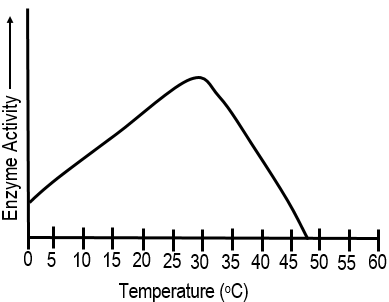
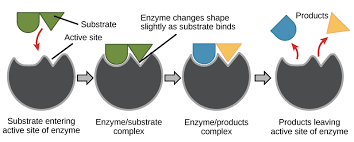
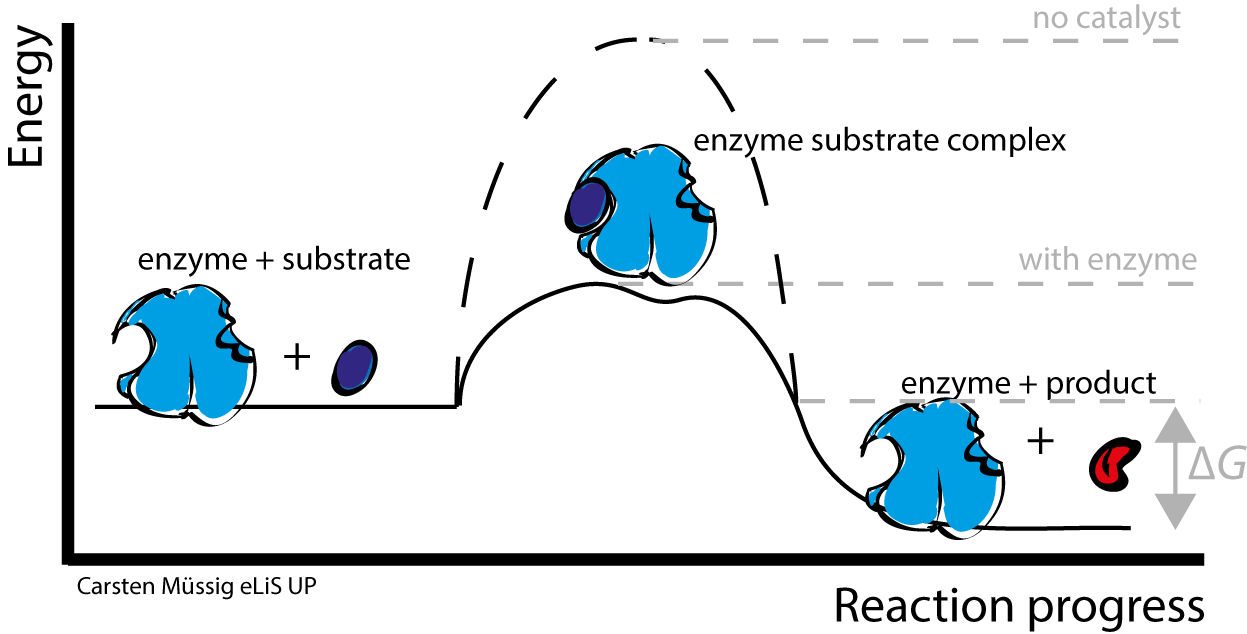

Looking at the graph, how would you know which reaction took place with the help of an enzyme?
The peak for the activation energy is lower.
The peak for the activation energy is higher.
There is less energy in the products than the reactants.
There is no way to really tell which line on the graph shows a reaction that takes place with a reaction.
Once an enzyme has helped a reaction take place, it can then
be reused for another reaction with the same reactants.
be broken down.
be stored in the cell until it is needed again.
be used to help different reactants go through a reaction.
The energy needed to start a reaction is called the
activation energy
starting energy
promoting energy
reacting energy
A process that changes one set of chemicals into a new set of chemicals.
chemical reaction
physical reaction
synthetic reaction
chemical production
protein
compounds made of amino acids.
complex macromolecules that transmit and store genetic information.
Compound composed of a ratio of 1 carbon :2 hydrogen :1 oxygen
molecules made mostly of carbon and hydrogen that make up fats, oils, and waxes.
enzyme
special proteins that are biological catalysts
the minimum amount of energy needed for reactants to form products
The specific location where a substrate binds on an enzyme.
process by which atoms in substances are reorganized into different substances.
Which of the following in not a compound?
H2O
O
CO2
NaCl
What is formed when substances combine in any proportions without a chemical reaction?
An element
An atom
A chemical compund
A mixture

A water molecule (H2O) is formed when hydrogen (H) and oxygen (O) atoms are sharing electrons in, resulting in
a covalent bond
an ionic bond
an element
an atom

Covalent bonds form when
atoms share electrons
atoms transfer electrons
atoms share protons
atoms transfer protons
If an element has an atomic # of 3 and the # of neutrons is 4, what is the # of electrons?
3
4
7
10
How can you find the # of neutrons in an atom?
protons + electrons
atomic mass + protons
atomic # - protons
atomic mass - atomic #
Formed when two or more elements are joined chemically
element
proton
compound
electron
The end result of a chemical reaction
reactants
electrons
atomic mass
products
Made of one kind of atom
element
compound
product
Basic unit of matter
compound
atom
proton
electron
Particles that are smaller than an atom
compounds
subatomic particles
products
reactants
Any natural resource available in limited amounts or replaced extremely slowly by natural processes is called:
Nonrenewable Resources
Renewable Resources
Endemic Resources
Natural Resources
Any resource replaced by natural processes more quickly than it is consumed is a:
Nonrenewable Resource
Renewable Resource
Endemic Resource
Natural Resource

What is the variety of ecosystems that are present in the biosphere?
species diversity
genetic diversity
ecosystem diversity
biodiversity


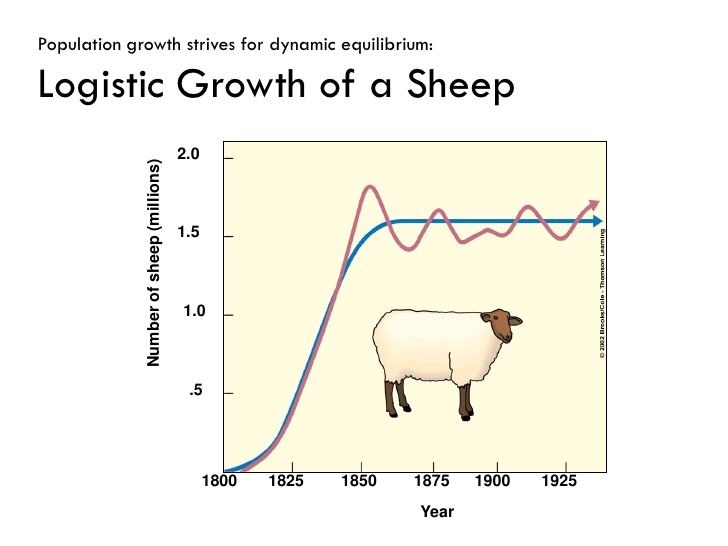
What is happening at the 'A' on the graph?
the population overshoots above the carrying capacity
the population stops growing
growth begins to slow down due to limited resources
growth is speeding up due to an abundance of resources


the condition of the atmosphere at a specific place and time
weather
latitude
climate
tolerance

Zone labeled "B" in this diagram.
Intertidal zone
Photic zone
Aphotic zone
Benthic zone
Abyssal zone

What range is "A" referring to?
tolerance
exponential
limiting
optimal
logistical


If a keystone species is removed from an ecosystem,
abiotic and biotic factors can be affected
only biotic factors can be affected
only abiotic factors can be affected
neither abiotic nor biotic factors can be affected
Which process is part of the hydrologic cycle?
nitrification
evaporation
decomposition
ammonification
Bacteria are important in the nitrogen cycle because they
help convert nitrogen into a form that organisms can use
respire, returning carbon dioxide into the atmosphere
decay and eventually form fossil fuels
produce sugars that plants can use

Which two processes in the carbon cycle are also parts of the oxygen cycle?
combustion and respiration
photosynthesis and decay
combustion and decay
photosynthesis and respiration
Organism that has an unusually large effect on its ecosystem.
top predator
tertiary consumer
producer
keystone species
The temperature, rainfall, and soil/sand in an ecosystem would all qualify as
a whole ecosystem
abiotic factors
biotic factors
living things
A model that shows a single sequence of feeding relationships is called a
food web
food chain
feeding chain
trophic level

What process regulates an organism’s internal
conditions and keeps them stable?
adaptation
equilibrium
homeostasis
metabolism

