wayground logo

Free Printable Worksheets

Font size

S
M
L
XL
Worksheets

Semester 1 Test Biology

Total questions: 65

Worksheet time: 34mins

Name
Class
Date
1.
What variable is purposely changed in an experiment?
a)
Independent variable
b)
Dependent variable
c)
Control
d)
Qualitative variable
2.
What is the name of the group that receives no changes in an experiment?
a)
The variable group
b)
Control group
c)
Test group
d)

Experimental group

3.

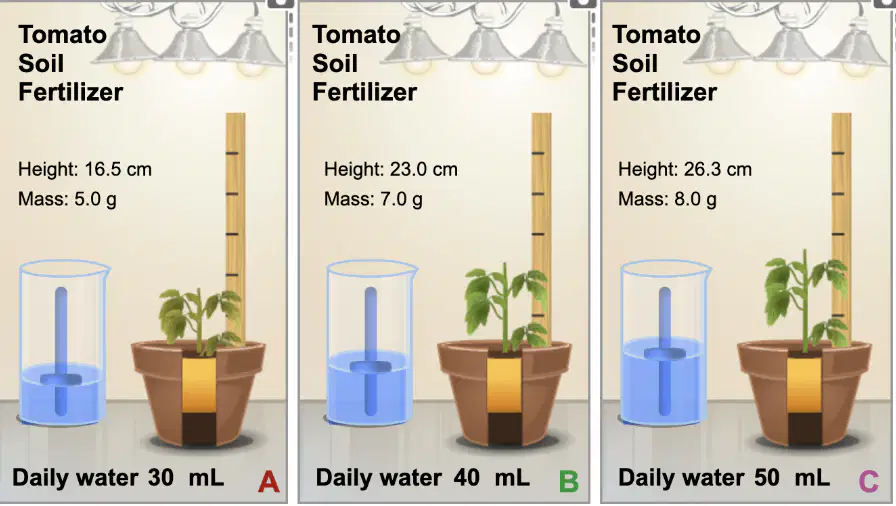
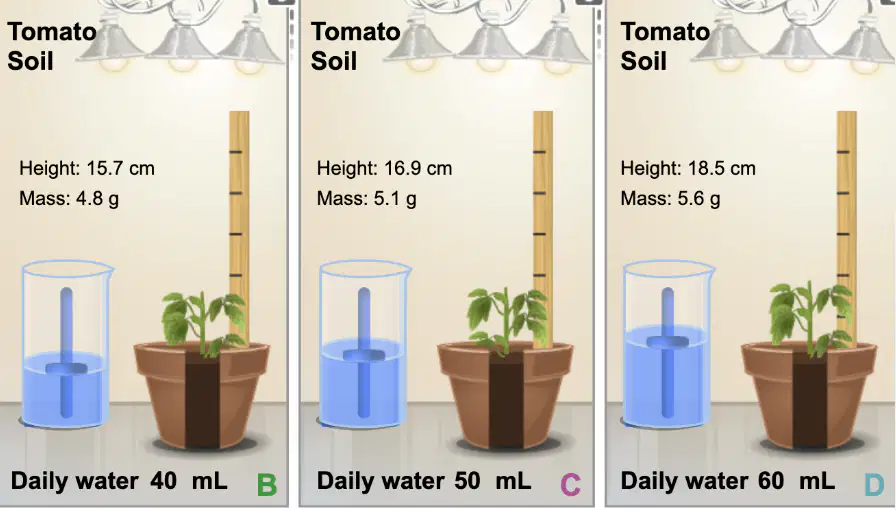
In the picture shown here, the type of plant, fertilizer, and number of lights are all kept the same. What word describes variables that are the same in all of the groups?
a)
Constants
b)
Dependent variables
c)
Independent variables
d)
Experimental groups
4.

In the picture shown here, the amount of water each plant receives is changed to see how it affects plant height. The height of the plant is being measured and depends on how much water is given. The height of the plant would be which variable?
a)
Independent variable
b)
Dependent variable
c)
Control group
d)
Experimental group
5.
What word means the body trying to keep conditions stable or normal? Example: Sweating when you are too hot or shivering when you are cold helps keep your body temperature stable.
a)
Thermostatic control
b)
Mitosis
c)
Control abilities
d)
Homeostasis
6.
Which of the following organisms is an example of a producer?
a)
Cow
b)
Frog
c)
Snake
d)
Grass
7.
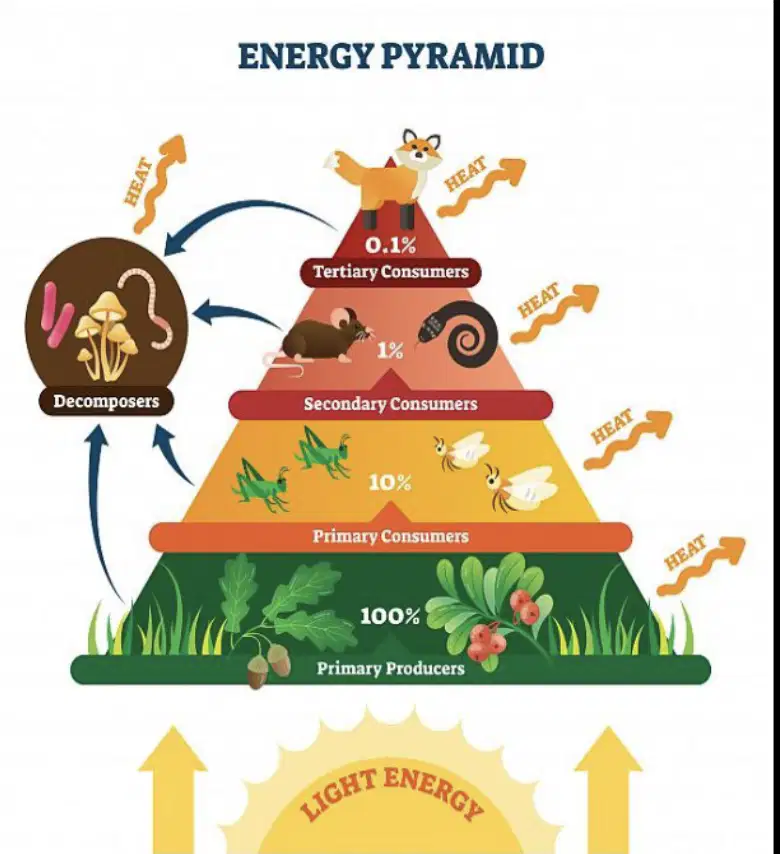
How much energy is transferred between each trophic level?
a)
100%
b)
60%
c)
10%
d)
5%
8.
Which of the following is an example of an biotic factor in an ecosystem?
a)
Bird
b)
Soil
c)
Water
d)
Atmosphere
9.

Rabbits main predators are hawks. If the hawk population increases, what would you expect to happen to the rabbit population?

a)
It would stay the same
b)
It would decline
c)
It would increase
d)
There is not enough information to answer the question.
10.

What happens to the majority of the energy obtained from food?

a)

Released as heat

b)
Used to make ATP
c)
Turns into fat/muscle
d)
Disappears into nothing
11.
In any food chain, what level has the most organisms in it?
a)
Herbivores
b)
Consumers
c)
Carnivores
d)
Producers
12.

Which of the following organisms would be classified as a tertiary consumer?

a)
Mushroom
b)
Tree
c)
Bee
d)
Wolf
13.
Moose eat bushes and trees that animals like birds use for their homes. If the moose population decreased, what would happen to the population of birds?
a)
The population would increase.
b)
The population would decrease.
c)
The population would remain the same.
d)
Not enough information to answer the question.
14.
Large molecules like proteins are made of smaller building blocks. What are these small building blocks called?
a)
Polymers
b)
Monomers
c)
Enzymes
d)
Nucleic acids
15.

Match the following monomers to their polymers

a)

Monosaccharides

1.

Carbohydrate

b)

Amino Acids

2.

Protein

c)

Glycerol & Fatty Acid

3.

Lipid

d)

Nucleotides

4.

Nucleic Acid

16.
These biomolecules carry genetic information, examples include DNA and RNA.
a)
Nucleic acids
b)
Carbohydrates
c)
Proteins
d)

Lipids

17.
These biomolecules are made of amino acids and include enzymes or structural polymers like actin and myosin.
a)
Nucleic acids
b)
Carbohydrates
c)
Proteins
d)

Lipids

18.
Examples of these biomolecules include glucose, cellulose, and starch. They store energy.
a)
Nucleic acids
b)
Carbohydrates
c)
Proteins
d)

Lipids

19.
These biomolecules are made of fatty acids and glycerol. They store energy or build membranes. Examples include triglycerides and waxes.
a)
Nucleic acids
b)
Carbohydrates
c)
Proteins
d)

Lipids

20.
A type of protein that speeds up chemical reactions.
a)
Buffer
b)
Golgi body
c)
Photosystem
d)
Enzyme
21.
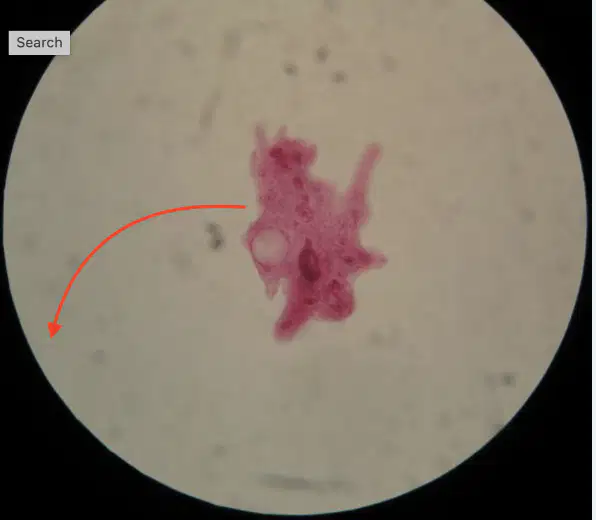
When you look through the microscope, you see an organism moving to the left and then down. How is the organism actually moving?
a)
To the right and up
b)
To the right and down
c)
To the left and up
d)
To the left and down
22.
What is the correct order of the objectives you should use on a microscope? Answers are listed from first to last.
a)
Blue (40x), Red (4x), Yellow (10x)
b)
Red (4x), Yellow (10x), Blue (40x)
c)
Red (4x), Blue (40x), Yellow (10x)
d)
Blue (40x), Yellow (10x), Red (4x)
23.
Which part of a light microscope is used to adjust the amount of light passing through the specimen?
a)
Stage
b)
Eyepiece
c)
Diaphragm
d)
Coarse adjustment knob
24.
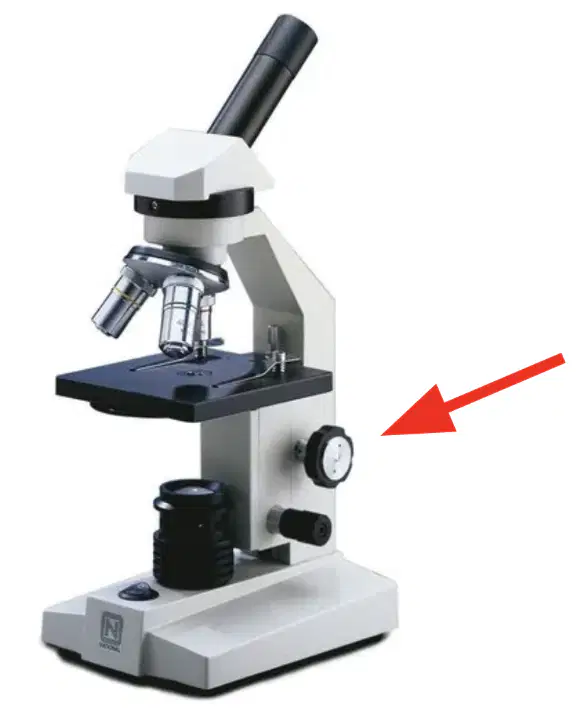
What is this part of the microscope (larger knob for bigger adjustments)?
a)
Fine adjustment
b)
Coarse adjustment
c)
Stage
d)
Arm
25.
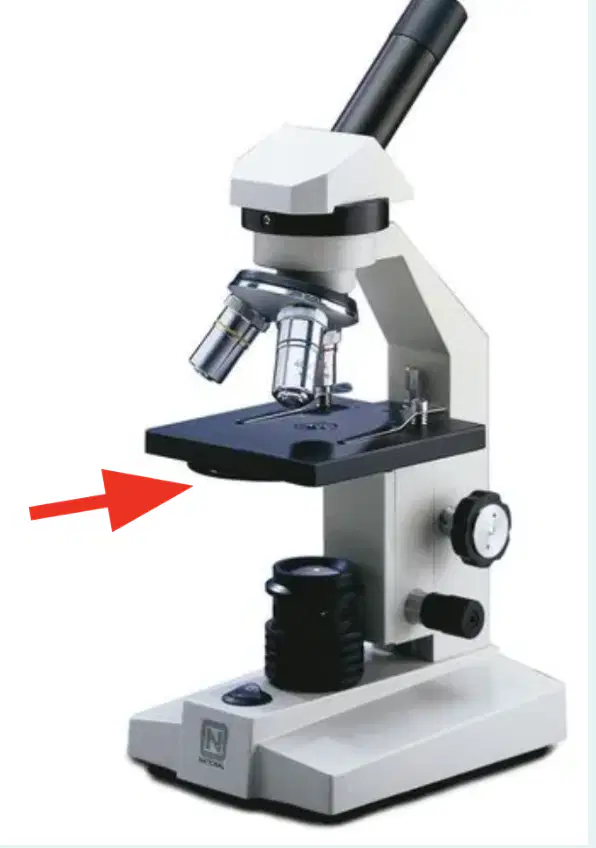
The diaphragm is located under the stage as seen on the diagram. What is the purpose of the diaphragm?
a)
To control how much light goes through the specimen
b)
To hold the slide in place
c)
To support the microscope
d)
To magnify the image.
26.
What is the part of the microscope that you look through?
a)
Illuminator
b)
Eyepiece
c)
Stage
d)
Objective lens
27.
What is this part of the microscope?
a)
Stage
b)
Arm
c)
Coarse adjustment
d)
Fine adjustment
28.
What is the total magnification when using the 10x eyepiece and the 40x objective lens (blue)?
a)
4X
b)
400X
c)
4,000X
d)
40,000X
29.
What is the primary difference between passive and active transport in cells?
a)
Passive transport moves substances from low to high concentration
b)
Passive transport requires energy, while active transport does not
c)
Active transport moves substances from high to low concentration without energy
d)
Passive transport does not require energy, while active transport does
30.
How do molecules move during passive transport?
a)
High to low concentration
b)
Low to high concentration
c)
From the nucleus to the mitochondria
d)
Molecules cannot move during passive transport, only active
31.

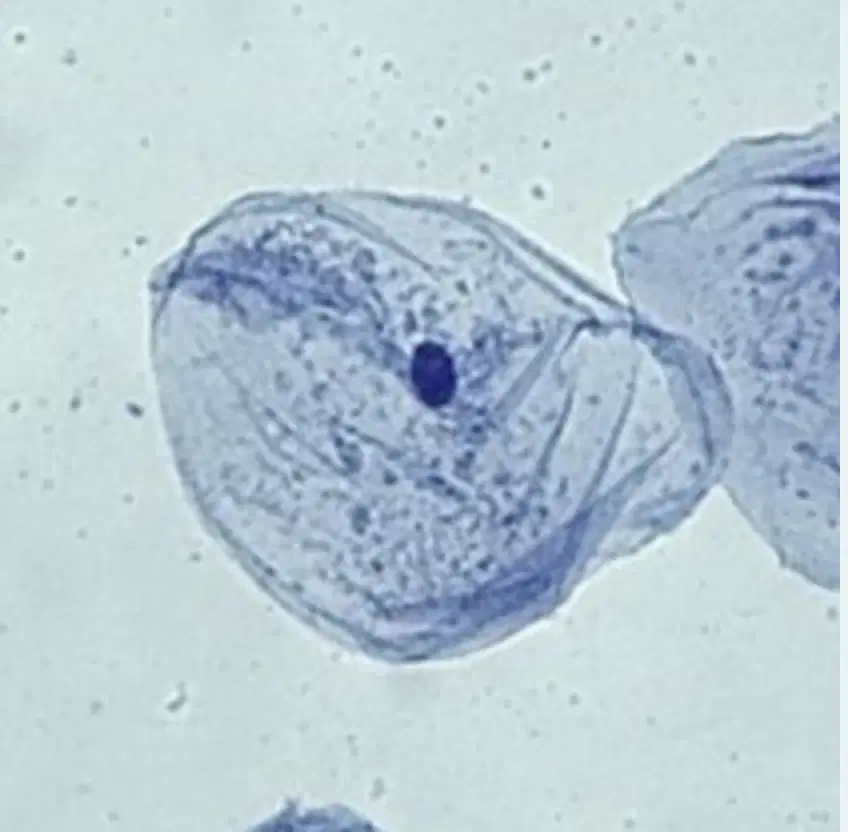
Is this cell a eukaryote or a prokaryote?

a)
Prokaryotic
b)
Eukaryotic
32.
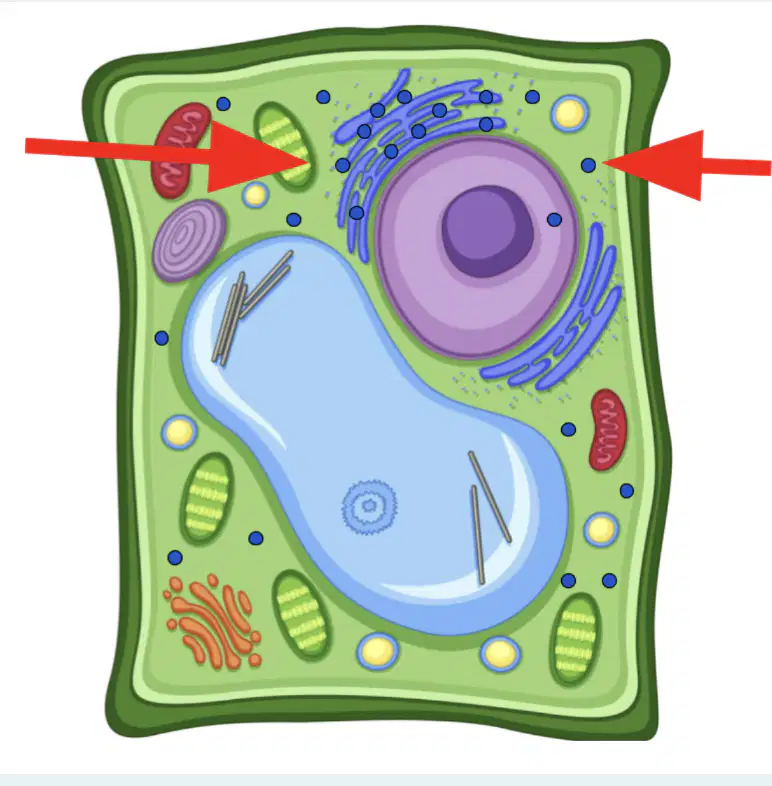
What is the function of the mitochondria?
a)
To make glucose by performing photosynthesis
b)
To store materials such as water and starch
c)
To make ATP (energy) by breaking down glucose
d)
To make proteins for the cell
33.
Which type of passive transport allows water to move through a selectively permeable membrane?
a)
Endocytosis
b)
Solute pump
c)
Osmosis
d)
Exocytosis
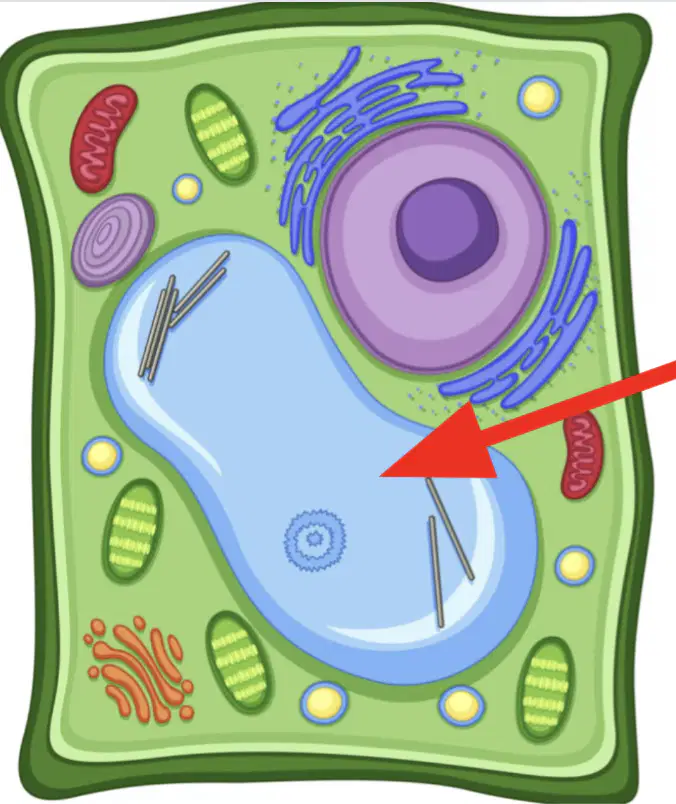
34.

What is the job of the cell membrane?
a)
To package, process and secrete proteins
b)
To breakdown old cell and waste products
c)
To house and protect the DNA
d)
To control what enters or exits the cell
35.
What are two structures found in plant cells that are not found in animal cells?
a)
Cell memebrane and the nucleus
b)
Cytoplasm and mitochondria
c)
Cell wall and chloroplast
d)
Ribosomes and Cytoplasm
36.
What term describes complex cells with a nucleus, such as plant or animal cells?
a)
Osmosis
b)
Unicellular
c)
Prokaryotic
d)
Eukaryotic
37.
What is the name of the organelle that builds proteins and can be found in the cytoplasm or attached to the rough ER?
a)
Nucleus
b)
Ribosomes
c)
Golgi body
d)
Lysosomes
38.
What cell organelle stores materials such as water and starch and are especially large in plant cells?
a)
Lysosomes
b)
Nucelus
c)
Ribosome
d)
Vacuole
39.
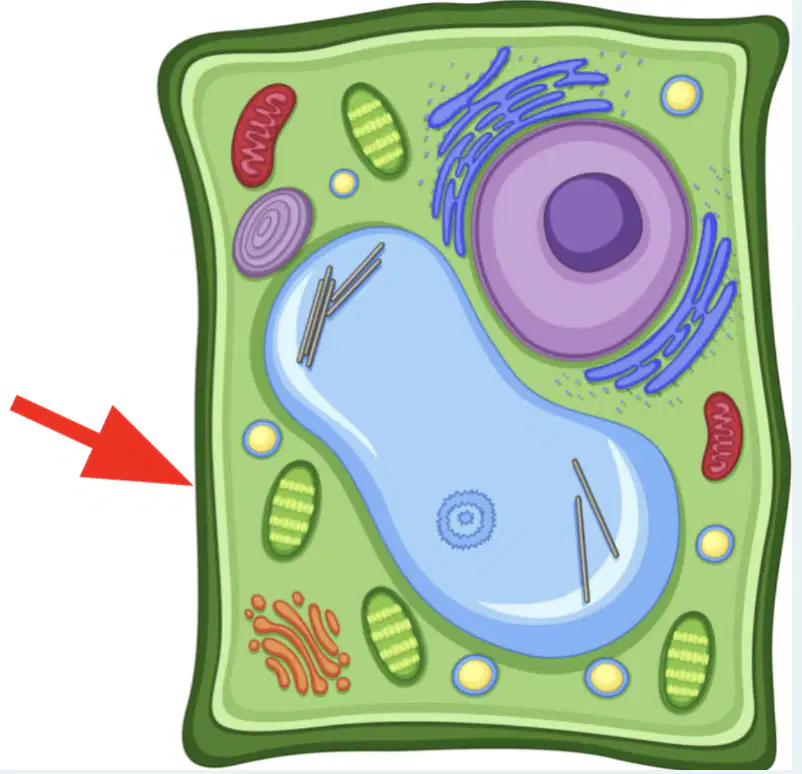
What cell organelle is found on the outside of plant cells and give the cell support and protection?
a)
Chloroplast
b)
Cell wall
c)
Cell memebrane
d)
Mitochondria
40.
What cell organelle is found in plants and performs photosynthesis?
a)
Mitochondria
b)
Chloroplast
c)
Nucleus
d)
Ribosome
41.
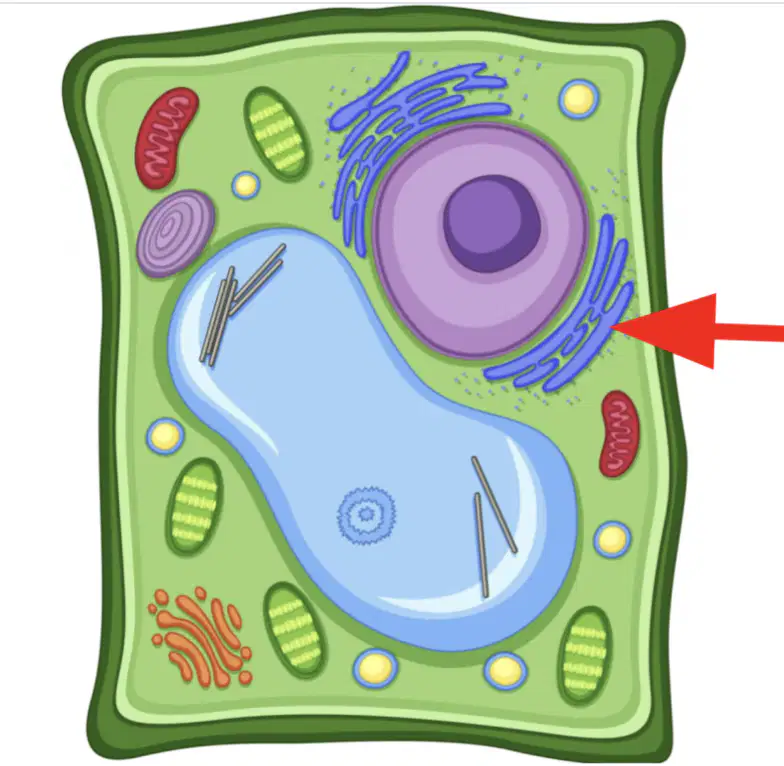
What is the name of the organelle located next to the nucleus that can build proteins and lipids?
a)
Ribosome
b)
Nucelus
c)
Endoplasmic reticulum
d)
Cytoplasm
42.
Energy is stored in ATP when
a)
bonds are formed
b)
bonds are broken
43.
Green pigment found in plants that absorbs light energy.
a)
Glucose
b)
Chloropyll
c)
Vacuole
d)
Chloroplast
44.
Photosynthesis can be divided into two main parts: ____________________ and the _________________.
a)
Krebs cycle, Calvin cycle
b)
Light-dependent reactions, Glycolysis
c)
Light-dependent reactions, Calvin cycle.
45.
Which of the following is the correct equation for photosynthesis?
a)

C6H12O6 + 6 CO2 → 6 O2 + 6 H2O

b)

6 O2 + 6 H2O → 6 CO2 + C6H12O6

c)

6 CO2 + 6 H2O → C6H12O6 + 6 O2

d)

C6H12O6 + 6 O2 → 6 CO2 + 6 H2O

46.
The light-dependent reaction produces __________ for the Calvin cycle, the second step of photosynthesis.
a)
Water
b)
ATP and NADPH
c)
Carbon dioxide
d)
Glucose
47.
The oxygen gas produced in photosynthesis is made as a result of the
a)
breakdown of carbon dioxide.
b)
Calvin cycle.
c)
light-dependent reaction.
d)
Krebs Cycle.
48.
Plants and other autotrophs are able to complete
a)
both photosynthesis and cell respiration.
b)
photosynthesis only
c)
cell respiration only
49.

The purpose of the light-independent reactions or Calvin cycle is to...

a)
convert carbon dioxide into glucose.
b)
split water into oxygen and hydrogen ions.
c)
make carbon dioxide for the plant.
d)
make high-energy molecules like ATP and NADPH.
50.

Which of the following is the correct equation for cellular respiration?

a)

6 CO2 + 6 H2O → C6H12O6 + 6 O2 + ATP

b)

C6H12O6 + 6 H2O + ATP → CO2 + 6 O2

c)

CO2 + C6H12O6 → 6 H2O + 6 O2 + ATP

d)

C6H12O6 + 6 O2 → 6 CO2 + 6 H2O + ATP

51.
The main purpose of cellular respiration is to
a)
produce food for the plant.
b)
produce energy in the form of ATP.
c)
produce oxygen for the organism.
d)
produce identical daughter cells.
52.
What is the total number of ATP produced from one molecule of glucose?
a)
2
b)
4
c)
18
d)
36
53.
What waste product of cellular respiration is made in the Krebs cycle?
a)
Carbon dioxide
b)
Glucose
c)
ATP
d)
Water
54.
Which molecule accepts electrons at the end of the Electron Transport Chain in aerobic cellular respiration?
a)

NAD+

b)
Oxygen
c)
Pyruvic acid
d)
Carbon dioxide
55.
The production of energy WITHOUT oxygen is called?
a)
Aerobic respiration
b)
Photosynthesis
c)
Anaerobic respiration
d)
Electron Transport Chain
56.
Which of the following is NOT a stage of cellular respiration?
a)
Krebs Cycle
b)
Light-Independent Reaction
c)
Electron Transport Chain
d)
Glycolysis
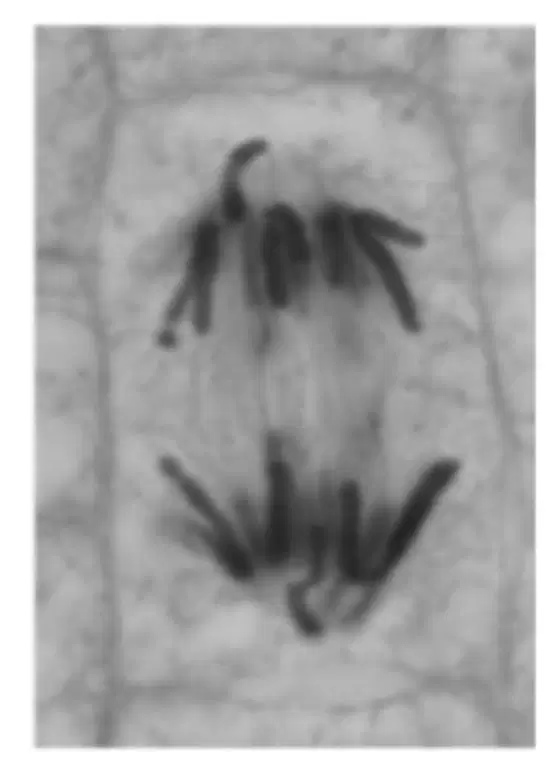
57.

In what stage of mitosis are chromosomes lined up in the middle of the cell?
a)
Prophase
b)
Metaphase
c)
Anaphase
d)
Telophase
58.
What is the phase of mitosis if chromosomes are being pulled apart to opposite ends of the cell?
a)
Prophase
b)
Metaphase
c)
Anaphase
d)
Telophase
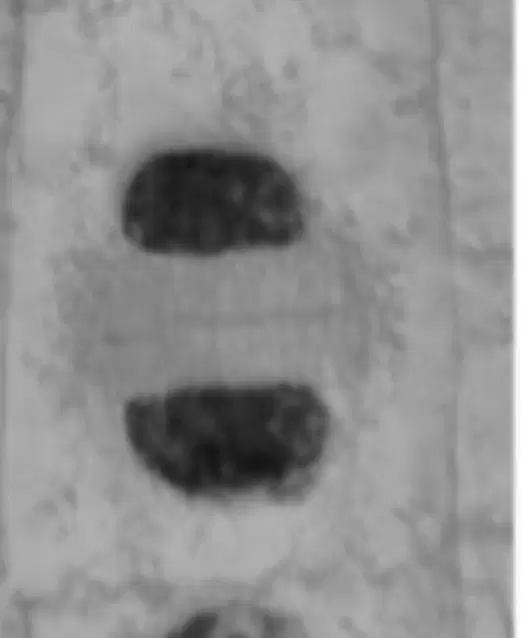
59.

What stage of mitosis involves chromosomes forming and the nucleus beginning to break down?
a)
Prophase
b)
Metaphase
c)
Anaphase
d)
Telophase
60.
What is the phase of mitosis if the two nuclei are starting to reform and the chromosomes are unwinding back into chromatin?
a)
Prophase
b)
Metaphase
c)
Anaphase
d)
Telophase
61.
What is the stage of a cell's life called if the cell is not actively dividing, but is preparing for its next division?
a)
Prophase
b)
Metaphase
c)
Anaphase
d)
Interphase
62.
What word means a cell that has a full set of chromosomes?
a)
Unicellular
b)
Multicellular
c)
Haploid
d)
Diploid
63.
What best describes cancer cells?
a)
Cells that do not have DNA
b)
Cells that are constantly dividing
c)
Cells that never divide
d)
Cells that can't copy their DNA
64.
What is chromatin?
a)
Thin and stringy DNA found in the nucleus during interphase
b)
DNA that is coiled up into an "X" shape
c)
DNA from mitochondria
d)
DNA that is in the cytoplasm
65.
What kind of cell division makes two identical body cells?
a)
Meiosis
b)
Mitosis
c)
Apoptosis
d)
Cytokinesis