
 Worksheets
IPC Finals Review Sem.1
Total questions: 83
Worksheet time: 2hrs 41mins
The variable that is being measured or observed is called the _______________. Hint: this is the variable that is the result or effect
independent variable
dependent variable
control variable
The independent variable is
The variable that you change in an investigation
The variable that you measure in an investigation
A variable that you keep the same in an investigation
A general statement that describes a patterns that are often observed in nature.
logical law
civil law
moral law
scientific law
An explanation based on many repeated observations during experiments.
conclusion
scientific law
theory
hypothesis
What is the SI unit for length?
meter
mass
length
distance
What is the SI unit for mass?
gram
kilogram
centigram
milligram
Tally of the type of pets owned by students in the class. Which graph type is most appropriate
Bar or column graph
Scatter or line graph
Pie chart
None of these
Percentage of people who have different colour eyes. Which graph type is most appropriate
Bar or column graph
Scatter or line graph
Pie chart
None of these

7,000 g = ____ kg
70
700
7
0.07

648 g = ____ mg
6,480
64,800
648,000
64.8

1000 grams = _____ kilograms
0.0001
1,000,000
10
1

1 L = _______ mL
1
10
100
1000
Convert 50 degrees Celsius to Kelvin
-223 K
323 K
50 C
273 K
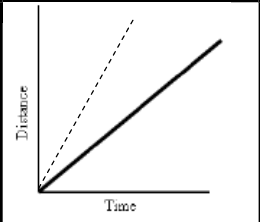
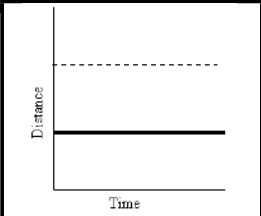


What does the term displacement mean?
The direction of motion
The distance traveled divided by time
The change of position of an object

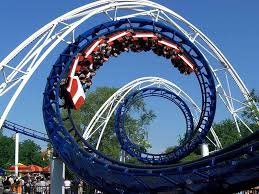
The momentum of an object depends upon the object's ___________&_____________.
size and shape
mass and speed
mass and veloctiy
mass and energy
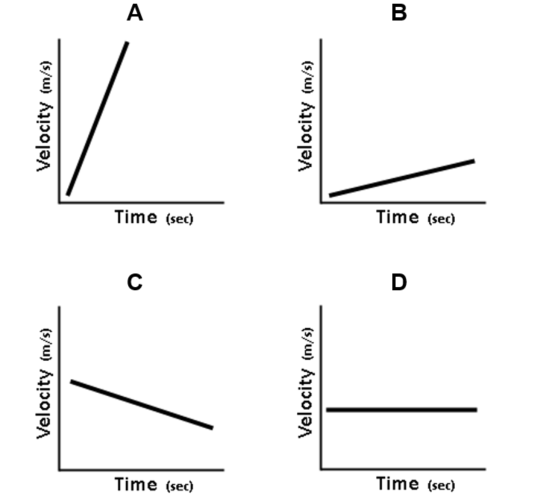

Law of Inertia
Law of Acceleration
Law of Action-Reaction
Law of Gravitation
Newton's Law of Inertia (first law) describes the motion of-
Objects that accelerate

Law of Inertia
Law of Acceleration
Law of Action - Reaction
Law of Gravitation
Law of Inertia
Law of Acceleration
Law of Action - Reaction
What is Newtons 1st law of motion?
Force = mass x acceleration
An object at rest stays at rest unless acted on an unbalanced force.
For every action there is an equal and opposite reaction
Weight=mass x gravity

An automobile you are riding in suddenly stops, but you continue to go forward.
Law of Inertia
Law of Acceleration
Law of Action - reaction

You push against a wall and the wall is pushing back on you.
Law of Inertia
Law of Acceleration
Law of Action Reaction
This type of force resists motion between two surfaces that are pressed together
mass
a push


The upward force which is exerted against a falling object is
gravity
terminal velocity
air resistance
intertia


Which type of friction is shown in the picture?
fluid
static
rolling
sliding
The sum of kinetic and potential energy is called...
sum energy
nonmechanical energy
mechanical energy
space energy
work is done when
the object you apply a force on moves
any force is applied to an object, regardless if it moves or not
the force is zero
the force and direction of motion are perpendicular


Which point has the most potential energy?
G
F
B
A
ratio of output work to input work
work
energy
efficiency
joule
energy stored in chemical bonds
gravitational potential energy
chemical potential energy
elastic potential energy
kinetic energy
does work with only one movement of the machine
simple machine
work
compound machine
joule
Energy cannot be created or destroyed
mechanical energy
efficiency
law of conservation of energy
work
Heat is also called ________ energy.
kinetic
radiant
chemical
thermal
The number of waves that pass a fixed point is the wave's ______________________.
amplitude
wavelength
frequency
wave speed

Which wave has the highest frequency?
gamma rays
infrared
ultraviolet
microwaves

Which wave has the longest wavelength?
gamma rays
infrared
ultraviolet
microwaves

Jill drops a rock in the water and creates a wave. The wave has a frequency of 2Hz and a wavelength of 4cm. What is the wave speed in cm/s?
The distance between two troughs in a wave is:
frequency
wavelength
equilibrium
period
The area of a longitudinal wave where the particles are crowded together.
compression
crest
transverse
medium
The highest point on a wave.
frequency
compression
trough
crest

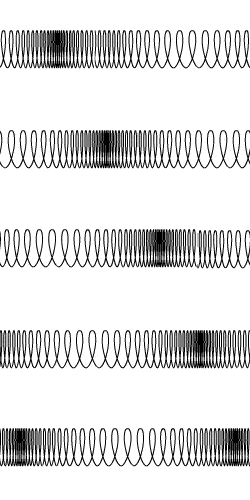
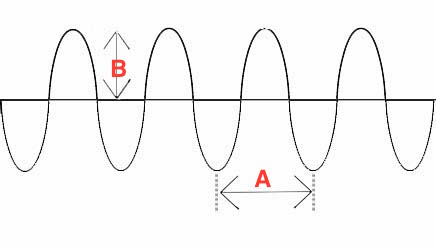
What best defines interference?
The bouncing of a wave off a boundary or object
The bending of a wave as it enters a new medium
The spreading of a wave around an obstacle
The overlapping of waves
What best defines diffraction?
The bouncing of a wave off an object or boundary
The spreading of a wave around an obstacle
The bending of a wave as it enters a new medium
The overlapping of waves

If the man throws the spear at the image, then he will miss the fish. This is because the water bends the light. What is this an example of?
Interference
Refraction
Diffraction
Reflection

What are echos an example of?
Reflection
Refraction
Diffraction
Resonance
The waves with the longest wavelengths in the electromagnetic spectrum are
Infrared rays.
radio waves
gamma rays
X-rays
The visible light spectrum ranges between
radar waves and X-rays.
television waves and infrared rays.
infrared rays and ultraviolet rays.
ultraviolet rays and gamma rays.
Select the correct order of waves on the EM Spectrum from low to high energy
Radio, Micro, Infra, Visible, Ultra, X-ray, Gamma
Gamma, X-ray, Ultra, Vis, Infra, Micro, Radio
Vis, Micro, Infra, Ultra, X-ray, Gamma, Radio
Micro, Radio, Vis, Infra, Ultra, X-ray, Gamma
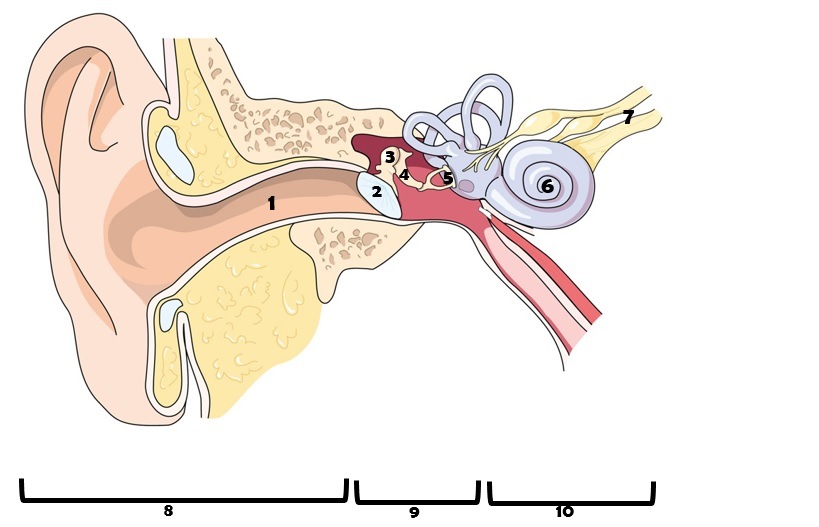
Name the part of the ear labeled as 6 in the diagram.
anvil
ear canal
stirrup
cochlea

This is the inner part of your ear. It vibrates when sound waves reach it. What is it?
eardrum
sound waves
pitch
vibrate
What is inside of the Cochlea?
Liquid, and tiny hairs
Water, and tiny hairs
Acid, and hairs
Water, and fuzz
a unit that compares the intensity of different sounds
intensity
loudness
decibel
pitch

