wayground logo

Free Printable Worksheets

Font size

S
M
L
XL
Worksheets

Astronomy review

Total questions: 61

Worksheet time: 54mins

Name
Class
Date
1.
True or False
The Earth is the center of the solar system.
a)
True
b)
False
2.
Jupiter, Saturn, Uranus, & Neptune
a)

Terrestrial planets

b)

Jovian planets

c)
Both
d)
Earth
3.

How many moons does Earth have?

a)

1

b)

2

c)

3

d)

4

4.
A ball of ice and dust with a tail of gas and dust pointing away from the sun.
a)
Asteroid
b)
Comet
c)
Moon
d)
Meteor
5.
A small object that appears as a streak of light as it enters earth's atmosphere.
a)
Asteroid
b)
Comet
c)
Moon
d)
Meteor
6.
A small rocky object orbiting the sun.
a)
Asteroid
b)
Comet
c)
Moon
d)
Meteor
7.

The gap between the orbits of Mars and Jupiter is occupied by a large number of small objects that revolve around the Sun called ____

a)

Comet

b)

ASTEROIDS

c)

I don't know

d)

None of the Above

8.

____ is a collection of gas and dust which appears as a bright ball of light in the sky with a long glowing tail when it comes close to the Sun.

a)

Comet

b)

Planet

c)

Sun

d)

All of the above

9.

How old is our Solar System?

a)

4.7 billion years old

b)

6.2 billion years old

c)

10.0 billion years old

d)

13.7 billion years old

10.

Which set of planets are all classified as terrestrial?

a)

Earth, Saturn, Mars, Jupiter

b)

Venus, Neptune, Jupiter, Mercury

c)

Mercury, Venus, Earth, Mars

d)

Jupiter, Saturn, Uranus, Neptune

11.

Which planet in our Solar System has the smallest density?

a)

Mercury

b)

Saturn

c)

Earth

d)

Jupiter

12.

Which planet in our Solar System has the hottest surface temperature?

a)

Mercury

b)

Venus

c)

Mars

d)

Saturn

13.

What is the largest planet in the solar system?

(a)  

14.

The rings of Saturn are made up of _____ particles.

a)

ice

b)

air

c)

dirt

d)

metal

15.
A student knows the mass of an object. What other variable does the student need to know to calculate the object's density?
a)
Color
b)
Weight
c)
Volume
d)
Length
16.
Earth and Venus are often called sister planets because they have similar...
a)
atmospheres
b)
size, density and composition
c)
surface temperature and pressure
d)
cloud composition and meteorology
17.

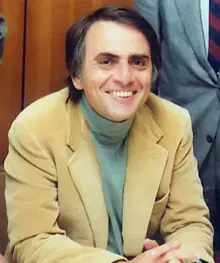
Who is the scientist on the picture?

a)

Carl Sagan

b)

Neil deGrasse Tyson

c)

Albert Einstein

18.

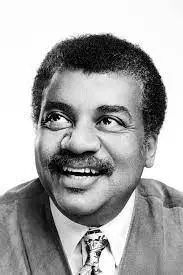
Who is the scientist on the picture?

a)

Carl Sagan

b)

Neil deGrasse Tyson

c)

Albert Einstein

19.
Some ELEMENTS can decay over time.
a)
True
b)
False
20.
Geologists use radioactive dating to determine THE ABSOLUTE AGE OF ROCKS.
a)
True
b)
False
21.
__________________is the time it takes for half of the radioactive atoms in an element to decay.
a)
dating range
b)
half life
22.
During ______________, the atoms of one element break down to form atoms of another element. 
a)
radioactive decay
b)
potassium decay
23.
The graph shows the decay of a radioactive material over time. 
How long does it take for this radioactive material to decay through 2 half-lives
a)
1 x 10years
b)
5 x 10years
c)
10 x 10years
d)
40 x 10years
24.
Because of rock samples, scientists found the composition of the moon similar to Earth's ____.
a)
mantle
b)
crust
c)
atmosphere
d)
core
25.
What are the three steps of the current explanation for the formation of the moon?
a)
impact, ejection, formation
b)
impact, explosion, creation
c)
explosion, ejection, formation
26.
All of the ______ have multiple moons.
a)
gas giants
b)
inner planets
27.
Jupiter's four largest moons as known as Galilean _____.
a)
giants
b)
satellites
c)
moons
d)
craters
28.
Which is Pluto's largest moon that is almost half the size of Pluto?
a)
Charon
b)
Hydra
c)
Nix
29.

What are the objects that formed in the solar nebula as an intermediate step between tiny grains and the larger planetary objects that we see today?

a)

Asteriod

b)

Planetesimal

c)

Jovian Planets

d)

Teressitrial planets

30.

What is the gravitational separation of materials of different density into layers in the interior of a planet or moon?

a)

Differentiation

b)

Radioactive dating

c)

Gravity

d)

Solar system

31.
When objects strike the surface of a planet or moon, they leave a deep impression on the surface called a:
a)
Pothole 
b)
Crater
c)
Canyon
d)
Plateau
32.
Who invented the telescope?
a)

Galileo Galilie

b)
Plato
c)

Claudius Ptolemy

d)

Hans Lippershey

33.
What was Galileo's contribution to the telescope?
a)
He invented it
b)
He patented it
c)
He discovered it
d)
He promoted it
34.
The bending of light through a lens is called _____
a)
reflection
b)
refraction
c)
diffraction
d)
absorption
35.
When the light comes to a focus, using a refracting telescope, it is _____
a)
upside-down, and flipped left and right
b)
only flipped left and right
c)
only upside-down
d)
unchanged
36.
The image, observed in a telescope, is _____
a)
bigger than the object
b)
the same size as the object
c)
slightly smaller than the object
d)
much smaller than the object
37.
The ability to separate two objects that are very close together, is called the _____
a)
orientation
b)
attitude
c)
magnification
d)
resolution 
38.
In general the bigger the telescope's objective the better your _____
a)
resolution
b)
magnification
c)
attitude
d)
orientation
39.
Telescopes that use mirrors are called _____
a)
refractors
b)
reflectors
c)
catadioptric
d)
resolving
40.
What do modern professional-grade optical telescopes use as their objective?
a)
lenses
b)
mirrors
c)
electronic detectors
d)
photographic film
41.
Photographs allow us to see fainter objects by taking long _____
a)
wavelength
b)
exposures
c)
body tubes
d)
frame rates
42.
What does Reflecting Telescope have?
a)
Lens
b)
Mirrors
c)
Bat ears
43.
What does Refracting Telescope have?
a)
Sand
b)
Mirrors
c)
Lens
d)
Batmobile 
44.
Which of the following does the radiation from a star tell us
a)
temperature
b)
velocity
c)
composition
d)
all of these
45.
Why are many large optical telescopes located on mountains?
a)
to be closer to the stars
b)
to be above part of the atmosphere
c)
because it is easier to build telescopes on mountains
d)
to be closer to city lights
46.
What is the MAJOR problem with trying to see stars in or near a city?
a)
Not as many people with telescopes
b)
Light pollution
c)
Clouds
d)
The stars are too far away.
47.

Which light waves have the longest wavelength?

a)

red light

b)

radio waves

c)

ultraviolet light

d)

gamma rays

48.

What are some of the characteristics of a good location for building a telescope?

a)

Calm air

b)

Clear skies (few clouds for most of the year)

c)

Dark skies (far from cities)

d)

Dry

49.

Modern telescopes don't use film to capture images, instead they use:

a)

CCDs

b)

USBs

c)

HDDs

d)

CD-ROMs

50.

One of the issues created by the air surrounding us is:

a)

Interferometry

b)

Reflection

c)

Interference

d)

Atmospheric blurring

51.

What is the largest refracting telescope, which measures 40 - inch refractor?

a)
Mount Wilson Observatory Telescope
b)
Keck Observatory Telescope
c)
Hubble Space Telescope
d)
Yerkes Observatory Telescope
52.

Which among these observatories are not a pre-telescopic observatories?

a)
Machu Picchu
b)

Manu Kea

c)
Stonehenge
53.

What is the area of a 8-diameter telescope?

a)
32π
b)
64π
c)
d)
16π
54.
Both reflecting and refracting telescopes are designed to
a)
break visible light into colors of the spectrum.
b)
separate visible light from ultraviolet and radio waves.
c)
gather and focus visible light.
d)
work better with short-wavelength radiation.
55.
The type of light humans can see is called ___________ light.
a)
electromagnetic
b)
red
c)
white
d)
visible
56.
What type of telescope is this?
a)
Refractor
b)
Reflector
c)
Non-Optical
d)
X- Ray
57.
What type of telescope is this?
a)
Refractor
b)
Reflector
c)
Non-Optical
d)
X- Ray
58.

Who is the lead in building the Yerkes telescope and Hale telescope?

a)
George Ellery Hale
b)
Isaac Newton
c)
Edwin Hubble
d)
Galileo Galilei
59.

A devised technique used by the astronomers to beat the Earth's atmosphere at its own game of blurring?

a)
optical correction
b)
adaptive optics
c)
active optics
d)
atmospheric optics
60.
What is infrared radiation?
a)
The circulation of a fluid caused by heating it.
b)
Transfer of heat inside a metal.
c)
Heat energy transfer by electromagnetic waves
d)
Transfer of light energy
61.
Infrared radiation cannot pass through a vacumn (T/F)
a)
True
b)
False