
 Worksheets
Transportation in plants and animals
Total questions: 50
Worksheet time: 32mins
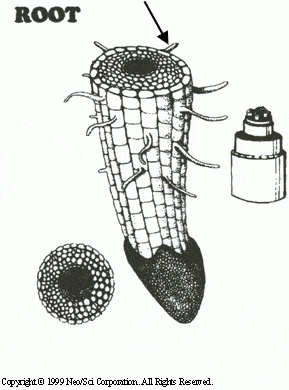
Root hairs are
Cortical cells
Projection of epidermal cells
Projection of cortical cells
Multicellular
The function of transpiration is to transport _______ and ____________ from the roots to the leaves
water, mineral salts
food, nutrients
water, food
Transpiration is a part of____________?
Condensation
Sublimation
Evaporation
Precipitation
_____ is the muscular wall that devides the heart length wise-
Septum
Ventricle
Atrium
None
In plants, food prepared by the leaves is transported to all the other parts of the plants by-
Stomata
Phloem
Root hair
Xylem
Which of the following is not a function of blood?
Blood cells, especially the WBCs, help fight infections.
Blood helps to distribute the digested food to all parts of the body.
Circulation of blood helps to maintain the body temperature
Blood removes the carbon dioxide, produced during respiration.

Which of the following indicates the pathway of water through a plant?
root hair cell --> xylem --> stomata
stomata --> root hair cell --> xylem
xylem --> stomata --> root hair cell
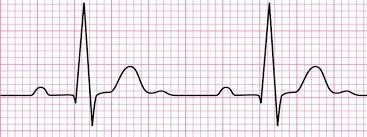
Type of device that records the electrical signal from your heart to check for different heart conditions.?
AED
MRI
ECG
CAT Scan
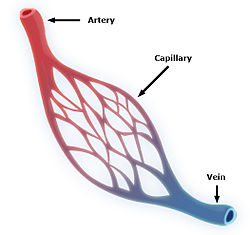
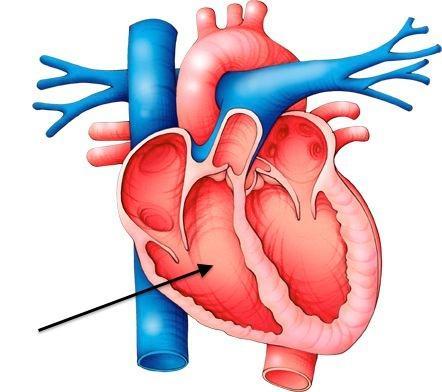

What is meant by Ascent Of Sap?
Upward Movement of Water in Xylem Vessels supported by Translocation.
Movement of food in the phloem vessels supported by Translocation
Upward movement of water in Xylem Vessels supported by Transpiration
Imposion of Thrombocytes in the circulation of Haemoglobin
Which of the following does not have valves
Heart
Arteries
capillaries
veins
Where is heart located
Abdomen
Mediastinum
Above the lungs
Below Diaphragm
How many chambers are present in the heart of fish
1
3
2
4
What is the meaning of bicuspid?
two cusps
three cusps
two cups
divided cusp
What are known as pumping chambers?
Auricles
Atrium
Ventricles
Arteries
Which type of cell is found in the greatest numbers in blood?
Red blood cell
White blood cell
Platelets
What happens to breathing and heart rate during exercise?
Breathing rate increases and heart rate decreases
They both increase
They both decrease
Why is there a limit to cell size in multicellular organisms?
As size of cells increase, their surface area to volume ratio also increases meaning substances would diffuse too slowly into the cell.
As size of cells increase, their volume decreases meaning substances would diffuse too slowly into the cell.
As size of cells increase, their surface area to volume ratio decreases meaning substances would diffuse too slowly into the cell.
What other names are given to red blood cells and also white blood cells?
Lymphocytes (red blood cells) and phagocytes and erythrocytes (white blood cells).
Erythrocytes (red blood cells) and phagocytes and lymphocytes (white blood cells).
Phagocyctes (red blood cells) and lymphocytes and erythrocytes (white blood cells).
What do phagocytes do?
Engulf (surround) microbes and digest them.
Produce antibodies.
Release a toxin that kills pathogens.
Why do arteries have a thick muscle layer?
To provide energy for the blood vessel.
To prevent the blood flowing backwards.
To help withstand the high pressure blood, also to contract to control blood flow.
List the structures in the circulatory system the blood travels through from vena cava to aorta.
Vena cava, lungs, pulmonary vein, left atrium, left ventricle, aorta, right atrium, right ventricle, pulmonary artery,
Vena cava, left atrium, right ventricle, pulmonary vein lungs, pulmonary artery, right atrium, left ventricle, aorta
Vena cava, right atrium, right ventricle, pulmonary artery, lungs, pulmonary vein, left atrium, left ventricle, aorta
Where would you find alveoli and what do they do?
In the arteries, they stop the artery from bursting.
In the heart, and they stop the blood flowing backwards
In the lungs and they are they site of gas exchange
Why do veins and the heart have valves?
To stop the backflow of blood
To contract to push the blood under high pressure
To cause the pulse
What type of blood vessel surround alveoli and other tissues in the body?
Capillaries
Arteries
Veins

Identify the process being investigated in the set up shown
Photosynthesis
Transpiration
Rate of transpiration
Rate of photosynthesis
Membrane surrounding the heart is filled with
Pericardium
Interstitial fluid
Pleural fluid
Pericardial fluid
Chamber of heart that receives blood from lungs
Right ventricle
Left auricle
Left ventricle
Left auricle
Normal B. P. is
120/80 cm of Hg
120/80 mm of Mg
120/80 mm of Hg
80/120 my of Hg
Broad lumen is present in
Arteries
Capillaries
Veins
Lymph vessels
Name the vitamin that helps in blood coagulation
Vitamin C
Vitamin K
Vitamin B1
Vitamin A
Type of blood present in pulmonary artery
Oxygenated
Mixed
Deoxygenated
Pure blood
Study of heart
Chondrology
Cardiology
Karyology
Haematology

