
 Worksheets
Unit 3 practice for the final exam
Total questions: 60
Worksheet time: 2hrs 0mins
MC crosses the ATC and AVC
where you draw it
at its lowest point
where MR=MC
None of the above
Which of the following markets is closest to perfectly competitive?
airlines
wheat
cell phones
textbooks
Which of the following is NOT an assumption of perfect competition
perfect information
free entry and exit
different goods
lots of buyers/sellers
What is the profit maximizing condition?
MR = D
MR = MC
MC = D
D = Profits
Suppose a firm in a perfectly competitive market faces a price which is lower than their average cost (ATC) but higher than their average variable costs (AVC). In the short run, this firm should
shut down
exit the industry
raise the price
produce where MC=MR

Based on this graph, this firm will:
make positive short-run profits
incur losses in the short-run
shut-down in the short run

In the long-run, price will equal
(a)
Firms are incurring short-run losses in a perfectly competitive firm. What will happen in the long-run?
New firms will enter and price will increase
New firms will enter and price will decrease
Firms will exit and price will increase
Firms will exit and price will decrease


What describes the law of diminishing returns?
large-scale production allows economies of scale
population growth adjust to where productivity is max
as more labor or a variable input is added to a fixed input, extra product declines at some point
proportionate increases in inputs of all resources results in less output

The graph above shows the marginal product (MP) and the average product (AP) of labor for a firm that uses labor as the only variable input. At which quantity of labor does marginal cost change from decreasing to increasing?
L1
L2
L3
L5

A firm expands its fixed resources and its overall costs of production go down. It is experiencing...
Increasing returns to scale
Constant returns to scale
Negative returns to scale
The firm minimum efficient scale, they have reach the lowest cost possible...
ATC 3 from 1000
ATC 1 From 1
ATC 2
The firm starts diseconomies of scale
from 100,000
from 1,000,000
from 100
The stage of production that is characterized by decreasing, but positive marginal returns. As more of the variable input is added to the fixed input, the marginal product of the variable input decreases.
Stage I
Stage II
Stage III
Stage IV
This stage results from increasing average product.
First Stage
Second Stage
Third Stage
Fourth Stage
This stage of production results due to negative marginal returns. In this stage of short-run production, the law of diminishing marginal returns causes marginal product to decrease so much that it becomes negative.
Stage I
Stage II
Stage III
Stage IV

The marginal production from 3 to 4 labors is _________.
2
7
4
8
If TP of employing one unit of variable factor is 12 units and that of 2 units of variable factor is 16 units, the marginal product of 2 units of VF is
3
4
8
16
The total output generated by the first four units of variable input is 200 units, 350 units, 450 units and 500 units. The marginal product of the third unit of input is
50
100
150
200
A woman recently quit her job as a teacher, which earned her $75/day, to become a tailor. She earns $85/day, during that day she spends a total of $25 on materials. What is her Economic Profit ?
$75
$15
-$75
-$15
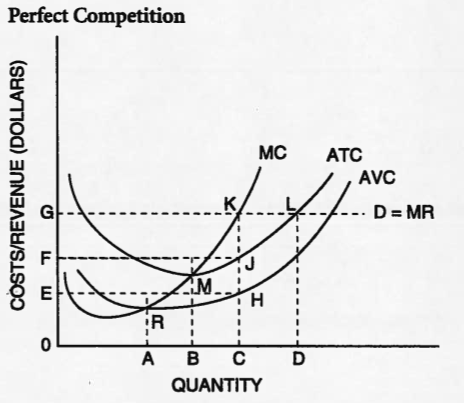

The image above shows a firm making
Economic Profit
Economic loss
Breaking even
Shutting down

If the market price is $9, how many widgets should this profit-maximizing firm produce?
3,000
6,000
12,000
15,000

At market price $6, the profit-maximizing rate of output will result in
normal profits
economic profits
economic losses

What quantity will this firm produce, and what price will it charge, in the short run?
Q= 8,000 P=$75
Q= 6,000 P= $80
Q= 8,000 P= $48
Q= 6,000 P= $48
What is the profit maximizing condition?
MR = D
MR = MC
MC = D
D = Profits

If the product price is $85, how many units of output must the firm produce in order to maximize profits?
0
3
4
5
6

The graph above shows the short-run cost and revenue curves for a perfectly competitive firm. Assume that the market price is P0 and the firm is producing at quantity Q2 . To maximize profit, the firm should
continue to produce quantity Q2, where average total cost is at its minimum
produce quantity Q1, where price is equal to marginal cost
produce quantity Q0, where average variable cost is at its minimum
decrease the price so that price equals average variable cost
increase the market price to the level of the minimum average total cost
Given a short-run production function, which of the following is true when total product is increasing at a decreasing rate?
total product decreases and marginal product is negative
total product decreases and marginal product decreases
total product increase
Marginal product must be positive and decreasing.
Which of the following are characteristics of a perfectly competitive industry:
I. New firms can enter the industry easily
II. There is no product differentiation
III. The industry's demand curve is perfectly elastic
IV. The supply curve of an individual firm in the industry is perfectly elastic
I and II only
I and III only
II and IV only
I, II, and IV only
I, III, and IV only

When Michael Scott employs 1 additional worker, the MP of labor decreases by 10 units. Which economic concept best characterizes Michael's production process?
Diminishing marginal returns
Increasing marginal returns
Constant returns to scale
Economies of scale
Diseconomies of scale

Dunder Mifflin produces paper and pays each worker $350/week. 10 workers can produce 100 reams of paper per week and 11 workers can produce 150 reams of paper per week. The marginal product per week of the 11th worker is:
$35
$350
50 reams of paper
7.5 reams of paper
125 reams of paper

Which of the following do not count as short run in economics? SELECT FOUR.
A period that is less than 1 year
A period between 1 and 4 years
A period that is too short for a firm to change output
A period in which at least 1 input cannot be changed
A period in which fixed costs are greater than variable costs

As Dunder Mifflin can produce more paper, the difference between ATC and AVC decreases because:
AFC decreases
TC increases
LRATC decreases
MC increases
MP of labor decreases
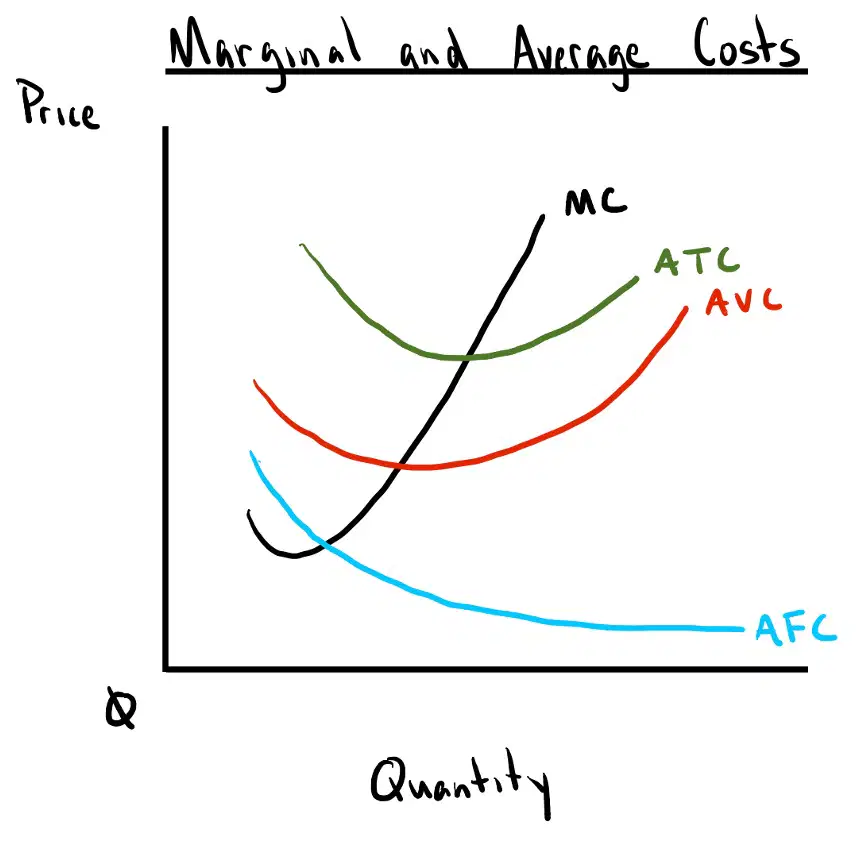
In the short run, what is true of Dunder Mifflin's average total cost of production?
ATC = MC + AVC
ATC = AFC + AVC
ATC increases when a firm increases production
It is zero if Dunder Mifflin shuts down
ATC = MC + AFC

Dunder Mifflin is producing 300 reams of paper at a total cost of $1200. The firm's average variable cost is $3.50 per ream. What is Dunder Mifflin's total fixed cost?
$50
$1
$400
$200
$150

Which of the following MUST be true of the long run?
At least 1 FoP is fixed
MC is constant
ATC is constant
All FoP are variable
At lasts at least 1 year
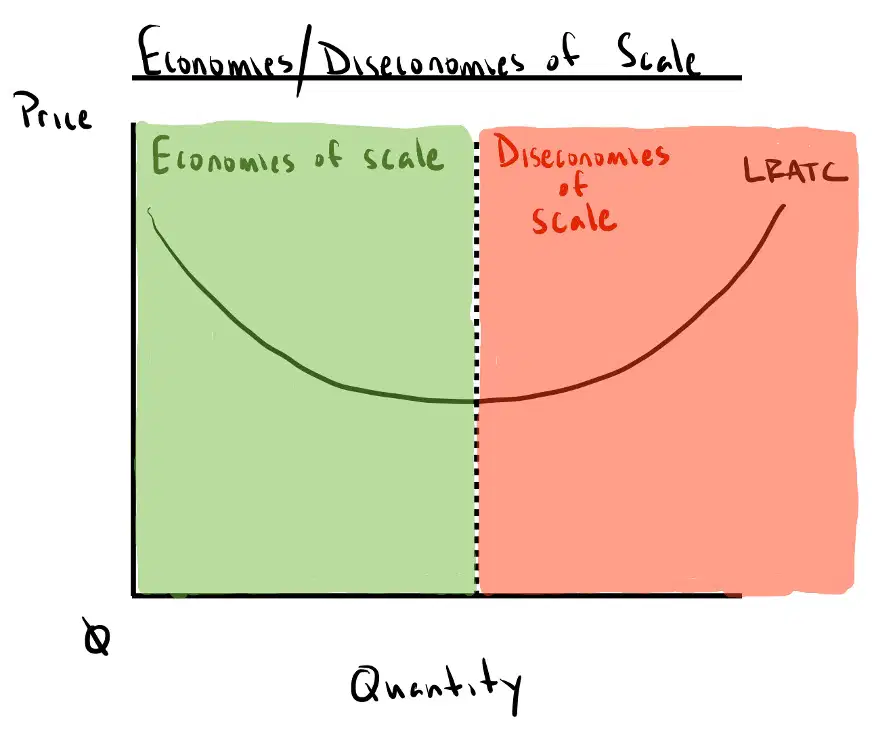
If Dunder Mifflin doubles the reams of paper it can sell with double the labor, it must be experiencing:
Constant returns to scale
Economies of scale
Decreasing returns to scale
Increasing returns to scale
Diseconomies of scale
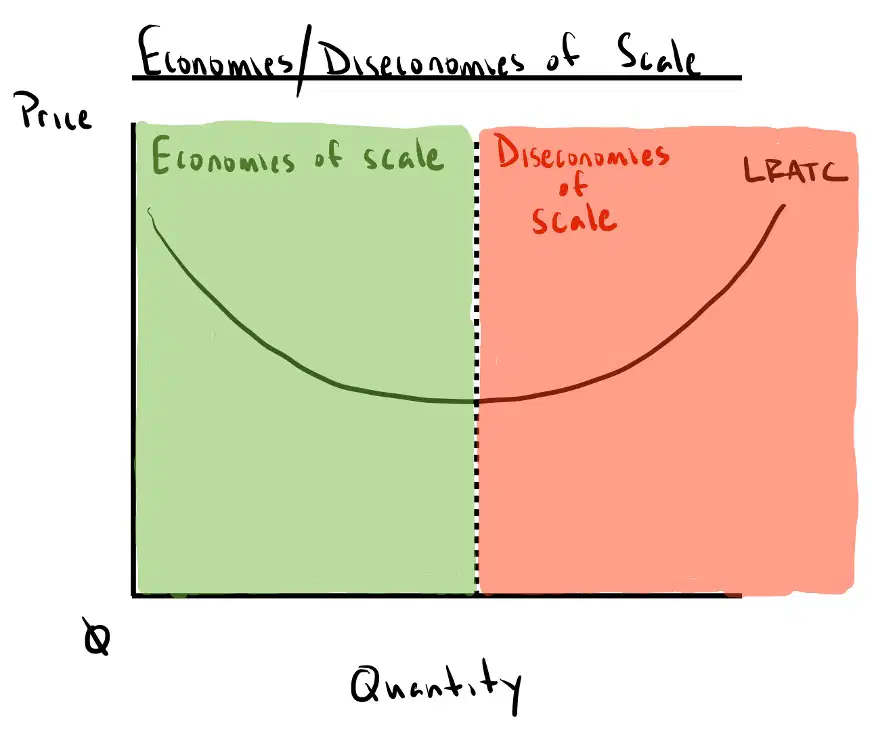
If Dunder Mifflin experiences diseconomies of scale over the entire range of output, the LRATC curve will be:
Upward sloping
Horizontal
Below the MC curve
U-shaped
Downward sloping

Jim Halpert is currently selling paper earning $150k per year and is currently considering quitting his job to start Athlead. The estimated revenue from Athlead is $350k. The cost of labor, advertising, and acquiring talent is $250k. What are Jim's accounting and economic profits if he opens Athlead?
AP: -$50k
EP: $100k
AP: $100k
EP: -$50k
AP: $200k
EP: $100k
AP: $200k
EP: -$50k
AP: $100k
EP: $200k

Economic profit can be calculated as accounting profit minus which of the following?
Fixed costs
Marginal costs
Explicit costs
Implicit costs
Total costs

Dunder Mifflin produces 800 reams of paper and sells each ream for $30. If the explicit cost of producing the paper is $9,000 and the implicit cost is $2,000, Dunder Mifflin's economic profit is:
$0
$2,000
$11,000
$13,000
$24,000

In this graph, TC is total cost and TR is total revenue. At which level of output is profit maximized?
Q1
Q2
Q3
Q4
Q5
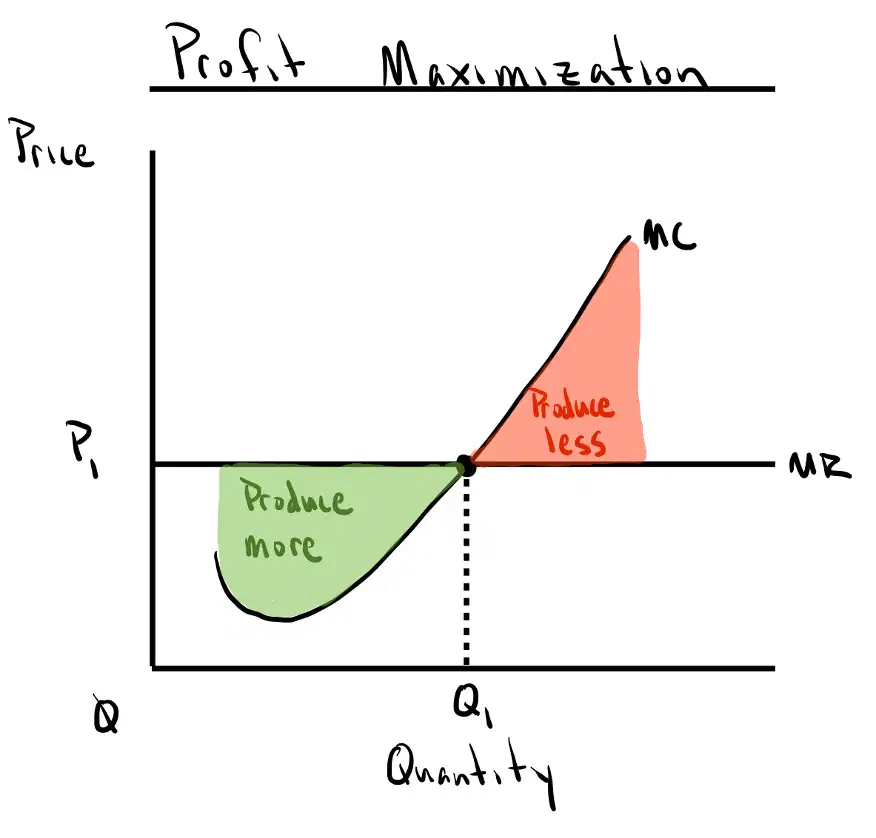
The most profitable level of output for Dunder Mifflin operating in the short run is the level of output at which:
Price equals marginal cost
Marginal revenue equals marginal cost
Marginal revenue exceeds marginal cost by the highest amount
Price equals average cost
Price exceeds average cost by the highest amount
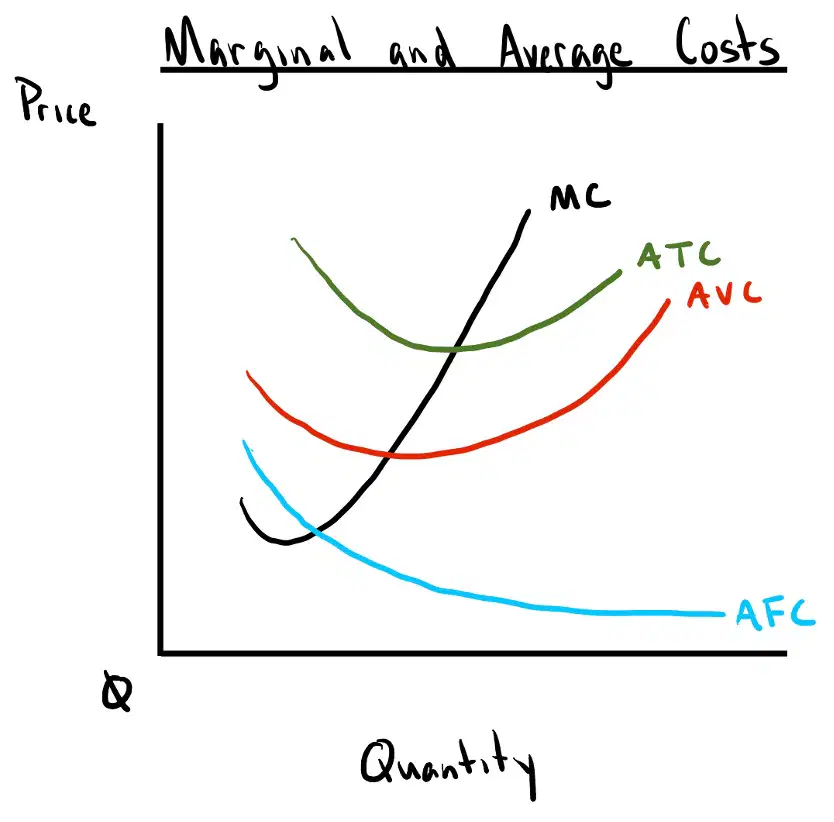
In the short run, Dunder Mifflin wants to maximize profits and will shut down if which of the following is true?
Its produce price is less than its average variable cost
It is not making an economic profit
Its product price is greater than its average variable cost but less than its average total cost
Its total revenue is less than its cost
It is not making a normal profit
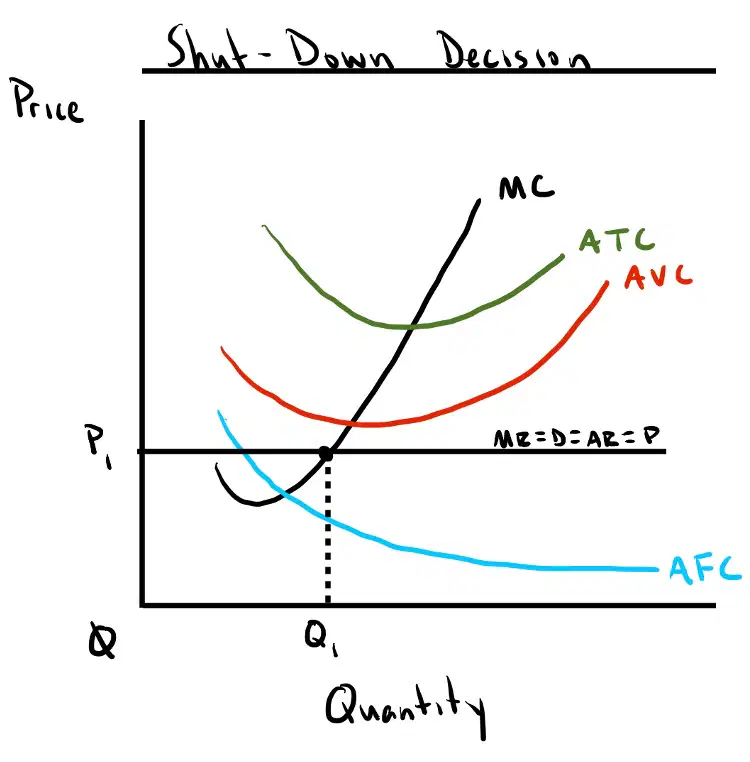
In order to minimize short-run losses, Dunder Mifflin, a profit-maximizing firm, will necessarily shut down production under which of the following conditions?
Marginal cost is greater than average total cost
Marginal cost is less than marginal revenue
Total revenue is less than total cost
Average revenue is less than average cost
Average revenue is less than average variable cost
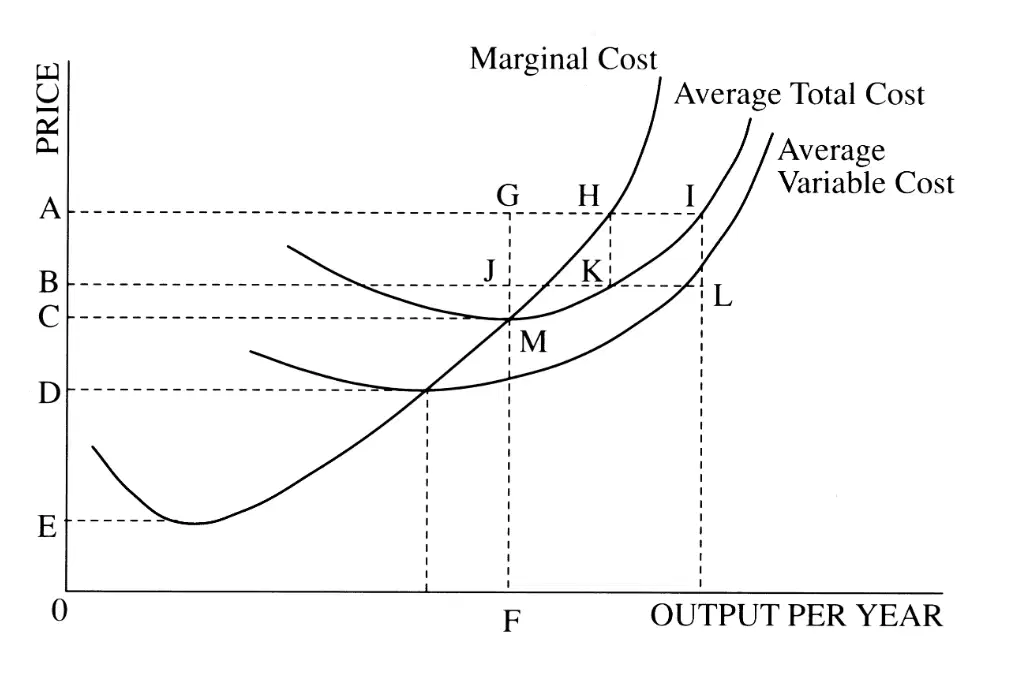
In the short run, Dunder Mifflin will stop production when the price falls below:
A
B
C
D
E
Which of the following are characteristics of a perfectly competitive industry:
I. New firms can enter the industry easily
II. There is no product differentiation
III. The industry's demand curve is perfectly elastic
IV. The supply curve of an individual firm in the industry is perfectly elastic
I and II only
I and III only
II and IV only
I, II, and IV only
I, III, and IV only
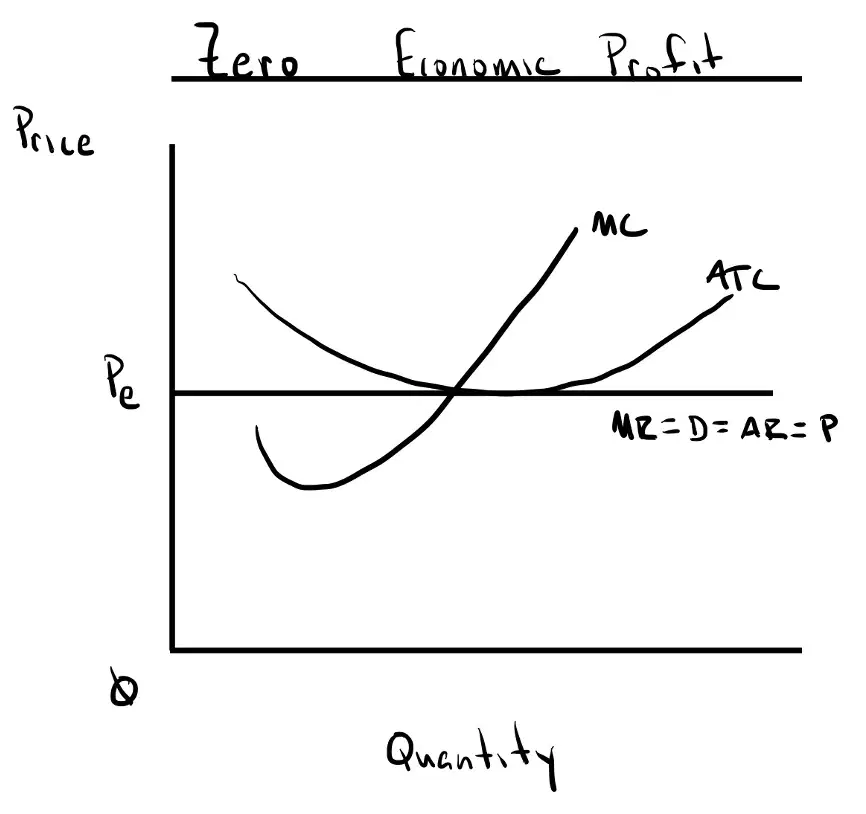
If Dunder Mifflin is a perfectly competitive firm in long-run equilibrium, which of the following is true?
It is productively inefficient
It earns positive economic profit
It experiences economic losses
It is allocatively efficient
It maximizes revenue
If there are many firms in a paper industry and each firm's product is indistinguishable from the products of all other firms, the individual firm's demand curve will be:
Horizontal and different for each firm
Upward sloping and different for each firm
Downward sloping and different for each firm
Horizontal and identical for every firm
Downward sloping and identical for every firm
Raheem is currently working as a financial analyst earning $75,000 a year and is considering quitting his current job to start an art gallery. The estimated annual revenue from the art gallery is $175,000. The annual cost of labor, advertising, and acquiring the art inventory is $125,000. What are Raheem's accounting and economic profits if he opens the art gallery?
Accounting profit is -$25,000 and economic profit is $50,000
Accounting profit is $100,000 and economic profit is $50,000
Accounting profit is $50,000 and economic profit is -$25,000
Accounting profit is $100,000 and economic profit is -$25,000
Accounting profit is $50,000 and economic profit is $100,000
Which of the following is true about economies of scale and increasing returns to scale?
Economies of scale refers to the relationship between inputs and output. Increasing returns to scale refers to the relationship between long-run average total cost and the size of the firm.
Economies of scale refers to the relationship between long-run average total cost and the size of the firm. Increasing returns to scale refers to the relationship between inputs and output.
Economies of scale is a long-run concept, while increasing returns to scale is a short-run concept.
Economies of scale and increasing returns to scale are the same thing.
Which of the following is true when total product is at its maximum?
Marginal product is equal to zero.
Marginal product is at its maximum.
Average product is increasing.
Marginal product equal to total product

