
NEW
Font size
 Worksheets
Unit 2 Lithosphere
Total questions: 80
Worksheet time: 41mins
What is a volcano?
A weak spot in Earth’s crust where magma can come to the surface.
A mix of rocks, minerals, gases, and water from the mantle.
Hot semifluid rock that becomes solid rock as it cools off.
A special kind of mountain.
What is magma?
Hot semifluid rock that becomes solid rock as it cools off.
A mix of rocks, minerals, gases, and water from the mantle.
A weak spot in Earth’s crust where magma can come to the surface.
Hardened rock.
What is lava?
A weak spot in Earth’s crust where magma can come to the surface.
A mix of rocks, minerals, gases, and water from the mantle.
Hot semifluid rock that becomes solid rock as it cools off.
A really hot part of the mantle.
Where do volcanoes typically form?
At plate boundaries.
In the middle of tectonic plates.
What is a quiet eruption?
When magma flows easily and erupts quietly with gases bubbling out gently and lava oozing out quietly.
When trapped gases build up pressure until they explode with incredible force.
What is an explosive eruption?
When trapped gases build up pressure until they explode with incredible force.
When magma flows easily and erupts quietly with gases bubbling out gently and lava oozing out quietly.
What kind of lava is fast-moving?
Pahoehoe
Aa
What kind of lava is slower-moving?
Pahoehoe
Aa
What typically erupts from explosive volcanoes?
Pahoehoe
Aa
A pyroclastic flow
What is an active volcano?
A volcano that has erupted at least once in the last 10,000 years.
A volcano that hasn’t erupted in the last 10,000 years, but could still erupt.
A volcano that should never erupt again.
What is a dormant volcano?
A volcano that has erupted at least once in the last 10,000 years.
A volcano that hasn’t erupted in the last 10,000 years, but could still erupt.
A volcano that should never erupt again.
What is an extinct volcano?
A volcano that has erupted at least once in the last 10,000 years.
A volcano that hasn’t erupted in the last 10,000 years, but could still erupt.
A volcano that should never erupt again.
Which of the following is NOT a feature of stratovolcanoes?
Also called composite volcanoes.
Made of layers of ash and lava.
Very tall.
Made of layers of just lava.
Which of the following is NOT a feature of shield volcanoes?
Some of the biggest mountains in the world.
Made of layers of just lava.
Made of layers of ash and lava.
Very wide.
What kind of eruptions do stratovolcanoes have?
Explosive eruptions.
Quiet eruptions.
What kind of eruptions do shield volcanoes have?
Explosive eruptions.
Quiet eruptions.

What kind of volcano is this?
Stratovolcano
Shield volcano
Cinder cone volcano

What kind of volcano is this?
Stratovolcano
Shield volcano
Cinder cone volcano

What kind of volcano is this?
Stratovolcano
Shield volcano
Cinder cone volcano
What is the name that scientists gave to the area around the pacific ocean where most of the volcanoes in the world exist?
The Ring of Fire
The Fire Ring
The Ring of Volcanoes
The Volcano Ring


Which rock is formed form the cooling of volcanic ash on Earth's surface?
intrusive igneous
foliated metamorphic
extrusive igneous
organic sedimentary
This is a natural solid that is made of one or more minerals.
Mineral
Fossil
Rock
Sediment
This is the continuous process of rock changing from one type to another.
Igneous rocks
Sedimentary rocks
Metamorphic rocks
Rock Cycle
What type of rock might contain evidence of past life?
Sedimentary Rock
Igneous Rock
Metamorphic Rock
Which of the following lists the steps an igneous rock undergoes in order to become a sedimentary rock, in the correct order?
Deposition, erosion, melting, cooling
Erosion, weathering, eruption, cooling
Dissolving, deposition, cooling, fracture
Weathering, erosion, deposition, cementation
Limestone is a sedimentary rock. During the rock cycle, limestone is changed into marble, a metamorphic rock. The processes that act on limestone and change it into marble are
weather and erosion
heat and pressure
compacting and cementing
melting, cooling, and hardening
If a lot of heat is applied to a rock, it will turn into
magma
rocks
sediment
metamorphic rocks


water, ice, wind or gravity
moves fragments of rock
and soil.
water, ice, wind or gravity
deposit rock sediments
and soil in a new place.
Earth’s crust into smaller
and smaller pieces.
water, ice, wind or gravity
moves fragments of rock
and soil.
water, ice, wind or gravity
deposit rock sediments
and soil in a new place.
Earth’s crust into smaller
and smaller pieces.

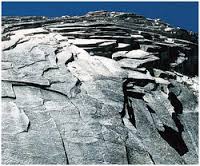
Which statement best explains why this process results in weathering?


These rocks were broken apart from the continuous freeze/thaw of water in the cracks of the rocks. This is an example of:
cryofracturing
acid rain
permeability
abrasion


water, ice, wind or gravity
moves fragments of rock
and soil.
water, ice, wind or gravity
deposit rock sediments
and soil in a new place.
Earth’s crust into smaller
and smaller pieces.

