
 Worksheets
Review: metallic, ionic, covalent
Total questions: 44
Worksheet time: 2hrs 49mins
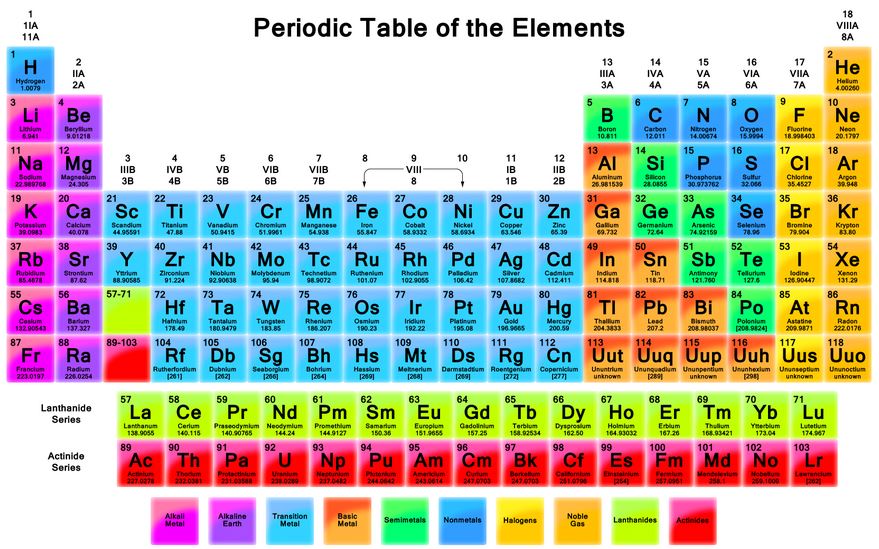
Why are metals malleable?
They are shiny
The electrons are held tightly within the lattice structure making it strong
The electrons are delocalized and able to move between the atoms
The electrons are shared between two metal ions and this holds the atoms together
Which of the following pairs of elements would NOT react to form an IONIC compound?
sulfur and phosphorus
sodium and iodine
iron and oxygen
aluminum and bromine
How are compounds with metallic bonds similar to ionic compounds?
Both tend to have double and triple bonds.
Both tend to have low boiling point
Both tend to have poor conductivity.
Both tend to have high melting points.
How are compounds with metallic bonds similar to ionic compounds?
They both have repeating structures
They both have high mp and bp
Both tend to have poor conductivity.
Both tend to have low melting points.
Nonmetals tend to form ions by
destroying electrons
gaining electrons
losing electrons
sharing electrons
In metallic bonds, the force of attraction is between
positive and negative ions
cations and electrons
two different metals
neutrons and electrons
Metals are used to make electric wires because metals (choose all that apply)
are ductile
are shiny
have free moving electrons
form a lattice
How does a metallic lattice differ from an ionic crystal?
A metallic lattice is less flexible
A metallic lattice can change shape without breaking
A metallic lattice shatters when struck
An alloy of iron and carbon is
more likely to rust than pure iron
weaker than pure iron
a mixture of two METALS
known as steel
True or False: A metallic bond may form between a metal and any other element
True
False
What are some benefits of alloys? (choose all that apply)
they can be stronger than pure metal
they may not rust/corrode as easily
they don't have electrons
they form covalent bonds


The following properties are all characteristics of ionic compounds EXCEPT
high melting and boiling points
soft
crystal lattice structure
conduct electricity when dissolved in water
Ionic compounds conduct electricity when dissolved in water. Which statement below best explains the property?
Ions are free to move.
Electrons are free to move.
Bonds are strong.
There are weak intermolecular forces of attraction.




Covalent compounds may be (multi select)
3 atom molecules
large repeating structures
small 2 atom molecules
single atoms


Is this correct way to draw the Lewis Dot Structure for Carbon?
Yes
No, too many electrons
No, not enough electrons
No, dots are in wrong places
Which of these is incorrect?


Which area would be most useful in determining the identity of an element?
Area 1
Area 2
Area 3
Area 4
Which statement best explains why protons are used to identify an element?
Protons are the most easily identified subatomic particles
Positive charges are more easily detected during an investigation than negative and neutral charges
The number of protons is unique to each element and remains constant
Protons alone cannot be used to identify an element. The number of electrons and neutrons must also be known.
What is a cation's charge?
positive
negative
neutral
depends on the element
What is an anion's charge?
positive
negative
neutral
depends on the element's charge
Identify the compound if hydrogen and chlorine are chemically combined.
HCl
HCl7
H1Cl1
H1Cl7
Valence electrons are 'shared' between 2 atoms
ionic bonding
covalent bonding
metallic bonding
Select the covalent compounds
lithium fluoride
nitrous oxide
carbon dioxide
methane

