
 Worksheets
INFORMATION MANAGEMENT FINAL EXAM
Total questions: 60
Worksheet time: 35mins
What is the field of study within Library and Information Science that focuses on activities such as document description, indexing, and classification?
Computer Engineering
Social Psychology
Knowledge Organization
Data Science
Who performs activities such as document description, indexing, and classification in the field of Knowledge Organization?
Artists
Engineers
Librarians
Doctors
Which approach in Knowledge Organization involves breaking down subjects into basic concepts and then combining relevant units and concepts to describe the subject matter of the information package?
User-oriented and Cognitive views
Facet analytic approaches
Bibliometric approaches
Traditional approaches
What does the PMEST formula categorize subjects into in the Facet Analytic Approach?
Facets
Shapes
Colors
Personalities
What are the Cranfield experiments known for introducing as evaluation criteria for systems efficiency?
Sensitivity and Specificity
Accuracy and Precision
Recall and Precision
Recall and Accuracy
What is the main purpose of the Information Retrieval Tradition?
To analyze historical documents
To evaluate user satisfaction
To measure system efficiency
To predict future trends
What is the primary focus of the domain analytic approach?
Creating digital archives
Developing new software applications
Analyzing social media trends
Understanding a specific subject area or domain
What is the main characteristic of a digital library?
It stores collections in physical formats
It is not accessible via computers
It is a type of information retrieval system
It is only accessible to a specific group of people
What do academic repositories primarily store and make accessible to the public?
Music albums
Cooking recipes
Fictional novels
Research papers and articles
What is the main goal of digital preservation?
To ensure continued access to digital materials over time
To limit access to digital resources
To delete outdated digital materials
To create new digital content
What is the purpose of the Trusted Digital Repository Model?
To limit access to digital resources
To create new digital content
To evaluate and certify a repository's ability to preserve and protect digital or physical materials
To provide access to digital materials
What is the main challenge of digital preservation?
Creating new digital content
Preserving physical materials
Limiting access to digital resources
Ensuring continued access to digital materials
What is the purpose of the European Framework for Audit and Certification of Digital Repositories?
To provide access to digital materials
To limit access to digital resources
To evaluate and certify a repository's ability to preserve and protect digital or physical materials
To create new digital content
What are some best practices for digital preservation?
Regularly checking to ensure the data hasn't been damaged
Limiting access to digital resources
Ignoring metadata creation
Storing digital content in any format
What is the main challenge of digital libraries in relation to copyright law?
Lack of user-friendly search interfaces
Lack of digital resources
Conflict of interest between libraries and publishers
Access to works from every time period
Which organization developed the DRAMBORA (Digital Repository Audit Method Based On Risk Assessment) methodology?
Digital Preservation Europe (DPE)
Online Computer Library Center (OCLC)
Collaborative Réseau de Bibliothèques (CRL)
Digital Curation Centre (DCC)
What is the purpose of TRAC (Trustworthy Repositories Audit & Certification)?
To assess a repository's ability to preserve and protect digital materials
To certify the financial stability of a repository
To evaluate the quality of physical materials in a repository
To measure the number of visitors to a repository
What is the purpose of the European Framework for Audit and Certification of Digital Repositories?
To certify the financial stability of digital repositories
To provide guidelines for planning, implementing, and self-evaluating trustworthy long-term digital repositories
To evaluate the physical infrastructure of digital repositories
To assess the number of digital materials in a repository
What is the purpose of the nestor catalogue of Criteria?
To establish standards for digital repository certification
To provide guidelines for digital audio preservation
To develop a catalogue of criteria for trusted digital repositories
To offer a methodology and toolkit for digital repository self-assessment
What is the purpose of PLATTERS (Planning Tool for Trusted Electronic Repositories)?
To assist repositories in identifying their self-defined goals and priorities
To develop a catalogue of criteria for trusted digital repositories
To provide guidelines for digital preservation best practices
To certify the financial stability of digital repositories
What is the purpose of the Audit and Certification of Trustworthy Digital Repositories (ISO 16363:2012)?
To provide guidelines for digital preservation best practices
To develop a catalogue of criteria for trusted digital repositories
To certify the financial stability of digital repositories
To evaluate the trustworthiness of a digital repository
What do digital preservation best practices involve?
Choosing the right file formats and regularly checking to ensure the data hasn't been damaged
Keeping good records about the data and being prepared to update the data to new formats as technology changes
None of the above
Both A and B
What do digital preservation best practices include?
File Formats and Metadata
Migration and Fixity Checks
Storage and Documentation
All of the above
What do digital audio preservation best practices provide guidelines for?
Preserving and providing access to digital materials
Digitizing analog content and creating new digital audio resources
None of the above
Both A and B
Which organization operates the National Digital Stewardship Alliance?
The Library of Congress
Digital Preservation Europe (DPE)
The National Archives of the United Kingdom
The British Library
What is the goal of digital preservation?
To evaluate the trustworthiness of a digital repository
To create new digital audio resources
To certify the financial stability of digital repositories
To ensure continued access to digital materials for as long as necessary
What does LSDIs (Large-Scale Digital Preservation Initiatives) refer to?
The establishment of robust infrastructure, standards, policies, and best practices for managing and preserving digital collections
The collective efforts undertaken by libraries and other institutions to ensure the long-term preservation of digital content on a large scale
Both A and B
None of the above
How does copyright law affect digital libraries?
It requires permission from rights holders for republication of material on the web
It allows digital libraries to have access to works from every time period
Both A and B
None of the above
What do the Fair Use Provisions under the Copyright Act of 1976 provide guidelines for?
Under which circumstances libraries are allowed to copy digital resources
How to acquire a license to lend digital resources
Both A and B
None of the above
What is the purpose of metadata creation in digital libraries?
To find works of interest directly related to how well they were catalogued
To perform full text search for all catalog searches
Both A and B
None of the above
What is the primary goal of implementing knowledge management in Indian academic libraries?
To reduce the number of library staff
To increase the number of books in the library
To enhance the efficiency and effectiveness of library services
To promote the use of physical archives
What does data comprise of according to the concept of knowledge management?
Facts or observations
Principle, insight, moral, or archetype
Description, definition, or perspective
Strategy, practice, method, or approach
Which tool is used by Indian academic libraries to store and share scholarly works and research papers?
Library Management Systems (LMS)
Digital Repositories
Content Management Systems (CMS)
Collaboration Tools for Knowledge Sharing
What is the main purpose of using collaboration tools like Google Workspace and Microsoft Teams in Indian academic libraries?
To facilitate seamless communication and teamwork
To automate library operations
To manage and present digital content
To analyze usage patterns and user preferences
What has significantly evolved since the early 1990s in the field of Knowledge Management?
The use of traditional card catalogs
The integration of emerging technologies like AI and automation
The focus on ethical considerations and information security
The formalization of KM as a distinct discipline
What is the term 'information professional' used to describe?
Individuals specializing in managing digital information
Individuals who facilitate access to information
Individuals who provide research support
Individuals who deal with technology and education
What is the relationship among data, information, and knowledge according to Alavi & Leidner (1999)?
Data comprises of facts or observations
Data is related to description, definition, or perspective
Information comprises strategy, practice, method, or approach
Knowledge embodies principle, insight, moral, or archetype
Which tool is used by Indian academic libraries to automate library operations and streamline workflows?
Digital Repositories
Library Management Systems (LMS)
Content Management Systems (CMS)
Collaboration Tools for Knowledge Sharing
What is the main focus of the open access movement in academic libraries?
To enhance data analytics and usage insights
To promote unrestricted access to scholarly research
To restrict access to scholarly research
To limit the use of digital repositories
What is the primary purpose of using data analytics and visualization tools in Indian academic libraries?
To facilitate seamless communication and teamwork
To analyze user behavior and preferences
To store and share scholarly works and research papers
To automate library operations
What is the main goal of implementing knowledge management in 21st-century information professionals?
To manage and present digital content
To facilitate access to information
To identify, capture, store, organize, and distribute knowledge assets
To restrict access to information
What has significantly evolved in the field of Knowledge Management since the 1990s?
The integration of emerging technologies like AI and automation
The use of traditional card catalogs
The formalization of KM as a distinct discipline
The focus on ethical considerations and information security
What is the main responsibility of information professionals in managing digital information, databases, and information systems?
To conduct data management
To facilitate access to information
To promote information literacy
To provide research support
What is the primary goal of using collaboration tools like Slack and Microsoft Teams in Indian academic libraries?
To analyze usage patterns and user preferences
To automate library operations
To manage and present digital content
To facilitate seamless communication and teamwork
What is the main purpose of using digital repositories in Indian academic libraries?
To restrict access to scholarly works and research papers
To enhance the efficiency and effectiveness of library services
To promote the use of physical archives
To store and share scholarly works and research papers
What is the role of information professionals in Indian academic libraries?
Addressing Information Literacy
Integration of Technology
Promoting Open Access Initiatives
All of the above
What are the new roles of information professionals in the 21st century?
Knowledge mappers
Technology experts
Networkers and knowledge brokers
None of the above
What are the new competencies and skills required for information professionals?
Negotiation skills
Good communication
Understanding flexible needs of customers
All of the above
What does Ranganathan's Fifth Law of Library Science emphasize in the digital era?
The library is a growing organism
Save the time of the reader
Books are for use
Which path involves the arrangement of materials based on a pre-defined, fixed set of categories or subjects?
Enumerative Classification Path
Chain Procedure Path
Faceted Classification Path
None of the above
Personal and experiential knowledge.
(a)
What is the importance of technology in knowledge management?
Information Access and Retrieval
Innovation and Problem-Solving
Remote Access and Mobile Capabilities
What are the key drivers of knowledge management?
Customer and Market Orientation
None of the above
Incentives and Recognition
Leadership Support and Organizational Culture
What does managing intellectual capital refer to?
Structural Capital
Leveraging human capital
Managing physical assets
None of the above
What does Stewart's work emphasize in managing intellectual capital?
Investing in employee training and development
Protecting intellectual property
Focusing on knowledge creation
All of the above
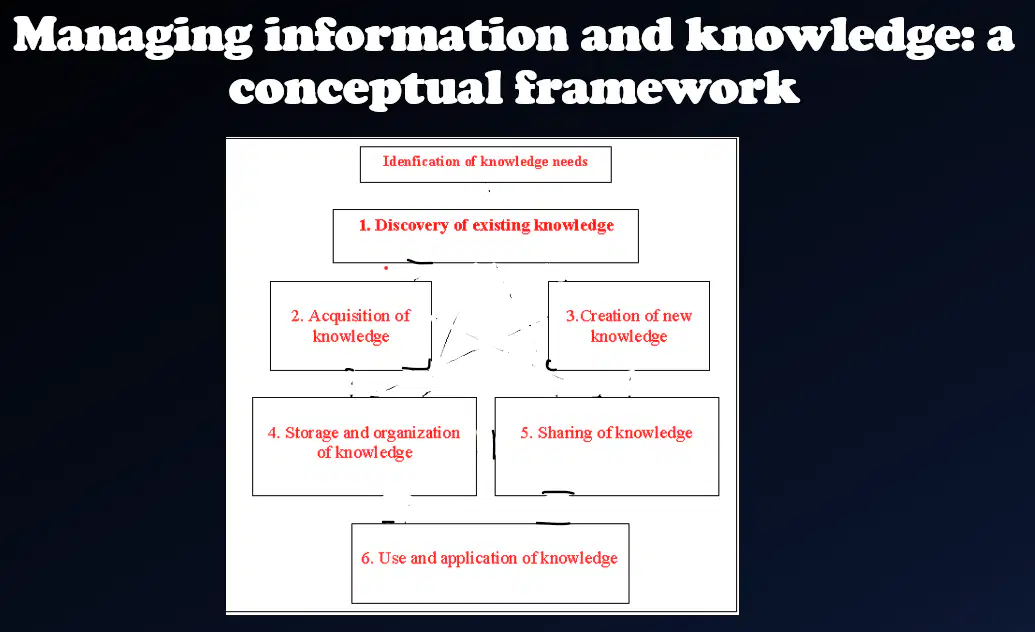
Draw a Connection Line that shows the flow of the Conceptual Framework.
Often seen as processed or organized data that holds meaning or significance to someone.
(a)
It involves the integration of information with experience, understanding, and insights.
(a)
A systematic process which focuses on understanding customer needs and improving customer’s service, it is a way to evaluate the quality of a library services and provides goal for improvements.
(a)
Serves as the raw material or basis upon which knowledge is built.
(a)

