
 Worksheets
Cell Cycle and Central Dogma
Total questions: 69
Worksheet time: 35mins
Cells of organisms must go through cell division for?
growth
repair of damaged cells
replacement of dying cells.
All of these
DNA is replicated during ______ of the cell cycle.
Gap 1
Synthesis (S phase)
Gap 2
Gap 0
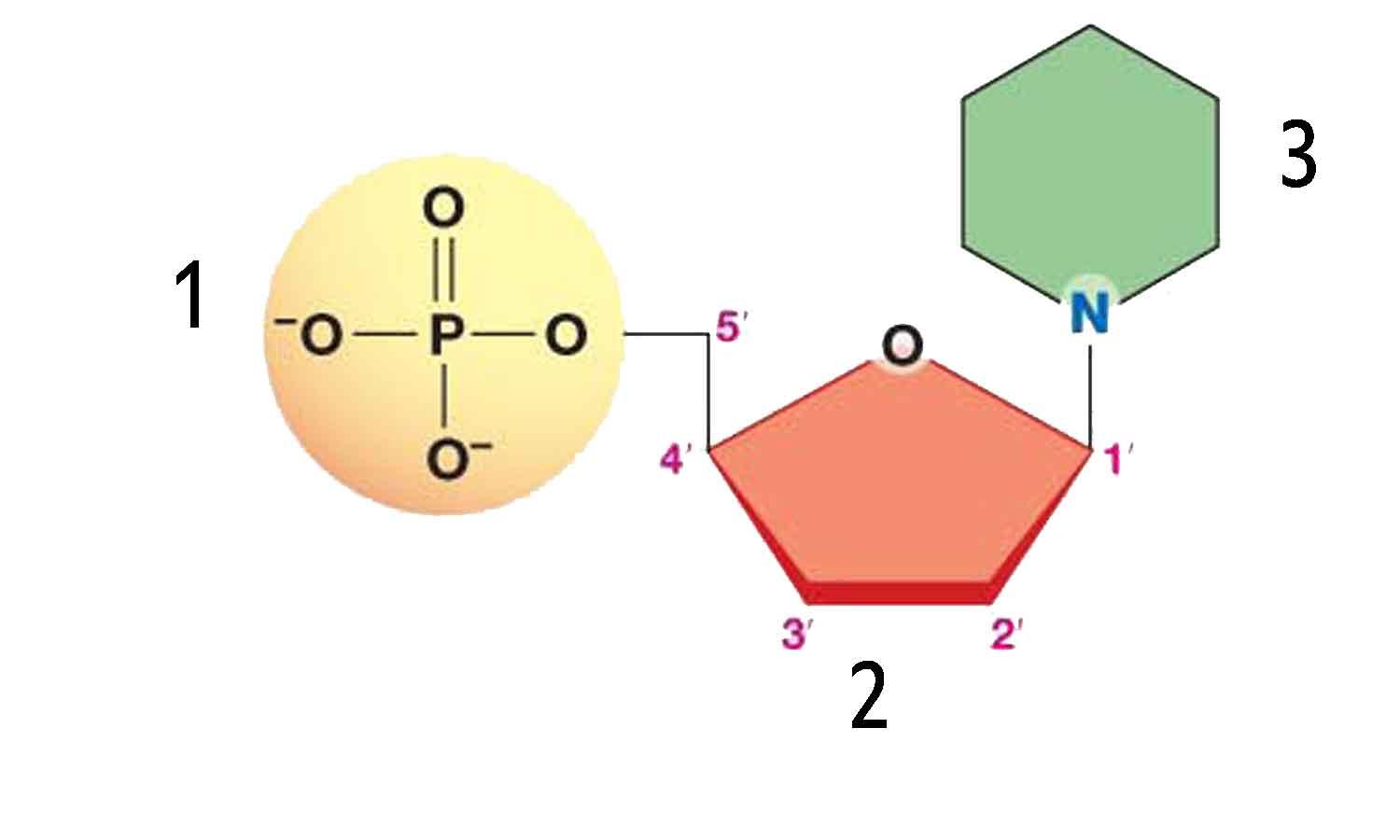
3) Nitrogen Base
2) Phosphate
3) Nitrogen Base
2) Ribose Sugar
3) Nitrogen Base
2) Deoxyribose Sugar
3) Nitrogen Base
Normal cells grow and divide continuously.
During most of interphase, DNA is found in a relaxed form called
chromosome
centromere
centriole
chromatin
During mitosis, DNA is found in the condensed form called a
chromosome
centromere
centriole
chromatin
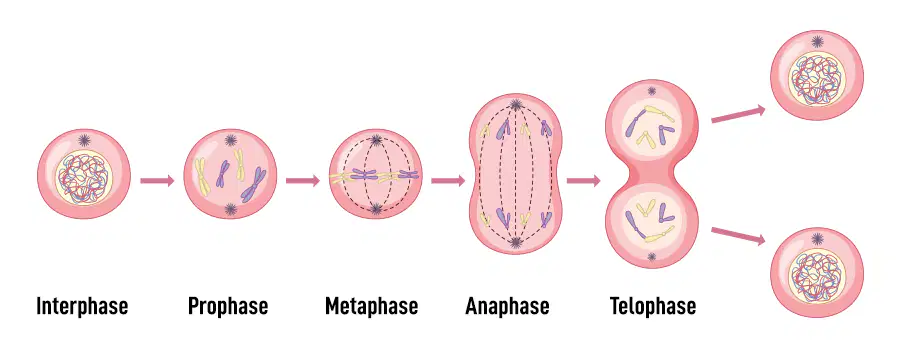
In prophase of mitosis, chromosomes
form and the nuclear envelope disappears.
are pulled toward opposite ends of the cell.
chromosomes line up along the equator of the cell
chromosomes begin to decondense and the two new nuclei begin to form.
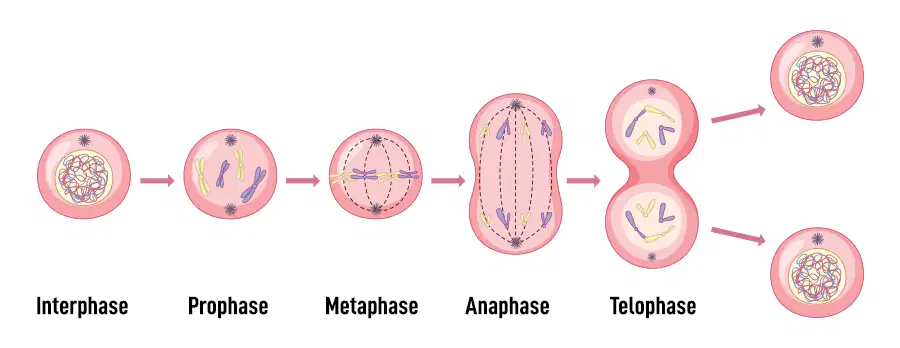
In metaphase of mitosis, chromosomes
form and the nuclear envelope disappears.
are pulled toward opposite ends of the cell.
chromosomes line up along the equator of the cell
chromosomes begin to decondense and the two new nuclei begin to form.
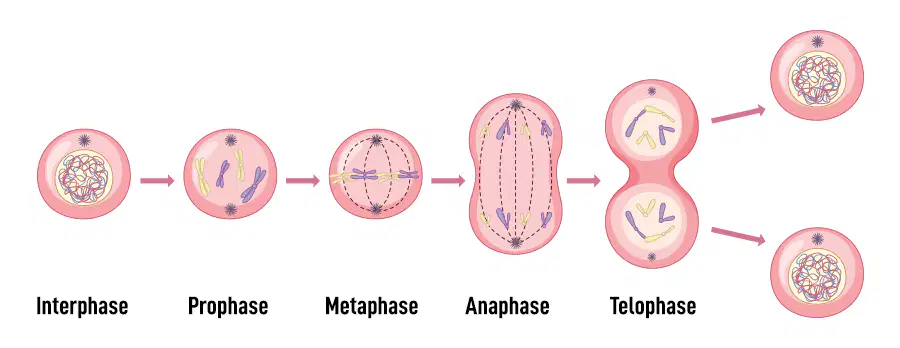
In anaphase of mitosis, chromosomes
form and the nuclear envelope disappears.
are pulled toward opposite ends of the cell.
chromosomes line up along the equator of the cell
chromosomes begin to decondense and the two new nuclei begin to form.
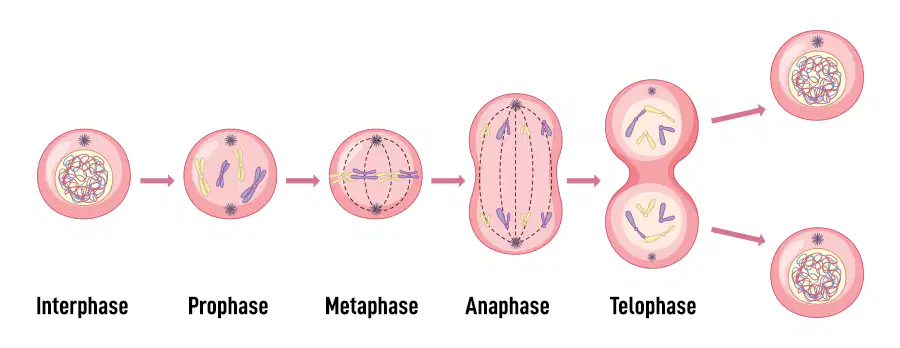
In telophase of mitosis, chromosomes
form and the nuclear envelope disappears.
are pulled toward opposite ends of the cell.
chromosomes line up along the equator of the cell
chromosomes begin to decondense and the two new nuclei begin to form.
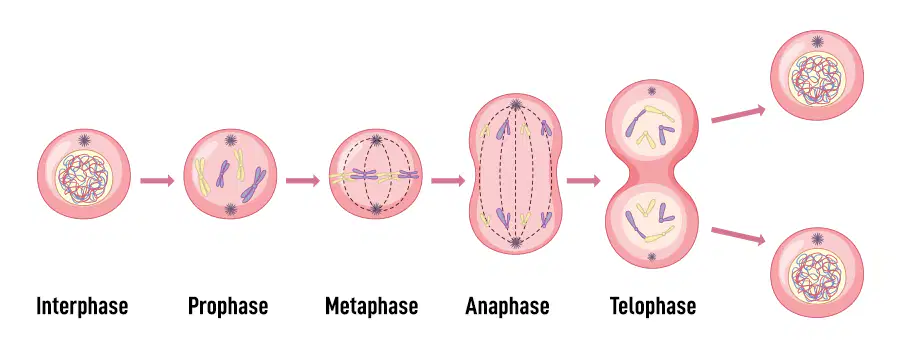
After mitosis, the cytoplasm and organelles are divided between the two new forming cells in a process called
centriole
chromatin
cytokinesis
centromere
This process is the programmed death of a cell
stem cell
regulation
apoptosis
cytocide
The cell cycle is regulated by this
cyclins
stem cells
cyclin-dependent kinases
both cyclins and cyclin-dependent kinases
When cells go through mitosis repeatedly without entering interphase, this results
arthritis
cancer
mutation
diabetes


Each base will only bond with one other specific base. For DNA replication, what bases always pair together?
Adenine - Guanine
Cytosine - Thymine
Thymine - Adenine
Cytosine - Guanine
Adenine - Uracil
Thymine - Cytosine
Adenine - Uracil
Cytosine - Guanine
For the following strand of DNA, type the complementary DNA base pairings. (Type your codon, then a space, then a dash (-), then a space and your next codon.)
AGG - CTC - AAG - TCC - TAG
(a)

According to Chargoff's Rule, if I have a DNA molecule with 18% Thymine, it must have __________ % Guanine
64
18
30
32
According to Chargoff's Rule, if I had a DNA molecule with 27% Adenine, it would have to have _________ % Thymine
23%
25%
27%
29%
Give the correct base pairing for this strand of RNA
AAUUGGCCUU
AAUUGGCCUU
TTAACCGGAA
UUAACCGGAA
UAUACGCGAT
The nitrogen base pairs for RNA are
Adenine-Thymine
Cytosine-Guanine
Adenine-Uracil
Cytosine-Guanine
Adenine-Cytosine
Thymine-Guanine
Thymine-Uracil
Guanine-Cytosine

In eukaryotes, which organelle is DNA usually found in?
cell membrane
vacuole
chloroplast
nucleus
The process of replication using one parent strand and one new strand of DNA
Okasaki Fragment
Semiconservative replication
DNA polymerase
Copy copy
The ability of an organism to control the genes that are transcribed
Gene regulation
Mutation
DNA polymerase
Segmentation
A permanent change in an organisms DNA
Operon
Intron
Mutation
Mutagen
Substances that cause mutations
Okasaki Fragments
Mutations
Mutagens
Roundup
Synthesis of mRNA from DNA
Transcription
Translation
Mutation
Introns
Enzyme that regulates RNA synthesis
DNA polymerase
Anaphase
Telophase
RNA polymerase
Segment of nucleic acid that travels from the nucleus to the ribosome
Transfer RNA
DNA
RNA polymerase
Messenger RNA
The type of RNA that makes up ribosomes
mRNA
rRNA
tRNA
qRNA
The type of RNA that takes messages from the DNA in the nucleus to the ribosome in the cytoplasm.
mRNA
rRNA
tRNA
qRNA
Small segments of RNA that transport amino acids to the ribosomes
tRNA
rRNA
mRNA
qRNA
Three base code in DNA and RNA
Intron
Exon
Translation
Codon
When the RNA is read to make a protein
Transcription
Ribosome
Translation
Amino Acid
A frameshift mutation is which of the following?
Point mutation
Insertion
Deletion
Subtitution
Which mutation would be more harmful for an organism?
Point mutation (substitution)
Frameshift (insertion/Deletion)
Which of the following is not a type of mutation?
Substitution
Insertion
Prescription
Deletion
THEBIGFATREDCATSAT is the normal message, what type of mutation is this: ZHEBIGFATREDCATSAT
Insertion
Deletion
Substitution
THEBIGFATREDCATSAT is normal, what would this be:
THESBIGFATREDCATSAT
Substitution
Insertion
Deletion
THEBIGFATREDCATSAT is normal, what is this:
THEBIGFATREDATSAT
Substitution
Insertion
Deletion

Which mutation will cause translation to stop?
Mutations 1 and 3 only
Mutation 1 only
Mutation 2 only
Muations 1, 2, 3
Why are insertion and deletion (frameshift) mutations so harmful?
They change all of the codons from the mutation on down the line, which changes the amino acid sequence
They insert things that an organism doesn't need.
They often delete things that organisms need.
Insertion and deletions are not any more harmful than substitution mutations.
ATTTGAGCC- Original
ATTGAGCC - Mutated
The example above is an example of a
Insertion- Frameshift
Deletion- Substitution
Deletion -Frameshift
All of the above
DNA pieces can then be separated and compared using a process called
gel electrophoresis
DNA Puzzle Pieces
RFLPs
Agrose Gel
What is a palindrome?
Sticky end
Blunt end
A sequence that reads the same forwards and backwards
A sequence that is complementary to the other

Which RE's from above make blunt cuts?
Alul
HaeIII
BamHI
HindIII
EcorRI

What kind of cuts were made in the scenario above?
Blunt
Sticky
No cuts were made
Palindrome
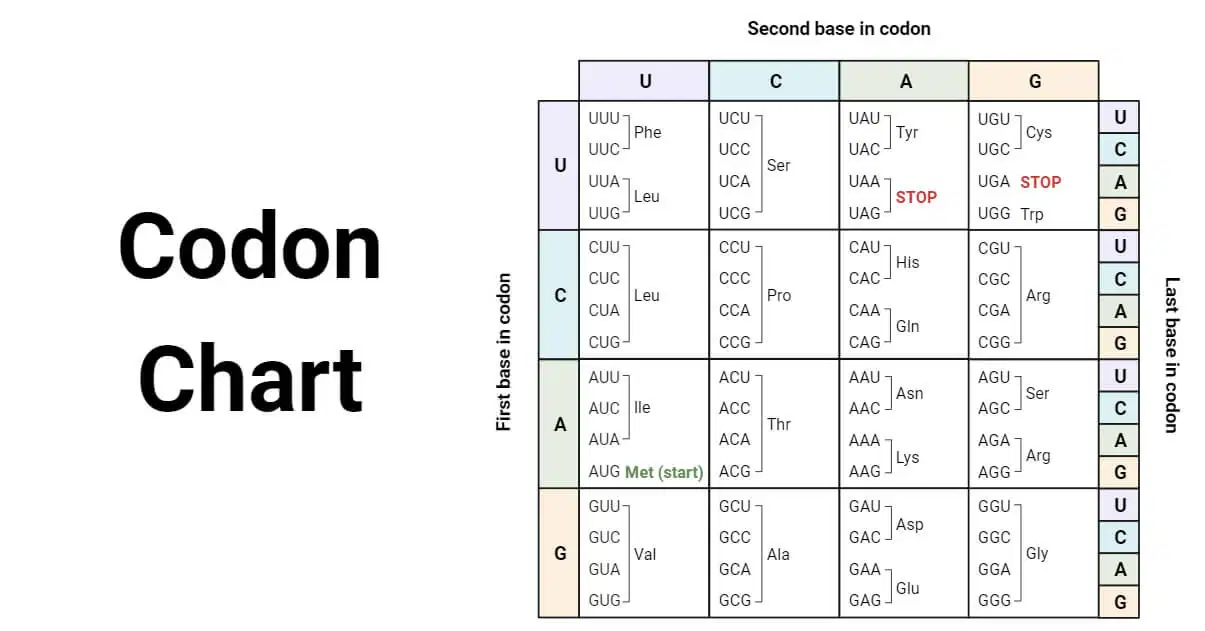
Using the codon chart, which one of these mRNA codons is for the amino acid Tryptophan (Trp for short)
CUU
UGU
UAG
UCG

