wayground logo

Free Printable Worksheets

Font size

S
M
L
XL
Worksheets

1st Semester Review

Total questions: 78

Worksheet time: 2hrs 37mins

Name
Class
Date
1.

What is the function of carbohydrates?

a)

provides quick energy

b)

stores energy

c)

helps with growth and repair of tissues

d)

stores genetic information

2.

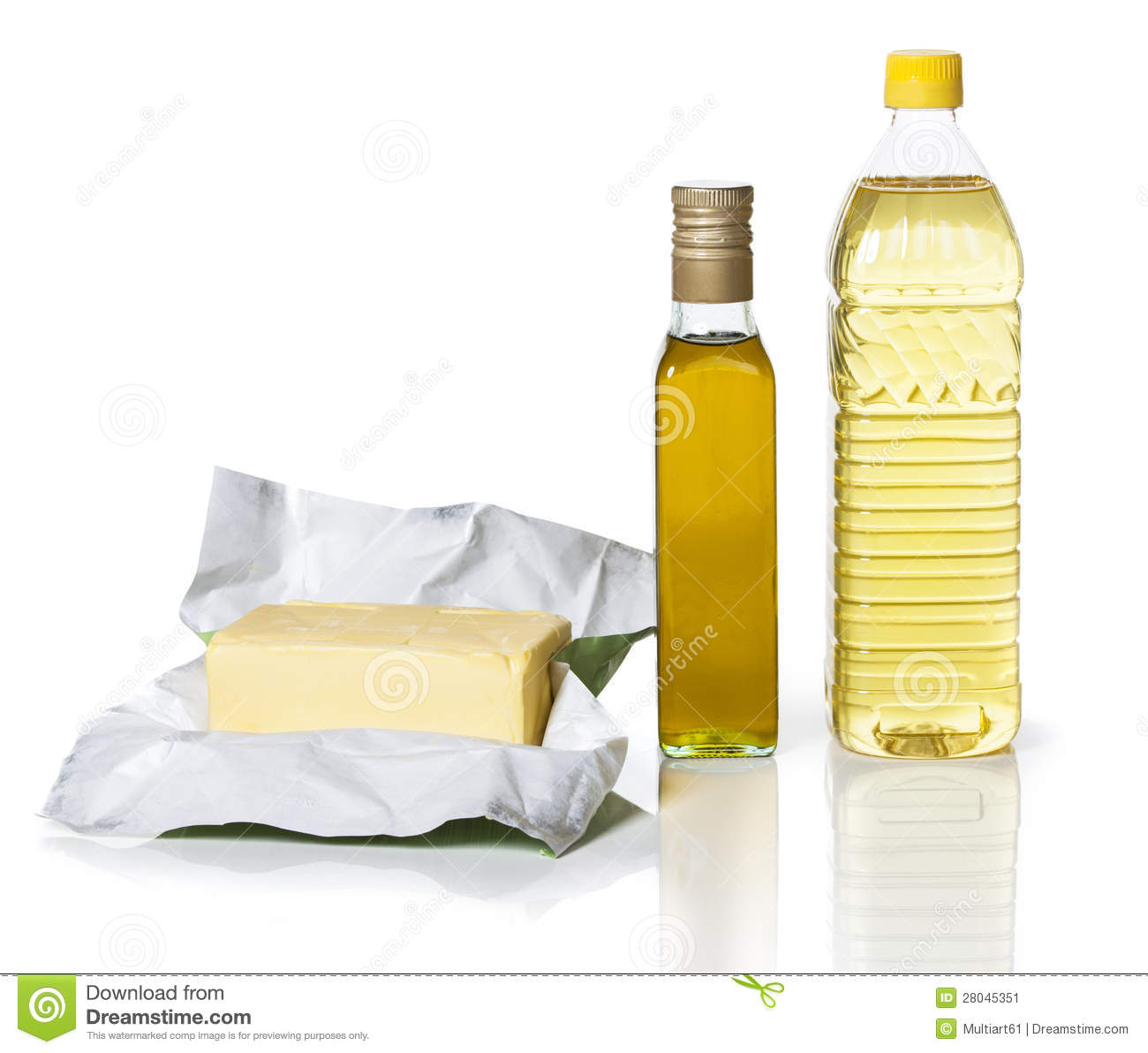
What is the function of lipids?

a)

provides quick energy

b)

stores energy

c)

helps with growth and repair of tissues

d)

stores genetic information

3.

What is the function of proteins?

a)

provides quick energy

b)

stores energy

c)

helps with growth and repair of tissues

d)

stores genetic information

4.

What is the function of nucleic acid?

a)

provides quick energy

b)

stores energy

c)

helps with growth and repair of tissues

d)

stores genetic information

5.
Which biomolecule is found in fats, oils, and waxes and is a source of long-term energy
a)
Proteins
b)
Nucleic Acid
c)
Lipids
d)
Carbohydrate
6.

Which biomolecule makes up your genes?

a)

Carbohydrate

b)

Lipid

c)

Nucleic Acid

d)

Protein

7.

What is the function of nucleic acids such as DNA and RNA?

a)

Stores energy

b)

Stores genetic information

c)

Movement

d)

Physical structure

8.
What biomolecule do enzymes belong to? 
a)
Carbohydrate
b)
Lipid
c)
Nucleic Acid
d)
Protein
9.

Beeswax is a waxy substance that is produced by bees and then harvested by humans for a variety of uses. Ancient Romans used beeswax as a waterproofing agent because it is not water-permeable. Beeswax is which of the following types of organic molecule?

a)

carbohydrate

b)

lipid

c)

nucleic acid

d)

protein

10.
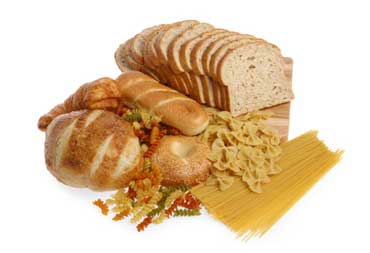
Which biomolecule is found in pasta and bread?
a)
Lipid
b)
Protein
c)
Nucleic Acid
d)
Carbohydrate
11.
Which biomolecule is a main source of quick energy?
a)
Nucleic Acid
b)
Protein
c)
Lipid
d)
Carbohydrate
12.
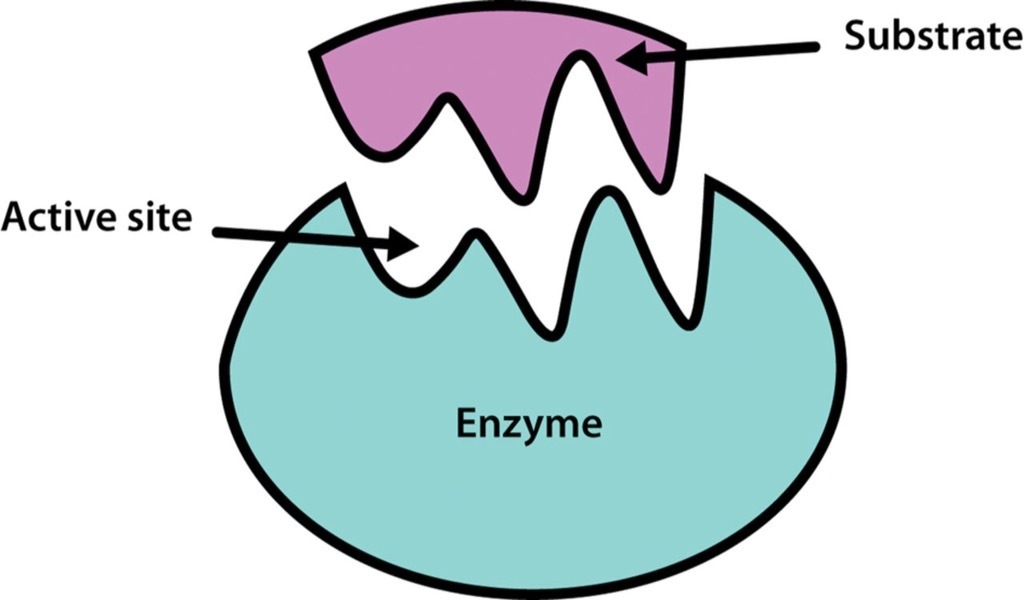
What is the purpose  of an enzyme?
a)
give permission for the reaction
b)
raise activation energy
c)
speed up reactions
d)
control how many reactions occur
13.
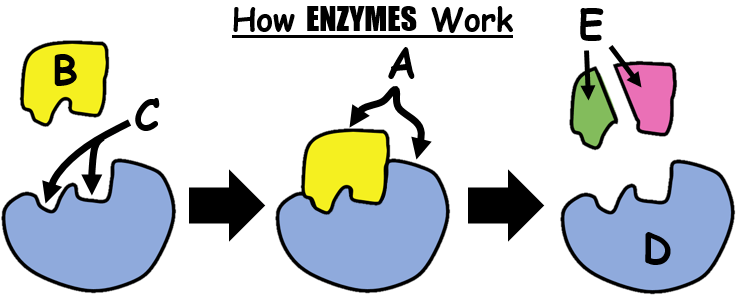
Letter D...
a)
active site
b)
enzyme
c)
substrate
d)
products
14.

Viruses are bacteria.

a)

True

b)

False

15.

Observe the diagram of the two viruses.

Part C is the ______________

a)

Genetic material

b)

Capsid

c)

Ligand

d)

Envelope

16.

Which sentence is true about this picture.

a)

It shows a virus being made.

b)

It shows a virus entering the cell of a human or animal.

c)

It shows a virus being destroyed by soap.

17.

What happens after the virus has been taken up by the cell?

a)

it begins making protein

b)

it divides, or replicates

c)

it inserts into the host DNA

d)

it switches to infectious mode

18.

What reason do scientists give for saying that viruses are not living organisms?

a)

they cannot reproduce without the aid of a host

b)

they do not metabolize food into energy

c)

they do not have organized cells

d)

all of the above

e)

none of the above

19.

What happens in the lysogenic cycle?

a)

A virus injects DNA into a host cell

b)

Bacteria injects genetic material into a host cell

c)

Bacteria injects DNA into a host cell

d)

A virus injects its genetic material into a host cell

20.

What does the lytic cycle result in?

a)

destruction of the infected cell and the membrane

b)

multiple new cells

c)

people going in sane

21.
What does NOT happen during interphase?
a)
growth
b)
DNA replication 
c)
obtaining nutrients
d)
cell divison
22.
Cells spend the majority of their lives in
a)
Interphase
b)
Mitosis
c)
Synthesis 
d)
Gap 2
23.

Cells of organisms must go through cell division for?

a)

growth

b)

repair of damaged cells

c)

replacement of dying cells.

d)

All of these

24.

DNA is replicated during ______ of the cell cycle.

a)

Gap 1

b)

Synthesis (S phase)

c)

Gap 2

d)

Gap 0

25.

In anaphase of mitosis, chromosomes

a)

form and the nuclear envelope disappears.

b)

are pulled toward opposite ends of the cell.

c)

chromosomes line up along the equator of the cell

d)

chromosomes begin to decondense and the two new nuclei begin to form.

26.

In telophase of mitosis, chromosomes

a)

form and the nuclear envelope disappears.

b)

are pulled toward opposite ends of the cell.

c)

chromosomes line up along the equator of the cell

d)

chromosomes begin to decondense and the two new nuclei begin to form.

27.

In metaphase of mitosis, chromosomes

a)

form and the nuclear envelope disappears.

b)

are pulled toward opposite ends of the cell.

c)

chromosomes line up along the equator of the cell

d)

chromosomes begin to decondense and the two new nuclei begin to form.

28.

After mitosis, the cytoplasm and organelles are divided between the two new forming cells in a process called

a)

centriole

b)

chromatin

c)

cytokinesis

d)

centromere

29.

This process is the programmed death of a cell

a)

stem cell

b)

regulation

c)

apoptosis

d)

cytocide

30.

When cells go through mitosis repeatedly without entering interphase, this results

a)

arthritis

b)

cancer

c)

mutation

d)

diabetes

31.

In humans, the haploid number of chromosomes is ____.

a)

23

b)

46

c)

69

d)

92

32.

In which stage of MEIOSIS does crossing over occur? (The exchange of genetic material between chromosomes in a tetrad.)

a)

Anaphase I

b)

Metaphase I

c)

Prophase I

d)

Telophase I

33.

How many cells are formed at the end of Meiosis II?

a)

2

b)

3

c)

4

d)

8

34.

WHAT DOES MEIOSIS CREATE?

a)

CHROMOSOMES

b)

GAMETES

c)

DNA

d)

TRAITS

35.

THE STRUCTURE THAT CONTAINS THE DNA IS CALLED (CHOOSE THE MOST SPECIFIC ANSWER)

a)

CHROMOSOME

b)

CELL BODY

c)

CELL

d)

NUCLEUS

36.

MALE GAMETE IS KNOWN AS

a)

EGG

b)

SPERM

37.

A FEMALE GAMETE IS KNOWN AS

a)

EGG

b)

SPERM

38.

CROSSING OVER ALLOWS FOR WHAT TO HAPPEN?

a)

ALL CELLS TO STAY THE SAME

b)

GENETIC VARIATION

c)

REDUCTION OF CHROMOSOMES

d)

CHROMOSOME NUMBER TO INCREASE

39.
 Which system is the stomach in?
a)
respiratory
b)
digestive
c)
nervous
d)
excretory
40.
 What is the main function of the respiratory system?
a)
take in oxygen and exhale waste like carbon dioxide
b)
move nutrients throughout the body
c)
take in carbon dioxide and exhale oxygen
41.
 What is the main job of the digestive system? 
a)
break down foods into nutrients that can be used by the body
b)
take in oxygen and exhale waste like carbon dioxide
c)
pump blood throughout the body
d)
makes the body hungry
42.
Which systems main function is to allow movement of the body?
a)
muscular
b)
digestive
c)
skeletal
d)
excretory
43.
The smallest units or parts of living things; the body's building blocks.
a)
cells
b)
organs
c)
tissues
d)
system
44.
Your large and small intestines are part of this body system.
a)
nervous
b)
digestive
c)
muscular
d)
skeletal
45.
A collection of the same kinds of cells working together to do the same job.
a)
cells
b)
tissues
c)
organs
d)
systems
46.
Which system provides shape and support, enables you to move, protects your internal organs, and stores minerals?
a)
skeletal
b)
muscular
c)
digestive
d)
nervous
47.
When blood is used by the body it must pass through which of the following organs before it is pumped back out to the body?
a)
Lungs
b)
Brain
c)
Stomach
d)
Skin
48.
Which characteristic do single-celled organisms and multicellular organisms have in common?
a)
Both have cells with specialized functions for each life process.
b)
Both perform all life processes within one cell.
c)
Both have a way to get rid of waste materials.
d)
Both are able to make food from sunlight.
49.
Which body system sends electrical signals to all other body systems?
a)
circulatory system
b)
nervous system
c)
digestive system
d)
skeletal system
50.
Which two human body systems are most responsible for getting oxygen to cells?
a)
digestive and skeletal
b)
skeletal and circulatory
c)
circulatory and respiratory
d)
respiratory and digestive
51.
The __________ is the main organ of the nervous system.
a)
heart
b)
lungs
c)
brain
d)
skin
52.

The main function of the respiratory system is to take in ______________ through the lungs and get rid of carbon dioxide and water.

a)

oxygen

b)

saliva

c)

water

d)

carbon dioxide

53.

The excretory system helps ___________ wastes in the body.

a)

bring in

b)

get rid of

54.

Which body system eliminates pathogens and sicknesses from invading the body?

a)

excretory system

b)

nervous system

c)

immune system

d)

respiratory system

55.

anchor plants in the ground and prevents erosion

a)

roots

b)

stems

c)

leaves

56.

carry the products of photosynthesis from the leaves back down to the roots

a)

roots

b)

stems

c)

leaves

57.

Xylem transports...

a)

water

b)

sugar

c)

oxygen

d)

carbon dioxide

58.

What are the reactants (inputs) of photosynthesis/ the products (outputs) of cellular respiration? Check all that apply.

a)

Some type of energy

b)

Water

c)

Oxygen

d)

Glucose

e)

Carbon dioxide

59.

Part of the plant that has chlorophyll

a)

Roots

b)

Flowers

c)

Petals

d)

Leaves

60.

Green substance that turn the leaves green

a)

Chlorophyll

b)

Roots

c)

Green Paint

d)

Spore

61.

The shoot system is the part of the plant that is ________________________________.

a)

below the ground

b)

above the ground

c)

in the water

d)

In the tree

62.

Stomates have multiple functions. Select the two answers that best describe what stomates do.

a)

allow carbon dioxide into the leaf

b)

allow oxygen out of the leaf

c)

allow sunlight into the leaf

d)

allow sugars out of the leaf

63.
What is the chemical formula for glucose?
a)
C6H12O6
b)
C6H6O12
c)
C12H6O12
d)
C6O2H6
64.
What is the chemical formula for water?
a)
H2O
b)
HO2
c)
CHO2
d)
CO2H
65.
What is the chemical formula for carbon dioxide?
a)
H2O
b)
CO2
c)
CHO2
d)
CO2H
66.
Which choice correctly shows the gases that enter and exit plants during photosynthesis?
a)
Enter: Oxygen
Exit: Carbon dioxide
b)
Enter: Water vapor
Exit: Glucose
c)
Enter: Carbon dioxide
Exit: Oxygen
d)
Enter: Light
Exit: Water vapor
67.
After photosynthesis, plants store their energy as _________ .
a)
chlorophyll
b)
pigment
c)
glucose (sugar)
d)
Oxygen
68.
Which of the following is the correct equation for PHOTOSYNTHESIS?
a)
CO+ light + H2O --> O+ Sugar
b)
CO+ sugar + H2O --> O+ light
c)
O2 + light + H2O --> CO+ Sugar
d)
CO+ O2 + H2O --> Light+ Sugar
69.
The word Tropism mean_________
a)
growth in response to stimuli
b)
to create something new
c)
Chemical energy
d)
Taproot system
70.
What does it mean if a plant has a POSITIVE phototropism?
a)
That the plant grows toward light.
b)
That the plant grows away from light.
c)
That the plant grows toward gravity.
d)
That the plant grows away from gravity. 
71.
What does it mean if a plant has a POSITIVE gravitropism?
a)
That the plant grows toward light.
b)
That the plant grows away from light.
c)
That the plant grows toward gravity.
d)
That the plant grows away from gravity. 
72.
What does it mean if a plant has a NEGATIVE gravitropism?
a)
That the plant grows toward light.
b)
That the plant grows away from light.
c)
That the plant grows toward gravity.
d)
That the plant grows away from gravity. 
73.

Plants curling around a pole or mailbox is an example of:

a)

Phototropism

b)

Germination

c)

Turgor pressure

d)

Thigmotropism

74.
If a plant experiences a gravitropism, then it will do what?
a)
Grow toward or away from light. 
b)
Grow away from light. 
c)
Grow toward light.
d)
Grow in response to gravity. 
75.
What type of tropism response to water? 
a)
Hydrotropism
b)
Gravitropism
c)
Thigmotropism
d)
Phototropism
76.
What type of tropism response to light? 
a)
Gravitropism
b)
Thigmotropism
c)
Phototropism
d)
Hydrotropism
77.
What type of tropism response to gravity?
a)
Hydrotropism
b)
Phototropism
c)
Thigmotropism
d)
Gravitropism
78.

A plant's response to touch

a)

thigmotropism

b)

geotropism

c)

hydrotropism

d)

dormancy