
 Worksheets
Review for Midterm Exam
Total questions: 52
Worksheet time: 27mins
Which of the following determines the atomic number of an element?
The number of protons
The number of electrons
The number of neutrons
The amount of mass
What makes an ellipse MORE eccentric?
What is Newton's equation for Force of Gravity?
F = G * (m * m) / d^2
F = G * (m * m) / d
F = G * (m - m) / d^2
F = G * (m + m) / d^2
Which of these is NOT correct regarding Newton's law of Gravitational Force?
F = Force
G = Gravitational Constant
m = mass
d = diameter of the planet
What is meant by Aphelion?
Where does the independent variable go on a graph
on the bottom
on the side
What is a foci?
What is Kepler's first law?
The orbit of a planet is a perfect circle
The orbit of a planet is a straight line
The orbit of a planet is an ellipse with the Sun at one of the two foci.
The orbit of a planet is a parabola
What is Kepler's second law?
What is Kepler's third law?
A planet's period squared is equal to the average distance from the sun cubed.
A planet's period cubed is equal to the average distance from the sun squared.
A planet's period squared is equal to the average distance from the sun squared.
A planet's period cubed is equal to the average distance from the sun cubed.
Protons are
positive and in the nucleus
neutral and in the nucleus
negative and in the nucleus
positive and in the cloud
negative and in the cloud
neutrons are
positive and in the nucleus
neutral and in the nucleus
negative and in the nucleus
positive and in the cloud
negative and in the cloud
Electrons are
positive and in the nucleus
neutral and in the nucleus
negative and in the nucleus
positive and in the cloud
negative and in the cloud
Which of these is "too light" to count towards atomic mass?
protons
neutrons
electrons
A helium has two protons, two neutrons, and two electrons. What is its mass?
4 because 2 protons + 2 neutrons = 4
4 because 2 protons + 2 electrons = 4
2 because there are 2 protons
2 because there are 2 neutrons
A row across in the periodic table is called a
period
group
Columns in the periodic table are known as
groups
periods
As you move DOWN the periodic table:
The number of shells increases
The number of valence electrons increases
The elements get bigger
There are more protons
As you move ACROSS the periodic table:
The number of shells increases
The number of valence electrons increases
The elements get bigger
There are more protons
Why do elements get smaller as you move left to right across the table?
Even though there are more protons the electrons squeeze in and make the radius smaller
Even though there are more neutrons the protons squeeze in and make the radius smaller
Even though there are more electrons the neutrons squeeze in and make the radius smaller
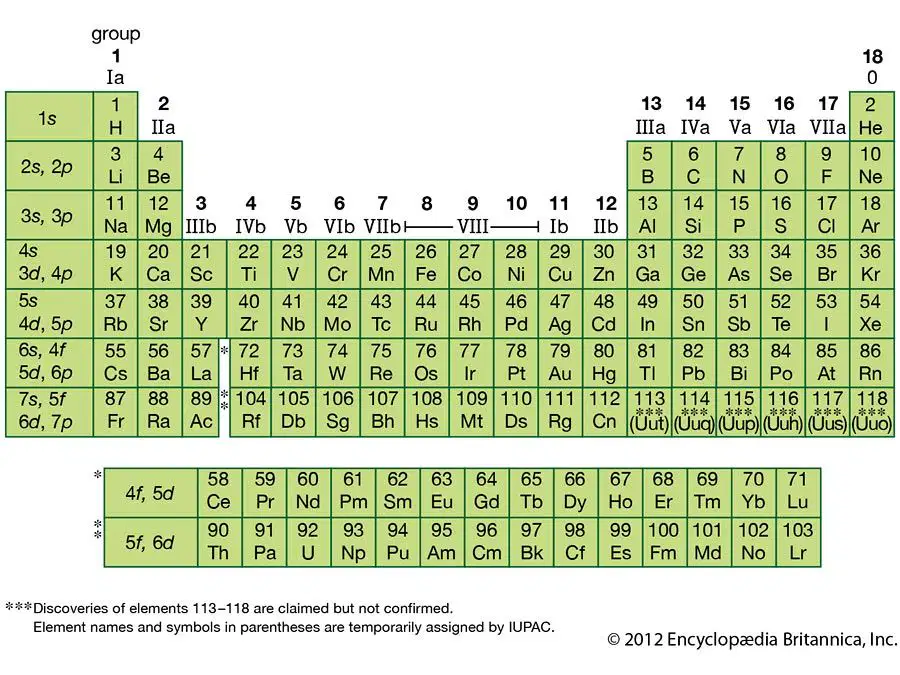
How many protons does Be have?
1
2
3
4
Which element has 27 protons?
Oxygen
Argon
Krypton
Cobalt
Elements that are in the same ______ act the same
period
group
Valence electrons are
Positive protons are attracted to
neutral neutrons
negative electrons
positive protons
A carbon atom has 6 electrons. How many will fit on each shell?
2, 4
2, 6
2, 8
2, 10
Lewis dot diagrams ONLY show the
Cations are
positively charged ions caused by losing an electron
negatively charged ions caused by gaining an electron
Ionic bonds form between
Opposite charges
cations and anions
shared electrons
Metals are most reactive towards the________________ of the periodic table.
top right
top left
bottom right
bottom left
Why are elements towards the top right most electronegative? (except for the noble gasses)
They are small at the top AND they are only short an electron or two
They are small at the top AND they have full valence shells
They are large at the top AND they are only short an electron or two
Which type of bond would sodium chloride have?
Since sodium is on the far left and chloride is on the far right they won't share. Instead they'll both for ions (A cation and anion) and attract through opposite charges.
Since sodium and chloride don't form ions they won't become charged and, instead, they'll share electrons.
What charge will a flourine make when it becomes an ion?
-1
-2
+1
+2
Fusion is when
two atoms come together and join their protons into one nucleus becoming a new element
an atom separates into two separate atoms
What would the fusion of Carbon and Helium make?
Lithium
Nitrogen
Oxygen
Flourine
Which decay type is this?
It loses two protons (a helium) but can be stopped by clothing or paper
alpha
beta
gamma
Which decay type is this?
it loses an electron and gains a proton. You need a think sheet of metal to protect yourself from this.
alpha
beta
gamma
Which decay type is this?
it releases photons
alpha
beta
gamma
Protons are always
created
destroyed
conserved
The main elements that make up, and fuel, stars are
H and He
He and Li
H and Li
Li and Be
If a star begins the process of fusion it can enter the main sequence. Otherwise it stays as a
nebula
brown dwarf
white dwarf
supernova
Isotopes of an element have the same number of protons but different numbers of
neutrons
electrons
shells
Energy in motion is considered
kinetic energy
potential energy
stored energy is
kinetic energy
potential energy
You can calculate the total energy in a system by adding up
all the microscopic forces
all the suns in the galaxy
how many springs are there
Scientific evidence points to the __________ as a potential start to our Universe.
Big Bang Theory
Newtons Theory
Kepler's Theory
Hubble's Law States that
farther galaxies are moving faster
closer galaxies are moving faster
farther galaxies are moving slower
A light spectrum is
Redshift happens when
Redshift happens when the object is moving away from the observer
Redshift happens when the wavelength gets stretched out
Which type of energy is left over from the Big Bang?
Large mass stars can fuse elements all the way up to
carbon
nitrogen
iron
uranium
What celestial event makes elements larger than iron?
a neutron star
a black hole
a white dwarf
a supernova

