
 Worksheets
Unit 1 AP Biology Review
Total questions: 60
Worksheet time: 51mins
Which list of components characterizes RNA?
a phosphate group, deoxyribose and uracil
a phosphate group, ribose and uracil
a phosphate group, ribose and thymine
an amino group, deoxyribose and uracil
Which of the following statements reguarding carbon is false?
Carbon has the capacity to form polar covalent bonds with hydrogen
Carbon has the ability to form covalent bonds with up to 4 other atoms
Carbon has the capacity to form single and double bonds
Carbon has the ability to bond together to form extensive "carbon skeletons"
Because of the unique properties of water associated with hydrogen bonding, water evaporates from pores on the leaves of plants and draws water molecules in a continuous chain from the roots up through the vascular tissues of plants. Which of these groups of terms describes the process and the properties of water that explain this?
adhesion, cohesion, and translocation
adhesion, cohesion, and transcription
cohesion, adhesion, and transpiration
cohesion, hybridization, and transpiration
Match the following molecular terms:
Lipids
The major class of biological molecules that are not polymers
Peptide bonds
Linkages between the monomers of proteins
Alpha helix
A secondary structure of proteins
Cellulose
A structural carbohydrate found in plants
Hydrolysis is involved in which of the following?
formation of starch, a polysaccharide, from monomers of glucose
hydrogen bond formation between nitrogen bases of nucleic acids
peptide bond formation between amino acids to form a protein
the digestion of sucrose, a disaccharide, into its monomers of glucose and fructose
The process by which protein conformation is lost or broken down is called what?
dehydration synthesis
translation
denaturation
hydrolysis
Which of the macromolecules below could form structural parts of the cell, be enzymes, or be involved in cell movement?
nucleic acids
proteins
lipids
carbohydrates
An organic compound that is composed of carbon, hydrogen, and oxygen in a 1:2:1 ratio is known as a (a) .
The plasma membrane is composed of several different macromolecules. Which macromolecule serves as the fluid interface between the intracellular and extracellular environments?
proteins
phospholipids
carbohydrates
cholesterol
A globular blood protein that transports vitamin A is 127 amino acids long. Select an answer for each of the following:
How many water molecules were produced in synthesis of the protein?
What chemical process joined the amino acids together?
127 water molecules
126 water molecules
hydrolysis
dehydration synthesis
Which of the following biological macromolecules contains phosphorous?
Nucleic acids
Carbohydrates
Proteins
Lipids
Match the following DNA strands to their complementary strands:
5' - TTTA - 3'
5' - AAAT - 3'
5' - CTAG - 3'
5' - GATC - 3'
5' - AGCC - 3'
5' - TCGG - 3'
5' - AGGA - 3'
5' - TCCT - 3'
5' - TCGA - 3'
5' - AGCT - 3'
How do organisms manage to grow, reproduce, and maintain their internal organization?
Organisms are consumers and obtain their energy and raw material from other organisms
Organisms exchange matter with the environment, taking in nutrients and releasing waste products
Organisms are producers, taking in raw materials and forming their organic compounds utilizing energy from the sun
Organisms recycle already exsisting raw materials thereby providing a constant stream of organic compounds
Which of the following is the monomer of proteins?
Amino Acid
Fatty Acid
Monosaccharide
Nucleotide
DNA and RNA differ in their sugar and a nitrogenous base. DNA has...
Deoxyribose; Thymine
Deoxyribose; Uracil
Ribose; Thymine
Ribose; Uracil
Hydrophilic side chains will fold _____ of the polypeptide
Towards the exterior
Towards the interior
No affect on folding
Which describes the polarity of phospholipids?
Polar head facing exterior; fatty acid tails facing interior
Polar head facing interior; fatty acid tails facing exterior
Both polar head and fatty acid tails are hydrophobic
Both polar head and fatty acid tails are hydrophilic
What is at the 3' end of a nucleic acid?
Carbon
Hydroxyl
Nitrogenous Base
Phosphate
What is the direction of DNA synthesis?
3' to 5'
5' to 3'
It's antiparallel so either direction is correct
What level of protein structure is described as hydrogen bonds between backbone?
Primary
Secondary
Tertiary
Quaternary
What level of protein structure is described as alpha helix/beta-pleated sheet?
Primary
Secondary
Tertiary
Quaternary
How many hydrogen bonds exist between C & G?
1
2
3
4
How many hydrogen bonds exist between A & T?
1
2
3
4
Traditionally, how are the strands different?
DNA = single; RNA = double
DNA = single; RNA = triple
DNA = double; RNA = single
DNA = triple; RNA = single
The amino acid glutamic acid has a R group with a negative charge. During folding, which of the following describes the orientation of the R group?
Exterior of protein due to negative charge providing hydrophilic properties
Exterior of protein due to negative charge providing hydrophobic properties
Interior of protein due to negative charge providing hydrophobic properties
Interior of protein due to negative charge providing hydrophilic properties
Cohesive force between water molecules and adhesive force between water molecules and other molecules enable this phenomenon to occur.
Surface tension
Capillary action
Float on water
Photosynthesis
Why is water considered polar?
Nonpolar covalent bonds in structure
Ionic bonds in structure
Polar covalent bonds in structure
Hydrophobic interaction in structure
Water beads up on the surface of a penny because of what property?
Adhesion
High surface tension
Universal solvent
Changes in density
Which of the following element(s) are found in proteins?
Carbon / Hydrogen
Oxygen
Phosphorus
Nitrogen
Sulfur
Which of the following functional groups is found in all amino acids?
Amino
Carboxyl
Hydroxyl
Sulfhydryl
Which of the following describes the difference between a purine and a pyrimidine?
Purines are single ring structures while pyrimidines are double ring structures
Pyrimidines are single ring structures while purines are double ring structures
Purines are composed of single bonds while pyrimidines are composed of double bonds
Pyrimidines are composed of single bonds while purines are composed of double bonds
Which of the following are purines?
Adenine
Cytosine
Guanine
Thymine
Uracil
Which of the following are pyrimidines?
Adenine
Cytosine
Guanine
Thymine
Uracil
Which of the following describes the base pairing and bonding involved with nitrogenous bases?
Adenine binds with cytosine with two hydrogen bonds
Adenine binds with thymine with two hydrogen bonds
Adenine binds with guanine with three hydrogen bonds
Adenine binds with uracil with three hydrogen bonds
Which of the following describes a DNA strand that would be most stable at high temperatures?
25% A/T and
75% G/C
50% A/T and
50% G/C
75% A/T and
25% G/C
100% A/T and
0% G/C
Pharmaceutical researchers are often interested in blocking particular receptor proteins on cell surfaces. What chemical property of a molecule would be most important for it to bind a receptor active site?
The molecule's structural shape
the type of bonding
the number of double bonds in the molecule
the number of valence electrons
A reaction between an alpha carboxylic acid and an alpha amino group creates a peptide bond. Which of the following describes this process?
Hydrogenation
Dehydration Synthesis
Hydrolysis
Esterification
Which of the following structures remains constant when a protein is in its denatured form?
Primary
Secondary
Tertiary
Quarternary
How is protein primary structure formed?
Hydrogen bonds between the amine group of one amino acid and the side chain of another
Hydrogen bonding between the hydrogen of one amino acid and carboxylic acid of another
Peptide bonds between the amine group of one amino acid and the carboxylic acid group of another
Peptide bonds between side chains (R-Groups)

What is the best explanation for a meniscus of water in a capillary tube?
Cohesive property is stronger than adhesive
Adhesive property is stronger than cohesive
Surface tension is causing water molecules to be pulled down
Adhesive and cohesive properties are of the same strength
Match the following functional groups with their chemical formula
Hydroxyl group
-OH
Carbonyl group
-CO
Carboxyl group
-COOH
Phosphate group
_OPO32-
Amine group
-NH2
Which of the following functional groups would you always find in an amino acid?
-OH
-NH2
-CO
-CH3

Ethan is conducting a science experiment in which he heats a protein until it unfolds. This process is known as
Denatured
Building
Adding amino acids
Making food
Olivia, Charlotte, and Daniel are discussing the functions of protein. Daniel says that one of the functions is to provide quick energy. Is Daniel correct?
Yes, protein forms enzymes and hormones
Yes, protein forms transport channel in cell membrane
Yes, protein forms structural proteins in the body
No, protein does not provide quick energy
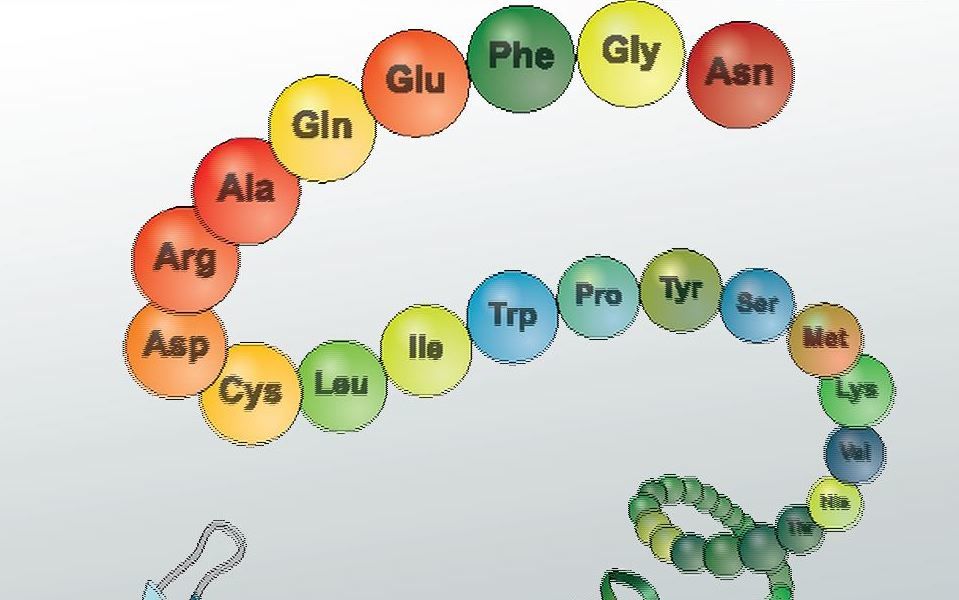
In a biology class, Kai and Benjamin were discussing about proteins. Kai said that the initial chain of monomers in a protein is called a 'polysaccharide'. Benjamin disagreed and said it's called something else. What is the correct term that Benjamin might have used?
polypeptide
polysaccharide
polyester
polynucleotide
Rohan is learning about different types of fats in his biology class. His teacher explained about UNSATURATED fats. Which of the following statements that Rohan learned about UNSATURATED fats is true?
They are more common in animals than in plants.
They have double bonds in their fatty acid chains.
They generally solidify at room temperature.
They contain more hydrogen than saturated fats having the same number of carbon atoms.

Carbohydrate structure

Lipid structure
Monosaccharide
Carbohydrate monomer
Fatty acids
Lipid monomer
The process of breaking bonds by splitting water
Dehydration
Hydrolysis
Which type of macromolecule is used for long term energy storage?


This image is of what type of macromolecule?
lipid
carbohydrate
protein
nucleic acid
Lugol's reagent tests for the presence of starches. Which type of macromolecule does it test for?
lipid
protein
nucleic acid
carbohydrate
Prokaryotic organisms typically have ________ chromosomes, while eukaryotic organisms typically have multiple ________ chromosomes.
linear, circular
circular, linear
In DNA Replication, which strand is formed continuously?
Leading
Lagging

