wayground logo

Free Printable Worksheets

Font size

S
M
L
XL
Worksheets

Module 4 Study Guide

Total questions: 80

Worksheet time: 1hrs 4mins

Name
Class
Date
1.

Heterozygous are

a)

The same pair of genes

b)

different pair of genes

c)

bb

2.

Wrinkle seeds are recessive over Round.


Which pair is a recessive gene?

a)

RR

b)

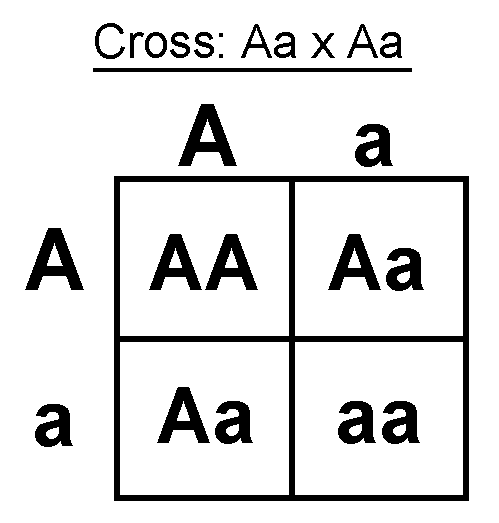
rr

c)

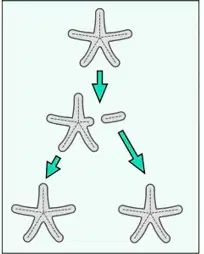
Rr

3.
Genotype refers to the ...
a)
physical expression of the genes
b)
the possible combination of alleles in a gene
c)
whether an allele is dominant or recessive
d)
how an organism will appear
4.
An offspring will receive how many alleles from each parent to determine a specific trait?
a)
one
b)
two
c)
three
d)
five
5.
Which of the following is a phenotype?
a)
BB
b)
Bb
c)
bb
d)
Blue eyes
6.
the passing of genetic traits from parent to offspring.
a)
heredity
b)
trait
c)
gene
d)
allele
7.
having two of the same genes for the trait (sometimes called purebred).
a)
homozygous
b)
hetrozygous
c)
protein
d)
chromosome
8.
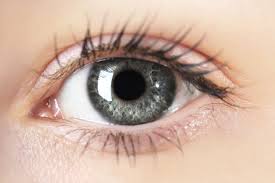
Two brown eyed parents (Bb) have a baby. What is the chance the baby is blue eyed?
a)
0 %
b)
25%
c)
50%
d)
75%
9.
An allele whose trait only shows up when no dominant allele is present.
a)
hidden allele
b)
dominant allele
c)
recessive allele
d)
present allele
10.
One form of a gene is called_______________
a)
a DNA
b)
a Phenotype
c)
a trait
d)
an allele
11.
Which of the following genotypes is a purebred?
a)
Bb
b)
Gg
c)
bb
d)
Dd
12.
If green is dominant over purple, then what is the genotype for this individual?
a)
Purple
b)
Green
c)
GG
d)
gg
13.
 Dominant alleles are-
a)
capital
b)
lowercase
c)
both
d)
neither
14.
 Recessive alleles are-
a)
capital
b)
lowercase
c)
both
d)
neither
15.
Which of the following alleles is homozygous (purebred) recessive?
a)
Tt
b)
tt
c)
TT
d)
t
16.
Aa, DD, bB, yy are all examples of
a)
genotypes
b)
phenotypes
17.
Which of the following genotypes is homozygous dominant?
a)
A
b)
Aa
c)
AA
d)
aa
18.
Which of the following genotypes is heterozygous?
a)
Bb
b)
BB
c)
bb
d)
B
19.
In a flowering plant species, red flower color (R) is dominant over white flower color (r). What is the genotype of any red-flowering plant resulting from this species?
a)
rr
b)
R
c)
RR
d)
RR or Rr
20.
What you see, or the physical appearance.
a)
Genotype
b)
Phenotype
c)
Homozygous
d)
Heterozygous
21.
How many alleles (letters) do each person carry for a trait?
a)
1
b)
2
c)
3
d)
4
22.
W=white hair
w= non-white hair
If you cross a horse with WW and a horse with ww what fraction of the offspring would be expected to have white hair?
a)
none
b)
3/4
c)
1/2
d)
all
23.
A dog gives birth to 5 puppies. What percentage of the chromosomes does each puppy share with the mother?
a)
25%
b)
50%
c)
75%
d)
100%
24.
this image is an example of
a)
codominance
b)
dominance
c)
incomplete dominance
25.
A homozygous dominant dog with brown fur is crossed with a heterozygous dog with brown fur. What are the percentages of the possible genotypes?
a)
100% BB
b)
75% BB and 25%Bb
c)
50 % BB and 50% Bb
d)
50% Bb and 50% bb
26.
Magda is a tall, 11 year old drummer. She has a scar on her right cheek. She is good at swimming. Which of her traits did Magda most likely inherit?
a)
height
b)
the scar
c)
ability to swim
d)
ability to play drums
27.
An allele whose trait only shows up when no dominant allele is present.
a)
hidden allele
b)
dominant allele
c)
recessive allele
d)
present allele
28.

Punnett Square #1

In plants tall is dominant to short.

Cross two heterozygous plants.

What is the genotypic ratio?

a)

1:2:1

b)

2:2

c)

3:1

29.

Punnett Square #1

In plants tall is dominant to short.

Cross two heterozygous plants.

What is the phenotypic ratio?

a)

1:2:1

b)

2:2

c)

3:1

30.

Which type of asexual reproduction does this picture represent?

a)

binary fission

b)

vegetative propagation

c)

regeneration

d)

budding

31.

Asexual reproduction has

a)

1 parent

b)

2 parents

32.

Sexual reproduction has

a)

1 parent

b)

2 parents

33.

Asexual reproduction creates offspring that are

a)

genetically identical to the parent

b)

different from the parent

c)

different from each other

d)

formed by 2 parents

34.

Budding, vegetative propagation, regeneration, and binary fission are all types of

a)

sexual reproduction

b)

asexual reproduction

35.

The type of asexual reproduction shown in the diagram is called

a)

regeneration

b)

binary fission

c)

vegetative propagation

d)

budding

36.

The type of asexual reproduction shown in the picture is called

a)

regeneration

b)

binary fission

c)

vegetative propagation

d)

budding

37.

In meiosis, how many cells are made?

a)

2 cells with identical genetic information

b)

2 cells with different genetic information

c)

4 cells with identical information

d)

4 cells with different genetic information

38.

The egg cell of a koala contain 12 chromosomes. How many chromosomes does a normal cell contain?

a)

6

b)

12

c)

24

d)

36

39.

A hydra has 32 chromosomes and reproduces by budding. How many chromosomes does its offspring have?

a)

8

b)

16

c)

32

d)

64

40.

In which type of reproduction do the sperm and egg cell join?

a)

asexual

b)

sexual

41.

You can think of DNA as a great library of information that exists to do one thing only. What is that thing?

a)

direct the building of different protein molecules

b)

Build other double helix models of information.

c)

Tell the brain how to construct the body.

d)

Store data about what worked and what did not.

42.

How many chromosomes does the human genome contain?

a)

23

b)

46

c)

96

d)

14

43.

A whole new starfish can grow from a single arm that was cut off a starfish. Based on this information, what type of reproduction is this?

a)

sexual reproduction

b)

asexual reproduction (fragmentation)

c)

asexual reproduction (budding)

44.

What molecules are in nucleotides?

a)

Phosphate group

b)

Protein

c)

Sugar

d)

lipid

e)

Nitrogenous base

45.

Thymine will bond with...

a)

Guanine

b)

Cytosine

c)

Adenine

d)

Uracil

46.

Guanine will bond with...

a)

Thymine

b)

Cytosine

c)

Adenine

d)

Uracil

47.
What are the nucleotides made of?
a)
Sugar, Phosphate, nitrogen base
b)
Phosphate, Adenine, nitrogen base
c)
Thymine, Adenine, Cytomine
d)
Phosphate, Nitrogen, Adenine
48.
Which sequence of DNA bases would pair with this partial strand
ATG TGA CAG
a)
ATG TGA CAG
b)
TAC ACT GTC
c)
GTA AGT GAC
d)
CAT TCA CTG
49.
Which organelle is DNA usually found in?
a)
cell membrane
b)
vacuole
c)
chloroplast
d)
nucleus
50.
What determines the code, or information, of a DNA molecule?
a)
the shape (structure) of the nitrogen bases
b)
the order (sequence) of the nitrogen bases
c)
the color of the nitrogen bases
d)
the frequency (number) of nitrogen bases
51.
The shape of the DNA molecule is a double __________________?
a)
"S"
b)
helix
c)
rope
d)
curve
52.
Which shows the correct complementary base pairing for DNA?
a)
C-A, T-G
b)
A-G, C-T
c)
C-G, U-A
d)
T-A, G-C
53.
If we think of DNA as a ladder, which parts are the steps of the ladder?
a)
the nitrogenous base pairs
b)
the phosphate-sugar backbone
c)
the genes
d)
the phospholipid bilayer
54.
If we think of DNA as a ladder, which parts are the sides of the ladder?
a)
the nitrogenous base pairs
b)
the phosphate-sugar backbone
c)
the genes
d)
the phospholipid bilayer
55.
T - tall and t = short
In the punnett square below, what belongs in the missing square
a)
tt
b)
Tt
c)
Bb
d)
TT
56.
B = brown fur  b = white fur
In the punnett square, what is the probability for white fur? 
a)
0%
b)
25%
c)
50%
d)
75%
57.
In plants, tall (T) is dominant to short (t). Perform the following cross: Tt x Tt. What is the probability of producing a short plant?
a)
0%
b)
25%
c)
50%
d)
75%
58.
What is the probability of heterozygous offspring?
a)
25%
b)
50%
c)
0%
d)
100%
59.
What allele combination should go in the missing box?
a)
AA
b)
Aa
c)
aa
d)
none of these
60.
What is the phenotype of the offspring? (A-Brown hair; a-blond hair) 
a)
50 % Brown Hair and 50% Blond Hair 
b)
25 % Brown Hair and 75% Blond Hair 
c)
75 % Brown Hair and 25% Blond Hair 
d)
0% Brown Hair and 100% Blond Hair 
61.
A homozygous dominant brown mouse is crossed with a heterozygous brown mouse (tan is the recessive color). 
a)
100 % tan
b)
100 % brown 
c)
50 % brown and 50% tan 
d)
75 % brown and 25 % tan 
62.

If a heterozygous parent and a homozygous recessive parent mate, what percentage of their offspring will be dominant?

a)

25%

b)

50%

c)

75%

d)

100%

63.
Two brown eyed parents (Bb) have a baby. What is the chance the baby is blue eyed?
a)
0 %
b)
25%
c)
50%
d)
75%
64.
AA and Aa always show up as
a)
dominant
b)
recessive
65.
In pea plants, the tall allele is dominant to the short allele. What key would demonstrate this?
a)
Tall = T
Short = S
b)
Tall = T
Short = t
c)
Tall = t
Short = T
d)
Tall = TT
Short = tt
66.
A heterozygous long-tusked elephant is crossed with a homozygous recessive short-tusked elephant. What is the probability of the offspring having short tusks?
a)
0%
b)
25%
c)
50%
d)
75%
67.
A heterozygous long-tusked elephant is crossed with a homozygous recessive short-tusked elephant. What is the probability of the offspring having short tusks?
a)
0%
b)
25%
c)
50%
d)
75%
68.
What is the probability of a purple-horned unicorn if a heterozygous pink-horned unicorn is crossed with a heterozygous pink-horned unicorn?
a)
0%
b)
25%
c)
50%
d)
75%
69.
Leonardo bet his friend Olivet that two heterozygous green-eyed sea monsters could not have a recessive blue-eyed baby sea monster. Olivet said they can have a blue-eyed sea monster.
Who wins the bet?
a)
Leonardo
b)
Olivet
c)
Both
d)
Neither
70.
Identify the homozygous dominant genotype:
a)
FF
b)
Ff
c)
ff
71.

Name this phase of Meiosis

a)

Anaphase II

b)

Anaphase I

c)

Metaphase I

d)

Metaphase II

72.

The phase in Meiosis where crossing over occurs:

a)

Metaphase I

b)

Prophase I

c)

Prophase II

d)

Profés

73.

Name this phase of Meiosis:

a)

Telophase I

b)

Prophase II

c)

Telophase II

d)

Anaphase II

74.

The phase in Meiosis in which 2 daughter cells are formed:

a)

Anaphase I

b)

Anaphase II

c)

Telophase I

d)

Metaphase II

75.

The phase of Meiosis in which chromatids separate:

a)

Prophase II

b)

Metaphase II

c)

Telophase II

d)

Anaphase II

76.

Name this phase of Meiosis:

a)

Metaphase I

b)

Anaphase II

c)

Anaphase I

d)

Metaphase II

77.

The exchange of genetic information that insures that every gamete is unique is referred to as

a)

mitosis

b)

meiosis

c)

reduction division

d)

crossing over

78.

How many times does a sex cell undergo mitosis?

a)

1

b)

2

c)

3

d)

4

79.

Crossing over happens when part of the genetic information of one chromosome switches places with the genetic information from another chromosome. Another term for this process is

a)

genetic recombination

b)

genetic reduction

c)

a mutation

d)

nondisjunction

80.

Which of the following are CORRECT observations about the differences between MITOSIS and MEIOSIS? (Check all that apply.)

a)

Mitosis produces cells that identical to the parent cell.

b)

Meiosis produces cells that have half the number of chromosomes as the parent cell.

c)

All cells go through INTERPHASE as part of the cell cycle, whether it goes to mitosis or meiosis next.

d)

In both types of cell division, the chromosomes are only duplicated once.

e)

Only in Mitosis, do you see chromosomes pair up to form a tetrad.