
 Worksheets
Global History 2 overdrive
Total questions: 87
Worksheet time: 1hrs 11mins

What leader created the 5 Year Plans in the Soviet Union?
Stalin
Lenin
Gorbachev
Khrushchev

Which Cold War event is depicted in this political cartoon?
Soviet Afghan War
Vietnam War
Cuban Missile Crisis
Bandung Conference

Which Soviet leader did Ronald Reagan ask "to tear down" the Berlin Wall?
Vladimir Lenin
Mikhail Gorbachev
Joseph Stalin
Leonid Brezhnev
Which British leader created the expression "The Iron Curtain" as a way to describe the divide between communism and the free world?
Margaret Thatcher
Boris Johnson
Neville Chamberlain
Winston Churchill
What is the name of Mikhail Gorbachev's "economic restructuring" policy?
Glasnost
New Economic Policy
Perestroika
Detente
Who led Vietnam during the Cold War?
Mao Zedong
Joseph Stalin
Ho Chi Minh
John F. Kennedy
What does "detente" translate to mean?
tension
habit
hello
relaxation
Which Cold War alliance was created by Western Europe and the United States?
NATO
Non-alignment Movement
Warsaw Pact
Potsdam Conference
What phrase refers to the increase in nuclear weapons?
Nuclear Proliferation
Detente
Nuclear Disarmament
Atomic energy
One way in which the Scientific Revolution and the Enlightenment were similar is that they
encouraged the spread of new ideas
strengthened traditional institutions
led to the Protestant Reformation
rejected Renaissance individualism
The ideas of Enlightenment philosophers were based on
efforts to achieve salvation
faith in human reason
traditional practices
the inevitability of poverty
In Two Treatises of Government, John Locke wrote that the purpose of government was to
keep kings in power
regulate the economy
expand territory
protect natural rights
Why is the Enlightenment considered a turning point in world history?
The factory system was used to mass-produce goods.
Martin Luther broke away from the Roman Catholic Church.
Europeans changed their thinking about the role of government.
The Columbian exchange occurred.
During the Age of Absolutism, European monarchs looked to
Develop better relations with muslim rulers
Centralize political power in their nations
Encourage the growth of political farms
Increase human rights for citizens
Who was Louis XIV?
This man promoted Westernization campaigns to make his country more European
This man demonstrated absolutism by building Versailles as a way of distracting the French nobility
This man believed that humans were naturally good and would not need a large government to rule over them.
This man did not believe that the average person was intelligent enough to participate in government, which led him to believe that an enlightened monarchy was best.
Social Contract
Agreement among members of a society
Natural Rights
Inalienable; fundamental = life, liberty, happiness
Blank Slate
Learning comes from association & experience
Separation of Powers
An act of keeping government in separate bodies
This group of (a) thinkers used the (b) method to re-examine all aspects of life; from (c) and justice, freedom of (d) and women's rights.
English Civil War
Glorious Revolution
American Revolution
French Revolution
Latin America Revolution
Match the following
Leviathan (Hobbes)
1651
Treatises of Government (Locke)
1690
Wealth of Nations (Smith)
1776
This increased the wealth of a nation through restrictive trade practices.
Capitalism
Communism
Socialism
Mercantilism
(a) , no one by birth could have a right to set up his own family in preference as a royal to all others FOREVER...his descendents might be far too unworthy to inherit them. It is actually, unnatural.

Which group of French were unhappy with their representation and eventually began the French Revolution
(a)
Which country in South America is named after Simon Bolivar?
(a)
How did the defeat of Spain and Portugal during the Napoleonic Wars help to bring about political change in Latin America?
Napoleon became the leader of Latin America
It allowed countries of Latin America to rebel
The Napoleonic Wars led to the rise of the British Empire in Latin America.
French law became law for all of Latin America

English Civil War
England's Glorious Revolution
English Bill of Rights
England's Constitutional Monarchy
Match the following leader to their country:
I spread serfdom but adopted western technologies in order to modernize.
Peter the Great (Russia)
I love the arts but spent my country's money on my palace at Versailles.
Louis XIV (France)
I gained wealth from colonies in the Americas. I fought the Protestants and lost.
Spain
I dissolved Parliament bc I did not want to consult when I increased taxes
King Charles (England)

The Magna Carta and English Bill of Rights impacted American government by (a) citizens (b) rights.
A policy in which a strong nation seeks to dominate other countries politically, socially, and economically.
Imperialism
Isolationism
Meiji Restoration
Industrial Revolution
A movement in the 18th century that advocated the use of reason as the method to solve political and social problems.
Scientific Revolution
French Revolution
Enlightenment
Industrial Revolution
Hands off approach to government; the government should not interfere in the economy
Laissez-faire economics
Communism
Socialism
Traditional economy
a political theory derived from Karl Marx, advocating class war and leading to a society in which all property is publicly owned and each person works and is paid according to their abilities and needs.
Communism
Laissez-faire economics
Utopianism
Utilitarianism
A system in which society, usually in the form of the government, owns and controls the means of production.
Socialism
Laissez-faire economics
Traditional economy
Utilitarianism
model for government in which divided into branches, each with separate and independent powers and areas of responsibility so that the powers of one branch are not in conflict with the powers associated with the other branches.
Absolute Monarch
Tyranny
Separation of Powers
Social Contract
Locke and other Enlightenment followers believe that the purpose of government was to...
Dictate ones life and ensure no freedoms
To make laws and protect the peoples rights and freedoms
To not exist at all
Jail everyone who practiced freedom of speech
One way in which Toussaint L’Ouverture, Simón Bolívar, and José de San Martín are similar is that they
All favored Absolute Monarchs
led independence movements
Were against revolution movements
Led the Enlightenment
What was an effect of the French Revolution?
Militarism was discouraged
Communism became popular
Nationalistic feelings were stimulated
The government became a democracy
Which below is an economic cause of the American Revolution?
The British government imposed man Taxes on the Colonists
Colonists grouped together to protest at the Boston Tea Party
The colonists gained economic independence from Britain After Independence
America created a constitution to protect the rights of the citizen
Which Enlightenment thinker had the concept that all men have natural rights (life, liberty, property)? This thinker also inspired the ideas in the Declaration of Independence.
John Locke
Charles Montesquieu
Thomas Hobbes
Jean-Jacques Rousseau
What was the central theme that Enlightenment thinkers were writing about?
Divine Right Theory
Debating taxation
Relationship between people and government
Increasing the power of the Church
Of the following enlightenment thinkers, who developed the idea for the social contract?
Charles Montesquieu
Jean-Jacques Rousseau
Voltaire
John Locke
Life, liberty, and property are also known as?
Unalienable Rights
Essential Rights
Natural Rights
Original Rights

What concept below would the Enlightenment philosophers be most likely to agree upon?
Government should be dictated by the Divine Right Theory
Citizens should never be involved in how the Government is ran
People should get to choose how the government controls them
There should be no separation between Church and Government
What was the main reason the American colonists wanted freedom from Great Britain?
They wanted their own Monarch
Taxation without representation
They never wanted to be free from Great Britain, Great Britain wanted rid of the colonies
Great Britain wanted to end slavery
Many Enlightenment thinkers had strong beliefs about:
The role of government
Scientific method
Industrial growth
Increase of wealth
Who inspired the Declaration of Independence, & who authored it?
Jean-Jacques Rousseau
Montesquieu & John Adams
Louis XVI & George III
John Locke & Thomas Jefferson
Which of the following is NOT a cause of the French Revolution?
Separation of citizens into distinct classes
Reign of Terror
Unequal representation
Unfair taxation
Which Estate in France was expected to pay the majority of taxes?
First
Second
Thrid
Everyone had to pay taxes
Who led the government of the new Republic of France?
Marie Antoinette
Napoleon Bonaparte
King Louis XVI
Maximillien Robespierre
What was the Reign of Terror
The event that started the French Revolution
The event that led to 17,000 French citizens to be killed by the Guillotine
A mob that stormed the Bastille in Paris, France
The event that started the American Revolution
What was the Guillotine?
A device that made executions more difficult
A new technology for the field of medicine
A device that made executions quicker and easier
A device used during the American Revolution
When ruling France, what was Napoleon Bonaparte's title?
Sith Lord II
Emperor
King
President
What is Enlightenment?
Eloquently stating your opinion
A time period of reason and logic about how government should work
A rebirth of Art and Science
A time period of rebuilding social structure

Who was the Italian military commander that gained control of Sicily, overthrew the King in Naples, and joined with Northern Italy? He was instrumental in the unification of most of the Italian Peninsula (not Rome and Venetia). He was known as the "Sword of Unification."
Count Cavour
Giuseppe Garibaldi
Giuseppe Mazzini
Otto Von Bismarck
Transportation in the 1800s was revolutionized by the development of the
caravel
astrolabe
airplane
steam engine
Which phrase best illustrates the theory of laissez-faire capitalism?
businesses operating with little government regulation
the state establishing production quotas
central planning committees setting prices on goods
decisions related to distribution being based on community traditions
Adam Smith’s Wealth of Nations stressed the importance of
tradition
supply and demand
large corporations
government ownership
Karl Marx predicted that laissez-faire capitalism would result in
a return to manorialism
a revolution led by the proletariat
fewer government regulations
an equal distribution of wealth and income
Which two major ideas are contained in the
writings of Karl Marx?
survival of the fittest and natural selection
class struggle and revolutionary change
separation of powers and checks and balances
monotheism and religious tolerance
What was one effect of the French Revolution?
Differences between ethnic groups were eliminated.
Communism became popular.
Militarism was discouraged.
Nationalistic feelings were stimulated.
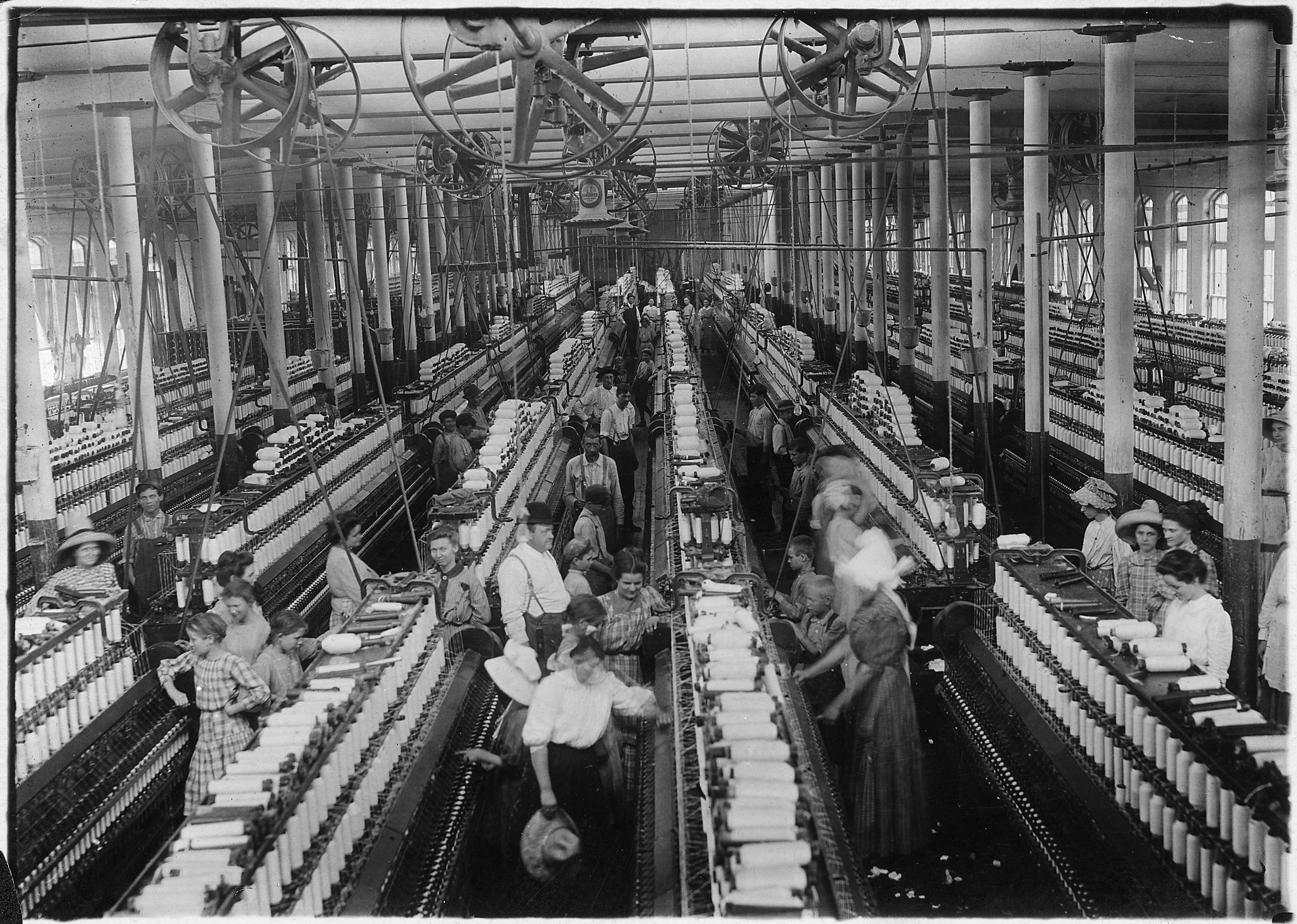
What were working hours so long for factory workers?
The owners wanted to produce as much product as possible to make more money
The owners didn't like the workers at all
As punishment for those who disobeyed
They liked their jobs so much
True or False, Karl Marx was the main founder of the Capitalism economic system?
True
False
True or False, Urbanization caused overcrowding and horribly dirty living and working conditions.
True
False
Which nation was the first to industrialize?
Britain
France
Germany
Japan
Napoleon?
What are the two main aspects of nationalist movements?
disbanned and fight
unite and flight
unification and equality
unification and separation

