wayground logo

Free Printable Worksheets

Font size

S
M
L
XL
Worksheets

Physical and Chemical Properties and Phase Change Quiz

Total questions: 71

Worksheet time: 1hrs 6mins

Name
Class
Date
1.

What is the melting point of water?

a)

0 degrees Celsius or 32 degrees Fahrenheit

b)

50 degrees Celsius or 122 degrees Fahrenheit

c)

100 degrees Celsius or 212 degrees Fahrenheit

d)

200 degrees Celsius or 392 degrees Fahrenheit

2.

What is the freezing point of water?

a)

50 degrees Celsius

b)

0 degrees Celsius

c)

100 degrees Celsius

d)

20 degrees Celsius

3.

What is the boiling point of water?

a)

50 degrees Celsius

b)

100 degrees Celsius

c)

200 degrees Celsius

d)

75 degrees Celsius

4.

What is the condensation point of water?

a)

100°C

b)

200°C

c)

50°C

d)

0°C

5.

What are some examples of physical properties of matter?

a)

Flexibility, transparency, magnetism

b)

Taste, smell, weight

c)

Color, shape, size, density, melting point, boiling point, and conductivity

d)

Sound, taste, odor

6.

What are some examples of chemical properties of matter?

a)

Melting point, boiling point, and solubility

b)

Flammability, reactivity, and toxicity

c)

Density, volume, and mass

d)

Color, texture, and shape

7.

Explain the phase change diagram and its significance.

a)

The phase change diagram shows the transitions between liquid, gas, and plasma states of a substance as temperature and pressure change.

b)

The phase change diagram shows the transitions between solid, liquid, and plasma states of a substance as temperature and pressure change.

c)

The phase change diagram shows the transitions between solid, gas, and plasma states of a substance as temperature and pressure change.

d)

The phase change diagram shows the transitions between solid, liquid, and gas states of a substance as temperature and pressure change.

8.

How does temperature affect the phase change of a substance?

a)

Temperature affects the phase change of a substance by causing it to transition from one phase to another.

b)

Temperature has no effect on the phase change of a substance

c)

Temperature only affects the color of the substance

d)

Phase change of a substance is only influenced by pressure, not temperature

9.
Is sharpening a pencil a physical or chemical change?
a)
Physical 
b)
Chemical
10.
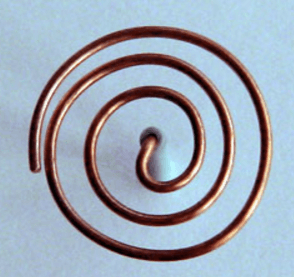
Is bending copper wire a physical or chemical change?
a)
Physical
b)
Chemical
11.
Is melting butter a physical or chemical change?
a)
Physical
b)
Chemical
12.

Any time something burns, it is going through a

a)

chemical change

b)

physical change

13.

A copper penny turning green after a few years is an example of ...

a)

Chemical Change

b)

Physical Change

14.

The end results of a chemical reaction are called

a)

products

b)

reactants

c)

explosion

d)

a pile of goo

15.

The substances that go into a chemical reaction are called

a)

reactants

b)

products

c)

molecules

d)

mixtures

16.

Which of the following is a clue that a chemical change has occurred? (Choose all correct answers.)

a)

Formation of a gas (bubbles)

b)

Color change

c)

Phase change

d)

Produces light or heat

17.

Which of the following could indicate that a chemical change took place?

a)

Change in color

b)

Production of Energy

c)

Formation of Gas

d)

All are correct

18.

Identify what type of change happening in the picture below...

a)

Chemical Change

b)

Physical Change

c)

Endothermic Reaction

d)

Exothermic Reaction

19.

Identify what type of change happening in the picture below...

a)

Chemical Change

b)

Physical Change

c)

Endothermic Reaction

d)

Exothermic Reaction

20.

Which of the following is an example of a physical change?

a)

A glass falling and shattering on the floor.

b)

Baking a birthday cake.

c)

Burning a piece of paper.

d)

Baking soda and vinegar mixing together.

21.

Which is not a clue that could indicate a chemical change has occurred?

a)

Change in color

b)

Change in shape

c)

Release of energy

d)

Formation of an odor

22.
In a ___________change, a substance changes into a different substance.
a)
Physical
b)
Chemical
23.
The Law of Conservation of Mass states
a)
that matter exists in all states and reacts the same
b)
that matter can only be changed into new substances by introducing a catalyst
c)
that matter exists in the same state throughout any chemical change
d)
that matter cannot be created or destroyed and that the mass of the products must equal the mass of the reactants
24.
An gel ice pack getting cold after you put it in the freezer for an hour.
a)
Chemical Change
b)
Physical Change
25.
Which of the following IS a physical change?
a)
Getting a haircut
b)
Rusty metal
c)
sour milk
d)
A compound
26.
Any change that alters a substance without changing it into another substance is a(n) ____________ change. 
a)
Physical
b)
Chemical
27.
____________ is anything that has mass and takes up space.
a)
Matter
b)
An Element
28.
In a physical change, some of the physical properties of the substance may be altered and the chemical composition remains the same. 
a)
True
b)
False
29.
Properties that can be measured or observed without matter changing to an entirely different substance.
a)
Chemical Properties of Matter
b)
Physical Properties of Matter
c)
Physical Change
d)
Chemical Change
30.
Properties that can be measured or observed only when matter undergoes a change to become an entirely different kind of matter.
a)
Evaporation
b)
Density
c)
Physical Properties Of Matter
d)
Chemical Properties of Matter
31.
Which property is an example of a chemical property?
a)
The ability to burn
b)
The ability to dissolve
c)
The ability to evaporate
d)
The ability to melt
32.
Density, melting point, boiling point:These may all be classified as
a)
chemical properties
b)
physcial properties
33.
Silver is a white metal that is an excellent conductor. Silver tarnishes when exposed to air and light. The density of silver is 10.49 g/cm3 The melting point is 962oC and the boiling point is 2000oC. A chemical property of silver is
a)
melting point
b)
boiling point
c)
density
d)
tarnishing
34.
Juan observes these properties of an unknown substance. The substance is white, has a crystaline structure, dissolves in water and burns when a flame is applied. What is a chemical property of the substance?
a)
color
b)
crystaline structure
c)
dissolves
d)
burns
35.
you test by seeing which material can scratch the other material
a)
Hardness
b)
Malleability
c)
Density
d)
Conductivity
36.
temperature at which a substance changes from solid to liquid
a)
Conductivity
b)
Melting Point
c)
Hardness
d)
Boiling Point
37.
The ability of matter to conduct electric current or heat
a)
Solubility
b)
Mass
c)
Weight
d)
Conductivity 
38.
An attractive force for some metals.
a)
Conductivity
b)
Solubility
c)
Magnetism
d)
Mass 
39.
This is an example of a
a)
physical change
b)
chemical change
40.
Ability to rust is this type of property:
a)
Physical property
b)
Chemical property
41.
What is anything that has mass and takes up space?
a)
matter
b)
substance
c)
chemistry
d)
property
42.
A physical property can be observed with your
a)
Eyes
b)
Ears
c)
Tastes
d)
All of the above
43.
Paper burning and metal rusting are examples of a
a)
physical property
b)
chemical property
c)
physical change
d)
chemical change
44.
The formation of a precipitate is evidence that a _________________ has taken place.
a)
physical property
b)
chemical property
c)
physical change
d)
chemical change
45.
The formation of gas bubbles is evidence that a _________________ has taken place.
a)
physical property
b)
chemical property
c)
physical change
d)
chemical change
46.
What is the formula for density?
a)
density = mass x volume
b)
density = mass / volume
c)
density = mass + volume
d)
density = mass - volume
47.
Jack has a rock. The rock has a mass of 14g and a volume of 2cm3. What is the density of the rock?
a)
7 mL
b)
7 g/cm3
c)
28 g/cm3
d)
1/7 g/cm3
48.
Frank has an eraser. It has a mass of 4g, and a volume of 2cm3. What is its density?
a)
8 g/cm3
b)
2 g/cm3
c)
1/2 g/cm3
d)
24 g/cm3
49.

Burning Wood

a)

Physical Property

b)

Chemical Property

c)

Physical Change

d)

Chemical Change

50.

Melting Ice into Water

a)

Physical Property

b)

Chemical Property

c)

Physical Change

d)

Chemical Change

51.

Baking Cookies

a)

Physical Property

b)

Chemical Property

c)

Physical Change

d)

Chemical Change

52.

Boiling Point

a)

Physical Property

b)

Chemical Property

c)

Physical Change

d)

Chemical Change

53.

Folding Origami

a)

Physical Property

b)

Chemical Property

c)

Physical Change

d)

Chemical Change

54.

Malleability

a)

Physical Property

b)

Chemical Property

c)

Physical Change

d)

Chemical Change

55.

Flammable

a)

Physical Property

b)

Chemical Property

c)

Physical Change

d)

Chemical Change

56.

Hardness

a)

Physical Property

b)

Chemical Property

c)

Physical Change

d)

Chemical Change

57.

Changing color

a)

Physical Property

b)

Chemical Property

c)

Physical Change

d)

Chemical Change

58.

Explosion of fireworks.

a)

Physical Property

b)

Chemical Property

c)

Physical Change

d)

Chemical Change

59.

Evaporation of water

a)

Physical Property

b)

Chemical Property

c)

Physical Change

d)

Chemical Change

60.

Getting a haircut

a)

Physical Property

b)

Chemical Property

c)

Physical Change

d)

Chemical Change

61.

Taste

a)

Physical Property

b)

Chemical Property

c)

Physical Change

d)

Chemical Change

62.

Odor

a)

Physical Property

b)

Chemical Property

c)

Physical Change

d)

Chemical Change

63.

A solid forms when two liquids are mixed.

a)

Physical Property

b)

Chemical Property

c)

Physical Change

d)

Chemical Change

64.

Physical or chemical?

a)

Physical

b)

Chemical

65.

Physical or chemical?

a)

Physical

b)

Chemical

66.

Physical or chemical?

a)

Physical

b)

Chemical

67.

Physical or chemical?

a)

Physical

b)

Chemical

68.

Physical or chemical?

a)

Chemical

b)

Physical

69.

Physical or Chemical?

a)

Physical

b)

Chemical

70.

Physical or chemical?

a)

Physical

b)

Chemical

71.

Physical or chemical?

a)

Physical

b)

Chemical