
 Worksheets
CBA #3 Test Review - Earth and Space
Total questions: 99
Worksheet time: 3hrs 17mins
What are the four main phases of the moon?
half moon, waxing crescent, waning gibbous, blue moon
solar eclipse, lunar eclipse, equinox, solstice
new moon, first quarter, full moon, and third quarter
new moon, supermoon, harvest moon, blood moon
Explain the difference between a waxing and waning moon.
The waxing moon is when the visible portion of the moon is increasing, while the waning moon is when the visible portion of the moon is decreasing.
The waxing moon is when the moon is full, while the waning moon is when it's a new moon
The waxing moon is when the moon is closer to the Earth, while the waning moon is farther away
The waxing moon is when the moon is made of wax, while the waning moon is made of wane
What causes the change in seasons on Earth?
The distance from the Earth to the moon
Global warming and cooling
The rotation of the Earth
Axial tilt and orbit around the sun
How does the tilt of the Earth's axis contribute to seasonal changes?
The tilt of the Earth's axis causes the Earth to move closer to the sun in summer and farther away in winter
The tilt of the Earth's axis causes the Earth to rotate faster in summer and slower in winter
The tilt of the Earth's axis has no impact on seasonal changes
The tilt of the Earth's axis causes different parts of the Earth to receive varying amounts of sunlight throughout the year.
What causes the difference between spring tides and neap tides?
The difference is caused by the alignment of the sun, moon, and earth.
The difference is caused by the rotation of the earth.
The difference is caused by the gravitational pull of the moon.
The difference is caused by the change in sea level due to global warming.
Explain the concept of neap tides and spring tides.
Neap tides happen when the moon is closest to the Earth, resulting in maximum tidal range.
Neap tides occur when the sun, moon, and Earth form a right angle, resulting in minimal tidal range. Spring tides occur when the sun, moon, and Earth are aligned, resulting in maximum tidal range.
Neap tides occur when the sun, moon, and Earth are aligned, resulting in maximum tidal range.
Spring tides occur when the sun, moon, and Earth form a right angle, resulting in minimal tidal range.
Describe the lunar cycle and its different phases.
The different phases of the lunar cycle are new moon, waxing crescent, first quarter, waxing gibbous, full moon, waning gibbous, third quarter, and waning crescent.
The lunar cycle has four phases: new moon, half moon, full moon, and quarter moon
The lunar cycle has six phases: new moon, half moon, full moon, quarter moon, gibbous moon, and crescent moon
The lunar cycle has only two phases: full moon and new moon
How do the different moon phases affect the tides on Earth?
The size of the moon affecting the tides
The temperature of the moon affecting the tides
The gravitational pull of the moon on the Earth's oceans
The color of the moon affecting the tides
What causes the phenomenon of 'Lunar Eclipse'?
It is caused when the Earth comes between the Sun and the Moon, and the Earth's shadow falls on the Moon.
It is caused when the Moon comes between the Sun and the Earth, and the Moon's shadow falls on the Earth.
It is caused when the Sun comes between the Earth and the Moon, and the Sun's shadow falls on the Moon.
It is caused when the Earth moves out of the Sun's shadow.
What is the role of the Sun in the changing of seasons on Earth?
The Sun's distance from the Earth changes, causing the seasons.
The Sun's temperature changes, causing the seasons.
The Sun's position in relation to the Earth's tilted axis changes, causing the seasons.
The Sun's rotation around the Earth causes the seasons.
If today is a new moon, what will be the moon phase after 7 days?
First quarter
Full moon
Waxing crescent
Waning gibbous
What is the difference between a solar and a lunar eclipse?
A solar eclipse occurs when the Moon comes between the Sun and the Earth, while a lunar eclipse occurs when the Earth comes between the Sun and the Moon.
A solar eclipse occurs when the Earth comes between the Sun and the Moon, while a lunar eclipse occurs when the Moon comes between the Sun and the Earth.
A solar eclipse occurs when the Sun comes between the Earth and the Moon, while a lunar eclipse occurs when the Moon comes between the Sun and the Earth.
A solar eclipse and a lunar eclipse are the same.
What is the role of the Moon in the changing of tides on Earth?
The Moon's distance from the Earth changes, causing the tides.
The Moon's temperature changes, causing the tides.
The Moon's gravitational pull on the Earth's oceans changes, causing the tides.
The Moon's rotation around the Earth causes the tides.
How many high and low tides occur in a 24 hour period?
1 low 2 high
2 low 2 high
3 low 2 high
4 low 4 high
Approximately how long does it take the moon to make one revolution around Earth?
365.25 days
24 hours
29 days
84 years
True or False: The moon does not create it own light, but reflects light from the sun.
True
False


In position 1, which hemisphere receives the most direct sunlight?
Northern
Southern
Both
Neither

At which position of the moon would people on Earth see a quarter moon?
1
2
3
4
How does the angle of sunlight that reaches the Earth change in the different seasons?
More direct during the summer
More direct during the winter
It does not change
It only changes at the equator

What phases of the moon is shown at position H?
Crescent
New
Full
Gibbous

Which model best shows the relationship between the Earth, moon, and sun?
A
B
C
D
What moon phases comes after a waxing crescent?
Full
Waning Crescent
1st Quarter
Waxing Gibbous
What is the alignment of the Earth, moon, and sun during a solar eclipse?
Sun, Moon, Earth
Sun, Earth, Moon
Earth, Sun, Moon

What season is being experienced at the "X" and how much light is it receiving?
Fall and lots of light
Summer and less light
Spring an lots of light
Winter and less light

Which phases of the moon could be observed from Earth when the moon is at position C?
1st Quarter
Waning Cresecent
Waxing Crescent
3rd Quarter


Wha type of tide would this arrangement of earth-moon-sun create?
full moon tide
new moon tide
neap tide
spring tide
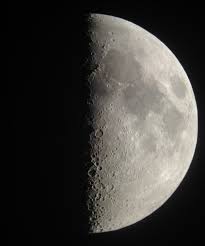
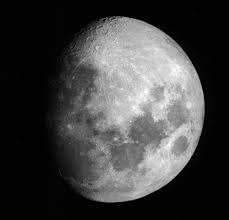

Which of these cycles is a direct result of Earth's rotation?
Day and Night
Moon Phases
Rainfall and evaporation
Seasons
______ tides, tides that are weaker than normal, happen when the Moon is at first or last quarter phase and the sun and moon interfere with each other.
High
Low
Neap
Spring

Which letter illustrates a 3rd quarter Moon
A
B
C
D
Which of the following is NOT true about main sequence stars?
as temperature increases so does luminosity
all medium/ average sized stars
include red giants, yellow stars, blue giants
has the least amount of stars
Which star would have the longer life span?
main sequence
blue giant

How is it possible for white dwarf stars to have a lower luminosity than the sun, even though the sun has a cooler surface temperature.
The sun is smaller than a white dwarf.
The sun is larger than a white dwarf.

Most of the stars on the HR diagram are classified as which type of star?
White Dwarfs
Main Sequence
Giants
Supergiants

What is the color of the stars with the highest surface temperature?
Red
Yellow
White
Blue
The brightness of a star depends on?
its size
its temperature
its distance from earth
All of the options
All stars____?
Reflect light from the Sun
Produce their own light
wander off their star path
are cold
Stars are made mostly
of which two elements?
Hydrogen and helium
Hydrogen and oxygen
Nitrogen and helium
Nitrogen and oxygen
In about 5 billion years, our sun will
grow 100 times its size into its
next stage called a
Supernova
Neutron star
Red giant
White dwarf
When a star runs out of hydrogen gas to
fuse, what element must then be fused
in order to form a Red Giant?
Nitrogen
Oxygen
Iron
Helium
The biggest most massive stars in the
universe are known as
Blue giants
Red giants
White giants
Red supergiants
Space and all the matter & energy in it
Space
Universe
Earth
Milky Way
the universe began a tremendous expansion 13-15 billion years ago
big bang theory
red shift
light abundance
theory of life
The theory that provide support of the big bang theory
red shift
blue shift
red expansion
theory of life
The universe is currently
expanding
staying the same
getting smaller
shrinking
What were the original two elements in our universe?
Hydrogen and Lithium
Helium and Oxygen
Helium and Hydrogen
None of the above
Cosmic Microwave Background Radiation (CMBR) is the term used to describe the residual microwave radiation observed everywhere in the universe that seems to have no single source. The observation of CMBR is used as evidence of the Big Bang Theory because it is believed to be -
the result of collisions between neighboring galaxies.
particles of dust that have absorbed radioactivity.
radiation left over from the rapid expansion of matter.
light energy emitted from the source of the Big Bang.
The Big Bang Theory suggests that our universe formed as the result of a huge explosion that sent all existing matter flying outward from a single point. The Big Bang Theory is supported by which of these observations?
All matter in the universe is composed of the same atoms.
All galaxies appear to be moving away from all other galaxies.
All stars in the universe are approximately the same age.
The universe is relatively the same temperature in all locations.
All the stars we observe from Earth emit light that is shifted, to varying degrees, to longer wavelengths. This evidence is used to support the Big Bang Theory because it shows that stars we observe -
are all older than our Sun.
are made up of helium gas.
use nuclear fusion to make light.
are moving away from us.
The red-shift in the spectral lines of light, reaching us from other galaxies implies that these galaxies ____________.
Are moving closer to one another
Are moving farther apart from one another
Are in rapid rotation
Redshift doesn´t exist


Which color has the longest wavelength?
Yellow
Red
Green
Purple

Which of the following is not in the electromagnetic spectrum?
Light waves
Sound waves
Radio Waves
X-rays

In which list are forms of electromagnetic energy arranged in order from longest to shortest wavelength?
Microwave -> Radio wave -> Infrared rays
Visible light -> x-ray -> radio wave
Microwave -> infrared -> visibile light
Infrared -> radio wave -> ultraviolet

Scientists observed a celestial object emitting a wavelength of 3 x 10⁻¹⁰m. What type of telescope did the scientists have to use to view this?
Radio wave
Infrared ray
X-ray
Gamma Ray
Scientists observed a celestial object emitting a wavelength of 3 x 10³m. What type of telescope did the scientists have to use to view this?
Radio wave
Infrared ray
X-ray
Gamma Ray
What type of galaxy is the Milky Way?
Spiral
Elliptical
Irregular
Transition
This type of galaxy is generally considered to be older and is no longer forming stars.
Spiral
Irregular
Elliptical
Transition Galaxies

Have you studied for your CBA #3 to the BEST OF YOUR ABILITY TO MAKE SURE YOU UNDERSTAND EVERYTHING?
YES
NO

