Worksheets
TOPIC 3_UNIVERSAL LAW OF GRAVITATION
Total questions: 30
Worksheet time: 45mins
What is the value of G and g respectively?
G = 6.67 x 10⁻¹¹ N.m2/kg2
g = -9.80 m/s2
G = 6.67 x 10¹¹ N.m2/kg2
g = -9.80 m/s2
G = 6.67 x 10⁻¹¹ N.m2/kg2
g = 9.80 m/s2
G = 6.67 x 10¹¹ N.m2/kg2
g = 9.80 m/s2
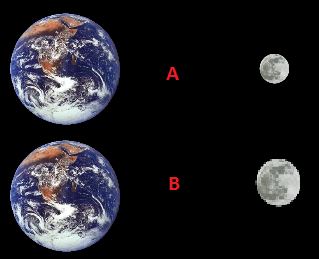
Which has greater gravitational force? Earth or moon? Why?
Earth, because it has more mass than the moon.
Moon, because it has more mass than the moon.
Earth, because it has less mass than the moon.
Moon, because it has less mass than the moon.
Which will take more force to launch a rocket? Earth or moon, why?
Earth, because it has more mass. Thus, it has more gravitational force and the stronger the pull.
Moon, because it has more mass. Thus, it has more gravitational force and the stronger the pull.
Earth, because it has less mass. Thus, it has less gravitational force and the weaker the pull.
Moon, because it has less mass. Thus, it has less gravitational force and the weaker the pull.
What is gravitational lensing?
The bending of light due to the strong gravity produced by massive stars.
The scattering of light due to the strong gravity produced by massive stars.
The refraction of light in a gravitational field.
The absorption of light by a massive object.
Which of the following is a consequence of strong gravitational lensing?
Multiple images of the same distant object.
Change in the color of light.
Polarization of light.
Dispersion of light.
Where will the astronauts feel more weightless in the outerspace? Why?
Near the earth, because of its greater mass, thus, greater gravitational force.
Near the earth, because of its greater mass, thus, weaker gravitational force.
Near the moon, because of its greater mass, thus, greater gravitational force.
Near the moon, because of its lesser mass, thus, weaker gravutational force.
Where will the astronauts feel more weightless in the outerspace? Why?
Near the earth, because of its greater mass, thus, greater gravitational force.
Near the earth, because of its greater mass, thus, weaker gravitational force.
Near the moon, because of its greater mass, thus, greater gravitational force.
Near the moon, because of its lesser mass, thus, weaker gravutational force.

Which configuration will result in the greatest gravitational force?
small masses far apart
large masses far apart
small masses close together
large masses close together

How is the gravitational force between to objects related to their mass
They are directly proportional
They are inversely proportional
They do not affect each other
They are equal

Why doesn't the Moon fall to the ground?
It has too much mass to move
It pulls Earth with an equal force
It is fast enough to make a circle
It is too far away to feel its gravity
Why do astronauts bounce so high on the moon?
The moon has more gravity
The moon has no gravity
The moon has less gravity
The mass of most objects are too small for them to experience gravity between them.
True
False
Why doesn't the sun pull us off the earth?
It is too small
It is too far away
It is too big
It is too close
When will the forces of gravity between two objects be the GREATEST?
when the masses of both objects are small and the objects are far apart
when the masses of both objects are large and the objects are close together
when the masses of both objects are small and the objects are close together
when the masses of both objects are large and the objects are far apart
When will the gravity between two objects be the LEAST?
when the masses of both objects is small and the objects are close together
when the masses of both objects is small and the objects are far apart
when the masses of both objects is large and the objects are close together
when the masses of both objects is large and the objects are far apart