
 Worksheets
BIO 101 Photosynthesis Practice
Total questions: 75
Worksheet time: 3hrs 52mins
Chloroplast
Oxygen and Sugar (glucose)
Sunlight and Sugar (glucose)
water and carbon dioxide
6CO2 + light + 6H2O --> 6O2 + C6H12O6
6CO2 + C6H12O6 + 6H2O --> 6O2 + light
6O2 + light + 6H2O --> 6CO2 + C6H12O6
6O2 + C6H12O6 --> 6H20+ Sugar + ATP

This is the chemical formula for a molecule of...
Oxygen
Carbon dioxide
Glucose
Water
What is the purpose of photosynthesis?
To release energy
To create glucose
To grow
To get oxygen for respiration
Which of these factors woudl not affect the rate of photosynthesis? .
Light intensity
Water
Temperature
Oxygen levels
Carbon Dioxide concentration

Main products of the Calvin Cycle
Oxygen, NADP+, ADP
Glucose, CO2, ADP
ADP, NADP+, Glucose
ATP, NADPH, Oxygen
The Calvin Cycle occurs in the
Thylakoid
Grana
Inner membrane of chloroplast
Stroma


What supplies the electrons during photolysis?
oxygen
water
glucose
rubisco
Choose the statement that best describes light reaction.
It converts CO2 to sugar molecule
It converts light energy to chemical energy of ATP and NADPH
It takes place in the stroma
It converts water into hydrogen gas and oxygen gas
Which of the following is not needed to start the light reaction
H2O
ADP + P
CO2
chlorophyll
What is NOT the product of light dependent reaction?
ATP
NADPH
H2O
O2
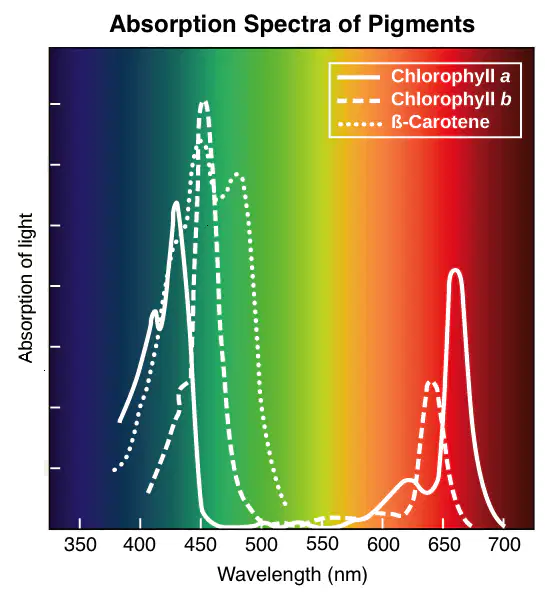
Which of the following light color tends to be absorbed by plant chlorophyll?
Red
Green
yellow
Light green
Which color of light will we see from B-carotene pigment?
Red
Green
yellow-orange
blue green
•Plants and plant-like organisms make their own food or energy (glucose) from sunlight.
Chemotrophs
Heterotrophs
Autotrophs
Saprophytes

What begins the process of photosynthesis?
carbon dioxide is diffused into the stroma to, in a series of reactions, create sugar
Water is split apart to release electrons and create a hydrogen concentration gradient
ATP and NADPH energize reactants to produce oxygen and glucose
Light energy is absorbed by pigments to energize the electron transport chain

What is water's role in photosynthesis?
To create a liquid solute for oxygen to be made.
To provide electrons and hydrogen, to energize ATP and NADPH.
To help plants with gas exchange, such as diffusion of CO2.
To hydrate plants and removes harmful waste products.

What do pigments do?
Absorb specific wavelengths(color) of visible light for energy.
Absorb CO2 in the Stroma to create sugar.
Transports e- in the electron transport chain.
Transports energy between plant cells.

What are the two main energy carrying molecules used to create glucose?
ADP and ADNH+
ATP and NADPH
Starch and Cellulose
Glucose and Hydrogen

When glucose is produced in the dark reactions, what molecules provided this sugar with the energy it carries?
ATP and NADPH
Sunlight
ADP and NADP+
H2O and CO2

Where is energy stored and released in the molecules of photosynthesis?
In the molecules bonds between atoms
Energy is transferred freely
Energy radiates into or out of molecules
Enzymes carry the energy in vacuoles

What are the primary ways glucose is stored in plants?
As glycogen and fat
As starch, cellulose, and oils
In the stroma of the chloroplast
As glycogen and cellulose

As the intensity of light increases, the rate of photosynthesis will...
steadily increase
increase exponentially
increase, then level off
decrease at first, then increase

Which of the following statements is true about pigments?
Chlorophyll is best at absorbing green and yellow light
Chlorophyll a makes plants either violet or red
Carotenoid is best at absorbing yellow, orange, and red light
Carotenoid is best at absorbing blue-violet light

Which of the following statements about pigments is true?
Chlorophyll A is much better at absorbing light than Chlorophyll B
Phycocyanin would make a plant look blue or violet
Yellow light is reflected by phycoerythrin
Carotenoids would make a plant look a lighter shade of blue or green
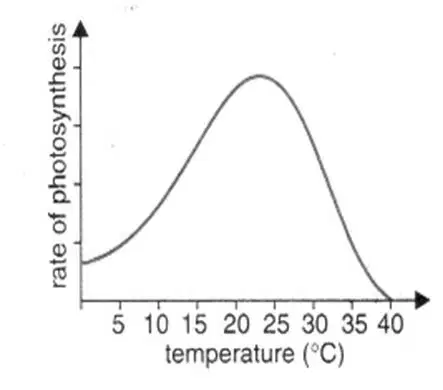
Which of the following best explains why the rate of photosynthesis dramatically drops off at extreme cold temperatures?
there is not enough CO2 to fuel the reaction
there is not enough light to power the reaction
the shape of enzymes involved in the reaction denature
the mitochondria cannot function at these temperatures
there is not enough kinetic energy to provide many collisions
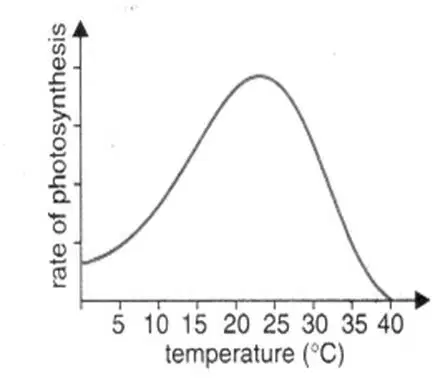
Which of the following best explains why the rate of photosynthesis dramatically drops off at extreme hot temperatures?
there is not enough CO2 to fuel the reaction
there is not enough light to power the reaction
the enzymes involved in the reaction denature
the mitochondria cannot function at these temperatures
all of the above could explain why the rate drops off

Which of the following best explains how increasing CO2 concentration affects the rate of photosynthesis?
as CO2 increases, the rate of photosynthesis rapidly increases until it plateaus due to enzymes being saturated
as CO2 increases, the rate of photosynthesis increases continuously since CO2 is a needed reactant
as CO2 concentration rises, the rate of photosynthesis increases until it becomes toxic to the plant's leaves
there is no correlation between CO2 concentration and the rate of photosynthesis

What is the source of activation energy to drive the photosynthetic reaction?
Bonds in carbon dioxide being broken apart
Glucose being broken down
Sunlight being captured by chlorophyll
Water being split into H+ ions
Combustion of oxygen gas

Where is the energy stored in ATP that will be used to energize the Calvin Cycle?
In the ribose sugar
In the bonds between ribose and adenine
In the adenine base
In the phosphates
In the bonds between the phosphates

Match the following structures found in the chloroplast to their function
Holds the form of the chloroplast and lets substances in and out.
Outer membrane
Traps light energy and photolyzes (splits) water
Thylakoid
A stack of thylakoids
Grana
The inner fluid of the thylakoids
Lumen
The fluid of the inner chloroplast compartment. Contains enzymes, starch, and the chloroplast's genome.
Stroma

NAD and NADPH
NADP + and Glucose
NADPH and ATP
Oxygen and NADPH

Where does the Oxygen we breathe come from?
From chlorophyll
From the Krebs cycle in mitochondria
From water used in the photolysis reaction
From water in respiration reactions

Reorder the following stages of the light dependent processes in photosynthesis
Sunlight strikes the chlorophyll in the thylakoid membranes
Light energy is used to split water into oxygen, protons and electrons
The electrons pass from the chlorophyll to an electron transport chain
The energy lost by electrons as they pass through the electron transport chain is used to make ATP
NADP+ molecules are converted to NADPH as they carry electrons to the stroma of the chloroplast for the light independent reaction
The stroma is the region outside the
chloroplasts
thylakoids
plant cells
all of the above
Where do the light-dependent reactions take place?
in the stroma of the chloroplast
within the thylakoid membranes
within the mitochondria membranes
in the outer membrane of the chloroplasts
What are the products of the light-dependent reactions?
ATP, NADPH, and oxygen gas
ATP, carbon dioxide gas, and NADPH
carbon dioxide gas, oxygen gas, and NADPH
oxygen gas and glucose
Which of the following activities happens within the stroma?
Photosystem I absorbs light.
ATP synthase produces ATP.
Electrons move through the electron transport chain.
The Calvin cycle produces sugars.
The Calvin cycle is another name for the...
light-independent reactions.
light-dependent reactions.
photosynthesis reaction.
electron transport chain.
The light reactions of photosynthesis provides the Calvin cycle with...
protons and electrons.
ATP and NADPH
CO2 and glucose.
light and chlorophyll.
The plants’ principal pigment is carotene.
True
False
During the light-dependent reactions, plants use the energy in ATP and NADPH to build high-energy sugars.
True
False
harvesting light energy to make ATP
receiving electrons from the thylakoid membrane ETC of photosystem I
generation of molecular oxygen from water
In photosystem II, the energy from the sun is used to split water into electrons, 2 protons (H+), and 1 atom of oxygen. The H+'s build up inside the lumen of the thylakoid membrane to build a concentration gradient. What are this H+ gradient used for?
thylakoid membrane and inner mitochondrial membranes
Reactions that consume CO2 take place in
they store CO2 obtained from the night to use for photosynthesis during the day time.
fix CO2 into citrate by combining it with RuBP in the Calvin cycle.
obtain CO2 through their roots during the day.
fix CO2 into organic acids in the mesophyll cells, which do not rely on stomata.
have higher rates of photorespiration.
can can fix CO2 into OAA so it can be used later allowing the stomata to only open for quick bursts of CO2
only open their stomata at night
The Calvin cycle is responsible about 90% of all carbon fixation. What is carbon fixation?
concentrating carbon in the earth's atmosphere in the form of CO2
removing carbon from the Calving cycle and releasing it as CO2
Splitting CO2 to make ATP in the Calving cycle
remodeling inorganic carbon from CO2 into organic glucose
Carbon dioxide, ATP and NADPH
Exit: Carbon dioxide
Exit: Glucose
Exit: Oxygen
Exit: Water vapor

Oxidation is...
Gain of electrons
Loss of electrons
Gain of Hydrogen atoms
burning
True or False? Electrons lose energy as they pass through ETC proteins.
True
False
Which of these would be considered a C4 Pathway plant?
aglae
oak tree
cactus
sugar cane
Which type of plant is adapted to live in areas that are hot AND humid?
C3
C4
CAM
All
Most plants on earth are __________ plants.
C3
C4
CAM
ALL
CAM plants keep stomata closed in daytime, thus reducing loss of water. They can do this because they
fix CO2 into organic acids (OAA) during the night when temperatures are cooler.
fix CO2 into by combining it with RuBP in the Calvin cycle.
obtain CO2 through their roots during the day.
are able to store light energy in their mesophyll for use at night
Which of these would be considered a CAM pathway plant?
cactus
corn
elm tree
algae
CAM plants have a different adaptation to what climate
cold and wet
hot and dry
both
none of the above

This leaf structure regulates the opening and closing of stomata.
guard cell
chlorophyll
oxygen
Which part of the leaf is involved in conserving water in dry conditions?
stroma
chloroplast
veins
stomata

The enzyme responsible for Carbon Fixation in C3 Photosynthesis is
RuBisCo
PEP Carboxylase
Hexokinase
Pyruvate DeHydrogenase
Which part of the leaf consists of xylem and phloem?
vascular bundle
bundle sheath
palisade mesophyll
spongy mesophyll
The outermost layer of CELLS of the leaf is the
cuticle
epidermis
spongy mesophyll
bundle sheath

