wayground logo

Free Printable Worksheets

Font size

S
M
L
XL
Worksheets

8.8AB Components of the Universe

Total questions: 204

Worksheet time: 4hrs 23mins

Name
Class
Date
1.
The Milky Way galaxy is described as a disk of stars orbiting a central point on the disk. Which of these best explains why people on Earth cannot see the entire shape of the Milky Way?
a)
Earth is a part of this galaxy
b)
Many more stars exist outside the galaxy
c)
The stars in the center of the galaxy are extremely small.
d)
The center of the galaxy consists of a dense cluster of stars.
2.

Use the Hertzsprung Russell Diagram to answer the following question. Which of these observations of Epsilon Eridani is most likely accurate?

a)

Epsilon Eridani is less bright than the Sun, has a surface temperature below 5,000 oC, and is red orange.

b)

Epsilon Eridani is brighter than the Sun, has a surface temperature below 5,000 oC, and is red orange.

c)

Epsilon Eridani is brighter than the Sun, has a surface temperature below 6,000 oC, and is red.

d)

Epsilon Eridani is less bright than the Sun, has a surface temperature below 5,000 oC, and is yellow

3.

Use the Hertzsprung Russell Diagram to answer the following question. Which of these observations of Procyon is most likely accurate?

a)

Procyon is less bright than the Sun, has a surface temperature below 5,000 oC, and is red orange.

b)

Procyon is brighter than the Sun, has a surface temperature below 5,000 oC, and is red orange.

c)

Procyon is brighter than the Sun, has a surface temperature of about 6,000 oC, and is yellow.

d)

Procyon is less bright than the Sun, has a surface temperature of about 6,000 oC, and is yellow

4.

Use the Hertzsprung Russell Diagram to answer the following question. Which of these observations of Tau Ceti is most likely accurate?

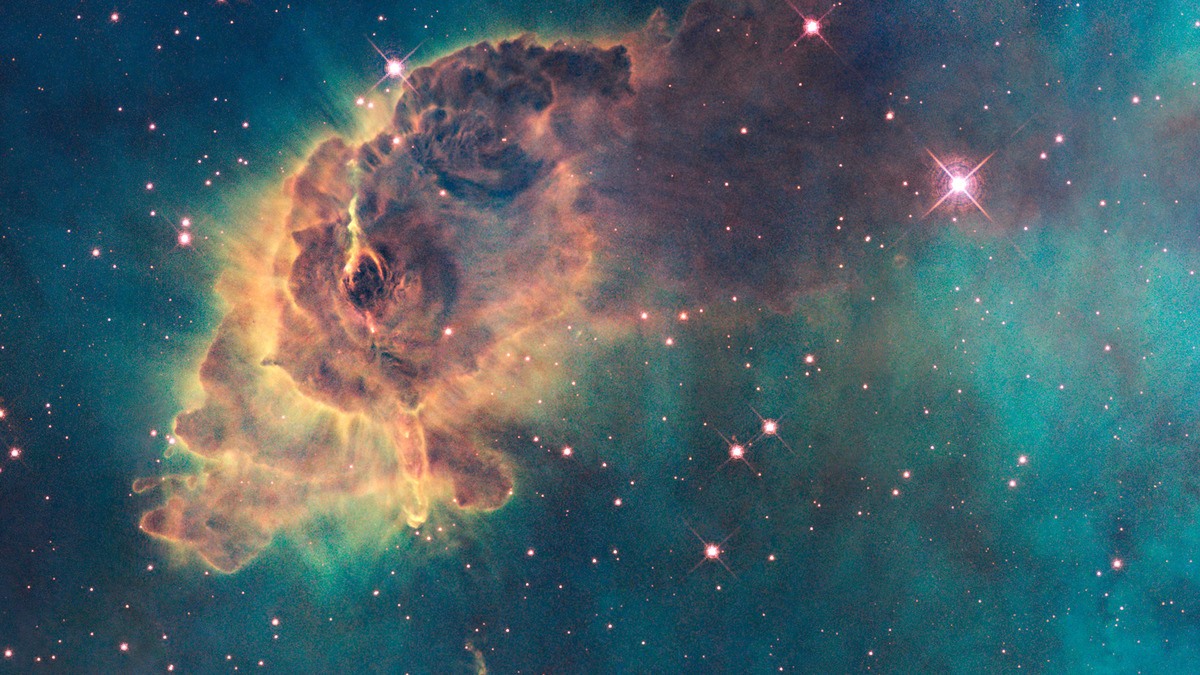
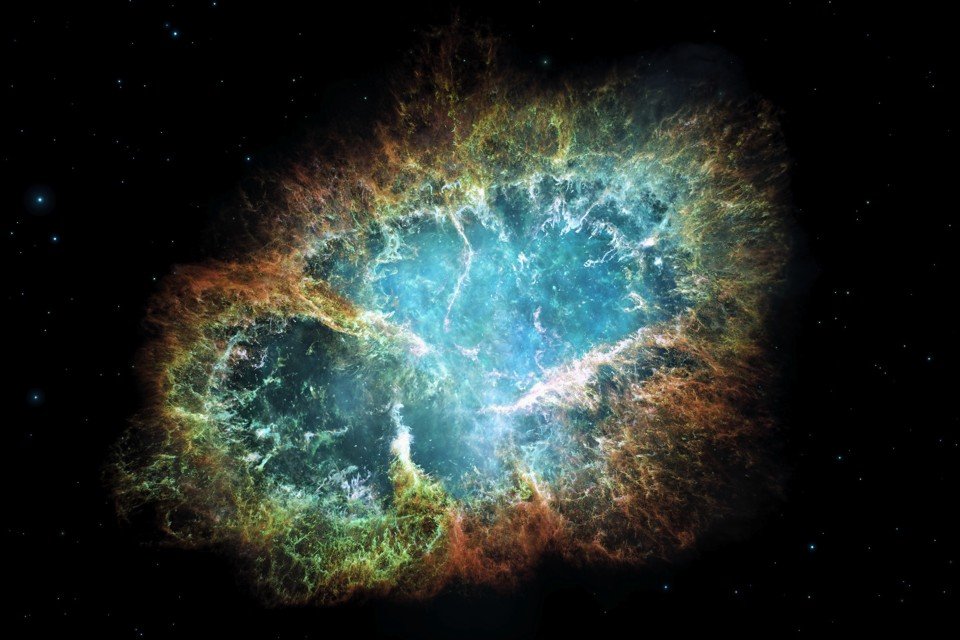
a)

Tau Ceti is less bright than the Sun, has a surface temperature above 5,000 oC, and is red orange.

b)

Tau Ceti is brighter than the Sun, has a surface temperature below 5,000 oC, and is red orange.

c)

Tau Ceti is brighter than the Sun, has a surface temperature below 5,000 oC, and is yellow.

d)

Tau Ceti is less bright than the Sun, has a surface temperature above 5,000 oC, and is yellow

5.
Based on this diagram which type of stars would belong to spectral class M and have the lowest luminosity?
a)
Main Sequence Stars
b)
Giants
c)
Super Giants
d)
White Dwarfs
6.
Based on this diagram which type of stars would belong to spectral class G and have the highest luminosity?
a)
Main Sequence Stars
b)
Giants
c)
Super Giants
d)
White Dwarfs
7.
Based on this diagram which type of stars would belong to spectral class B and have the lowest luminosity?
a)
Main Sequence Stars
b)
Giants
c)
Super Giants
d)
White Dwarfs
8.

Use the Hertzsprung Russell Diagram to answer the following question. How do the characteristics of Vega and Barnard's Star compare?

a)

Vega is cooler and less bright than Barnard's Star.

b)

Vega is hotter and brighter than Barnard's Star.

c)

Vega is cooler and brighter than Barnard's Star.

d)

Vega is hotter and less bright than Barnard's Star.

9.

Use the Hertzsprung Russell Diagram to answer the following question. How do the characteristics of Vega and Betelgeuse compare?

a)

Vega is cooler and less bright than Betelgeuse.

b)

Vega is hotter and brighter than Betelgeuse.

c)

Vega is cooler and brighter than Betelgeuse.

d)

Vega is hotter and less bright than Betelgeuse.

10.

Use the Hertzsprung Russell Diagram to answer the following question. How do the characteristics of Vega and Rigel compare?

a)

Vega is cooler and less bright than Rigel.

b)

Vega is hotter and brighter than Rigel.

c)

Vega is cooler and brighter than Rigel.

d)

Vega is hotter and less bright than Rigel.

11.
Which of these correctly compares the masses of different objects in the universe?
a)
A moon has less mass than a star and more mass than the planet it orbits.
b)
A planet has less mass than a galaxy and more mass than the star it orbits.
c)
A galaxy has less mass than a moon and more mass than a planet.
d)
A star has less mass than a galaxy and more mass than a planet.
12.

Use the Hertzsprung Russell Diagram to answer the following questions. A star that is several thousand time brighter than the sun with a temperature lower than 5,000oC and is red.

a)

Betelgeuse

b)

Deneb

c)

Sirius B

d)

Barnard's Star

13.

Use the Hertzsprung Russell Diagram to answer the following questions. A star that is several thousand time dimmer than the sun with a temperature higher than 6,000oC and is white.

a)

Betelgeuse

b)

Deneb

c)

Sirius B

d)

Barnard's Star

14.

Use the Hertzsprung Russell Diagram to answer the following questions. A star that is several thousand time dimmer than the sun with a temperature lower than 5,000oC and is red.

a)

Betelgeuse

b)

Deneb

c)

Sirius B

d)

Barnard's Star

15.

Use the Hertzsprung Russell Diagram to answer the following questions. A star that is several thousand time brighter than the sun with a temperature higher than 6,000oC and is white.

a)

Betelgeuse

b)

Deneb

c)

Sirius B

d)

Barnard's Star

16.
The universe has may different components.  Which list places four components of the universe in the most likely order from smallest to largest.
a)
Planets, Stars, Galaxies, Nebulae
b)
Nebulae, Stars, Planets, Galaxies
c)
Galaxies, Stars, Planets, Nebulae
d)
Planets, Stars, Nebulae, Galaxies
17.
Barnard's Star has a temperature of 2,800, what is its spectral class?
a)

Spectral Class O

b)
Spectral Class A
c)
Spectral Class G
d)
Spectral Class M
18.
Zeta Eridani has a temperature of 40,000 what is its spectral class?
a)
Spectral Class O
b)
Spectral Class A
c)
Spectral Class G
d)
Spectral Class M
19.
Procyon B has a temperature of 6,000, what is its spectral class?
a)
Spectral Class O
b)
Spectral Class A
c)
Spectral Class G
d)
Spectral Class M
20.
Alcor has a temperature of 11,000, what is its spectral class?
a)
Spectral Class O
b)
Spectral Class A
c)
Spectral Class G
d)
Spectral Class M
21.
What is the name of the gas/dust clouds that form stars?
a)
Nebulas
b)
Protostars 
c)
Supernova
d)
Neutron Star
22.
What is the name of the explosion at the death of a massive star?
a)
Supergiant
b)
Supernova
c)
Black Hole
d)
Nebula
23.
What is the main element in a stars composition? 
a)
Hydrogen 
b)
Helium 
c)
Lithium 
d)
Heavy Elements 
24.
The main elements in a star's composition are _______ and ________.
a)
hydrogen, helium
b)
carbon, helium
c)
hydrogen, iron
d)
helium, dark matter
25.
______ is a force that causes dust particles to stick together in a nebula.
a)
nuclear fusion
b)
gravity
c)
hydrogen
d)
iron
26.
For stars that are bigger than our sun what happens when it no longer a main sequence star?
a)
It becomes a protostar.
b)
It becomes a super giant.
c)
It becomes a white dwarf.
d)
It becomes a red giant.
27.
Low-mass stars eventually collapse into what final star remnant?
a)
Black holes
b)
Neutron stars
c)
White dwarfs
d)
Nebulae
28.
Very massive stars eventually collapse into what final star remnant?
a)
Neutron stars
b)
Black holes
c)
White dwarfs
d)
Protostars
29.
Massive stars (between low-mass and very massive) eventually collapse into what final star remnant?
a)
Black holes
b)
Neutron stars
c)
White dwarfs
d)
Protostars
30.
H-R diagrams measure both a star's ______ and _______. 
a)
mass and color
b)
absolute magnitude and tempurature
c)
brightness and composition
d)
location and type
31.
Very hot stars are what color? 
a)
Blue
b)
Yellow
c)
Red
d)
Orange
32.
Which star has the lowest luminosity?
a)
A
b)
B
c)
C
d)
D
33.
Which star has the lowest temperature?
a)
A
b)
B
c)
C
d)
D
34.
Which star is considered a Main Sequence Star?
a)
A
b)
B
c)
C
d)
D
35.
Put the stars in order from hottest to coolest.
a)
Blue, Red, White, Yellow, Orange, 
b)
Red, White, Yellow, Orange, Blue
c)
Blue, White, Yellow, Red, Orange
d)
Blue, White, Yellow, Orange, Red
36.
Which of these is in the correct order for very massive stars?
a)
nebula, protostar, main sequence star, red supergiant, supernova, black hole
b)
protostar, nebula, main sequence star, red supergiant, supernova, black hole
c)
nebula, protostar, red supergiant, main sequence star, supernova, black hole
d)
nebula, protostar, main sequence star, red supergiant, black hole, supernova
37.
A collection of stars, dust, and gas bound together by gravity is...
a)
Universe
b)
Solar System
c)
Planet
d)
Galaxy
38.

Our sun is in what stage?

a)

planetary nebula

b)

protostar

c)

main sequence

d)

red giant

39.

What color is our sun?

a)

orange

b)

yellow

c)

yellow white

d)

yellow orange

40.
After a supernova, the core can collapse into a neutron star, or if massive enough even a ___________.
a)
Black Hole
b)
White Dwarf
c)
Brown Dwarf
d)
Black Dwarf
41.
A black hole is an object so dense with so much gravity that even ________ cannot escape.
a)
man
b)
bacon
c)
spaceships
d)
light
42.
The color of a star depends on its
a)
size
b)
temperature
c)
shape
d)
magnitude
43.
Brightness of a star as seen from Earth
a)
parallax
b)
apparent magnitude
c)
absolute magnitude
d)
spectrum
44.
How old is our universe?
a)
13.7 billion years old
b)
4.6 billion years old
c)
5,000 years old
d)
13 years old
45.
As gravity pulls gas and dust into a sphere that becomes denser and hotter, and a sunlike star begins to form, it is called a(n)
a)
white dwarf
b)
red dwarf
c)
supergiant
d)
protostar
46.
a)

Star

b)

Galaxy

c)

Nebula

d)

Comet

47.
a)

Star

b)

Galaxy

c)

Nebula

d)

Asteroid

48.
a)

Star

b)

Comet

c)

Asteroid

d)

Planet

49.
a)

Star

b)

Comet

c)

Nebula

d)

Asteroid

50.
a)

Nebula

b)

Star

c)

Meteorite

d)

Galaxy

51.
a)

Comet

b)

Star

c)

Meteorite

d)

Nebula

52.
a)

Planet

b)

Star

c)

Nebula

d)

Asteroid

53.
a)

Planet

b)

Comet

c)

Nebula

d)

Star

54.
a)

Galaxy

b)

Star

c)

Nebula

d)

Asteroid

55.
a)

Meteorite

b)

Comet

c)

Planet

d)

Asteroid

56.

A ball of gas that gives off heat and light.

a)

Nebula

b)

Star

c)

Galaxy

d)

Asteroid

57.

A group of stars held together by gravity.

a)

Nebula

b)

Solar System

c)

Galaxy

d)

Star

58.

A cloud of dust and gas where multiple stars are born.

a)

Nebula

b)

Galaxy

c)

Solar System

d)

Universe

59.

A word that describes the collection of all known things in space.

a)

Solar System

b)

Galaxy

c)

Nebula

d)

Universe

60.

A ball of ice and dust that has a tail when it travels near the Sun.

a)

Asteroid

b)

Meteorite

c)

Planet

d)

Comet

61.

A piece of rock that, after traveling through the atmosphere, lands on Earth.

a)

Meteorite

b)

Comet

c)

Planet

d)

Star

62.

A large rock in orbit in a "belt" between Mars and Jupiter.

a)

Planet

b)

Star

c)

Asteroid

d)

Solar System

63.

A collection of planets, moons, and asteroids in orbit around a star.

a)

Galaxy

b)

Solar System

c)

Comet

d)

Universe

64.

A rocky body in orbit around a planet.

a)

Moon

b)

Comet

c)

Meteorite

d)

Nebula

65.

The Milky Way

a)

Star

b)

Moon

c)

Planet

d)

Galaxy

66.

A cloud of primarily Hydrogen gas that fuses into multiple stars.

a)

Galaxy

b)

Nebula

c)

Universe

d)

Solar System

67.

A celestial body where the fusion of Hydrogen into Helium creates radiation.

a)

Planet

b)

Nebula

c)

Star

d)

Comet

68.

A celestial structure characterized by having long, spiral arms and a bright center bulge.

a)

Elliptical Galaxy

b)

Spiral Galaxy

c)

Irregular Galaxy

d)

Nebula

69.

A massive collection of stars held together by gravity.

a)

Nebula

b)

Constellation

c)

Solar System

d)

Galaxy

70.

A celestial body.

a)

Star

b)

Moon

c)

Sun

d)

Comet

71.

A celestial structure whose primary characteristics are a collection of stars held together by gravity, without any clear pattern or shape.

a)

Spiral Galaxy

b)

Elliptical Galaxy

c)

Irregular Galaxy

d)

Nebula

72.

A celestial structure that is a collection of stars held together by gravity and has a oval shape, but lacks spiral arms.

a)

Nebula

b)

Spiral Galaxy

c)

Irregular Galaxy

d)

Elliptical Galaxy

73.

A process that occurs when atoms collide at such high speeds and temperatures that two atoms merge into one.

a)

Nuclear Fusion

b)

Nuclear Fission

c)

Supernovae

d)

Nebulae

74.
a)

Elliptical Galaxy

b)

Irregular Galaxy

c)

The same type of galaxy as The Milky Way

d)

Spiral Galaxy

75.
a)

A cloud of dust and gas where stars are created.

b)

A dense ball of gas where nuclear fusion is ongoing.

c)

A collection of stars held together by gravity.

d)

A celestial object that has a tail when orbiting the sun.

76.

Which of the following star types is the BRIGHTEST?

a)

Supergiant

b)

Giant

c)

Main Sequence

d)

White Dwarf

77.

Which of the following star types is LEAST BRIGHT?

a)

Supergiant

b)

Giant

c)

Main Sequence

d)

White Dwarf

78.

Which star stage could belong to Spectral Class K and have the lowest luminosity?

a)

Supergiant

b)

Giant

c)

Main Sequence

d)

White Dwarf

79.

Which star stage could belong to Spectral Class K and have the highest luminosity?

a)

Supergiant

b)

Giant

c)

Main Sequence

d)

White Dwarf

80.

Select ALL star stages that have greater luminosity than our Sun.

a)

Supergiant

b)

Giant

c)

Main Sequence

d)

White Dwarf

81.

Which star stage does our Sun belong to?

a)

Supergiant

b)

Giant

c)

Main Sequence

d)

White Dwarf

82.

Which star stage is generally the HOTTEST?

a)

Supergiant

b)

Giant

c)

Main Sequence

d)

White Dwarf

83.

Which star stage is generally the COOLEST?

a)

Supergiant

b)

Giant

c)

Main Sequence

d)

White Dwarf

84.

Which comparison is correct?

a)

Supergiants are hotter and brighter than White Dwarfs

b)

Supergiants are hotter and less bright than White Dwarfs

c)

Supergiants are cooler and brighter than White Dwarfs

d)

Supergiants are cooler and less bright than White Dwarfs

85.

Which comparison is correct?

a)

Giants are brighter than Superigants

b)

Giants are just as bright as Supergiants

c)

Giants are less bright than Supergiants

d)

Giants do not have a brightness

86.

Small chunk of rock falling through planet's atmosphere

a)

comet

b)

meteor

c)

star

d)

asteroid

87.
How can you rearrange the words to match the diagram correctly in terms of size and space?
a)
Solar System in the largest circle, then Nebula, followed by the Galaxies in the smallest circle.
b)
Nebula in the largest circle, then Galaxies, followed by the Solar System in the smallest circle.
c)
Galaxies in the largest circle, then Nebula, followed by the Solar System in the smallest circle.
d)
The diagram is labeled correctly.
88.
Analyze this HR Diagram. Which group of stars is considered to have lower than average luminosity as well as a higher than average temperature?
a)
Giants
b)
Main Sequence
c)
White Dwarfs
d)
Super Giants
89.
A collection of dust and gases where stars can form is called a:
a)
Galaxy
b)
Nebula
c)
Black Hole
d)
Supernova
90.
Our Sun is located near the edge of a _____ ______ galaxy, named the ____________.
a)
disc shaped, Milky Way
b)
disc shaped, Solar System
c)
elliptical shaped, Milky Way
d)
elliptical shaped, Solar System
91.
Choose the best description of Bernard's star.
a)
Bernard's star is both cooler and brighter than the sun.
b)
Bernard's star is both cooler and dimmer than the sun.
c)
Bernard's star is neither cooler or dimmer than the sun.
d)
Bernard's star is brighter and hotter than the sun.
92.
The sun is not:
a)
a medium size star.
b)
near the edge of a disc-shaped galaxy.
c)
many thousands of times closer to Earth than any other star.
d)
in the center of the Milky Way.
93.
Stars are classified on the HR diagram by:
a)
luminosity & brightness
b)
temperature & absolute magnitude luminosity
c)
temperature & apparent magnitude
d)
temperature & density
94.
What shape is this galaxy?
a)
elliptical
b)
spiral
c)
irregular
d)
obtuse
95.
In the diagram given, what happens as we move to the left?
a)
Stars Get Larger
b)
Stars get Colder
c)
Stars get hotter
96.
Which star is the coldest?
a)
Yellow Star
b)
Red Star
c)
Orange Star
d)
Blue Star
97.
What type of galaxy is this?
a)
Spiral
b)
Elliptical
c)
Irregular 
d)
Irrational
98.
Which statement is true about the sun?
a)
It is a star.    
b)
It is the largest star in our galaxy. 
c)
It is a planet close to Earth.
d)
It is a moon. 
99.
 Why does the sun appear so bright in our sky?
a)
The sun is the largest star
b)
Looking at the sun can hurt your eyes  
c)
The sun is the nearest star to Earth 
d)
Clouds make the sun dimmer
100.

A rocky body in orbit around a planet.

a)

Moon

b)

Comet

c)

Meteorite

d)

Nebula

101.

The Milky Way

a)

Star

b)

Moon

c)

Planet

d)

Galaxy

102.
What is the name of the explosion at the death of a massive star?
a)
Supergiant
b)
Supernova
c)
Black Hole
d)
Nebula
103.
______ is a force that causes dust particles to stick together in a nebula.
a)
nuclear fusion
b)
gravity
c)
hydrogen
d)
iron
104.
Which star has the lowest luminosity?
a)
A
b)
B
c)
C
d)
D
105.

Our sun is in what stage?

a)

planetary nebula

b)

protostar

c)

main sequence

d)

red giant

106.

Why can't we see the entire shape of the Milky Way Galaxy?

a)

Earth is part of the Milky Way

b)

More stars exist outside of the galaxy

c)

the stars in the center are very small

d)

the center of the galaxy is a dense star cluster

107.

This is a model of a galaxy a student made out of sand, each grain of sand would represent-

a)

comet

b)

black hole

c)

asteroid

d)

star

108.

Why does the sun appear brighter than the supergiant star Betelgeuse?

a)

the sun is a different color

b)

the sun is older

c)

the sun is closer

d)

the sun is made of different elements

109.

Scientists detected a small bright object with a fan shaped tail coming close to the sun, what was this object?

a)

asteroid

b)

comet

c)

meteor

110.

The picture is of a galaxy found in the Universe. What is the shape of this galaxy?

a)

Spiral

b)

Elliptical

c)

Obtuse

d)

Irregular

111.
The illustration provided shows four locations in or near the Milky Way Galaxy. Which of the labeled locations shows the approximate position of the Sun?
a)
W
b)
X
c)
Y
d)
Z
112.
How many of the stars visible in the night sky are closer to Earth than to the Sun?
a)
All of them
b)
None of them
c)
About half
d)
Only one
113.
A characteristic of a nebula is that it
a)
is at the center of the solar system
b)
is a region where stars are born
c)
forms halfway through a star's life cycle
d)
has the coolest temperature in space
114.

There are four groups of stars on the HR Diagram. About 90% of all stars are in the ________.

a)

Supergiants

b)

Giants

c)

White dwarfs

d)

Main sequence

115.

Based on the data, which star would you presume would have the greatest mass? Hint: The larger the apparent brightness, the brighter the star appears.

a)

Star X

b)

Star Y

c)

Star Z

116.

How can you rearrange the words to match the diagram correctly in terms of sizes in space?

a)

Solar systems in the largest circle, then galaxies, followed by the universe in the smallest circle.

b)

Universe in the largest circle, then galaxies, followed by the solar systems in the smallest circle.

c)

Galaxies in the largest circle, then universe, followed by the solar systems in the smallest circle.

d)

The diagram is already correct.

117.

Analyze this HR Diagram. Which group of stars is considered to have a lower than average luminosity as well as a higher than average temperature?

a)

Giants

b)

Main Sequence

c)

White Dwarfs

d)

Supergiants

118.

Analyze this HR Diagram. Which group of stars is considered to have a higher than average luminosity as well as a lower than average temperature?

a)

Giants

b)

Main Sequence

c)

White Dwarfs

d)

Supergiants

119.

A collection of dust and gas where stars can form is called a...

a)

universe

b)

nebula

c)

black hole

d)

supernova

120.

Our sun is located near the edge of a ______ galaxy, named the _______.

a)

Spiral shaped; Milky Way

b)

Spiral shaped; Solar System

c)

Elliptical shaped; Milky Way

d)

Elliptical shaped; Solar System

121.

Stars are classified on the HR Diagram by...

a)

luminosity and brightness.

b)

temperature and absolute magnitude (or luminosity).

c)

temperature and apparent magnitude.

d)

temperature and distance.

122.

Stars radiate thermal energy through space by a process called _____ where the element _____ is converted into helium.

a)

nuclear fusion; hydrogen

b)

nuclear fusion; lithium

c)

nuclear transfer; hydrogen

d)

nuclear transfer; boron

123.

Which of the following best describes the sun's position in the Milky Way galaxy?

a)

The sun is a giant yellow star located close to the galactic core.

b)

The sun is a medium yellow star located approximately 2/3 of the way down one of the galaxy's spiral arms.

c)

The sun is a dwarf star located at the end of one of the spiral arms.

d)

The sun is a medium yellow star located one light year from the galactic core.

124.

There are four groups of stars on the HR Diagram. About 90% of all stars are in the ________.

a)

Supergiants

b)

Giants

c)

White dwarfs

d)

Main sequence

125.

Based on the data, which star would you presume would have the greatest mass? Hint: The larger the apparent brightness, the brighter the star appears.

a)

Star X

b)

Star Y

c)

Star Z

126.

How can you rearrange the words to match the diagram correctly in terms of sizes in space?

a)

Solar systems in the largest circle, then galaxies, followed by the universe in the smallest circle.

b)

Universe in the largest circle, then galaxies, followed by the solar systems in the smallest circle.

c)

Galaxies in the largest circle, then universe, followed by the solar systems in the smallest circle.

d)

The diagram is already correct.

127.

Analyze this HR Diagram. Which group of stars is considered to have a lower than average luminosity as well as a higher than average temperature?

a)

Giants

b)

Main Sequence

c)

White Dwarfs

d)

Supergiants

128.

Analyze this HR Diagram. Which group of stars is considered to have a higher than average luminosity as well as a lower than average temperature?

a)

Giants

b)

Main Sequence

c)

White Dwarfs

d)

Supergiants

129.

A collection of dust and gas where stars can form is called a...

a)

universe

b)

nebula

c)

black hole

d)

supernova

130.

Our sun is located near the edge of a ______ galaxy, named the _______.

a)

Spiral shaped; Milky Way

b)

Spiral shaped; Solar System

c)

Elliptical shaped; Milky Way

d)

Elliptical shaped; Solar System

131.

Stars are classified on the HR Diagram by...

a)

luminosity and brightness.

b)

temperature and absolute magnitude (or luminosity).

c)

temperature and apparent magnitude.

d)

temperature and distance.

132.

Stars radiate thermal energy through space by a process called _____ where the element _____ is converted into helium.

a)

nuclear fusion; hydrogen

b)

nuclear fusion; lithium

c)

nuclear transfer; hydrogen

d)

nuclear transfer; boron

133.

Which of the following best describes the sun's position in the Milky Way galaxy?

a)

The sun is a giant yellow star located close to the galactic core.

b)

The sun is a medium yellow star located approximately 2/3 of the way down one of the galaxy's spiral arms.

c)

The sun is a dwarf star located at the end of one of the spiral arms.

d)

The sun is a medium yellow star located one light year from the galactic core.

134.
A system of stars, gas, dust, and dark matter bound together by gravity is called -
a)
an asteroid
b)
a nebula
c)
a galaxy
d)
a moon
135.
Stars are made mostly of which two elements?
a)
Selenium and sodium
b)
Astatine and arsenic
c)
Chlorine and cesium
d)
Hydrogen and helium
136.
A large celestial body made of gases that emits light due to nuclear reactions is called -
a)
a galaxy
b)
a nebula
c)
a comet
d)
a star 
137.
An interstellar cloud of dust and gases that serves as a location for the formation of new stars is -
a)
a meteor
b)
a planet
c)
a galaxy
d)
a nebula
138.
Galaxies are classified into all of the following types by their shapes EXCEPT -
a)
spiral
b)
elliptical
c)
oblong
d)
crescent
139.
The Hertzsprung-Russell diagram is provided, which is used for classifying stars based on the relationship between their brightness and their temperature and color. Regulus belongs in which of the following classifications?
a)
Super Giants
b)
Giants
c)
Main Sequence Stars
d)
White Dwarfs
140.
Which of the following is an accurate description of the relationship between components of the universe?
a)
Stars always contain galaxies
b)
Galaxies contain many stars
c)
Stars contain several nebulae
d)
Nebulae contain many galaxies
141.
A characteristic of a nebula is that it -
a)
is at the center of the solar system
b)
is a region where stars are born
c)
forms halfway through a star's life cycle
d)
has the coolest temperature in space
142.
Hot clouds of gaseous elements and compounds that act as nurseries for stars
a)
Galaxies
b)
Star
c)
Nebulae
d)
Black holes
143.
Large objects that form dense gravity wells in space
a)
Galaxies
b)
Star
c)
Nebulae
d)
Black holes
144.
Composed of millions of stars as well as interstellar gas and dust
a)
Galaxies
b)
Star
c)
Nebulae
d)
Black holes
145.
A large ball of gas that generates energy by fusing hydrogen atoms
a)
Galaxies
b)
Star
c)
Nebule
d)
Black holes
146.
Galaxies are classified into all of the following types by their shapes EXCEPT -
a)
spiral
b)
elliptical
c)
lenticular
d)
crescent
147.
The stars and all the other matter in a galaxy are held together by which of the following?
a)
Dark matter
b)
Inertia
c)
Gravity
d)
Magnetism
148.
The Hertzsprung-Russell diagram, for classifying stars based on the relationship between their brightness and their temperature and color, is provided. In comparison to the Sun, Betelgeuse -
a)
is smaller in diameter
b)
is brighter and hotter
c)
is less bright but hotter
d)
is cooler and brighter
149.
The illustration provided shows four locations in or near the Milky Way Galaxy. Which of the labeled locations shows the approximate position of the Sun?
a)
W
b)
X
c)
Y
d)
Z
150.
The table displays the diameters of various stars. The diameter of the Sun would place it, in relative size, between-
a)
LGM-1 and Gliese 229 B.
b)
Gliese 229 B and Proxima Centauri.
c)
Proxima Centauri and Arcturus.
d)
Arcturus and Betelgeuse.
151.
All of the stars that can be observed in the night sky, when compared to the Sun are
a)
thousands of times farther away
b)
hundreds of times larger
c)
millions of times more massive
d)
billions of times hotter
152.
How many of the stars visible in the night sky are closer to Earth than to the Sun?
a)
All of them
b)
None of them
c)
About half
d)
Only one
153.
Astronomers can heat elements here on Earth and observe the wavelengths of light, which the elements emit. By then analyzing the light from distant stars, the astronomers can determine what property of these stars?
a)
Average diameter
b)
Distance from Earth
c)
Overall shape
d)
Chemical composition
154.
The spectrum for visible wavelengths emitted by Star X is compared here to the emission spectra of four different elements. According to the spectral analysis data, which element is present in Star X?
a)
Carbon
b)
Helium
c)
Magnesium
d)
Neon
155.
Light years are used by astronomers to measure what property of celestial bodies?
a)
Distance from Earth
b)
Time since formation
c)
Internal temperature
d)
Absolute brightness
156.
Proxima Centauri is the closest star to Earth after the Sun and is located 4.3 light years away from Earth. How long does it take light from Proxima Centauri to reach Earth?
a)
1 year
b)
4.3 years
c)
43 years
d)
10 trillion years
157.
A scale diagram of four galaxies is provided. Which galaxy has a diameter closest to 75,000 light years?
a)
Galaxy JK23
b)
Galaxy TO37
c)
Galaxy RB17
d)
Galaxy WD28
158.
To express the distance between the Milky Way galaxy and the Andromeda galaxy, the most appropriate unit of measure is the -
a)
meter
b)
kilometer
c)
light year
d)
astronomical unit
159.
Use the Hertzsprung-Russell Diagram to answer the following question.  Betelgeuse is a _____
a)
Hot and Bright Star
b)
Cool and Bright Star
c)
Hot and Dim Star
d)
Cool and Dim Star
160.

Use the Hertzsprung-Russell Diagram to answer the following question. Spica is a _____

a)

Hot and Bright Star

b)

Cool and Bright Star

c)

Hot and Dim Star

d)

Cool and Dim Star

161.

Use the Hertzsprung-Russell Diagram to answer the following question. Sirius B is a _____

a)

Hot and Bright Star

b)

Cool and Bright Star

c)

Hot and Dim Star

d)

Cool and Dim Star

162.

Use the Hertzsprung-Russell Diagram to answer the following question. Epsilon Eridani is a _____

a)

Hot and Bright Star

b)

Cool and Bright Star

c)

Hot and Dim Star

d)

Cool and Dim Star

163.

John observes three different colored stars. What can John infer about the three stars

a)

The three stars have different temperatures

b)

The three stars have the same temperatures

c)

The three stars have the same luminosity

d)

The three stars have different luminosity

164.

True or FalseThe Earth's Sun is classified as a super giant star

a)

True

b)

False

165.

True or FalseThe Earth's Sun is classified as a white dwarf star

a)

True

b)

False

166.

True or FalseThe Earth's Sun is classified as a main sequence star

a)

True

b)

False

167.

True or FalseThe Earth's Sun is classified as a supergiant star

a)

True

b)

False

168.

Which celestial body is know for its intense pull of gravity?

a)

nebula

b)

black hole

c)

Super Giant

d)

A Galaxy

169.
Is made up of billions of stars, dust and gas held together by gravity.
a)
nebula
b)
black hole
c)
Super Giant
d)
A Galaxy
170.

Use the Hertzsprung-Russell Diagram to answer the following question. Main sequence stars ______

a)

increase in size while they increase in temperature.

b)

increase in brightness while they decrease in temperature.

c)

decrease in brightness while they decrease in temperature.

d)

decrease in brightness while they increase in temperature.

171.
Use the Hertzsprung-Russell Diagram to answer the following question.  Red colored stars __________
a)
are stars with cool temperatures
b)
are stars with hot temperatures
c)
are all stars with bright luminosity.
d)
are all stars with dim luminosity
172.

Use the Hertzsprung-Russell Diagram to answer the following question. Blue colored stars __________

a)

are stars with cool temperatures

b)

are stars with hot temperatures

c)

are all stars with bright luminosity.

d)

are all stars with dim luminosity

173.

Use the Hertzsprung-Russell Diagram to answer the following question. Super Giants stars __________

a)

are stars with cool temperatures

b)

are stars with hot temperatures

c)

are all stars with bright luminosity.

d)

are all stars with dim luminosity

174.

Use the Hertzsprung-Russell Diagram to answer the following question. White dwarf stars __________

a)

are stars with cool temperatures

b)

are stars with hot temperatures

c)

are all stars with bright luminosity.

d)

are all stars with dim luminosity

175.
Which term would be considered the smallest object?
a)
Sun
b)
Supercluster
c)
Galaxy
d)
Universe
176.
A large cloud of dust and gas
a)
black hole
b)
nebula
c)
Galaxy
d)
Supercluster
177.

Use the Hertzsprung-Russell Diagram to answer the following question. What is Barnard's Star classified as?

a)

Dim Main Sequence Star

b)

Bright white dwarf star

c)

Bright Supergiant Star

d)

Dim white dwarf star

178.

Use the Hertzsprung-Russell Diagram to answer the following question. What is Canopus classified as?

a)

Dim Main Sequence Star

b)

Bright white dwarf star

c)

Bright Supergiant Star

d)

Dim white dwarf star

179.
A Hertzsprung-Russell diagram is shown below.
Based on this diagram, which type of stars would belong to spectral class M and have the highest luminosity?
a)
Main-sequence stars
b)
Giants
c)
White dwarfs
d)
Supergiants
180.
What type of galaxy is this?
a)
Spiral
b)
Elliptical
c)
Irregular 
d)
Irrational
181.

The Hertzprung Russell Diagram consists of two axis that are labelled...

a)

Luminosity and Size

b)

Luminosity and Temperature

c)

Luminosity and Age

182.
The Milky Way galaxy is described as a disk of stars orbiting a central point on the disk. Which of these best explains why people on Earth cannot see the entire shape of the Milky Way?
a)
Earth is a part of this galaxy
b)
Many more stars exist outside the galaxy
c)
The stars in the center of the galaxy are extremely small.
d)
The center of the galaxy consists of a dense cluster of stars.
183.
Which of the following best describes a star?  A star is a celestial body ---
a)
composed of rock and metal with a very high density
b)
that is too big to be an asteroid, but too small to be a planet.
c)
that rotates on an axis and revolves around the Sun
d)
composed of gases that emit light due to nuclear reactions
184.
Which of the following best describes a nebula.  A nebula is
a)
a region in the solar system that is occupied by irregularly shaped bodies
b)
a large and icy celestial body with an irregular orbit around the Sun
c)
a natural satellite created by the collision of two large asteroids
d)
an interstellar cloud of dust, hydrogen, helium and other gases
185.
Which of the following best describes a galaxy?  A galaxy is ---
a)
A particle of debris in the solar system that does not act as a satellite of any planet
b)
a visible body of liquid or frozen crystal droplets suspended above a planetary surface
c)
a massive system of stars, gas, dust and dark matter bound together by gravity.
d)
the visible path of a meteoroid as it enters Earth's atmosphere
186.
Use the Hertrzsprung-Russell diagram to answer the following question.  A trend among the Main Sequence Stars is that
a)
most of the stars are white or red
b)
the hotter the star, the more brightly it burns
c)
stars dimmer than the sun are of Blue
d)
the larger stars emit light that is blue
187.
An interstellar cloud of dust and gases that serves as a location for the formation of new stars is
a)
a meteor
b)
a planet
c)
a galaxy
d)
a nebula
188.
Galaxies are classified into all of the following types by their shapes except --
a)
spiral
b)
elliptical
c)
lenticular
d)
crescent
189.
Which of the following is an accurate description of the relationship between components of the universe?
a)
Stars always contain galaxies
b)
Galaxies contain many stars
c)
Stars contain several nebulae
d)
Nebulae contain many galaxies
190.
A characteristic of a nebula is that it
a)
is at the center of the solar system
b)
is a region where stars are born
c)
forms halfway through a star's life cycle
d)
has the coolest temperature in space
191.
Use the Hertzsprung-Russell Diagram to answer the following question.  Regulus belongs in which of the following classifications
a)
Super Giants
b)
Giants
c)
Main Sequence Stars
d)
White Dwarfs
192.
Which of the following components of the universe is best described as a system of stars, gases, and dust held together by gravity.
a)
a nebula
b)
a planet
c)
a meteor
d)
a galaxy
193.
Galaxies are classified by their shapes into all of the following types except
a)
spiral galaxy
b)
irregular galaxy
c)
oblong galaxy
d)
elliptical galaxy
194.
The stars and all the other matter in a galaxy are held together by which of the following?
a)
Dark Matter
b)
Inertia
c)
gravity
d)
magnetism
195.
Use the Hertzsprung-Russell Diagram to answer the following questions.  In comparison to the Sun, Betelgeuse --
a)
is smaller in diameter
b)
is brighter and hotter
c)
is less bright but hotter
d)
is cooler and brighter
196.
Which of the following components of the universe is best described as an interstellar cloud of dust and gases where stars are formed?
a)
a nebula
b)
a planet
c)
a meteor
d)
a galaxy
197.
Stars are made up mostly of which two elements?
a)
Hydrogen and Helium
b)
Mercury and Strontium
c)
Iron and Potassium
d)
Krypton and Bismuth
198.
A system of stars, gas, dust, and dark matter bound together by gravity is called ---
a)
an asteroid
b)
a nebula
c)
a galaxy
d)
a moon
199.
A Hertzsprung-Russell diagram is shown below.
Based on this diagram, which type of stars would belong to spectral class M and have the highest luminosity?

a)
Main-sequence stars
b)
Giants
c)
White dwarfs
d)
Supergiants
200.
Why does Earth get more energy from the sun than from all the other stars in the universe combined?
a)
The sun is much larger than other stars.
b)
The sun is much hotter than the other stars.
c)
The sun is much more dense 
d)
The sun is much closer than the other stars.
201.
What type of galaxy is this?
a)
Spiral
b)
Elliptical
c)
Irregular 
d)
Irrational
202.
The Hertzprung Russell Diagram consists of two axis that are labelled...
a)
Luminosity and Size
b)
Luminosity and Temperature
c)
Luminosity and Age
203.
The Hertzsprung-Russell diagram is provided, which is used for classifying stars based on the relationship between their brightness and their temperature and color. Regulus belongs in which of the following classifications?
a)
Super Giants
b)
Giants
c)
Main Sequence Stars
d)
White Dwarfs
204.
The Milky Way galaxy is described as a disk of stars orbiting a central point on the disk. Which of these best explains why people on Earth cannot see the entire shape of the Milky Way?
a)
Earth is a part of this galaxy
b)
Many more stars exist outside the galaxy
c)
The stars in the center of the galaxy are extremely small.
d)
The center of the galaxy consists of a dense cluster of stars.