
 Worksheets
Year in Review
Total questions: 206
Worksheet time: 2hrs 43mins
Name
Class
Date
1.
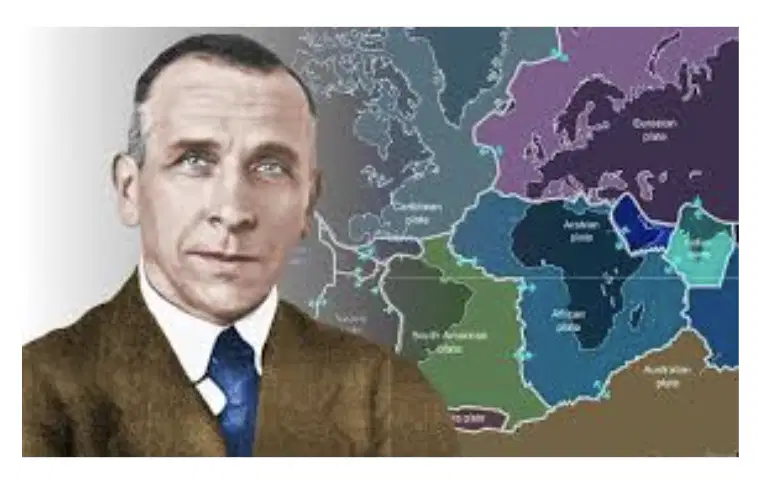
Who came up with the idea that all the continents were once joined together?
a)
Albert Einstein
b)
Alfred Wegener
c)
Charles Darwin
d)
Harry Hess
2.
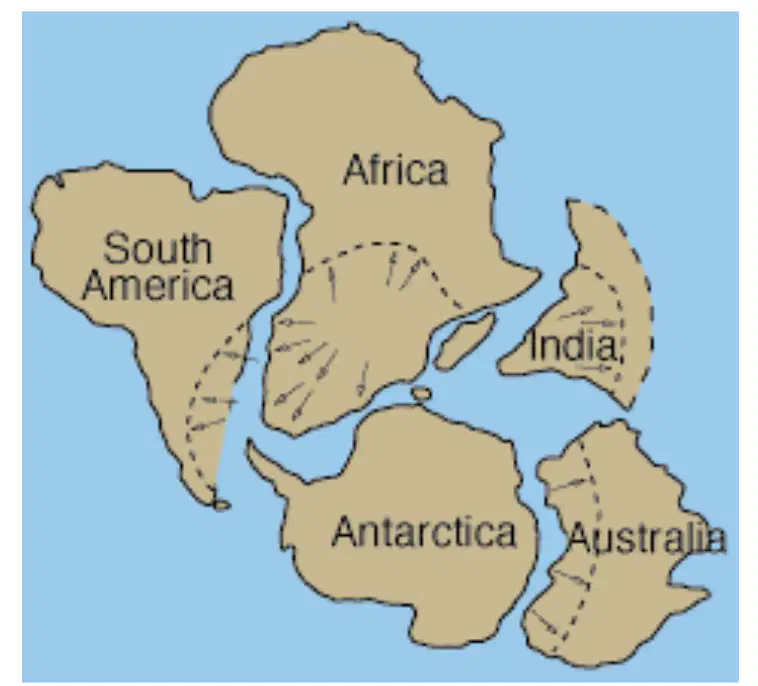
What evidence supports the idea that all the continents were once joined together?
a)
Similar rocks found on different continents.
b)
Mountains created by colliding continents.
c)
Evidence of glaciers in unexpected places.
d)
All of the above.
3.
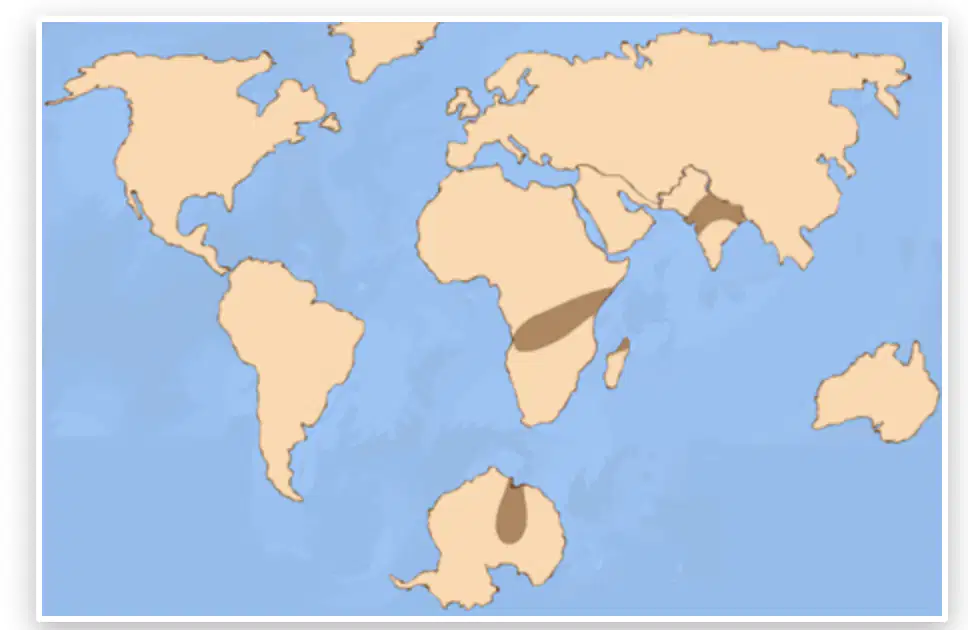
Lystrosaurus was a slow-moving, plant-eating reptile that lived over 250 million years ago. Fossils of Lystrosaurus have been found in the brown areas shown below. How is this explained by the existence of Pangaea?
a)
Lystrosaurus swam across the oceans from one continent to another.
b)
Lystrosaurus drifted on rafts of vegetation from one continent to another.
c)
Land bridges once crossed oceans to connect Africa, Antarctica, and India.
d)
Africa, Antarctica, and India used to be joined together into a single landmass.
4.
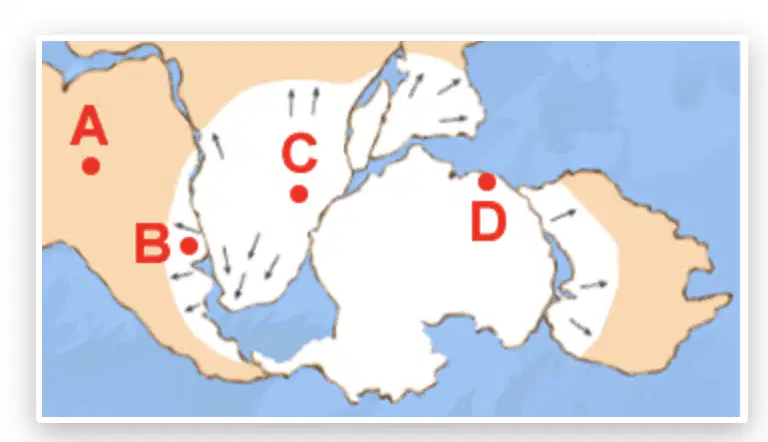
The map shows white areas that used to be covered by glaciers. Arrows show directions that glaciers moved. Based on the arrows, which red point was probably closest to the South Pole at the time of Pangaea?
a)
Point A
b)
Point B
c)
Point C
d)
Point D
5.
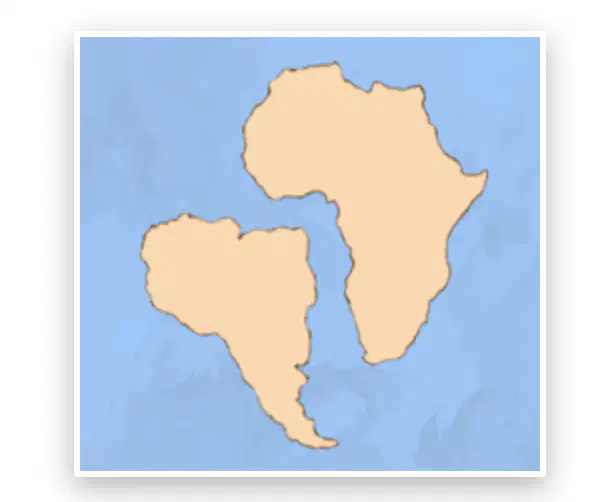
According to the theory of continental drift, why do the coastlines of Africa and South America appear to fit together so well?
a)
Africa and South America used to be joined together, but split apart long ago.
b)
Africa and South America are drifting towards each other and will soon fit together perfectly.
c)
Ocean currents on either side of the Atlantic have eroded the coastlines into the same shape.
d)
The theory does not explain why the coastlines seem to match.
6.
What is the Theory of Continental Drift?
a)
The Earth is broken into lithospheric plates that move due to convection currents in the mantle
b)
The continents were once joined in a super-continent and have moved over time
c)
Continents are stationary and do not move
d)
It explains the formation, movement and subduction of Earth's plates
7.
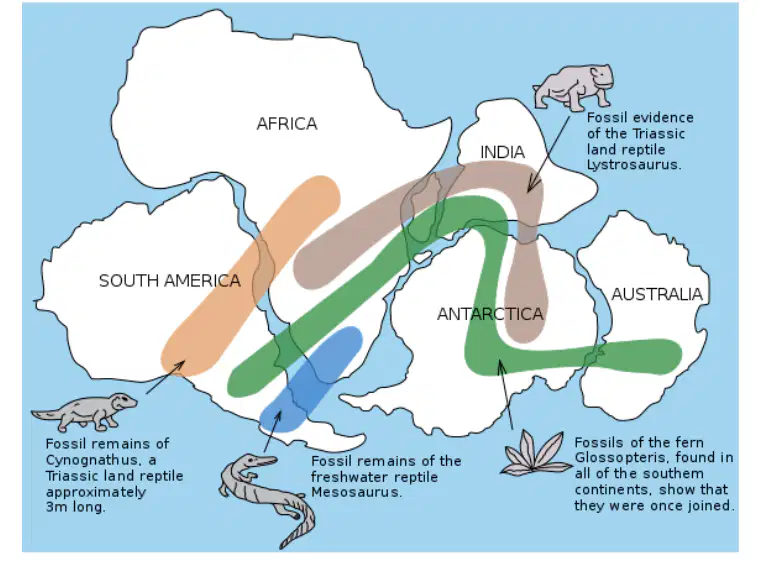
This piece of evidence explains why palm tree fossils have been found in very cold regions of the Earth.
a)
Evidence from fossils
b)
Evidence from climate
c)
Evidence from land features
8.
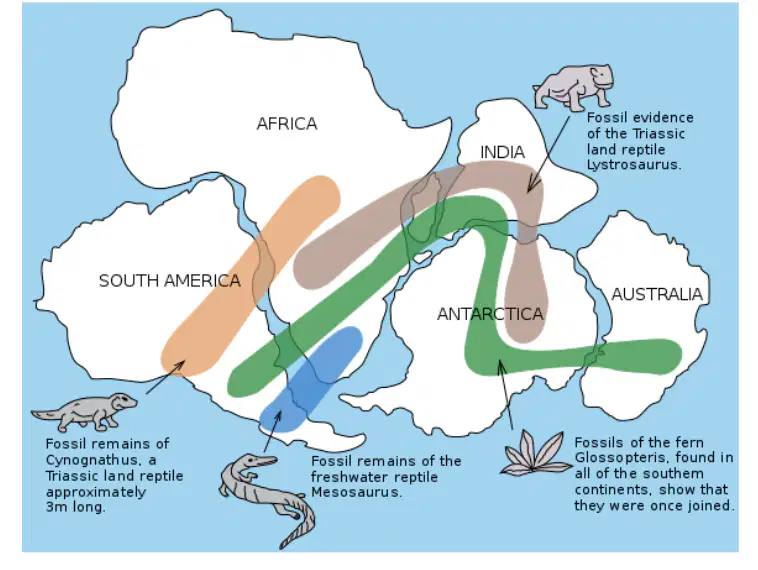
The presence of the same_________ on several continents supports the idea of continental drift.
a)
Fossils
b)
Climate
c)
Rocks
d)
Rocks and fossils
9.
The name of the supercontinent that broke apart millions of years ago
a)
Africa
b)
South America
c)
Pangaea
d)
North America
10.
Mountain ranges and coal fields appear to match up on different continents due to this piece of evidence
a)
Evidence from landforms
b)
Evidence from fossils
c)
Evidence from climate
11.
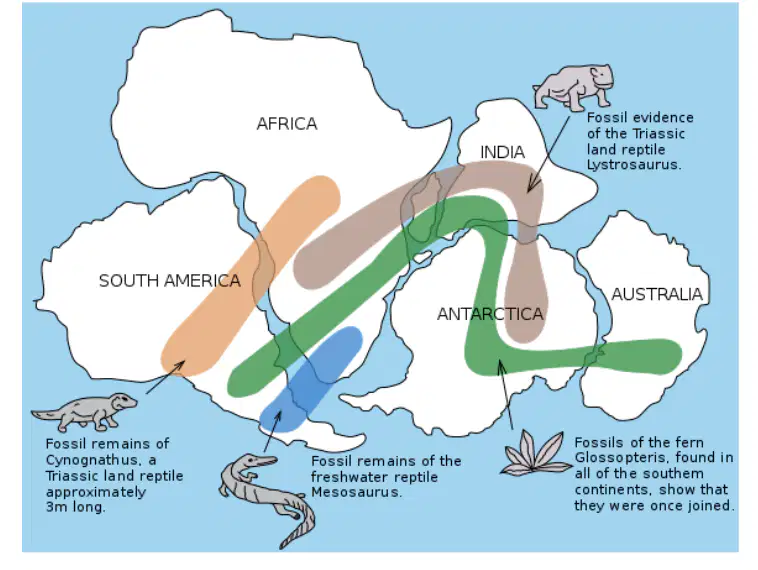
South America matches up with this continent
a)
North America
b)
Asia
c)
Europe
d)
Africa
12.
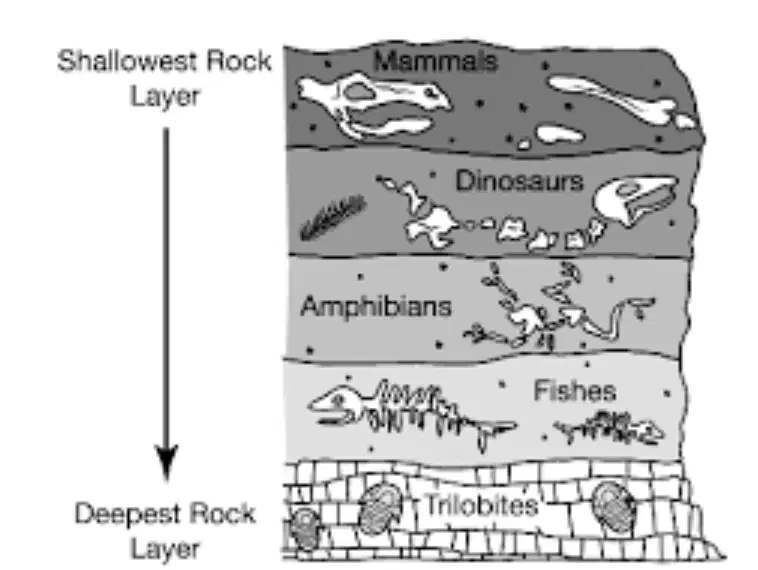
Evidence of dead plants and animals preserved in rock
a)
Fossil
b)
Pangaea
c)
metamorphic rock
d)
Mineral
13.
Why did no one believe Wegener's theory of continental drift?
a)
He couldn't explain how the continents moved
b)
He didn't have enough evidence
c)
He didn't use the right technology to gather data
d)
For geologists to accept continental drift, they would also have had to change their ideas about how mountains form
14.
Was continental drift accepted in Wegener's lifetime?
a)
Yes
b)
No
15.
Which statement does NOT summarize one of the pieces of evidence used by Alfred Wegener to support his theory of continental drift?
a)
Glacial deposits indicate a different climatic condition.
b)
Similar fossils are found on widely separated continents.
c)
Bands of rock are older the farther their position from a mid-ocean ridge.
d)
Similar geologic formations occur on both sides of the Atlantic Ocean.
16.
Wegener thought the continents moved because fossils of the same organisms are found on widely separated continents. Wegener's use of fossil evidence is an example of a(n)
a)
prediction.
b)
observation.
c)
inference.
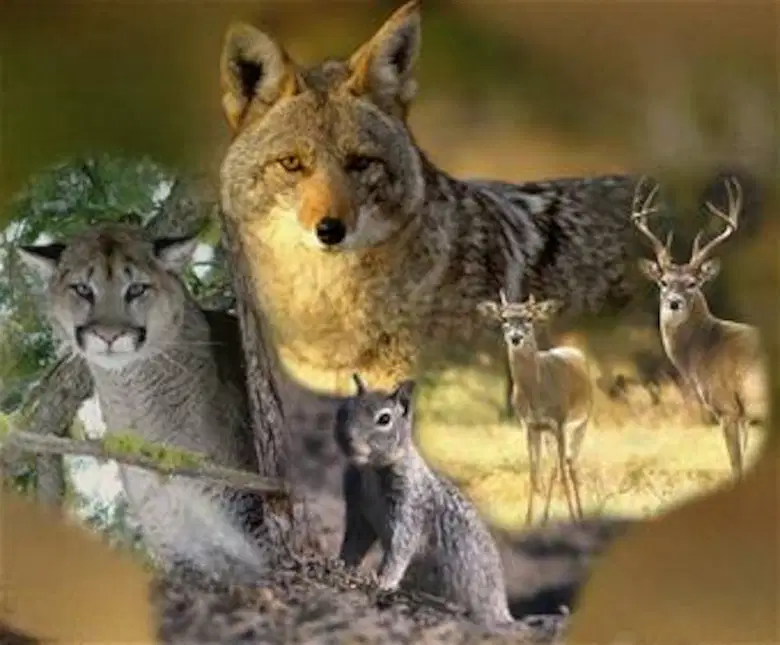
d)
controlled experiment.
17.
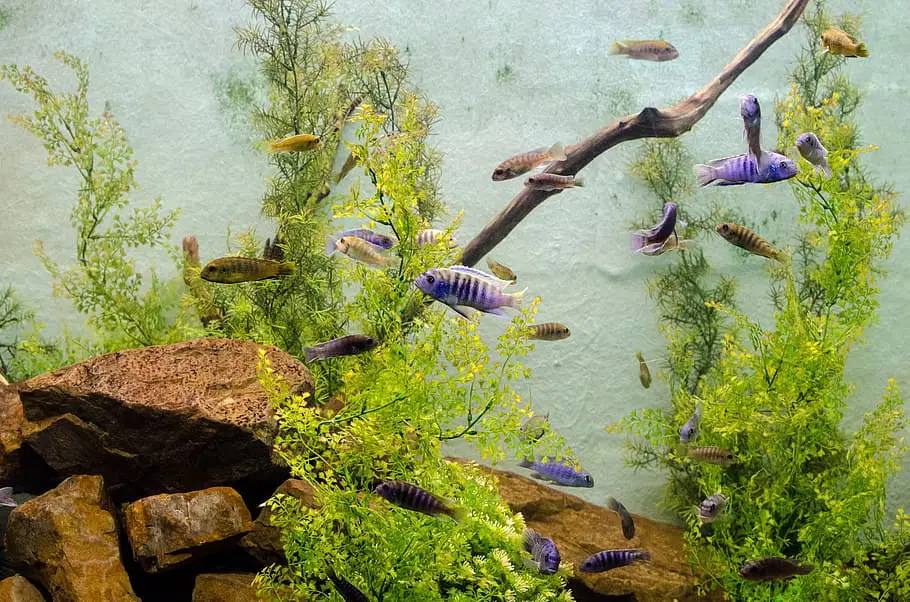
Which of the following answers the original focus question in an investigation?
a)
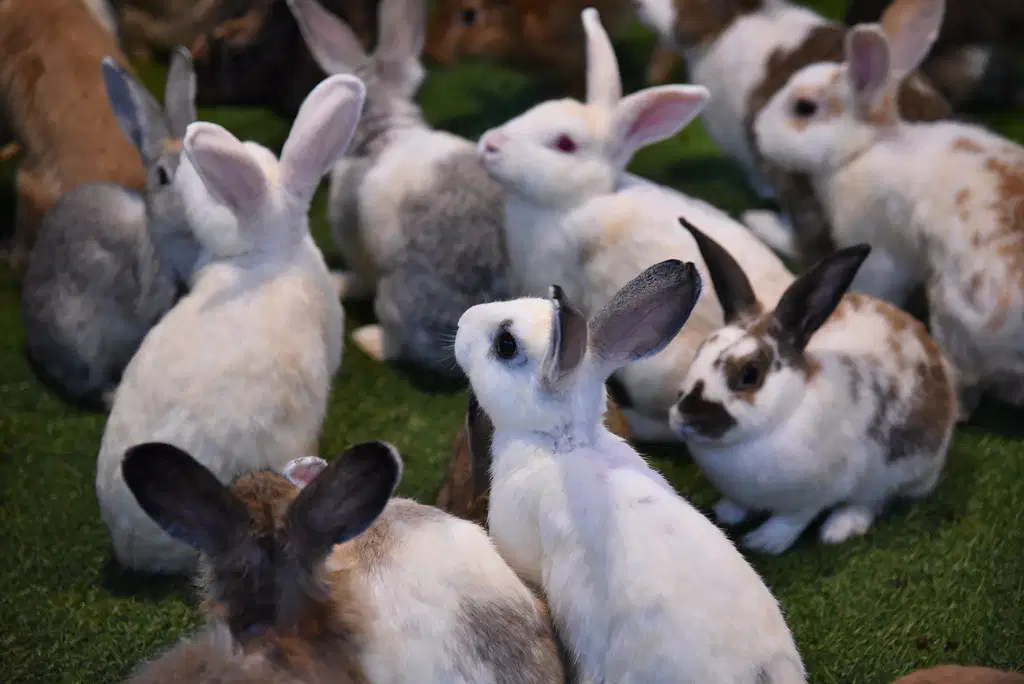
Reasoning
b)
Conclusion
c)
Claim
d)
Evidence
18.
Which is an example of evidence?
a)
Football players are 33% more likely to get injured than baseball players.
b)
Football is more dangerous than baseball.
c)
Baseball is a fun sport.
d)
Football is a fun sport.
19.
Which of the following includes reasoning.
a)
We took two pictures. One had yellow leaves and the one on the windowsill had green leaves
b)
Our plant in the closet is yellow. The plant on the window sill is growing. They are different colors.
c)
Our plant on the windowsill grew more and was green. I know that plants need sunlight to grow, so the green color might have something to do with getting the light they need.
20.
What is a good definition of evidence?
a)
A statement that answers a question
b)
Data/facts that support your claim
c)
Reasoning that justifies your answer
d)
All data and facts
21.
How are metamorphic rocks formed?
a)
Magma/lava cools, forms crystals, and then forms rock.
b)
Existing pieces of rock and other sediments become deposited, cement together over time, and eventually form rock.
c)
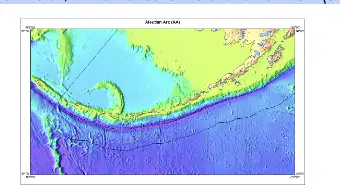
Addition of heat and pressure.
22.
How are igneous rocks formed?
a)
Magma/lava cools, forms crystals, and then forms rock.
b)
Existing pieces of rock and other sediments become deposited, cement together over time, and eventually form rock.
c)
Addition of heat and pressure.
23.
How are sedimentary rocks formed?
a)
Magma/lava cools, forms crystals, and then forms rock.
b)
Existing pieces of rock and other sediments become deposited, cement together over time, and eventually form rock.
c)
Addition of heat and pressure.
24.
Where do sedimentary rocks NOT form?
a)
Lakes
b)
Inside a volcano
c)
Rivers
d)
Deserts
25.
Can fossils be found in any kind of rock?
a)
No. Fossils can only be found in sedimentary rocks since the organisms that are preserved are considered deposited sediments and fossils will not be found if the rock undergoes metamorphism or complete melting.
b)
Yes. Fossils can be found in any of the three kinds of rock.
c)
No. Fossils can only be found in metamorphic rocks since the organisms undergo a change in order to form.
26.

What characteristic does this rock sample show us?
a)
Gas bubbles
b)
Glassy surface
c)
Visible sand and pebbles
d)
Crystals
e)
Fossils
27.

What characteristic does this rock sample show us?
a)
Visible sand and pebbles
b)
Fossils
c)
Glassy surface
d)
Crystals
e)
Ribbonlike layers
28.
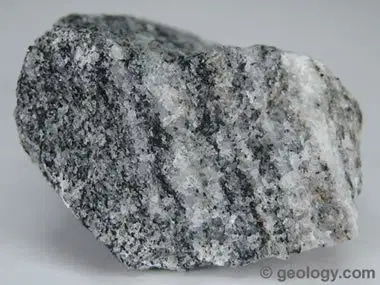
What characteristic does this rock sample show us?
a)
Crystals
b)
Ribbonlike layers
c)
Glassy surface
d)
Visible sand and pebbles
e)
Fossils
29.
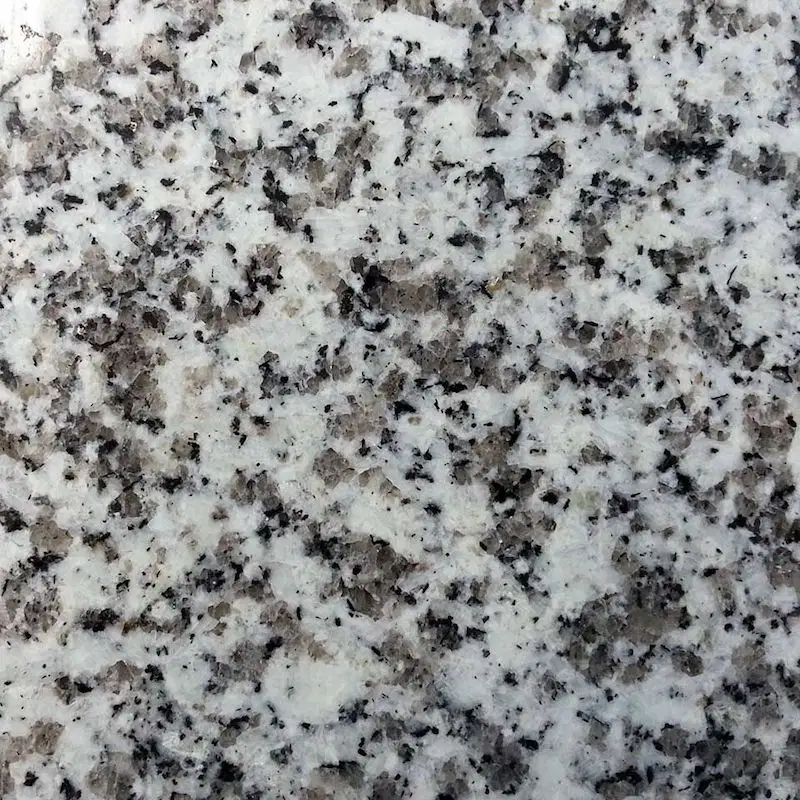
What characteristic does this rock sample show us?
a)
Glassy surface
b)
Crystals
c)
Visible sand and pebbles
d)
Fossils
e)
Ribbonlike layers
30.

If there is a rock sample that has visible sand and rock fragments, which rock type would this be and why?
4 lines
31.

What is the rock cycle?
a)
The never ending cycle in which one rock transfers into another rock following a specific linear pattern.
b)
The never ending cycle in which one rock transfers into any other type of rock.
c)
The cycle in which rocks break apart and get cemented back together.
d)
The cycle when The Rock is in a movie and when he isn't in a movie.
32.
Any rock can turn into any other kind of rock.
a)
True
b)
False
33.

This rock started as molten magma but transformed after a volcano erupted. What type of rock is this?
a)
Sedimentary
b)
Metamorphic
c)
Igneous
34.
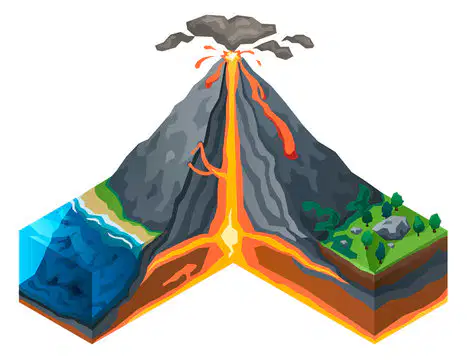
What is the difference between lava and magma?
4 lines
35.

This rock was formed by smaller pieces of rock that settled at the bottom of a lake millions of years ago. What type of rock is this?
a)
Sedimentary
b)
Metamorphic
c)
Igneous
36.
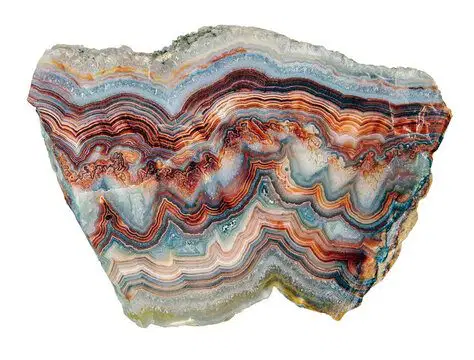
This rock was another type of rock that was heated and compressed over time to become a new type of rock. What type of rock is this?
a)
Sedimentary
b)
Metamorphic
c)
Igneous
37.
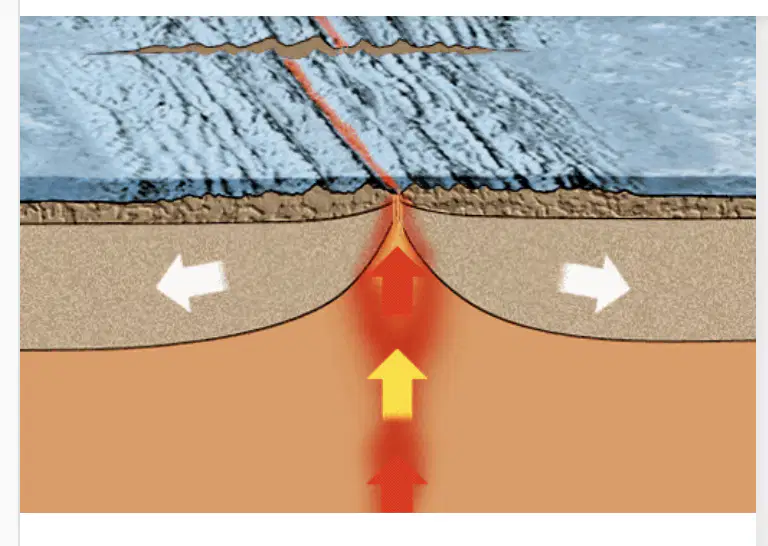
Finding________ rocks at mid-ocean ridges is considered evidence for seafloor spreading.
a)
older
b)
younger
c)
denser
38.
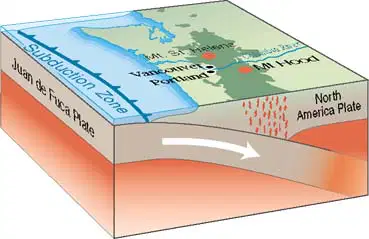
Oceanic plates are pushed down into the upper mantle in _________ zones.
a)
subduction
b)
divergent
c)
convection
39.
New seafloor material is formed at places in Earth’s crust where
a)
rock is broken into pieces as tectonic plates push against each other.
b)
one tectonic plate slides beneath another and is forced downward.
c)
lava flow from volcanic eruptions builds up over many thousands of years.
d)
magma rises from a crack in the oceanic crust.
40.

Part of the recycling of seafloor material includes its
destruction. This happens
a)
through weathering and erosion of exposed rock layers.
b)
as a result of violent and frequent volcanic activity.
c)
at trenches where rock material is subducted.
d)
when elements in rock are rearranged chemically.
41.

Examining rocks that form on either side of the Mid-Atlantic Ridge provides evidence that supports the idea of sea-floor spreading.
a)
have higher iron content.
b)
are made up of smaller particles.
c)
become thicker and thicker.
d)
are consistently older.
42.
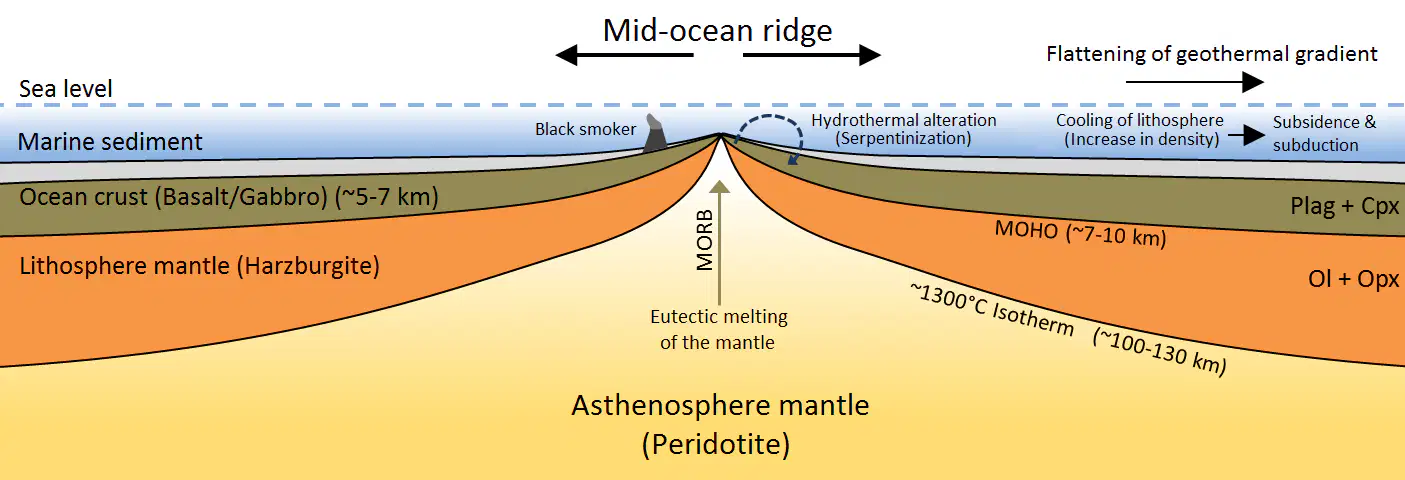
An undersea mountain chain where new ocean is produced is called
a)
Deep-Ocean Trench
b)
Sea-Floor Spreading
c)
Mid-Ocean Ridge
d)
Continental Drift
43.
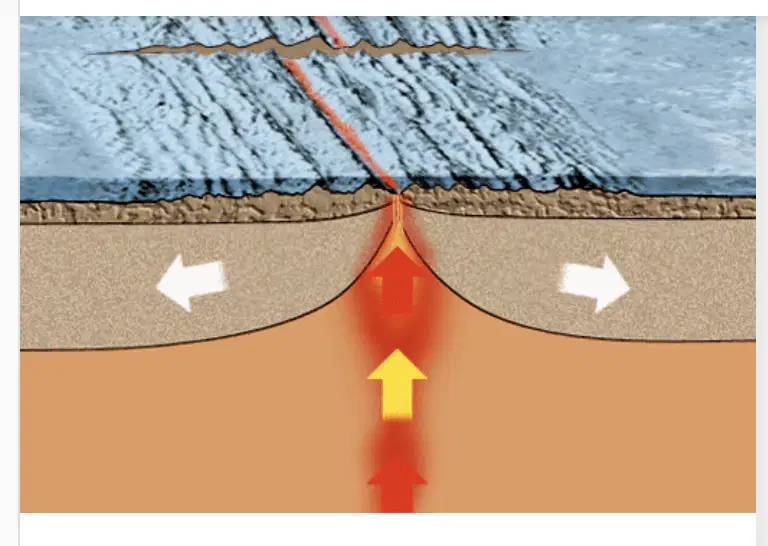
The process by which molten material adds new oceanic crust to the ocean floor is
a)
Deep-Ocean Trench
b)
Sea-Floor Spreading
c)
Mid-Ocean Ridge
d)
Subduction
44.

- A deep valley along the ocean floor beneath which oceanic crust slowly sinks toward the mantle
a)
Mid-Ocean Ridge
b)
Sea-Floor Spreading
c)
Deep-Ocean Trench
d)
Subduction
45.

- A device that determines the distance of an object under water by recording echoes of sound waves
a)
Subduction
b)
Sonar
c)
Mid-Ocean Ridge
d)
Deep-Ocean Trench
46.
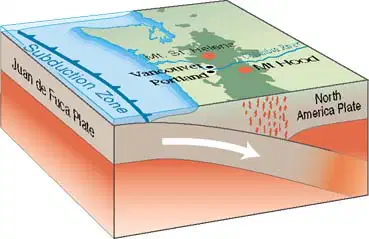
- The process by which oceanic crust sinks beneath a deep-ocean trench and back into the mantle
a)
Sonar
b)
Subduction
c)
Mid-Ocean Ridge
d)
Deep-Ocean Trench
47.
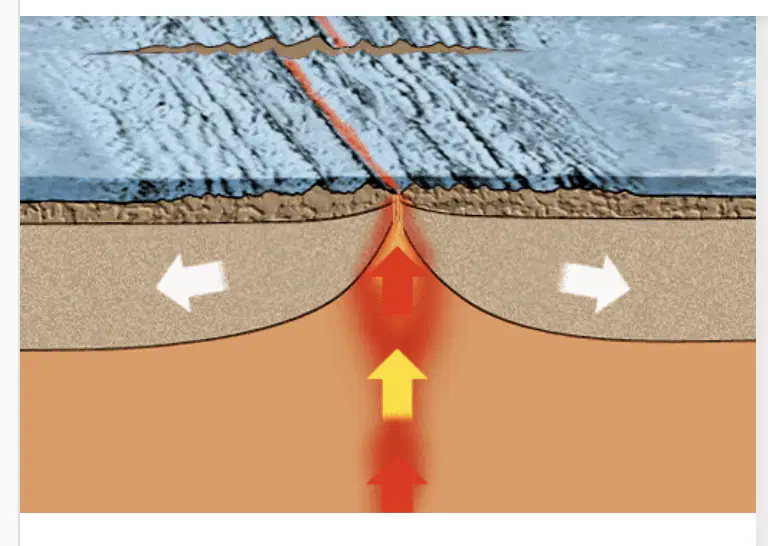
Sea-Floor Spreading begins at
a)
Mid-Ocean Ridge
b)
Deep Ocean Trench
c)
Subduction zone
d)
Rift Valley
48.
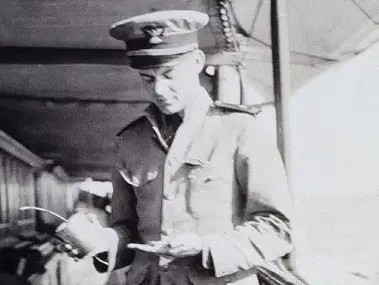
The scientist who proposed the idea of sea-floor spreading was
a)
Alfred Wegener
b)
Harry Hess
c)
Albert Eistein
d)
Marie Curie
49.

New sea-floor is added to both sides of a mid-ocean ridge in equal increments.
a)
True
b)
False
50.
Evidence is ___________________
a)
A statement or conclusion that answers a question
b)
Scientific data that supports the claim
c)
A justification that connects the claim to the evidence
d)
Not vital when using an argument
51.
What is a good description of reasoning?
a)
A statement of conclusion that answers the original question/problem
b)
Scientific data that supports the claim
c)
Ties together the claims and evidence and includes scientific principles
d)
Empirical Evidence
52.
What is a good description for claim?
a)
Any statement
b)
A statement that answers a question
c)
A question
d)
A piece of evidence
53.
What is the evidence for sea-floor spreading. Check all that apply.
a)
Evidence of molten material erupting along mid-ocean ridges
b)
Evidence of magnetic stripes
c)
Evidence of climate
d)
Evidence from drilling samples that proved older rocks were farther away from the ridge
54.
List the 3 steps in the process of sea-floor spreading? Number each step.
4 lines
55.
What is photosynthesis?
a)
-the process by which plants make their own food
b)
-the process by which animals make their own food
c)
-the process by which all organisms produce food
d)
-the part of the plant that absorbs like
56.
What is cellular respiration?
a)
-the process by which plants make their own food
b)
-the process by which animals produce energy
c)
-the process by which all organisms (plants and animals) produce energy
d)
-the part of the plant that absorbs like
57.
Which type of organism is able to perform photosynthesis?
a)
animals
b)
plants
58.
Which type of organism is able to perform cellular respiration?
a)
animals
b)
plants
59.
What are the reactants of photosynthesis?
a)
Oxygen, carbon dioxide and sunlight
b)
Carbon dioxide, glucose and sunlight
c)
Carbon dioxide, water and sunlight
d)
Water, oxygen and sunlight
60.
What are the reactants of cellular respiration?
a)
Oxygen, carbon dioxide and sunlight
b)
Carbon dioxide, energy, and water
c)
Oxygen and glucose
d)
Water, oxygen and sunlight
61.
What are the products of photosynthesis?
a)
Carbon dioxide and water
b)
Glucose and oxygen
c)
Water and glucose
d)
Carbon dioxide and oxygen
62.
What are the products of cellular respiration?
a)
Carbon dioxide, water, and energy
b)
Glucose and oxygen
c)
Water, glucose, and energy
d)
Carbon dioxide and oxygen
63.
What happens to the number of atoms in the photosynthesis equation?
a)
Atoms are gained.
b)
Atoms are lost.
c)
The number of atoms stays the same (no gain or loss).
64.
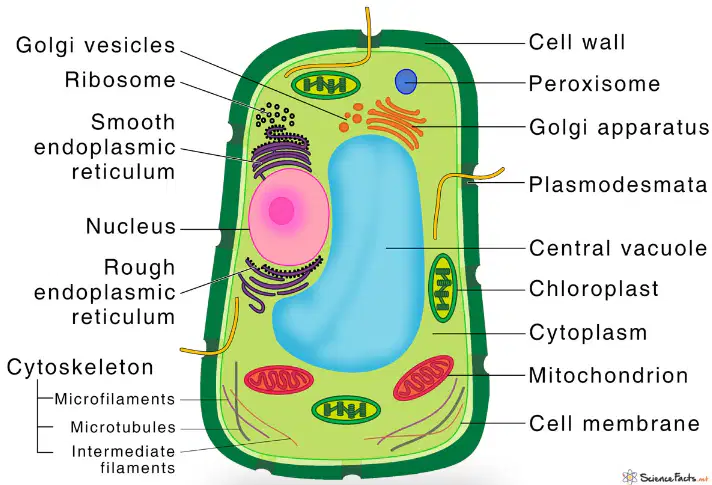
What is the name of the organelle where photosynthesis takes place?
a)
Nucleus
b)
Mitochondria
c)
Chloroplast
d)
Cytoplasm
65.

What is the name of the organelle where cellular respiration takes place?
a)
Nucleus
b)
Mitochondria
c)
Vacuole
d)
Cytoplasm
66.
What is the name of the pigment that allows plants to absorb sunlight?
a)
Chloroplasts
b)
Chlorophyll
c)
Photosynthesis
d)
Stomata
67.
Photosynthesis can happen without a light source.
a)
True
b)
False
68.
Photosynthesis will not happen without light from the sun.
a)
True
b)
False
69.
How are carbon dioxide, water, and oxygen used differently in photosynthesis and cellular respiration.
a)
Carbon dioxide and water are products of cellular respiration, but products of photosynthesis. Oxygen is a product of photosynthesis, but a reactant in cellular respiration.
b)
Carbon dioxide and water are reactants of cellular respiration, but products of photosynthesis. Oxygen is a reactant of photosynthesis, but a product in cellular respiration.
70.
What are the nonliving parts of an environment called?
a)
biotic factors
b)
organism
c)
abiotic factors
d)
population
71.
Anything that has mass and takes up space can be called
a)
matter.
b)
volume.
c)
an atom.
d)
a molecule.
72.
A living thing, such as a plant is called
a)
volume.
b)
an organism.
c)
an atom.
d)
a molecule.
73.
The smallest part of all matter is called
a)
an organism.
b)
a molecule.
c)
an atom.
d)
a proton.
74.
A living part of the environment is called
a)
an abiotic factor.
b)
nonliving.
c)
an electron.
d)
a biotic factor.
75.
An animal is an example of
a)
an abiotic part of the environment.
b)
a biotic part of the environment.
76.
An example of an abiotic part of the environment is
a)
an animal.
b)
a plant.
c)
water.
77.
A measure of how much matter is in an object is
a)
volume.
b)
water.
c)
mass.
78.
The amount of space that matter occupies is called
a)
volume.
b)
water.
c)
mass.
79.
All of the following are examples of matter except
a)
an atom.
b)
a rock.
c)
a cat.
d)
your reflection.
80.
The neutral particles found in the nucleus of the atom are called
a)
protons.
b)
neutrons.
c)
electrons.
81.
The positively charged particles that are found in the nucleus of the atom are called
a)
protons.
b)
neutrons.
c)
electrons.
82.
The negatively charged particles found in the electron cloud are called
a)
protons.
b)
neutrons.
c)
electrons.
83.
Where is most of the mass of an atom found?
a)
Electron Cloud
b)
Nucleus
c)
Protons
d)
Neutrons
84.
Where is most of the space (volume) of the atom found?
a)
Electron Cloud
b)
Nucleus
c)
Protons
d)
Electrons
85.
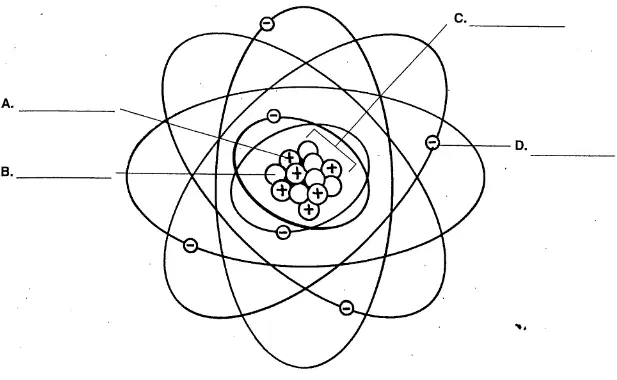
What is "Part A" pointing to?
a)
Protons
b)
Neutrons
c)
Electrons
d)
Nucleus
86.
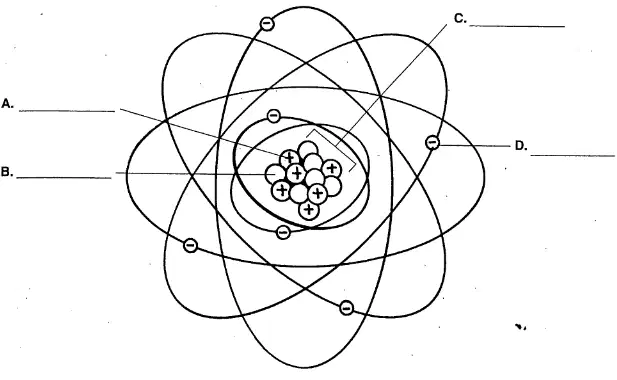
What is "Part C" pointing to?
a)
Protons
b)
Neutrons
c)
Electrons
d)
Nucleus
87.
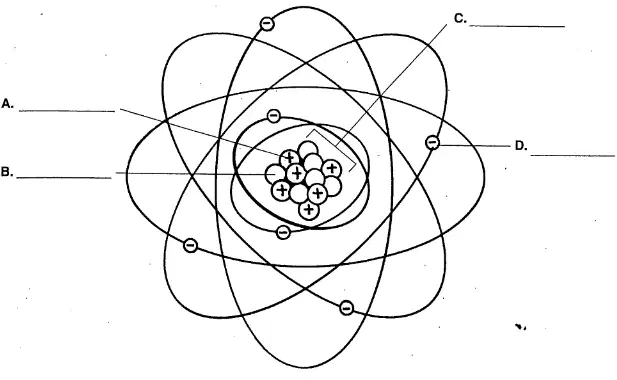
What is "Part B" pointing to?
a)
Protons
b)
Neutrons
c)
Electrons
d)
Nucleus
88.
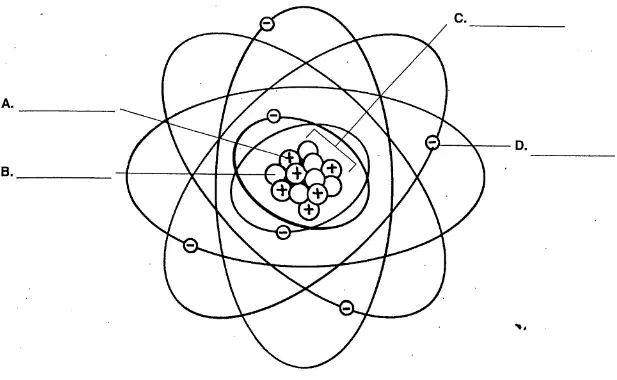
What is "Part D" pointing to?
a)
Protons
b)
Neutrons
c)
Electrons
d)
Nucleus
89.
What does the atomic number of an atom represent?
a)
The number of electrons
b)
The number of protons
c)
The number of neutrons
d)
The isotopes of the atom
90.
Elements that are normally in a gas form, that are dull, brittle, and poor conductors
a)
Metals
b)
Nonmetals
c)
Metalloids
d)
Solids
91.
The elements located to the left of the Periodic Table
a)
Metals
b)
Nonmetals
c)
Metalloids
d)
Gases
92.
Usually solid elements that are good conductors, malleable, ductile, and shiny
a)
Metals
b)
Nonmetals
c)
Metalloids
d)
Semiconductors
93.
The elements located along the stair-step
a)
Metals
b)
Nonmetals
c)
Metalloids
94.
Elements that can be lustrous or dull, malleable or brittle, and conductivity varies
a)
Metals
b)
Nonmetals
c)
Metalloids
95.
Which type of element is located to the right of the Periodic Table?
a)
Metals
b)
Nonmetals
c)
Metalloids
96.
The majority of the periodic table is made up of
a)
Metals
b)
Nonmetals
c)
Metalloids
97.
This element is on the left of the table, but it is not a metal
a)
Potassium
b)
Helium
c)
Hydrogen
d)
Oxygen
98.
This is the term used for a metal that is able to be hammered out or pressed
a)
Malleable
b)
Ductile
c)
Conductive
d)
Shiny
99.
Which element is the most abundant element found on Earth?
a)
Silicon (Si)
b)
Oxygen (O)
c)
Carbon (C)
d)
Nitrogen (N)
100.
Which of the following correctly lists the 3 main groups of elements from greatest conductivity to least conductivity?
a)
Nonmetals->Metals->Metalloids
b)
Metalloids->Metals->Nonmetals
c)
Metals->Metalloids->Nonmetals
d)
Nonmetal->Metalloid->Metals
101.
The word “luster” refers to which property of matter?
a)
The ability to conduct electrical or thermal energy
b)
The way a surface appears when it reflects light
c)
Suitable for being shaped by beating or rolling
d)
Capable of being drawn out into thin wires
102.
The elements argon, krypton, and xenon are all nonmetals. What property would these elements have in common?
a)
Soft and malleable
b)
Good conductors of thermal energy
c)
Brittle
103.
This term is used for a metal that is able to be drawn out into a thin wire
a)
Malleable
b)
Conductive
c)
Ductile
d)
Shiny
104.
Semi-conductors have properties of both metals and nonmetals. An example of a semi-conductor is
a)
Carbon
b)
Oxygen
c)
Magnesium
d)
Silicon
105.
Why are metals not used on transistors and integrated circuits?
a)
Metals are too expensive
b)
Metals can't be found very easily in nature
c)
Metals are not malleable
d)
Metals are tough to control the flow of electric current
106.
Which element is the second most abundant element found on Earth?
a)
Oxygen
b)
Carbon
c)
Silicon
d)
Nitrogen
107.
Which of the following is NOT a characteristic of a metal?
a)
Mostly solid
b)
Ductile
c)
Poor conductors
d)
Malleable
108.
What does it mean if a substance is described as having a high luster?
a)
It is very dull
b)
It is very shiny
109.
How many elements are metalloids?
a)
17
b)
88
c)
7
d)
118
110.
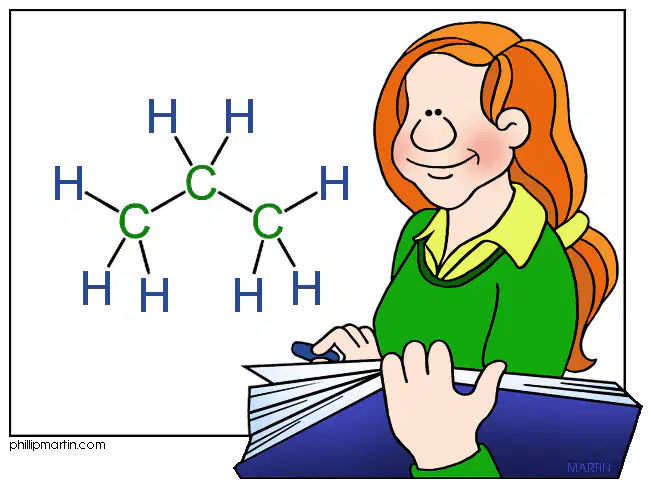
When two or more different types of elements are held together by a chemical bond it is called a(n)
a)
Atom
b)
Element
c)
Molecule
d)
Compound
111.

A substance made of two or more elements, compounds or both that are together in the same place but are not chemically combined
a)
matter
b)
compound
c)
element
d)
mixture
112.

Hydrogen (H) is an example of
a)
an element
b)
a solution
c)
a compound
d)
a mixture
113.
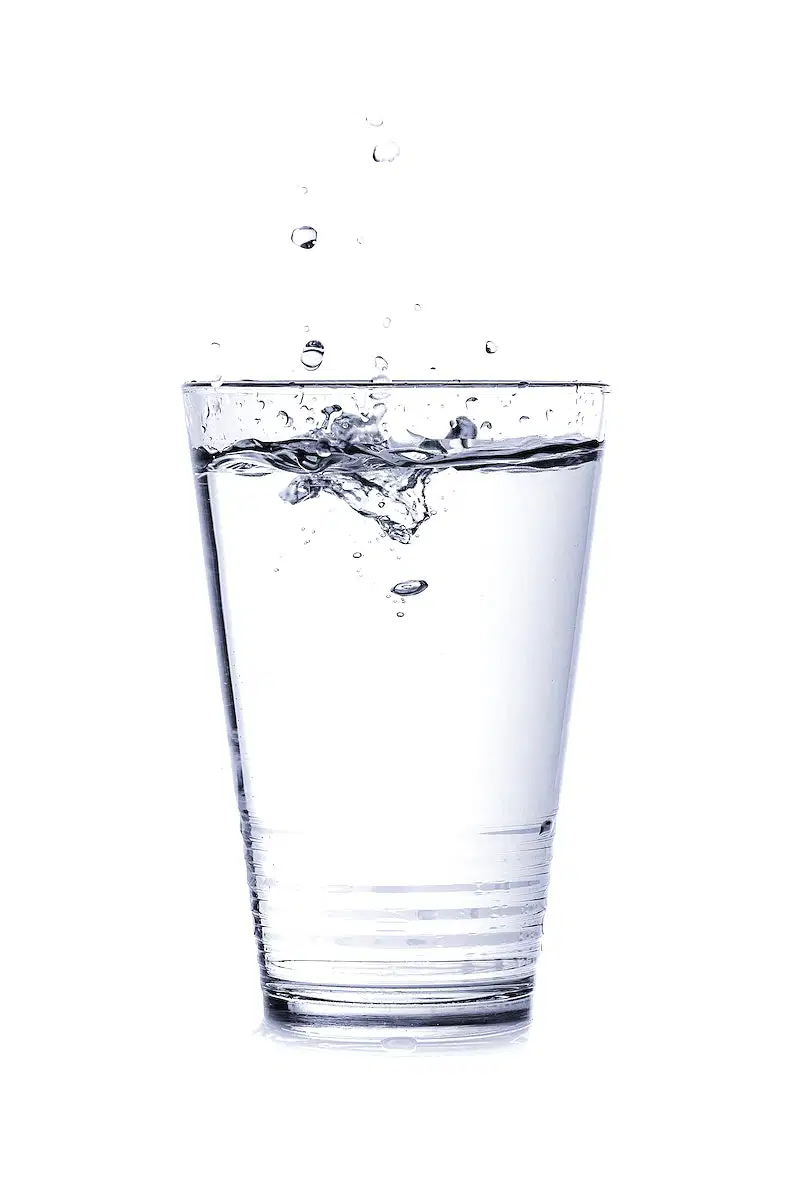
Sugar mixed with water is an example of a (n)
a)
compound
b)
heterogeneous mixture
c)
homogeneous mixture
d)
element
114.

Salt, sand and rocks are an example of a
a)
heterogeneous mixture
b)
compound
c)
element
d)
homogeneous mixture
115.
What can be considered a pure substance? Check all that apply.
a)
mixtures
b)
molecules
c)
elements
d)
compounds
116.
Air is an example of a
a)
homogeneous mixture
b)
heterogeneous mixture
c)
element
d)
compound
117.
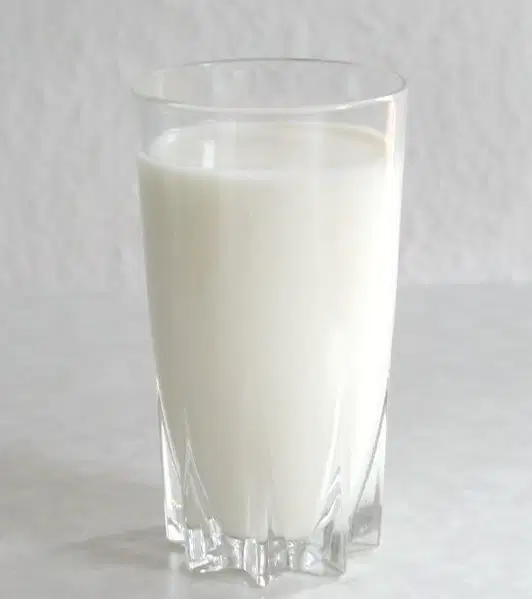
A mixture with a uniform composition (you can't see the individual parts) is
a)
heterogeneous
b)
homogeneous
118.
Salt (NaCl) is an example of a (Check all that apply)
a)
homogeneous mixture
b)
compound
c)
element
d)
molecule
119.
Carbon (C) is a(n)
a)
element
b)
homogeneous mixture
c)
heterogeneous mixture
d)
compound
120.

Which of the following best explains the relationship between molecules and atoms?
a)
Atoms are molecules that have a charge.
b)
Atoms have smaller parts, called molecules.
c)
Molecules are made up of two or more atoms.
d)
Molecules are atoms that have no mass.
121.
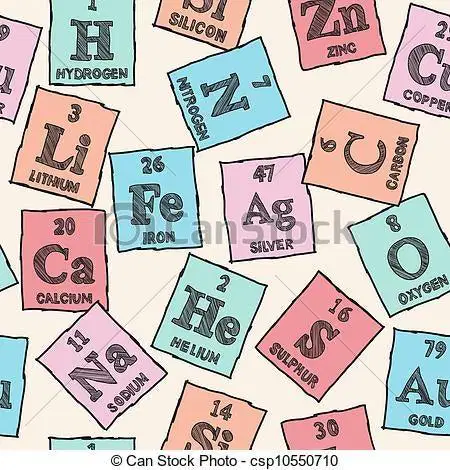
Substances that cannot be broken down into other substances are
a)
elements.
b)
compounds.
c)
mixtures.
d)
solutions.
122.
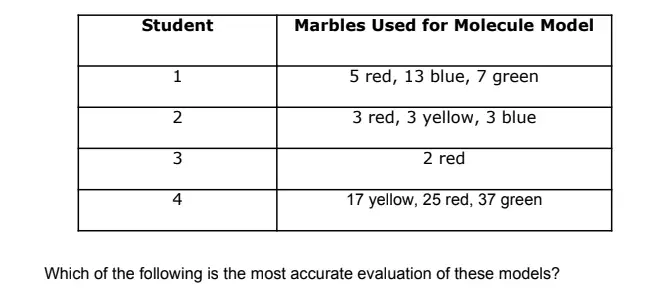
Students are asked to create models of molecules using marbles of different colors to represent atoms of different types. Below is a table describing the models made by four students.
a)
Only students 1,2, and 4 created acceptable models, since molecules must be made of different types of atoms.
b)
All of the students created acceptable models because molecules have to have two atoms bonded together..
c)
Only student 2 created an acceptable model of a molecule, since every molecule must have a balance of atoms.
d)
All student models are acceptable except that of student 4, since molecules can't be made of so high a number of atoms.
123.

The number placed below an element's symbol in a chemical formula is called a
a)
subscript.
b)
coefficient.
c)
reactant.
d)
product.
124.

What does this model represent?
a)
Element
b)
Compound
c)
Mixture
125.

What does this model represent?
a)
Element
b)
Compound
c)
Mixture
d)
Molecule
126.
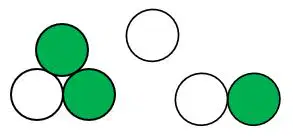
What does this model represent?
a)
Element
b)
Compound
c)
Mixture
d)
Molecule
127.
Which substance below are pure substance?
a)
milk
b)
Cheerios cereal
c)
Chex Mix
d)
Magnesium (Mg)
128.
How would you go about separating a mixture of table salt and water? Choose the best answer.
a)
Distilling the liquid solution
b)
Using a magnet
c)
Filtering the mixture
d)
Evaporation
129.
First Name
4 lines
130.
Last Name
4 lines
131.
An object with which of the following densities will float in water?
a)
0.7 g/mL
b)
3.5 g/mL
c)
1.2 g/mL
d)
11.4 g/mL
132.

A block has a mass of 54g and a volume of 20 cm3. What is the density of the block?
a)
2.7 g
b)
1080 g/cm3
c)
34 g/cm3
d)
2.7 g/cm3
133.
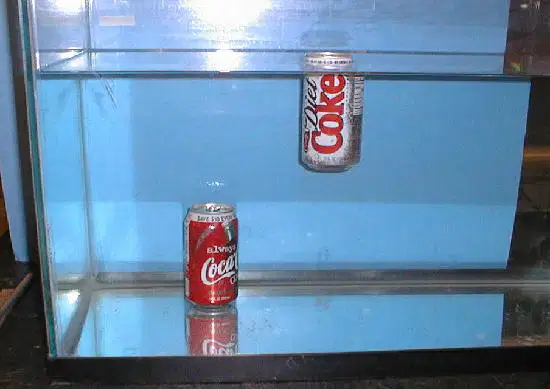
A can of Coke will sink in a bowl of water. A can of Diet Coke will float in a bowl of water. What does this tell you about the density of the Diet Coke?
a)
It is more than 1 g/mL
b)
It is less than 1 g/mL
134.

Why do ice cubes float in a glass of water?
a)
The ice cubes are more dense than the water.
b)
The water is more dense than the ice cubes.
c)
The water is more dense than the glass.
d)
The ice is more dense than the glass.
135.
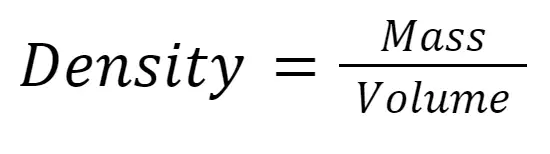
John finds a gold colored rock in a river. It has a mass of 9.65 g and a volume of 0.5 cm3. What is the density of the rock?
a)
10.15 g/cm3
b)
19.3 g/cm3
c)
9.15 g/cm3
d)
4.825 g/cm3
136.
Which property of matter is determined by dividing its mass by its volume?
a)
elasticity
b)
flammibility
c)
density
d)
viscosity
137.
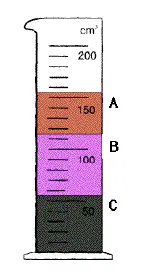
The following liquids are poured into a graduated cylinder: alcohol (density = 0.79 g/mL), corn syrup (density = 1.38 g/mL), water (density = 1.0 g/mL), and cooking oil (density = 0.93 g/mL). Which of these liquids will sink to the bottom of the graduated cylinder?
a)
alcohol
b)
corn syrup
c)
water
d)
cooking oil
138.
Will an object with a density of 1.1 g/cm3 float or sink in water?
a)
float
b)
sink
139.
Mercury is a metal that is a liquid at room temperature and has a density of 13.5 g/cm3. Which of these metals would sink below the mercury if dropped into the container of mercury?
a)
gold (density= 19.3 g/cm3)
b)
Lead (density = 11.4 g/cm3)
c)
iron (density = 7.9 g/cm3)
d)
aluminum (density = 2.7 g/cm3)
140.
A brick sinks in water while a wooden block of the same size floats. This is because the brick has a
a)
lower volume than the wooden block
b)
lower density than the wooden block
c)
higher volume than the wooden block
d)
higher density than the wooden block
141.
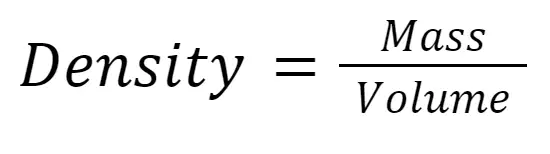
What is the density of a liquid that has a mass of 27 g and a volume of 30 mL?
a)
0.9 g/mL
b)
3 g/mL
c)
57 g/mL
d)
810 g/mL
142.
Will an object with a density of 0.9 sink or float in water?
a)
sink
b)
float
143.
A scientist has three different liquids and pours them all into a bottle. The silver liquid sinks to the bottom, the red liquid settles on top of the silver one, and the pink liquid settles at the surface. Which liquid has the smallest density?
a)
the pink liquid
b)
the silver liquid
c)
the red liquid
144.
What's the density of water?
a)
0 g/mL
b)
1 g/mL
c)
10 g/mL
d)
100 g/mL
145.
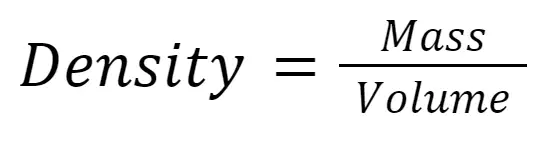
What is the density of a substance that has a mass of 30 g and a volume of 6 mL?
a)
24 g/mL
b)
5 g/mL
c)
36 g/mL
d)
180 g/mL
146.
Why do some substances float on water?
a)
They are warmer than water.
b)
They are cooler than water.
c)
They are more dense than water.
d)
They are less dense than water.
147.
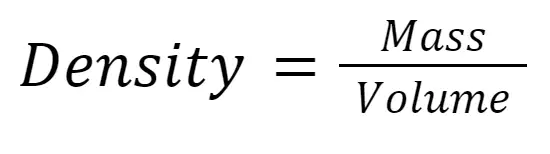
A piece of copper has a mass of 89 g and a volume of 10 cm3. What is the density of copper?
a)
0.89 9/cm3
b)
89 g/cm3
c)
8.9 g/cm3
d)
890 g/cm3
148.
Which of these would be correct units for density?
a)
g/cm
b)
cm3
c)
g/mL
d)
g
149.
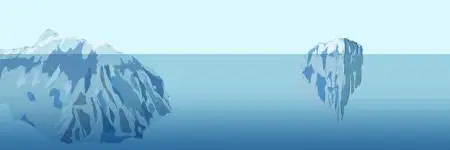
"That's just the tip of the iceberg" is a popular expression you may have heard. It means that what you can see is only a small part of the overall problem. As the diagram shows, most of an iceberg is actually out of sight, below the water level. Based on this diagram, what is the most likely density of the iceberg? (Assume a density of 1.03 g/mL for seawater.)
a)
0.88 g/cm3
b)
1.23 g/cm3
c)
0.23 g/cm3
d)
4.14 g/cm3
150.
The density of a human being can be measured using which of these quantities?
a)
mass and weight
b)
mass and volume
c)
height and weight
d)
length and volume
151.
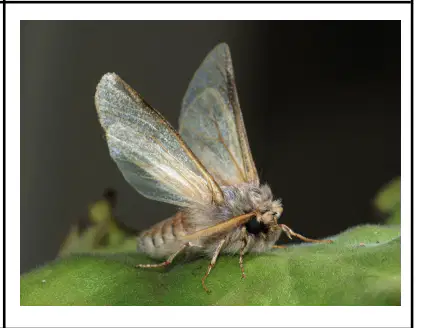
Which of the following is a biotic factor in the desert ecosystem?
a)
water
b)
sunlight
c)
soil
d)
snakes
152.
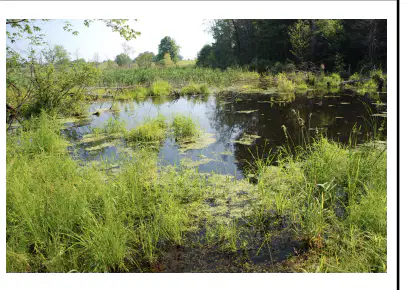
The place where an organism lives and that provides the things the organism needs is called its
a)
habitat
b)
population
c)
species
d)
community
153.
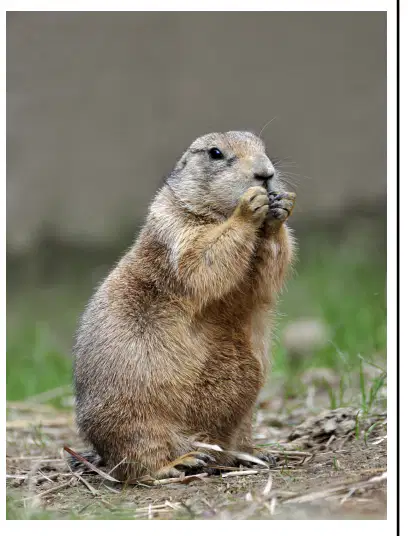
The smallest unit of ecological organization is a single
a)
population
b)
community
c)
organism
d)
ecosystem
154.
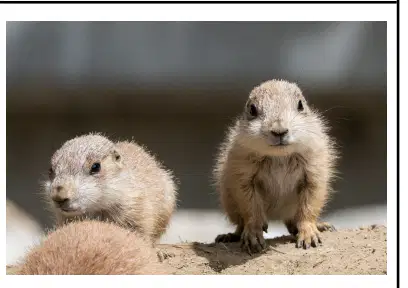
Which of the following is an example of a population?
a)
the cats and dogs in your neighborhood
b)
the bushes and grass in a park
c)
the rocks in a rock collection
d)
the gray wolves in a forest
155.
An organism's habitat must provide all of the following EXCEPT
a)
food
b)
water
c)
predators
d)
shelter
156.
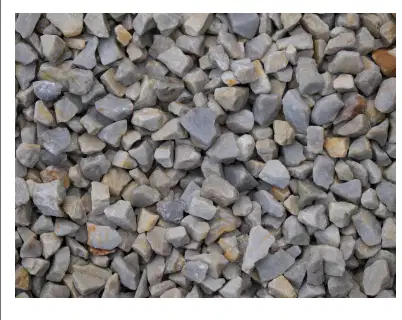
The nonliving parts of an ecosystem are called
a)
populations
b)
organisms
c)
biotic factors
d)
abiotic factors
157.
All the different populations that live together in an area make up a(n)
a)
organism
b)
community
c)
species
d)
ecosystem
158.

The study of how things interact with each other and with their environment is called
a)
ecology
b)
photosynthesis
c)
community
d)
biotic factor
159.
Which answer lists the levels of an ecosystem in order from smallest to largest?
a)
ecosystem, community, population, organism
b)
community, population, organism, ecosystem
c)
organism, population, community, ecosystem
d)
organism, community, population, ecosystem
160.
The community of organisms that live in a particular area along with the non-living surroundings as well is called a(n)
a)
population
b)
community
c)
ecosystem
d)
organism
161.

The process by which plants use water along with sunlight and carbon dioxide to make their own food is called
a)
Respiration
b)
Photosynthesis
c)
Conservation
d)
Oxidation
162.
A group of organisms that are physically similar that can mate and produce offspring
a)
species
b)
organism
c)
community
d)
ecosystem
163.
How does a decrease in abiotic resources impact the population growth of an ecosystem?
a)
The population size will increase
b)
The population size will decrease
c)
The population size will not change
164.
What determines the carrying capacity in an ecosystem?
a)
The number of different species in the ecosystem
b)
Limiting factors
c)
Only biotic factors
d)
Only abiotic factors
165.
Which of the following is an example of two organisms competing for an abiotic factor?
a)
Two different species of insects competing for leaves from trees
b)
Two different species of mammals competing for small rodents to eat
c)
Two different species of birds competing for berries to eat
d)
Two different species of mammals competing for the same water source
166.
What is the abiotic factor in this situation? Prairie dogs live in complex tunnels underground and compete with other herbivores in the ecosystem.
a)
Prairie dogs
b)
Underground habitat
c)
Other herbivores
d)
Grasses
167.
An environmental factor that causes a population to decrease is called a(n)
a)
limiting factor
b)
carrying capacity
c)
ecosystem
d)
organism
168.
The largest population that an area can support is called a(n)
a)
limiting factor
b)
ecosystem
c)
carrying capacity
d)
population
169.
Which answer lists the levels of organization in an ecosystem in order from the largest to the smallest?
a)
ecosystem, community, population, organism
b)
community, population, organism, ecosystem
c)
organism, population, community, ecosystem
d)
organism, community, population, ecosystem
170.
Would all the different kinds of organisms in a forest be considered a population or a community?
a)
population
b)
community
171.
Name
4 lines
172.
Long ago there were two types of giraffes, tall and short. Only the tall giraffes survived because the short giraffes were not able to get enough food. This is an example of
a)
adaptation
b)
natural selection
c)
niche
d)
predation
173.

A tape worm lives and feeds in the intestines of an organism. A tapeworm is a
a)
host
b)
prey
c)
ringworm
d)
parasite
174.

The oxpecker eats parasites and ticks off of a rhino's body. The rhino is being cleaned and the oxpecker is getting food. What type of relationship is this?
a)
mutualism
b)
commensalism
c)
competition
d)
parastism
175.
The three types of symbiosis are
a)
mutualism, commensalism, predator prey
b)
parasitism, mutualism, competition
c)
mutualism, commensalism, natural selection
d)
mutualism, commensalism, parasitism
176.
A niche includes everything EXCEPT
a)
the physical conditions needed for an organism to survive
b)
the type of food an organism eats
c)
how an organism digests its food
d)
how an organism reproduces
177.
The behaviors and physical conditions that allow an organism to live successfully in its environment is called a(n)
a)
adaptation
b)
competition
c)
parasitism
d)
symbiosis
178.

A bird builds a nest in the tree. The tree is not affected, but the bird has shelter and protection. This is an example of
a)
predator/prey
b)
commensalism
c)
mutualism
d)
parastism
179.

The struggle between organisms to survive when they attempt to use the same limited resource is called
a)
natural selection
b)
predator/prey
c)
symbiosis
d)
competition
180.
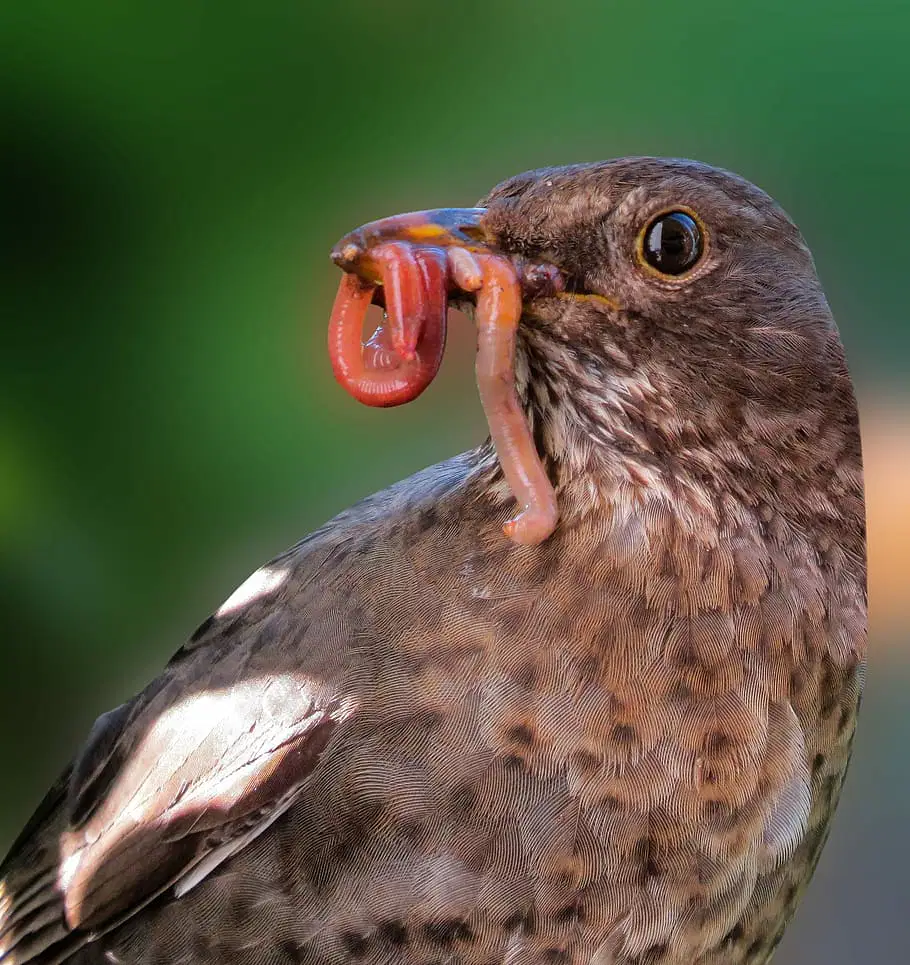
In the picture below, the bird is the
a)
predator
b)
prey
c)
host
d)
parasite
181.
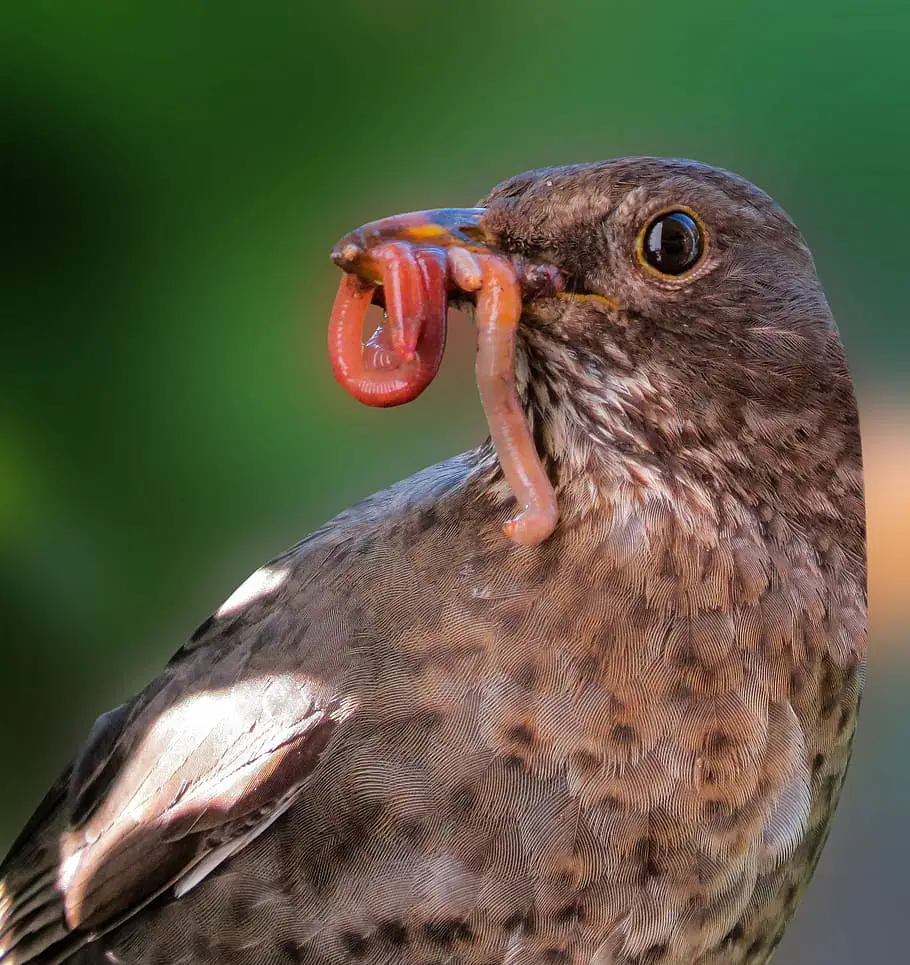
In the picture below, the worm is the
a)
predator
b)
prey
c)
host
d)
parasite
182.

Dying plants have mites on them. Which symbiotic relationship is most likely occurring between the plants and the mites?
a)
commensalism
b)
parasitism
c)
mutualism
d)
competition
183.

Foxes eat rabbits. How would a disease in the fox population one year most likely affect the rabbit population the next year.
a)
The rabbit population would go down because the disease spread to them
b)
The rabbit population would go up because they would eat the foxes
c)
The rabbit population would go up because the foxes are not eating them
d)
There would probably be no affect
184.
If the population of prey goes up, what will most likely happen to the predator?
a)
The predator's population will go down because there is not enough room for them
b)
The predator will be unaffected
c)
The predator's population will go down because other organisms will eat them
d)
The predator's population will go up because they have more food
185.
The three ways in which organisms interact are
a)
mutualism, commensalism and parasitism
b)
symbiosis, competition, and predation
c)
predator and prey, behavioral adaption and structural adaptation
d)
parasitic, competition and predator/prey
186.
An interaction in which one organism kills another for food is called
a)
predation
b)
parasitism
c)
competiton
d)
symbiosis
187.
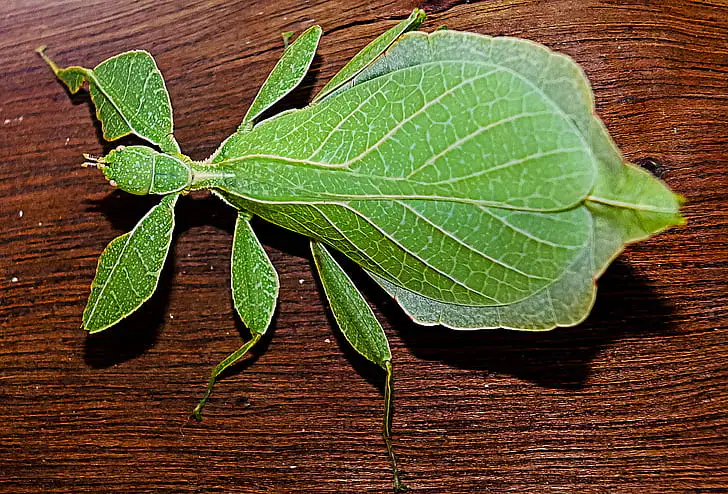
A walking leaf insect looks just like a leaf. This is an example of
a)
mutualism
b)
predator/prey
c)
adaptation
d)
parasitism
188.
A close relationship between two species that benefits at least one of the species is called
a)
predation
b)
symbiosis
c)
natural selection
d)
competition
189.
What happens to a population if the death rate exceeds the birth rate?
a)
The population goes down
b)
The population goes up
c)
The population is not affected
d)
There are more births than deaths
190.
Three different birds live in three different parts of a tree. They are doing this to avoid
a)
predators
b)
parastites
c)
adaptations
d)
competition
191.

An organism that mimics another to survive (like the gopher snake, that mimics a rattlesnake) is using
a)
competition
b)
symbiosis
c)
mutualism
d)
adaptation
192.
What is the approximate rate of plate movement per year?
a)
centimeters
b)
meters
c)
kilometers
193.
The process occurring in the mantle that is thought to be responsible for plate movement is known as a___________ current.
a)
electric
b)
conduction
c)
convection
194.

What type of plate boundary has plates sliding past each other?
a)
transform
b)
convergent
c)
divergent
195.
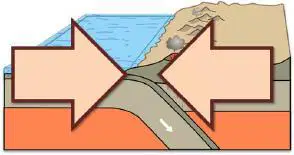
What type of plate boundary is illustrated by these arrows?
a)
convergent
b)
divergent
c)
transform
196.
Oceanic plates are pushed down into the upper mantle in _________ zones.
a)
subduction
b)
divergent
c)
convection
197.
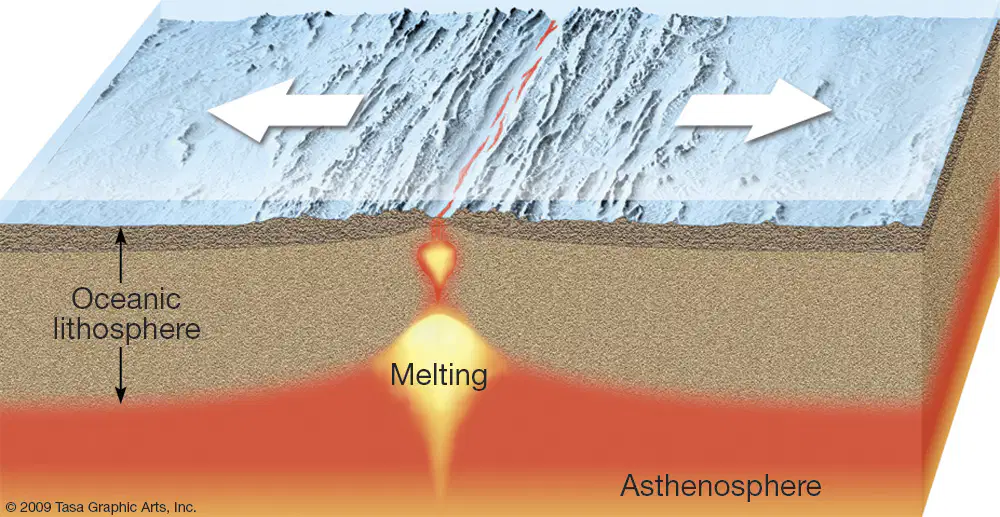
What type of boundary is illustrated by these arrows?
a)
convergent
b)
divergent
c)
transform
198.
What is the most common occurrence where plates slide against each other?
a)
volcanoes
b)
trenches
c)
earthquakes
199.
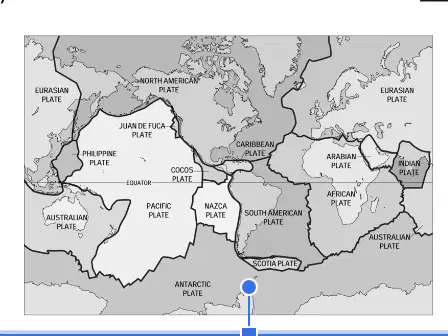
Find the Nazca and the South American Plate. This is an example of two plates converging. The denser oceanic plate (Nazca) moves under the continental plate (South American Plate). What features are likely found here?
a)
Rift Valleys
b)
Volcanoes
c)
Folded Mountains
d)
Ocean Basins
200.
The large plates move across the surface of the Earth by what process?
a)
. Convection
b)
Radiation
c)
Condensation
d)
Conduction
201.
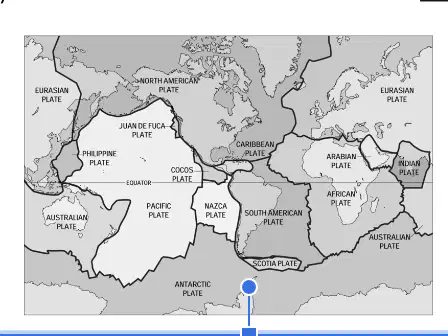
The Indian Plate (far right of plate picture) converges with the Eurasian Plate. When two continental plates converge what crustal feature is expected to form?
a)
Rift Valley
b)
Volcanoes
c)
Folded Mountains
d)
Ocean Basins
202.
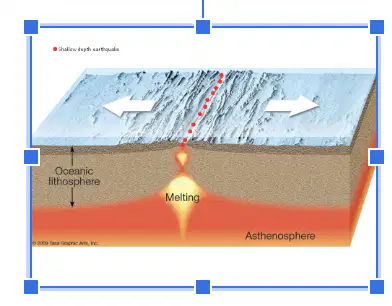
Below is a picture of sea-floor spreading. How are the ocean crusts moving?
a)
Converging
b)
Diverging
c)
Sliding
d)
No movement
203.

The San Andreas Fault in California is known as an active earthquake area. What type of boundary is it?
a)
Converging
b)
Diverging
c)
Transform
d)
Sea-floor spreading
204.
When two oceanic plate boundaries meet, what crustal feature forms? (see photo below)
a)
Plate tectonics
b)
Sea-floor spreading
c)
Folded mountains
d)
Volcanic Island Arc
205.
When an oceanic crust meets a continental crust, what occurs?
a)
. The oceanic crust moves under the continental crust resulting in volcanoes.
b)
The oceanic crust moves over the continental crust resulting in volcanoes.
c)
The two crusts converge forming folded mountains such as the Himalayas.
d)
Both crusts are subducted down into the mantle.
206.
Which is the only plate boundary that doesn't involve magma?
a)
Convergent
b)
Divergent
c)
Transform
d)
Convection
100 %

