Wayground logo

Free Printable Worksheets

Font size

S
M
L
XL
Worksheets

8.P.1 & 8.P.2

Total questions: 66

Worksheet time: 52mins

Name
Class
Date
1.
What is the significance of a column in the periodic table?
a)
A column, better known as a group, includes elements with similar properties.
b)
A column, better known as a period, includes elements with similar properties.
c)
A column, better known as a group, includes elements with the same number of electrons.
d)
A column, better known as a period, includes elements with the same number of electrons.
2.
halogensWhat is identified in the illustration?
a)
halogens
b)
metalloids
c)
noble gases
d)
transition metals
3.
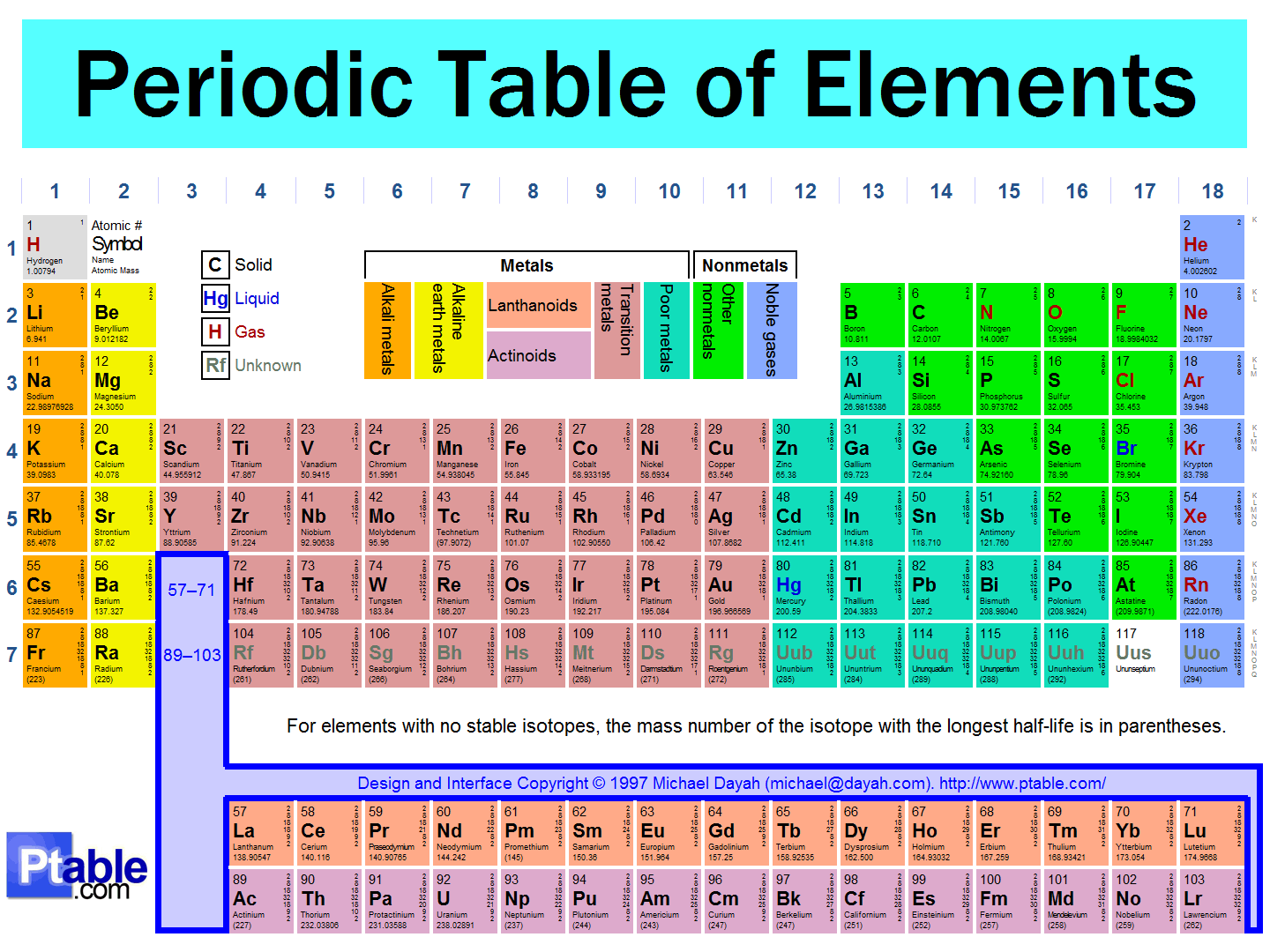
Which statement about the elements is true?
a)
Oxygen and sulfur share similar properties.
b)
Carbon and nitrogen share similar properties.
c)
Carbon and silicon have the same number of electrons.
d)
Oxygen and phosphorus have the same number of protons.
4.
Which term represents a physical property of matter?
a)
density
b)
flammability
c)
reactivity
d)
 toxicity
5.
Which example shows a physical change taking place?
a)
Heat is given off.
b)
 The substance melts.
c)
A new substance is produced.
d)
A precipitate is formed.
6.
Jake made a chart showing changes that occurred while he prepared his breakfast.
Which numbers would best  represent chemical changes? 
a)
2, 3, and 6
b)
2 and 6
c)
1, 2, and 3
d)
2 and 3
7.
Which statement about the Law of the Conservation of Mass is true?
a)
The mass of the products can be less than the mass of the reactants.
b)
 The mass of the products must be equal to the mass of the reactants.
c)
The mass of the final products can be more than the mass of the reactants.
d)
The mass of the reactants must be more than the mass of the products
8.
Review the reactants in the chemical reaction shown.
How many atoms of oxygen must be present in the product of this reaction?
a)
1
b)
2
c)
4
d)
6
9.
The number in front of a compound or element is a 
a)
Subscript
b)
Coefficient
c)
Superscript
d)
Charge
10.
The number to the lower side of an element is a 
a)
Subscript
b)
Superscript
c)
Coefficient
d)
Charge
11.
Matter can not be created nor destroyed: it can only be
a)
Destroyed a little bit
b)
Invisible
c)
Transformed, changed
d)
None of the above
12.
How many oxygen atoms are in this chemical formula?
a)
6 oxygen atoms
b)
2 oxygen atoms
c)
3 oxygen atoms
d)
4 oxygen atoms
13.
Which of the following is a sign that a chemical reaction has occurred?
a)
change in shape
b)
melting
c)
formation of a gas
d)
dissolving
14.
Is melting butter for popcorn a chemical or physical change?
a)
chemical
b)
physical
15.
Is bleaching your hair a physical or chemical change?
a)
physical
b)
chemical
16.
A vertical column is called...
a)
group
b)
tower
c)
period
d)
crew
17.
Which statement best explains how periods on the periodic table are organized?
a)
increasing atomic number from left to right
b)
increasing number of neutrons from left to right
c)
decreasing number of electrons from left to right
d)
decreasing atomic mass number from left to right
18.
Where are the most reactive metals located on the periodic table?
a)
the uppermost complete row of the table
b)
the rows at the bottom of the table connecting two section
c)
the column at the far left side of the table
d)
the second column from the right side of the table
19.
Which elements are most likely to react in the same manner in a chemical reaction?
a)
elements in the same group
b)
elements in the same period
c)
elements with similar atomic masses
20.
If an element has no electrons to share and is stable, what family is it found in?
a)
alkali metals
b)
noble gases
c)
halogens
21.
What is an example of a Chemical change?
a)
Ripped paper 
b)
boiled egg
c)
cracked egg
d)
sugar in water
22.

Which pair of elements has the most similar properties?

a)

Li and B

b)

I and Ca

c)

K and He

d)

N and P

23.

If a chemical reaction such as photosynthesis begins with 6 atoms of carbon (C), how many atoms of carbon (C) should be in the products?

a)

12 atoms of carbon (C)

b)

6 atoms of carbon (C)

c)

3 atoms of carbon (C)

d)

2 atoms of carbon (C)

24.

Which is a compound?

a)

sodium

b)

sugar

c)

nitrogen

d)

air

25.

Which is the best example of a pure substance?

a)

peanuts

b)

milk

c)

gold

d)

air

26.
The tendency of an element to react with other elements to produce compounds. 
a)
Chemical change
b)
Neutrality
c)
Reactivity
d)
Valence 
27.
A subatomic particle that has almost no mass and a negative charge.
a)
Electricity
b)
Proton
c)
Electron
d)
Neutron
28.
A positively charged subatomic particle located in the nucleus and has an atomic mass of 1.
a)
Neutron
b)
Valence
c)
Proton
d)
Electron
29.
The number of protons in the atoms of a particular element that is unique only to that element.
a)
Atomic Mas
b)
Atomic Number
c)
Proton Number
d)
Mole 
30.
The number of negatively charged particles in the most outer shell.
a)
Valence Electrons 
b)
Valence Neutron
c)
Valence Proton
d)
Valance Particles
31.
A chemical substance made up of two or more kinds of atoms bonded together. 
a)
Mixture 
b)
Solution
c)
Compound
d)
None of the above
32.
Which elements have the most similar chemical properties?
a)
K and Na
b)
K and Ca
c)
K and Cl
d)
K and S
33.
Which group of the periodic table is composed of inert (not reactive)  gases?
a)
alkali metals
b)
alkaline earth metals
c)
halogens
d)
noble gases
34.
Why is water classified as a compound?
a)
Because it is an element, which consists of only one type of atom.
b)
Because it is a substance, which can easily be separated.
c)
Because it is a substance composed of two or more kinds of atoms bonded together.
d)
Because it is an unevenly mixed solution, or a heterogeneous mixture.
35.
The mass of the products in a chemical reaction is the same as the mass of the reactants in the reaction.  Which law best describes this statement?
a)
The Law of Conservation of Angular Momentum
b)
The Law of Superposition
c)
The Law of Conservation of Matter
d)
The Law of Entropy
36.

Who created the periodic table of elements?

a)

John Dalton

b)

Hennig Brand

c)

Antoine Lavoisier

d)

Dmitri Mendeleev

37.

An element is identified by

a)

its number of protons.

b)

the atomic mass.

c)

the type of charge.

d)

its number of isotopes.

38.

The number of protons and neutrons in the atom is its

a)

atomic mass.

b)

atomic number.

c)

atomic power.

d)

atomic clock.

39.

The chemical formula for baking soda is NaHCO3. How many different elements make up baking soda?

a)

1

b)

2

c)

3

d)

4

40.

What general category describes the majority of the elements in the periodic chart?

a)

metals

b)

liquids

c)

nonmetals

d)

gases

41.

Properties such as magnetism, luster, and malleability have been used to group together which category of elements on the periodic table?

a)

metals

b)

nonmetals

c)

metaloids

d)

noble gases

42.
a _____ is two or more substances that have been physically combined
a)
compound
b)
element
c)
mixture
d)
atom
43.
a _____ mixture is not uniform throughout and components can be visibly distinguished
a)
homogeneous
b)
heterogeneous
c)
chemical
d)
physical
44.
a _____ mixture is uniform and you cannot see what it is made of
a)
heterogeneous
b)
homogeneous
c)
chemical
d)
physical
45.
Natural resources that are replenished by the environment in a short period of time (wind, solar power, geothermal energy, etc)
a)
Nonrenewable resources
b)
Renewable resources
c)
Solar Energy
d)
Fossil Fuels
46.
Resources that are not easily replenished by the environment.
a)
Renewable resources
b)
Nonrenewable resources
c)
Geothermal energy
d)
Energy conservation
47.
Nonrenewable resource; natural fuel such as coal, gas or natural gas that is formed in the Earth from the remains of living organisms.
a)
Biomass
b)
Hydroelectric power
c)
Solar energy
d)
Fossil fuels
48.
Renewable resource; radiant energy emitted by the sun that can be collected by solar panels.
a)
Solar energy
b)
Fossil fuels
c)
Energy conservation
d)
Biofuels
49.
Reducing energy consumption to save electricity; reduce/reuse/recycle
a)
renewable resources
b)
energy conservation
c)
solar energy
d)
nuclear power
50.
Renewable resource; uses heat from the earth to produce energy - 'geo' means 'earth' and 'thermal' means 'heat.'
a)
fossil fuels
b)
hydroelectric power
c)
energy conservation
d)
Geothermal energy
51.
Renewable resource; form of energy generated by the conversion of free-falling dam water to electricity 
a)
hydroelectric power
b)
biomass
c)
solar energy
d)
biofuels
52.
Renewable energy; released during nuclear fission or fusion, especially when used to generate electricity.
a)
biofuels
b)
nuclear power
c)
nonrenewable resources
d)
geothermal energy
53.
Renewable resource; fuels made from living organisms - literally biological fuels.
a)
biofuels
b)
solar energy
c)
fossil fuels
d)
geothermal energy
54.

Wind energy

a)

energy from the sun that is converted into thermal or electrical energy

b)

the process of obtaining heat or energy from a large body of water

c)

The energy captured by transforming the motion of air into electrical energy using a turbine

d)

Of, relating to, or produced by the internal heat of the earth

55.

Depletion

a)

Any natural resource (as wood or solar energy) that can be replenished naturally with the passage of time

b)

is the consumption of a resource faster than it can be replenished.

c)

a resource that cannot be reused or replaced easily (ex. gems, iron, copper, fossil fuels)

d)

the energy stored in atomic nuclei

56.
If significant amounts of fossil fuels continue to be used to support energy needs, what will be a negative impact for our planet?
a)
decreased oxygen levels, leading to lower air quality
b)
increased air pollution, leading to better human health
c)
decreased water quality, leading to increases in marine diversity
d)
increased levels of CO2, leading to warmer global climates
57.
Which pollutant is openly released into the atmosphere when coal is burned to supply energy to power plants?
a)
lead
b)
mercury
c)
carbon dioxide
d)
oxygen
58.
Which is a problem with using wind turbines to produce energy?
a)
Wind turbines are efficient only in certain areas.
b)
Wind turbines occupy a small area of land.
c)
Wind turbines produce a large amount of energy
d)
Wind turbines create a large amount of pollution.
59.
If an ash pond from a coal-fired power plant leaks ash into a local creek,which is an environmental consequence?
a)
Plants and organisms in the creek will be unaffected.
b)
Plants and organisms in the creek may die out.
c)
Plants and organisms in the creek may increase.
60.
The use of which energy source causes the most damage to the environment?
a)
fossil fuels
b)
biomass
c)
wind
61.
Which could most likely release a high dose of radiation to the environment?
a)
a nuclear energy power plant
b)
a coal-burning power plant
c)
a hydroelectric power plant
62.
Which method of energy production is most likely to have a negative impact upon the environment?
a)
hydroelectric power plant
b)
coal-burning power plant
c)
wind turbine
d)
solar panel
63.
Which form of energy production creates a radioactive waste product?
a)
coal combustion
b)
nuclear power
c)
wind turbines
d)
solar cells
64.
Which best describes a renewable energy source?
a)
oil
b)
coal
c)
sunlight
65.
Why do many communities use resources other than windmills to obtain energy?
a)
Windmills make small amounts of energy.
b)
Some areas have inconsistent winds.
c)
Windmills are visual pollutants.
66.
How does coal compare to natural gas?
a)
Both are renewable.
b)
Both are non-renewable.
c)
Coal is renewable, while natural gas is non-renewable.