
 Worksheets
Classical China
Total questions: 67
Worksheet time: 39mins
1) The purpose of the The Great Wall of China, as originally constructed by the Qin Dynasty, was to...
prevent immigration.
prevent foreign invasion.
show the greatness of the emperor
divide the empire into rival states.
The Han Dynasty of China contributed which invention to society that is still used today?
paper
stirrups
steel plow
typewriter
Which Dynasty replaced the Qin Dynasty?
Zhou
Shang
Han
Sui
The Silk Road was a system of trade routes that ran from _______ all the way to ________.
China ; Europe
China ; Australia
China ; India
China ; Russia
The goal of Confucianism was to create....
Social Order
a New Economy
Religious Peace
Political Unity
The Yellow River and Yangtze River were crucial sources of water, transportation, and trade in which civilization?
Ancient China
Ancient India
Ancient Egypt
Ancient Mesopotamia (Sumeria)
According to belief in the Mandate of Heaven, earthquakes and floods might be signs that:
The king did not govern well
The end of the world was near
The people did not obey the laws
The natural world ignored humans
According to the Mandate of Heaven, why would the Heavens become displeased?
The emperor did not govern well
The end of the world was coming
People were not respecting the law
People were not respecting their elders
________________ shows the influence of Confucian teachings in China.
New inventions
Exams for civil servants
Trade with other countries
Land given to farmers

A line of hereditery rulers.
Mongols
Dynasty
Patriarchy
Feudalism
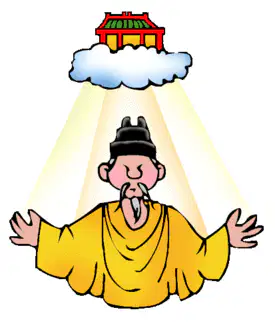
The claim by Chinese rulers to justify their power by saying they were chosen by the gods to rule.
Mandate of Heaven
Feudalism
Divine Right
Divine Selection

The belief that people are evil and need laws to follow and harsh punishments to force them to be good.
Caliphate
Feudalism
Moralism
Legalism

What Chinese Dynasty is known for valuing might, power, and control? Under this dynasty the Great Wall of China as well as the army of Terra Cotta Soldiers were created.
Xia
Qin
Zhou
Han
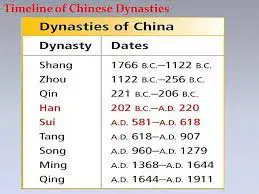
Upon overthrowing the Qin, this dynasty elimnated the practice of legalism and ended the persecution of the religion / philosphy of Confucianism.
Zhou
Xia
Han
Tang
What was the Warring States Era?
when China and Japan were at war
period after the Ming dynasty lost power
time when several families in China fought over power
when Hinduism was created
What is true of Classical China?
Cuneiform was made and used as a writing.
Woodblock printing, paper, compass, and gunpowder were the four great inventions.
Sailboats and wheels were invented.
They were mound builders.
Why did the Chinese build the Great Wall?
protect them from bad weather
protect them from northern enemies
for decor
to find labor for their large population
What were some of the Chinese contributions of this era?
Buddhism, Hinduism, cuneiform
sailboat, wheel, Judaism
calligraphy, civil service exam, seismograph
compass, wheel, sailboat
A system of government employees selected for their skills and merit
Trade System
Honor System
Spoils System
Civil Service System
The Silk Road connected China and ______________
the West
the South
the East
the North
The use of "legalism" in the Qin Dynasty involved
strict rules and harsh punishments
converting the population to confucianism
heavy taxation policies
mandatory military service
Why did the Chinese keep the silk-making process secret?
to control the trade of silk
to prevent silk ownership
to preserve silk for special occasions
to prevent phobia of worms from devaluing silk

What ruler ended the period of the Warring States in 221 B.C.E.?
Shi Huangdi
Confucius
Lao Tze
Li Si
Trade network that connected China through the Middle East and into the Roman Empire during the Han Dynasty?
Triangular Trade
Mediterranean Sea Complex
Columbian Exchange
Silk Road

During the Han Dynasty (206 BCE- 220 CE), Confucianism was named the official philosophy of the Chinese government because
It provided a way to bring order to society
Confucius founded the dynasty
The Han Dynasty was democratically elected
The caste system benefited the rulers
Why did Shi Huangdi have the Great Wall of China built?
to unify the nation
to beautify the nation
to protect the nation
to energize the nation
Civil servants were chosen based on
status
military ability
knowledge
where you live
Which of the following describes the Han government?
centralized
harsh ruling style
not harsh ruling style
incorporated the ideas of Confucius

What did Shi Huangdi do to incorporate legalist principles into Qin society?
educated and trained scholars
burned books and executed scholars
listened to "opinionated scholars"
destroyed books on medicine and agriculture
a series of rulers from the same family or group
Dynasty
Bureaucracy
Confucianism
Mandate of Heaven
The brief that Chinese ruling dynasties have permission from heaven to rule.
Daoism
Mandate of Heaven
Dynasty
Legalism
a system of rule that is stable and has a great deal of power over the people that it rules
Qin Dynasty
Confucianism
Strong Central Government
Mandate of Heaven
Refers to where an event is taking place and why it is taking place there.
Geographic Context
Lao Tze
The Analects
Architecture
Chinese philosopher (551-479 B.C.E.) whose ideas became the foundation for Confucianism
Confucius
Lao Tze
Shi Huang Di
Qin Dynasty
a philosophy (500 BCE) in China; stresses the importance of social order through the Five Relationships
Legalism
Filial Piety
Confucianism
Daoism
a book containing the teachings of Confucius
Architecture
The Analects
Filial Piety
The Five Relationships
Chinese dynasty 221 BCE - 206 BCE; founded by Shi Huangdi and ruled by a strong central government that used Legalist policies
Strong Central Government
Mandate of Heaven
Qin Dynasty
Han Dynasty
founder of the Qin Dynasty who ruled strictly, using Legalism which restricted freedom.
Daoism
Confucius
Lao Tze
Shi Huangdi
Who was the first emperor of China?
D. Emperor Li
C. Emperor Wu
B. Qin Shi Huangdi
A. Ying Zheng
What material were the terracotta soldiers sculpted from?
C. Terracotta
D. Clay
A. Marble
B. Bronze
What is reported to be inside the actual tomb of Qin Shi Huangdi?
A. Rivers of mercury
D. Precious stones
C. Palaces and artifacts
All of these
What is Emperor Qin known for?
Creating a common weights & measurements system
Creating a common writing system
The Great Wall
The Terracotta Army
All of these
What was the reason for the army being built?
To scare off the enemy
To protect and serve the king in the afterlife
To protect and serve the emperor in the afterlife
To impress the emperor

Which Dynasty is best known for beginning the Great Wall?
Shang
Qin
Ming
Zhou

Who did most of the work on the great wall?
skilled artisans
peasants and convicts
slaves captured in wars
soldiers and skilled engineers

Which of the following best describes conditions for laborers working on the Great Wall?
comfortable
harsh
boring
pleasant

Which of the following statements is true?
Most workers were proud to be a part of the construction of the Great Wall.
All of the Great Wall has been preserved.
The Great Wall was really many walls that were connected and extended.
The brick part of the Great Wall was built during the Qin Dynasty.
Qin ShiHuangdi was the first _______________ of China.
emperor
soldier
sculptor
inventor
What has happened to the colorful paint that once decorated the warriors?
The terracotta warriors were never painted.
Archeologists washed it off to show the terracotta color.
The paint flakes off and fades when exposed to air.
Qin Shi Huangdi told them to wash it off.
Which statement is true?
All terracotta warriors look exactly the same.
The warriors were made long after ShiHuangdi died.
Terracotta horses and chariots were found with the warriors.
The warriors did not have weapons, just food and water.
Positive change Qin Shi Huangdi made:
enforced Buddhism
standardized currency, language, and systems of weights & measures
created Feel Good Friday
invented the crossbow

Qin Shi Huangdi banished many nobles of conquered states and ordered public burning of books, including many books written by Confucian scholars.

What is a bureaucracy?
to join together into one group
control of what people read, write, hear, or see
a body of unelected government officials
to make the same
When was the Qin Dynasty?
221-206 BCE
221 - 206 CE
110- 93 BCE
637-467 BCE

