
Font size
 Worksheets
Review for Weather and Energy in the Atmosphere Test
Total questions: 101
Worksheet time: 2hrs 54mins
What form of energy is the sun's light?
Thermal
Electrical
Nuclear
Electromagnetic Radiation
Wind appearing to curve to the right in the Northern Hemisphere is caused by what?
Unequal Heating
Coriolis Effect
Greenhouse Effect
Centripetal Force
Convection currents in the atmosphere are caused by what?
Warm air rising and warm air sinking
Cold air rising and cold air sinking
Warm air rising and cold air sinking
Cold air rising and warm air sinking
What types of heat transfer occurs between two substances that are in direct contact with each other?
Convection
Conduction
Radiation
What type of heat transfer is given off by flames of a fire?
Convection
Conduction
Radiation
What is created when air moves from high to low pressure?
Precipitation
Clouds
Winds
Gas
Air above the land warms up faster than air over the water, and the cooler air from the water blows toward land. What type of wind is this?
Land Breeze
Global Wind
Sea Breeze
Surface Wind

What is this kind of heat transfer?
Conduction
Convection
Radiation

What kind of heat transfer is this?
Conduction
Convection
Radiation

What type of heat transfer is this?
conduction
convection
radiation
Hot air is less dense so it _________, and cold air is more dense so it __________.
sinks; rises
rises; sinks
rises; rises
sinks;sinks
Winds are caused by
Conduction
Convection
Radiation
Electromagnetic radiation
What causes wind?
Rotation of Earth on its axis
Uneven heating of Earth's surface
Movement of air from land to water
Air passing Earth as it revolved around the sun
Much of the sun's radiation is either absorbed or
reflected
refracted
converted
transformed

The curving of moving objects from a straight path due to the Earth's rotation is called
a continental deflection
a low pressure system bringing in snow
a rotational deflection
Coriolis Effect
The layers of the atmosphere are classified according to changes in
temperature and air pressure
altitude and air quality
humidity and temperature
air pressure and oxygen
What happens to air pressure when you go up the atmosphere?
decreases
increases
stays the same
changes

Which atmosphere layer contains the Aurora Borealis?
Troposphere
Mesosphere
Thermosphere
Stratosphere

The mixture of gases that surrounds Earth is the ______________.
atmosphere
stratosphere

What kind of heat transfer is occurring when the sun warms the sand?
Conduction
Convection
Radiation
Density

Which of the following is an example of convection?
A hair dryer is drying up your hair.
Boiling spaghetti noodles in water
When a car engine turns hot after being turned on.
When the AC or heater changes the temperature

What heat transfer happens when you burn your finger by touching a fire?
Convection
Radiation
Conduction
Gravity

When a frying pan is touching a stove that is on, what heat transfer is happening?
Radiation
Conduction
density
Convection

Hot air balloons rise because the heated air is less dense than cold air, so as the warm rises as the molecules spread out. The cold air is pushed downward, where it is also heated and rises. This swirling movement of air is called...
convection
radiation
insulation
conduction

The baby chickens kept warm from a heat lamps demonstrates this type of heat transfer.
conduction
radiation
convection
density

Warm air rises and the cool air sinks demonstrates this type of heat transfer.
conduction
radiation
convection
Insolation

Walking on the warm sand with your bare feet demonstrates this type of heat transfer.
conduction
radiation
convection
insolation

A group of friends gather around a fire to stay warm.
What type or energy is?
conduction
radiation
convection
waves
(sun)
The energy from the absorbed radiation heats the gases in the air and the gases hold the heat in the Earth’s atmosphere. This process is called the
Electromagnetic Waves
Greenhouse Effect
Heat Transfer
El Niño
Which are considered Greenhouse Gasses?
Sodium Chloride, Sodium dioxide, methanicane, and other gases in the air are considered Greenhouse Gases
Sodium Choride and smoky gasses
Water vapor, carbon dioxide, methane, and other gases in the air
Oxygen and Triglyceride
How are humans contributing to the Greenhouse Effect
By increasing the rate of chemical and mechanical weathering
By shopping too much
By watching Netflix on the weekends and eating strawberry popcorn all day
By increasing Carbon Dioxide (CO2)
The greenhouse effect.....
Protects the ocean from excessive evaporation rates
Is a place where people grow plants because the temperature is regulated
Keeps Earth’s atmosphere at a temperature that is comfortable for most living things
Increased carbon dioxide may cause global warming by
reducing the amount of oxygen in the air.
allowing more sunlight into the atmosphere.
trapping more heat in the atmosphere.
reflecting more sunlight from clouds.


Humans have the ability to cause temperature change.
True
False

Which of the following are greenhouse gases?
Carbon dioxide
Methane
Water vapor
All answers are correct

What happens to the temperature if more greenhouse gases are released into the atmosphere?
Temperature goes up
Temperature goes down

What is the greenhouse effect?
The warming of a planet due to trapped radiation.
The cooling of Earth due to air pollution.
The heating of a solid, such as a rock.

The hottest layer of the atmosphere is the ________________.
troposphere
thermosphere
exosphere
mesosphere


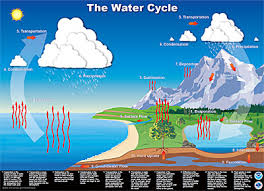
This picture shows a simple model of the ____________________
Layers of the atmosphere
Thermohaline current
Water cycle
Coriolis effect
When a low pressure system begins swirling over warm water near the equator, a _________________ may develop.
thunderstorm
tornado
blizzard
hurricane
Which type of front forms when cold air runs into a mass of warm air, causing the warm air to rise quickly?
Stationary front
Occluded front
Warm front
Cold front

Which molecule in the atmosphere is responsible for blocking harmful UV radiation from the sun?
ozone
methane
carbon dioxide
nitrogen

Within which atmospheric layer do most weather events occur?
the stratosphere
the thermosphere
the exosphere
the troposphere

What is the effect of the unequal heating of Earth's surface?
wind
ocean tides
greenhouse effect
the Coriolis effect


What type of pressure system forms clouds, precipitation and sometimes stormy conditions?
high pressure
low pressure
no pressure
stationary pressure


Which position on the map indicates an air mass that is warmer and drier?
A
B
C
D
Humidity is:
a boundary separating two masses of air of different densities.
a body of air with horizontally uniform temperature, humidity, and pressure.
a quantity representing the amount of water vapor in the atmosphere.
none of the above.
Why does warm air rise?
it is less dense than cool air
it is more dense than cool air
it is heavier than cool air
it particles have less energy than cool air
A large body of air that has the same properties as the area over which it is formed is known as a(n) ___.
front
air mass
humidity
trade wind
__________ is a boundary separating two masses of air of different densities, and is the principal cause of meteorological phenomena outside the tropics.
air mass
weather front
trade wind band
westerlies band of wind


Which layer of the atmosphere contains clouds and weather? (click to enlarge picture)
Therosphere
Mesosphere
Stratosphere
Troposphere

How does temperature in the Troposphere change as the altitude increases? (click to enlarge picture)
temperature increases
temperature decreases
temperature stays the same
How do plants 🪴 help water return to the atmosphere?
Respiration
Belching
Transpiration
Transportation
What are the weather conditions in an area over a long period of time?
climate
temperature
elevation
precipitation


Rain, sleet, hail, and freezing rain are all...
precipitation
condensation
evaporation
percolation

What do thunderstorms, tornadoes and hurricanes have in common?
strong winds
severe storms
no wind
nothing
The mixture of gases and particles that surrounds a planet, held by gravity is called what?
greenhouse effect
hydrosphere
atmosphere
Which layer of the atmosphere is the HOTTEST?
exosphere
mesosphere
thermosphere
troposphere
Air is very thin, satellites orbit here
troposphere
mesosphere
exosphere
ionosphere

