
 Worksheets
Ecological Organization, Pyramids, Carbon Cycle Quizizz
Total questions: 35
Worksheet time: 35mins
Which of the following shows an abiotic factor interacting with a biotic factor in the environment?
Lamprey eels survive by attaching themselves to trout.
Water temperature affects its oxygen level.
Low light intensity affects the growth of forest pine trees.
Gypsy moth caterpillars eat the leaves of apple tree.
Which is an example of a seasonal change to a biotic factor?
Temperatures get cooler in the fall.
Hours of sunlight increase the summer.
Birds fly south for the winter.
Rainfall increases in the spring.

What are the biotic factors in this image?
sunlight, elephants, grasses
sunlight, water, air
elephants, plants, trees
elephants, clouds, grasses

What are the abiotic factors in this image?
water
birds
plants
air

Which of the following best describes a community?
sharks, groupers, anemones and shrimp on a coral reef
decorator crabs on the seafloor
loggerhead sea turtles in Atlantic
prairie grassland in Wyoming

What level of organization can be seen here?
Species
Population
Community
Ecosystem

What level of ecological organization does this entire picture represent?
Organism
Population
Community
Ecosystem
Which two earth spheres are interacting: A fish swimming in a river.
geosphere and atmosphere
hydrosphere and biosphere
geosphere and cryosphere
atmosphere and biosphere
Which two earth spheres are interacting: The wind blows the leaves from a tree.
atmosphere
biosphere
atmosphere
geosphere
geosphere
hydrosphere
geosphere
atmosphere
Which two earth spheres are interacting: The sun dries up a small river.
hydrosphere
biosphere
hydrosphere
atmosphere
hydrosphere
geosphere
hydrosphere
cryosphere

When ocean water evaporates into the air, which 2 spheres are interacting?
Geosphere
Hydrosphere
Atmosphere
Biosphere

All energy in an ecosystem comes from the sun. This energy is passed through the ecosystem as organisms eat other organisms.
Ominvores
Herbivores
Detritivores
Flow of energy

Organisms that produce their own food mostly through photosynthesis (producers). Examples are plants and algae.
Ominvore
Detritivore
Heterotroph
Autotroph

Organisms that get their energy and nutrition from other organisms (consumers).
Heterotroph
Autotroph
Decomposer
Detritivore


Which level would have the most biomass?
Producers
Primary consumers - herbivores
Secondary consumers- carnivores
Quaternary consumers- Apex Predators
Which level would have the least biomass?
Producers
Primary consumers - herbivores
Secondary consumers- carnivores
Quaternary consumers- Apex Predators
A ecological pyramid model that shows the amount of living organic matter or tissue available at each trophic level.
trophic level
food web
biomass pyramid
pyramid of numbers
biosphere
atmosphere
geosphere
hydrosphere
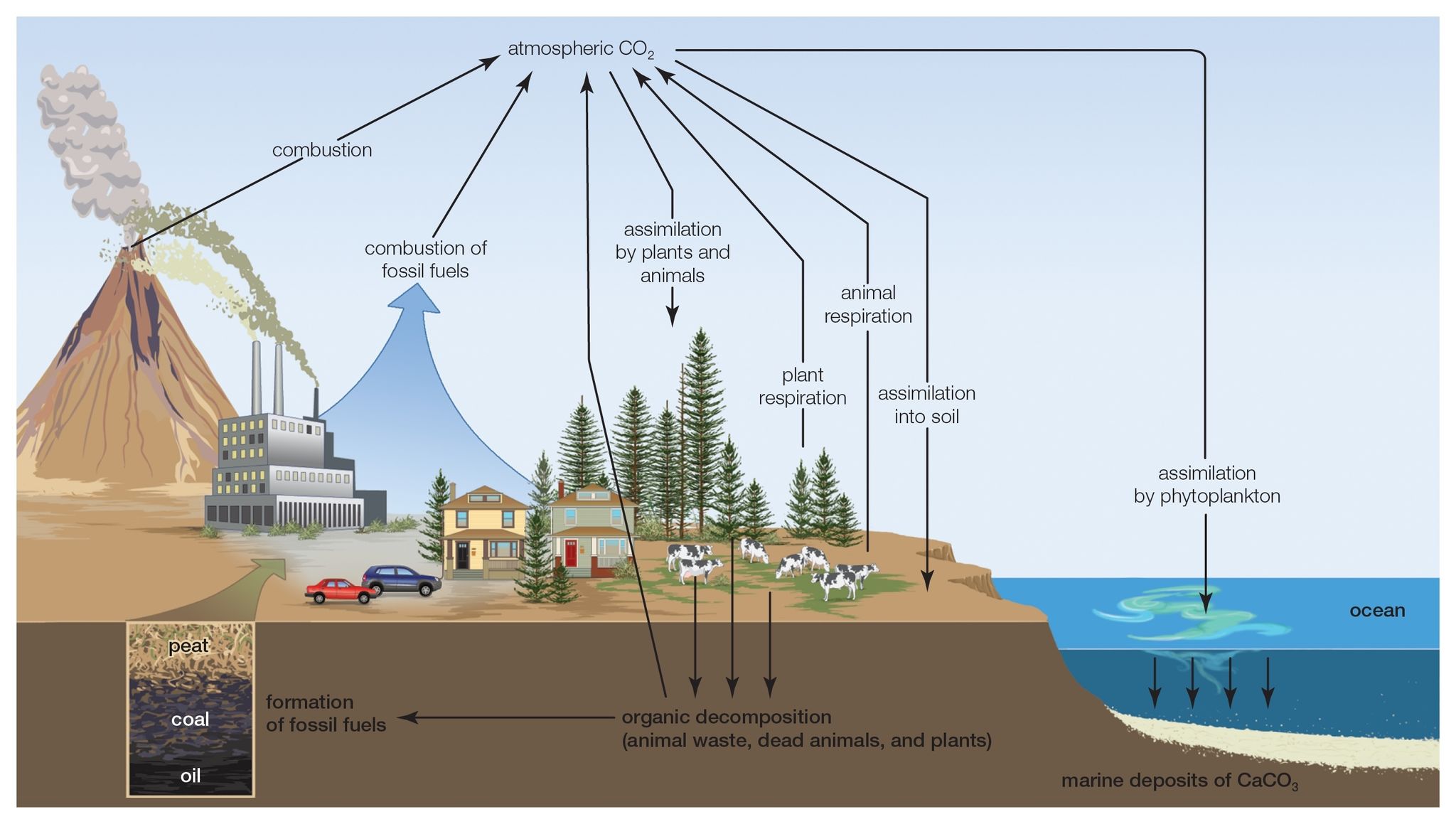
decomposition
Through food chains, the carbon that is in plants moves to the animals that eat them. When an animal eats another animal, carbon is ___________________.
released
transferred
dissolved
gone
Which of the below removes carbon dioxide from the atmosphere?
deforestation
trees and phytoplankton
burning fossil fuels
cellular respiration
Which statement is an example of how carbon moves through a food chain as part of the cycle?
Producers release carbon dioxide, and consumers take it it.
Producers take in carbon dioxide, and consumers release it.
Producers take in carbon from the soil, and they release it when they decompose.
Producers release carbon into the soil, and consumers take it in from the soil.
How does carbon move from the biosphere into the atmosphere?
Through cellular respiration
Through photosynthesis
Through burning fossil fuels
Through carbon dissolving in the ocean
How do humans obtain their carbon?
From absorbing sunlight
From inhaling carbon
From eating plants and animals
From fossil fuels
Which of the following are carbon sinks?
The ocean
Plants
The atmosphere
Clouds
If a carbon molecule moves from a plant to an animal, is it moving through the short-term or long-term carbon cycle?
Quick/Short Cycle
Slow/Long Cycle
Formation of fossil fuels is part of the:
Quick/Short Carbon Cycle
Slow/Long Carbon Cycle
How does the ocean fit into the carbon cycle?
Absorbs carbon dioxide from the atmosphere
Filters carbon for marine plants to use
Takes carbon from the soil on the ocean floor
Cycling carbon from the biosphere

