wayground logo

Free Printable Worksheets

Font size

S
M
L
XL
Worksheets

G10 CAI review week 9

Total questions: 106

Worksheet time: 9hrs 50mins

Name
Class
Date
1.
Whose experiment involved shooting small, positively charged alpha particles at a sheet of gold foil?
a)
J.J. Thompson
b)
Max Planck
c)
Ernest Rutherford
d)
Niels Bohr
2.
Rutherford referred to the center of the atom, where the mass was concentrated, as _____
a)
the kernel
b)
the nucleus
c)
the focus
d)
the heart
3.

What particle was used in the gold foil experiment?

a)

Beta Particle

b)

Alpha particle

c)

Gamma ray

d)

High energy electron

4.

Most of the alpha particles went straight through the gold foil. This suggested that....

a)

There is no interference between alpha and gold.

b)

Most of the atom is made up of empty space.

c)

The alpha particles were very tiny.

d)

quantum tunneling exists

e)

the nucleus is positively charged

5.

Some of the alpha particles fired at the gold foil were deflected at angles. This was due to...

a)

reflection of the alpha source when it it the fluorescent screen.

b)

The alpha particles hitting the gold nucleus.

c)

Repulsion forces between the positively charged nucleus and the positively charged alpha particles.

d)

A mis-firing of the alpha source

e)

most of the atom is made up of space

6.
Which scientist came up with the Plum pudding theory?
a)
Hantaro Nagaoka
b)
Ernest Rutherfud
c)
J.J Thomson
d)
Charles Darwin
7.

which two particles are oppositely charged

a)

electron

b)

neutron

c)

proton

d)

anti-neutrino

e)

neutrino

8.

which two subatomic particles have approximately the same mass?

a)

proton

b)

neutron

c)

electron

d)

neutrino

9.

A nucleus of sodium, Na, has 11 protons and 12 neutrons. Which symbol represents this nucleus?

a)
b)
c)
d)
10.

How many protons are in the nucleus of an atom of radium

a)

88

b)

138

c)

226

d)

314

11.

A nucleus of the element cobalt may be represented by the symbol in the picture. What is the structure of this nucleus?

a)

27 protons and 32 neutrons

b)

27 protons and 59 neutrons

c)

59 protons and 27 neutrons

d)

59 protons and 32 neutrons

12.

A narrow beam of alpha-particles is fired at a thin piece of gold foil. Which is the final direction of the largest number of alpha-particles?

a)

A

b)

B

c)

C

d)

D

13.

The proton number (atomic number) Z is

a)

number of neutrons

b)

number of neutrons and protons

c)

number of electrons

d)

number of protons

14.

The nucleon number (mass number) A is

a)

number of neutrons

b)

number of neutrons and protons

c)

number of electrons

d)

number of protons

15.

An atomic nucleus with a particular value of A and Z is called

a)

neutron

b)

nucleus

c)

nuclide

16.

Nuclides with the same proton numbers but different nucleon numbers are called

a)

isolation

b)

isotope

c)

iso iso

17.

Nuclear fission is a nuclear reaction that releases energy by splitting large atoms into smaller ones.

a)

True

b)

False

18.

Examples of nuclear fuels are...

a)

Uranium

b)

Neptunium

c)

Plutonium

d)

Mercury

19.

What particles are fired at atoms to make them split?

(a)  

20.

The new, smaller nuclei are called (a)   nuclei.

21.

Approximately (a)   neutrons are released with each fission reaction.

22.

The extra neutrons that are released cause further nuclear fission reactions to happen. These then release even more neutrons and the process repeats. This is called a (a)   reaction.

23.

Explain why the neutrons released in nuclear fission must be slow-moving in order to cause a chain reaction.

4 lines
24.

A moderator, such as graphite, is used to...

a)

stop a nuclear reaction happening

b)

speed up neutrons

c)

slow down neutrons

d)

absorb radiation from the reaction

25.

To slow down a nuclear fission reaction, the control rods are...

a)

raised

b)

lowered

26.

Control rods are often made from (a)   .

27.
In nuclear fusion, smaller atoms are forced together to create larger atoms. Does this process release, absorb or maintain energy?
a)
Absorb energy
b)
Maintain energy
c)
Release energy
28.

Define nuclear fusion.

a)

Nuclear fusion – combining lighter atoms to make heavier ones – is what makes it possible.

b)

Nuclear fusion – splitting lighter atoms to make heavier ones – is what makes it possible.

c)

Nuclear fusion – combining heavier atoms to make lighter ones – is what makes it possible.

d)

Nuclear fusion – splitting heavier atoms to make lighter ones – is what makes it possible.

29.

Which of the following reactions would yield the largest amount of energy per mole of fuel?

a)

92235U + 01n → 56141Ba + 3692Kr + 301n

b)

CH4 + 2O2 → H2O + CO2

c)

92238U → 90234Th + 24He2+

d)

94238Pu → 92234U + 24He2+

30.
Light has the highest velocity in which medium?
flint glass n=1.70
barium glass n=1.60
crown glass n=1.523
water n=1.33
diamond n=2.45
a)
diamond
b)
water
c)
flint glass
d)
barium glass
31.
Light has the lowest velocity in which medium?
flint glass n=1.70
barium glass n=1.60
crown glass n=1.523
water n=1.33
diamond n=2.45
a)
diamond
b)
water
c)
flint glass
d)
barium glass
32.
If a pulse of red light and a pulse of blue light travel in vacuum
a)
The red pulse travels faster because its index of refraction is smaller
b)
The blue pulse travels faster
c)
The two pulses travel at the same speed
d)
The relative speed depends on the exact wavelengths of the red and blue pulses
33.
According to Willebord Snell, light passing from air to glass will cause the light to
a)
maintain its original speed 
b)
accelerate while it is in glass
c)
increase its speed
d)
reduce its speed
34.
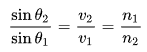
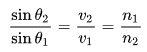
A ray of light traveling from air into crown glass strikes the surface at an angle of 30 degrees. What is the angle of refraction? (air n=1, crown glass n=1.532)
a)
39.7 degrees
b)
19.2 degrees
c)
59.1 degrees
d)
12.3 degrees
35.
According to the Law of reflection, a light ray striking a mirror
a)
continues moving through the mirror in the same direction
b)
moves into the mirror at a slightly different angle
c)
bounces off the mirror toward the direction it came from
d)
bounces off the mirror at the same angle it hits.
36.
Glass has a _____________ index of refraction than air.
a)
Equal
b)
Greater
c)
Less
d)
Impossible to say
37.
The fact the two angles are the same is an example of....
a)
Refraction
b)
Angle of Incidence
c)
Law of reflection
d)
Magnification
38.
This shows the phenomenon known as....
a)
reflection
b)
refraction
c)
mirrors
d)
focal point
39.
Light travels through a liquid at 2.25 EE 8 m/s. What is the index of the liquid?
a)
1.33
b)
1.0
c)
1.523
d)
2.45
40.
How does light behave as it enters these mediums?
a)
continue its path as straight line.
b)
bends toward the normal
c)
bends away from the normal
d)
reflects
41.
The velocity of light in vacuum is _______ m/s.
a)
3x10⁸
b)
3x10¹²
c)
3x10⁶
d)
3x10¹⁰
42.
The formula to calculate the refractive index is
a)
n=cv
b)
n=v/c
c)
n=c/v
d)
v=nc
43.
When a red light ray travels from air into a glass block, its
a)
velocity increases and its wavelength decreases 
b)
velocity decreases and its frequency stays the same
c)
velocity decreases and its frequency increases
d)
velocity remains the same and its wavelength decreases
44.
The pictures shows what a student observed when he looked through a hand lens at a penny.
What happens to light passing through a hand lens that makes the image of the penny appear larger? The light is-
a)
absorbed
b)
reflected
c)
refracted
d)
stopped
45.
A student placed a pencil in a cup of water.  The pencil appears broken because light-
a)
always travels in a straight line
b)
bends when it passes through water
c)
makes the water in the glass evaporate
d)
reflects the pencil on the water's surface
46.
A ray of light traveling from air into crown glass strikes the surface at an angle of 30 degrees. What is the angle of refraction? (air n=1, crown glass n=1.532)
a)
39.7 degrees
b)
19.2 degrees
c)
59.1 degrees
d)
12.3 degrees
47.

Light travels from air (n = 1.000) into an optical fiber. If the angles of incidence and refraction are 22oand 15º respectively. what is the index of refraction inside the fiber? Round off your values to 3 sig. figs.

a)

1.45

b)

1.44

c)

0.69

d)

0.70

48.

There are certain angles of incidence for which the angle of refraction is close to 90°. What is this angle called?

a)

Total internal angle

b)

Critical angle

c)

Reflection angle

d)

Refracted angle

49.

If light travels from a lower to a higher index of refraction medium the light will

a)

bend away from the vertical axis

b)

bend closer to the vertical axis

c)

not bend

d)

answer is not here

50.

If light travels from a higher to a lower index of refraction medium the light will

a)

bend away from the vertical axis or may not refract

b)

bend closer to the vertical axis

c)

not bend

d)

answer is not here

51.

Light travels from air (n = 1.00) into a second material. The incident ray of light hits the surface at angle of 64o and the refracted ray enters the second material at an angle of 32o. What is the index of refraction of the second material? n1sin(Θ1) = n2sin(Θ2)

a)

1.4

b)

0.90

c)

0.53

d)

1.7

52.

What happens to light during total internal reflection?

a)

The angle of incidence is greater than the critical angle.

b)

The angle of reflection is the same as the critical angle.

c)

The angle of refraction is less than the critical angle.

d)

The angle of incidence is zero.

53.

A 12Ω resistor is connected across the secondary winding of an ideal transformer whose secondary voltage is 120V. Determine the primary voltage if the supply current is 4A.

4 lines
54.
This picture is an example of a ___________
a)
Step- Up Transformer
b)
Step- Down Transformer
c)
Motor
d)
Generator
55.
Will a transformer work with direct current (d.c.) or alternating current (a.c.)?
a)
a.c. only
b)
d.c. only
c)
Both a.c. and d.c.
56.
Ratio of voltages is equal to ratio of
a)
iron sheets in core
b)
coil
c)
number of turns in coil
d)
all of above
57.

Assume primary has 240 turns and secondary has 60 turns. Primary is connected with 120V AC power supply. What is the voltage on the secondary?

a)

30 V

b)

0.333 V

c)

2 V

d)

120V

58.

choose all step down transformers

a)

TV adapter

b)

Mobile charger

c)

Transformer outside the homes

d)

Transformers outside power generating stations

59.

Mutual induction means: (Choose the correct statement)

a)

A conductor (wire) placed in a varying magnetic field will have a current induced in it

b)

A conductor produces varying magnetic field

c)

Two conductors must be connected together to produce current

d)

Two conductors cannot used magnetic field to produce current

60.

Primary winding of a transformer is determined by ...

a)

which winding is nearer to the load

b)

which winding is connected to the source

c)

which winding has more turns

d)

which side has the highest voltage

61.

The function of a transformer is to ...

a)

raise and lower the apparent power levels

b)

transfer DC voltage from the primary winding to the secondary winding

c)

increase or decrease A.C voltage or A.C current levels

d)

transform mechanical energy into electrical energy

62.
The diagram shows a two-pole single-coil electric motor.
The split-ring commutator reverses the current in the coil as it rotates.How many times is the current reversed if the coil is rotated once?
a)
1
b)
2
c)
3
d)
4
63.
What is the direction of the current in the wire?
a)
left 
b)
right
c)
up the page
d)
none
64.
What side of the wire is positive?
a)
left
b)
right
65.
What is the direction of the current in the wire?
a)
up
b)
down
c)
left
d)
right
66.
What is the direction of the electron flow?
a)
up the page
b)
down the page
c)
left 
d)
right
67.

Using the right hand rule, B represents the direction of the

a)

current

b)

magnetic field

68.

Using Fleming's left hand rule, the force would go

a)

towards you

b)

away from you

c)

to the left

d)

to the right

69.
In Flemings Left hand rule what does the thumb point in the direction of?
a)
The direction of the magnetic field
b)
The direction of the current
c)
The direction of the force (movement)
d)
None of these
70.

Making an electromagnet stronger would not involve which of the following?

a)

More current in the wire

b)

Making the loops wider

c)

Packing the loops tighter together

d)

Having more loops

71.
The rate at which a radioactive element decays is its ____.
a)
quarter life
b)
whole life
c)
wonderful life 
d)
half life
72.
The three types of nuclear radiation in order of increasing penetrating power are
a)
alpha, beta, gamma
b)
alpha, gamma, beta
c)
beta, alpha, gamma
d)
gamma, alpha, beta
73.
Name the type of radioactive particle that can be stopped by a sheet of paper.
a)
alpha
b)
beta
c)
gamma
d)
lambda
74.
Name the most penetrating type of radiation.
a)
alpha
b)
beta
c)
gamma
d)
lambda
75.
If the half life of a radioactive element is 100yrs, how long would it take for the radioactivity to reduce by one half?
a)
200yrs
b)
100yrs
c)
50yrs
d)
300yrs
76.
The half life of a radioactive substance:
a)
increases with time
b)
increases then decreases with time
c)
decreases with time
d)
stays the same with time
77.
A helium nucleus with two protons and two neutrons is called a(n) ____ particle
a)
alpha
b)
beta
c)
gamma
d)
lambda
78.
The amount of material left after TWO half lives is ____ of the original amount.
a)
1/2
b)
1/4
c)
1/8 
d)
1/16
79.
The splitting of a nucleus into smaller nuclei is
a)
fusion
b)
fission
c)
half-life
d)
gamma radiation
80.
This is an example of...
a)
Fission  reaction
b)
Fusion reaction
c)
Decomposition reaction
d)
Decay
81.
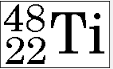
How many protons does this isotope of titanium have?
a)
48
b)
22
c)
26
d)
70
82.
How many neutrons does uranium-235 have?
a)
238
b)
92
c)
146
d)
143
83.
The type of radioactive particle that can be stopped by a sheet of paper is the ____.
a)
alpha particle
b)
beta particle
c)
gamma ray
d)
uranium
84.
A helium nucleus with two protons and two neutrons is called a(n) ____.  
a)
alpha particle
b)
electroscope
c)
beta particle
d)
gamma ray
85.
Negatively charged particles emitted from a nucleus at a high speed are ____.  
a)
alpha particle
b)
gamma rays
c)
beta particles
d)
X rays
86.
The half-life of Zn-71 is 2.4 minutes. If one had 100.0 g at the beginning, how many grams would be left after 7.2 minutes has elapsed?
a)
100.0g
b)
50.0g
c)
12.5g
d)
8.5g
87.
Barium-122 has a half-life of 2 minutes. A fresh sample weighing 80 g was obtained. If it takes 10 minutes to set up an experiment using barium-122, how much barium-122 will be left when the experiment begins?
a)
0.25g
b)
2.5g
c)
25g
d)
80g
88.
Takes two small nuclei and combines them into a larger nucleus
a)
fission
b)
fusion
89.
The atomic number of an atom or ion refers to the number of:
a)
neutrons
b)
protons
c)
nucleons
d)
electrons
90.
The half-life of strontium-90 is 25 years. How much strontium-90 will remain after 100 years if the initial amount is 4.0 g?
a)
3.0g
b)
0.25mg
c)
0.3g
d)
0.25g
91.

A radioactive nucleus R decays with the emission of a β-particle as shown:


Which equation is correct?

a)

x = p

b)

y = q

c)

p = x – 1

d)

q = y – 1

92.

An unstable nucleus has 145 neutrons and 92 protons. It emits a β-particle.

How many neutrons and protons does the nucleus have after emitting the β-particle?

a)

A

b)

B

c)

C

d)

D

93.

What will the values of x and y be?

a)

x=194, y =83

b)

x=194, y =84

c)

x=194, y =85

d)

I don't know. I should probably study this stuff more before the test.

94.

A sample of Radium-228 decays from 100g to 12.5g. How many half lives did it experience?

a)

1

b)

2

c)

3

d)

4

95.

How much of a 250g sample would be left after 5 half lives?

a)

125g

b)

62.5g

c)

31.25g

d)

7.81g

96.

If the half life of Uranium-240 was 10 years, how long would it take for it to decay from 310g to 80g?

a)

10 years

b)

240 years

c)

20 years

d)

30 years

97.

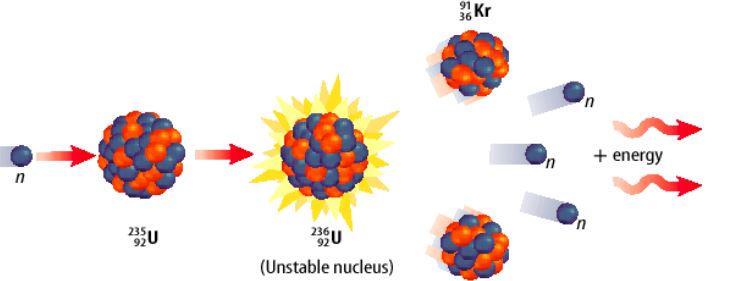
This image shows

a)

nuclear fission

b)

nuclear fusion

98.

This image shows

a)

Nuclear fission

b)

Nuclear fusion

99.

You have 100 grams of radioactive C-14. The half life of C-14 is 5730 years.

How many grams are left after 1 half life?

a)

100 grams

b)

25 grams

c)

2 grams

d)

50 grams

100.

Imagine you have 50,000 atoms of uranium-238. If U-238 has a half-life of 4.5 billion years, how many U-238 atoms will be left after 4.5 billion years?

a)

25,000

b)

50,000

c)

12,500

d)

0

101.

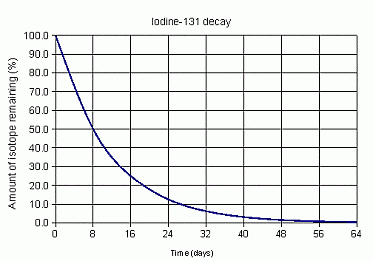
What is the half-life of iodine-131?

a)

32 days

b)

8 days

c)

16 days

d)

24 days

102.

If the half-life of uranium-232 is 70 years, how many half-lives will it take for 10 g of it to be reduced to 1.25 g?

a)

1 half-life

b)

2 half-lives

c)

3 half-lives

d)

4 half-lives

103.

Identify the missing variable in the following reaction.

a)
b)
c)
104.

Identify the missing variable in the following reaction.

a)
b)
c)
105.
Arrange in order of increasing ability to penetrate matter.
a)
Beta, gamma, alpha
b)
Alpha, gamma, beta
c)
Gamma, beta, alpha
d)
Alpha, beta, gamma
106.
Balance the following equation:
146C --> 0-1e + ________
a)
145B
b)
146C
c)
147N
d)
42He