
NEW
Font size
 Worksheets
VCE PE U2 Chapter 10.2
Total questions: 10
Worksheet time: 5mins
"refers to lack of involvement in physical activity during an individual’s leisure time"
Physical Activity
Physical Inactivity
Sedentary Behaviour
Metabolic Equivalents
"is any movement of the body produced by skeletal muscles, resulting in energy expenditure"
Physical Activity
Physical Inactivity
Sedentary Behaviour
Metabolic Equivalents
"is behaviour associated with sitting or lying down, including activities such as watching television, working or playing on the computer, driving or sitting in a car, bus or train. It also includes homework, studying or reading. MET of 1–2."
Physical Activity
Physical Inactivity
Sedentary Behaviour
Metabolic Equivalents
"are commonly used to express the intensity of physical activities"
Physical Activity
Physical Inactivity
Sedentary Behaviour
Metabolic Equivalents
Having a MET of 1 would be expected if you are doing which of the following?
Lying on the couch watching TV
Playing an intense game volleyball at lunch time
Walking to the bus after school
Completing a zumba class at the local gym
Moderate physical activity would result in a MET of...
3-6 METS
1-2 METS
10-15 METS
7-9 METS
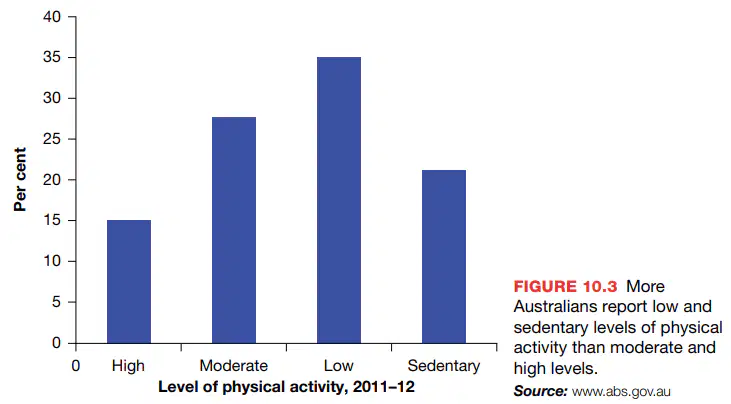
Approximately what percentage of people completed low levels of physical activity in 2011-12?
15%
35%
28%
22%
Approximately what percentage of people completed high levels of physical activity in 2011-12?
15%
35%
28%
22%
Approximately what percentage of people completed moderate levels of physical activity in 2011-12?
15%
35%
28%
22%
Approximately what percentage of people were sedentary in 2011-12?
15%
35%
28%
22%

