
Font size
 Worksheets
REVIEW 2
Total questions: 46
Worksheet time: 30mins
Which biomolecules transport oxygen and other substances, also the primary structure is amino acid and insoluble in water?
Lipids
Carbohydrates
Proteins
Nucleic Acids
Which biomolecules provide energy storage, supplying energy for the cell , cell signaling and structural support?
Carbohydrates
Proteins
Lipids
Nucleic Acids
2. Which biomolecules contains your genetic information?
Proteins
Lipids
Carbohydrates
Nucleic Acids
Just under an orca's skin lies a thick layer of blubber. Blubber helps insulate a whale from heat loss. Based on this information, which biomolecule is blubber primarily made of?
Lipids
Nucleic Acids
Proteins
Carbohydrates
7. Glycerol and fatty acids are the monomers of _________.
Lipids
Carbohydrates
Proteins
Nucleic Acids
3. Which biomolecules act as energy storage for the cell and also cushions and insulates organs?
Carbohyrdates
Lipids
Proteins
Nucleic Acids
11. People with albinism do not produce the melanin protein. Melanin allows for people to be protected from the sun and thus people with albinism are prone to severe sunburns. Which biomolecule would you infer is responsible for albinism?
Carbohydrate
Protein
Lipid
Nucleic Acid
Which of the following is NOT an RNA?
tRNA
mRNA
rRNA
DNA
The ability of proteins to catalyze chemical reactions is a a crucial role in enzymatic activity.
TRUE
FALSE
Which of these is an example of synthetic polymer?
cotton fibers
rubber
wool
polyvinyl chloride (PVC)
What is the name of the reaction used to make polymers?
polymerization
cracking
polygonization
precipitation

What is the name of polymer with this repeating unit?
Poly(methylester)
poly(methyl methacrelate)
polypropylene
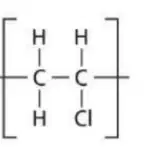
What is the name of polymer with this repeating unit?
Poly(methylester)
poly(methyl methacrelate)
polypropylene
PVC
Which is the most likely bond angle around the oxygen atom in ethanol?
104.5°
109.5°
120°
180°
Which one of the following molecules is not planar?
BF3
NCl3
C2H4
HCHO
Which of the following shapes is 109.5°?


What is the bond angle in the shape shown here?
109.5o
120o
107o
104.5o
Which of these functional groups is carboxyl?
-CO
-NH2
-CH3
COOH
Which of these functional groups is an Amino?
-CH3
-NH2
-COH
-PO4-
Which of these functional groups is a sulfhydryl?
-SH
-OH
-CO
-COH
Which of these functional groups is a hydroxyl?
-PO4-
-SH
-OH
NH2

Name this functional group compound.
Propane
Bropane
Propane(Br)
Bromopropane
What is the main purpose of amino acid ?
Acts as a base
Which of the "Halogens" is found in liquid state at room temperature?
Flourine
Chlorine
Iodine
Bromine
Which of these elements are Halogens and commonly used in toothpaste?
Fluorine
Helium
Zinc
Bromine
Solvent in paint thinners common use of compounds containing a hydroxyl group.
TRUE
FALSE

A molecular geometry with 3 bonding pairs, an example is Boron trifluoride (BF3).
Trigonal pyramidal
Trigonal planar
Trigonal bipyramidal
T-shaped

What functional group is shown?
amino
hydroxyl
carboxyl
sulfhydryl

What functional group is shown?
carbonyl
hydroxyl
carboxyl
amino

What functional group is shown?
halide
hydroxyl
amino
carboxyl
Name this compound.
Propane
Bropane
Propane(Br)
Bromopropane

Compounds that contain only the elements carbon and hydrogen and insoluble in water are called.
carbon chains
substituted hydrocarbons
isomers
synthetic polymers

Name this molecule:
methane
ethane
propane
butane

Name this molecule:
methane
ethane
propane
butane

C3H8
Which is the structures with IUPAC nomenclature
ethyl pentanoate


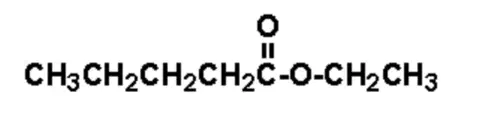
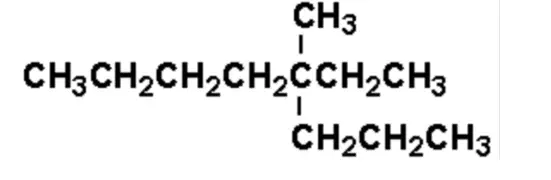
Which is the structures with IUPAC nomenclature
4-ethyl-4-methyloctane

What chemical is this? (C5H10)
Pentene
Pentane
Hexane
Heptene
(CH3)2CHCH(OH)CH2C(CH3)3
2,5,5-trimethyl-3-hexanol
TRUE
FALSE
What is the first in an decreasing reactivity towards an electrophilic reagent, among the following organic compound?
Toluene
Benzene
Phenol
Chlorobenzene

