
Font size
 Worksheets
SCIENCE REVIEWER 2ND TRIME
Total questions: 85
Worksheet time: 1hrs 8mins
___________ is the presence and flow of electric charge. Using ___________ we can transfer energy in ways that can allow us to do simple chores. Its best known form is the flow of electrons through conductors such as copper wires.
(a)
This type of electricity charges build up in one location.
Static Electricity
Current Electricity
This type of electricity has electrons on the move.
Static Electricity
Current Electricity
An ________ _______ is a closed path along which electrons can flow from and return to an energy source.
(a)
It is a complete circuit which allows electrons to flow along an uninterrupted path.
Open Circuit
Closed Circuit
This circuit has an opening/gap which does not allow the current to flow.
Open Circuit
Closed Circuit
A (a) is a control device that can complete or break a circuit it's connected to. It is not essential for a circuit to operate but it provides convenience.
Which circuit diagram represents a wire?


Which circuit diagram represents a cell/battery?
Which circuit diagram represents a lightbulb?
Which circuit diagram represents a resistor?
Which circuit diagram represents an open switch?
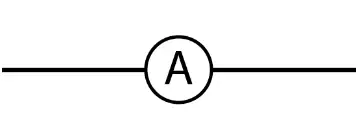
Which circuit diagram represents an ammeter?
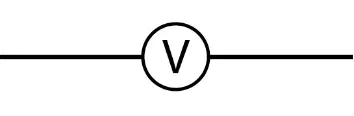
Which circuit diagram represents a voltmeter?
A ______ _______ is an electric circuit that has only one path along which electrons can flow. If the pathway is interrupted, the circuit will not be able to function.
(a)
In a ________ _______, each component has its own path for current. The points where a circuit divides into different paths are culled junction points.
(a)
This man was famous for inventing Ohm's law and led our mathematical understanding of the relationship between voltage, currents, and resistance. He was born on March 16, 1789 Bavaria and died on July 6 1854.
(a)
What is the symbol of the quantity Voltage?
V
I
R
P
What is the symbol of the quantity Current?
V
I
R
P
What is the symbol of the quantity Resistance?
V
I
R
P
What is the unit of the quantity Voltage?
Volts
Amperes
Ohms
Watts
What is the unit of the quantity Current?
Volts
Amperes
Ohms
Watts
What is the unit of the quantity Resistance?
Volts
Amperes
Ohms
Watts
What is the unit of the quantity Power?
Volts
Amperes
Ohms
Watts
What is the abbreviation/symbol of the quantity Voltage?
V
A
Ω
W
What is the abbreviation/symbol of the quantity Current?
V
A
Ω
W
What is the abbreviation/symbol of the quantity Power?
V
A
Ω
W
(a) is the pressure from an electrical circuit's power source that pushes charged electrons (current) through a conducting loop, enabling them to do work such as illuminating light.
An ________ _______ is a flow of electric charge.
(a)
__________ _____ is defined as the product of voltage and current. (P = VI)
(a)
What is a resistor used for?
For amplifying voltage in circuits.
For adjusting the current flow in electrical circuits.
For generating electricity.
For transmitting wireless signals.
A _______ _______ is an automatically operated electrical switch designed to protect an electrical circuit from damage caused by overloads or short circuits. Its basic function is to detect a fault condition and interrupt current flow.
(a)
An (a) is the sudden shaking or movement of the crust/ground due to the sudden burst of energy accumulated from the fracturing of interlocking rocks in the crust or lithospheric plates.
The _____ is the outermost solid portion of the earth that houses all living things. The Earth's _____ is made out of the Continental _____ and Oceanic _____.
(a)
What are the four main layers of the Earth?
Outer Core
Center
Crust
Mantle
Inner Core
The Earth's crust is divided up into several different plates that are moved into various directions. How many plates are there?
12
13
14
15
"The word, (a) , refers to the deformation of the crust as a consequence of plate interaction."
It is the region of initiation of seismic energy within the Earth.
Epicenter
Hypocenter
Area of Greatest building damage
Area of Least building damage
What is the function of a seismograph?
To sound an alarm
To prevent an earthquake from occuring
To record vibrations during an earthquake
To calm down the seismologist during the earthquake
"The _______ _____ is a seismic intensity scale used to measure the intensity of shaking and the effects of an earthquake at a particular location."
(a)
"The (a) is the region of initiation of seismic energy within the Earth."
"A (a) is a series of ocean waves with very long wavelengths, typically hundreds of kilometers caused by large-scale disturbances of the ocean, such as earthquakes, volcanic eruptions, underwater landslides or even meteorite impacts."
"The _______ ____ __ ____ is a region known for frequent seismic and volcanic activity located around the perimeter of the Pacific Ocean."
(a)
"A (a) is a large, rigid piece of Earth's lithosphere that makes up the Earth's continents. The Earth's lithosphere is divided up into several large and rigid plates that float on the semi-fluid asthenosphere beneath them."
"The (a) is a region of the Earth's upper mantle, located beneath the lithosphere, It lies approximately 80 to 200 kilometers below the Earth's surface. It is also characterized by its semi-fluid or plastic-like consistency, which allows it to flow slowly over long periods."
"______ _______ was a German meteorologist, geophysicist, and polar researcher who lived from 1880 to 1930. He is best known for his pioneering theory of continental drift, which he proposed in the early 20th century."
(a)
Which of these is the smallest unit of an element that retains the properties of that element.
Molecule
Atom
Cell
Proton
Which of these is where the majority of an atom's mass if found?
Proton
Neutrons
Electrons
Nucleus
"The _____ ____ is a principle in chemistry that states that atoms tend to gain, lose, or share electrons to achieve a stable configuration of eight valence electrons."
(a)
"______ _________ _________ was a Russian chemist who is best known for creating the Periodic Table of Elements. In 1869, he published his periodic table, which organized the known elements based on their atomic masses and properties."
(a)
These are elements that have atomic numbers higher than that of element (92). They are synthetic elements, meaning they do not occur naturally on Earth and must be created artificially through nuclear reactions.
Trans-uranium elements
Trans-plutonium elements
Noble gases
Radioactive elements
"__ _______ is credited with the discovery of the electron, one of the most significant discoveries in the history of physics. His discovery revolutionized our understanding of atomic structure and laid down the groundwork for modern atomic theories."
(a)
"______ __________ was famous for his gold foil experiment, which he conducted in 1909 at the University of Manchester. He bombarded a thin gold foil with alpha particles. He expected the alpha particles to pass through the foil with minor deflections, according to the prevailing "plum pudding" model of the atom."
(a)
Out of the following elements listed, which is the heaviest?
Gold
Oganesson
Hydrogen
Uranium
What is the foreign name of Tungsten?
(a)
What is the foreign name of Antimony?
(a)
What is the foreign name of Copper?
(a)
What is the foreign name of Sodium?
(a)
What is the foreign name of Calcium?
(a)
What is the foreign name of Iron?
(a)
What is the foreign name of Nitrogen?
(a)
What is the foreign name of Potassium?
(a)
What is the foreign name of Silver?
(a)
What is the foreign name of Tin?
(a)
"An (a) is a substance that cannot be broken down into simpler forms by ordinary chemical means."
All matter is made of Elements
TRUE
FALSE
How many naturally occurring elements are there on Earth?
72
82
92
102
What are the two main parts of an atom?
Mitochondria
Nucleus
Membrane
Cytoplasm
Electron Cloud
What are the maximum amount of electrons in the 1st shell?
2
8
18
32
What are the maximum amount of electrons in the 2nd shell?
2
8
18
32
What are the maximum amount of electrons in the 3rd shell?
2
8
18
32
What are the maximum amount of electrons in the 4th shell?
2
8
18
32
"A _______ ________ is the electron on the outermost shell of an atom which also takes part in chemical reactions."
(a)
"______ ____ refers to the "weight" of an atom. It is derived at by adding the number of protons with the number of neutrons."
(a)
"Each horizontal row of elements is called a ______. The elements in a ______ are not alike in properties, in fact, the properties change greatly across even given row."
(a)
"Columns of elements are called ______ or ________. These elements have similar but not identical properties."
(a)
"The ______ family is found in the first column of the periodic table. Atoms of the ______ metals have a single electron in their outermost level, in other words, 1 valence electron. They are shiny, have the consistency of clay, and are easily cut with a knife. They are the most reactive metals and they react violently with water."
(a)
" (a) elements include those elements in the B families.
These are the metals you are probably most familiar with: copper, tin, zinc, iron, nickel, gold, and silver.
They are good conductors of heat and electricity."
"The (a) Family is named after the first element in the family.
Atoms in this family have 3 valence electrons. This family includes a metalloid (boron), and the rest are metals. It include the most abundant metal in the earth’s crust (aluminum)."
"Atoms of the (a) family have 4 valence electrons.
This family includes non-metal (carbon), metalloids, and metals.
The element carbon is called the “basis of life.” There is an entire branch of chemistry devoted to carbon compounds called organic chemistry."
The ________ family is named after the element that makes up 78% of our atmosphere.
This family includes non-metals, metalloids, and metals. Atoms in the ________ family have 5 valence electrons and they tend to share electrons when they bond. Other elements in this family are phosphorus, arsenic, antimony, and bismuth."
(a)
"Atoms of the (a) family have 6 valence electrons. Most elements in this family share electrons when forming compounds. Oxygen is the most abundant element in the earth’s crust. It is extremely active and combines with almost all elements."
"The elements in the (a) family are fluorine, chlorine, bromine, iodine, and astatine.
They have 7 valence electrons, which explains why they are the most active non-metals. They are never found in nature. They react with Alkali metals to form salts."
"_____ _____ are colorless gases that are extremely un-reactive. One important property of the _____ _____ is their inactivity. They are inactive because their outermost energy level is full."
(a)
"________ _____________ is the distribution of electrons of an atom or molecule (or other physical structure) in atomic or molecular orbitals."
(a)

