wayground logo

Free Printable Worksheets

NEW

Font size

S
M
L
XL
Worksheets

Matter and Atoms Review

Total questions: 54

Worksheet time: 36mins

Name
Class
Date
1.

According to the Kinetic Molecular Theory, all matter is composed of particles that are what?

a)

Constantly moving

b)

In a fixed position

c)

Invisible

d)

Indestructible

2.

What is temperature a measure of, according to the Kinetic Molecular Theory?

a)

The mass of particles

b)

The size of particles

c)

The energy of motion of the particles

d)

The number of particles

3.

As temperature is changed, what may occur according to the Kinetic Molecular Theory?

a)

A change in state

b)

A change in color

c)

A change in chemical composition

d)

A change in volume

4.

What happens to the forces between particles as temperature changes, based on the Kinetic Molecular Theory?

a)

They become irrelevant

b)

They remain constant

c)

They become stronger as particles are closer together

d)

They become weaker as particles are closer together

5.

What is the relationship between the volume and shape of a solid state of matter?

a)

Definite volume and shape

b)

Indefinite volume and shape

c)

Definite volume but indefinite shape

d)

Indefinite volume but definite shape

6.

How are particles arranged in a liquid state of matter?

a)

Close together in a fixed position

b)

Close together but not in a fixed position

c)

Far apart and in a fixed position

d)

Far apart and not in a fixed position

7.

What type of movement do particles in a gas state of matter exhibit?

a)

Vibrational only

b)

Vibrational and rotational only

c)

Random and rapid

d)

No movement

8.

What kind of attractive forces or energy do particles in a solid state of matter have?

a)

Very weak or none

b)

Moderate

c)

Strong

d)

Variable

9.

What is the ability of a substance to undergo changes that result in a new substance called?

a)

Physical property

b)

Chemical property

c)

Elemental property

d)

Compound property

10.

Do physical changes change the identity of the substance?

a)

Yes, they change the identity of the substance.

b)

No, they do not change the identity of the substance.

c)

Yes, but only temporarily.

d)

No, they create a completely new substance.

11.

What results in a different substance being formed, indicating a completely new property?

a)

Physical change

b)

Chemical reaction

c)

Elemental reaction

d)

Compound mixture

12.
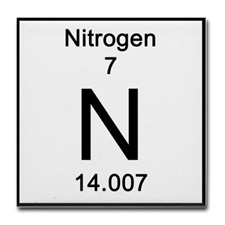
What is the number of protons that the element in this image contain?
a)
14
b)
7
c)
15
d)
18
13.
What is the atomic mass of "F"
a)
9
b)
18
c)
17
d)
19
14.
all matter is made of what 
a)
energy 
b)
atoms 
c)
electrons 
d)
compounds 
15.
The positive particles of an atom are 
a)
electrons 
b)
positrons 
c)
neutrons 
d)
protons 
16.
the central region of an atom where its neutrons and protons are is its 
a)
nucleus 
b)
electron cloud
c)
core 
d)
center 
17.
All matter is made of what?
a)
energy 
b)
atoms 
c)
electrons 
d)
compounds 
18.
electrons have this type of charge?
a)
negative
b)
positive
c)
neutral
19.
What is the mass of an atom if it has 11 protons, 12 neutrons, and 11 electrons?
a)
22
b)
11
c)
34
d)
23
20.
What are the 3 particles that make-up the atom?
a)
protons, neutrons, and isotopes
b)
neutrons, isotopes, and electrons
c)
positives, negatives, and electrons
d)
protons, neutrons, and electrons
21.

Who discovered the electron?

a)

Rutherford

b)

Thomson

c)

Milikan

d)

Dalton

22.
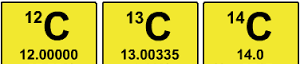
What do these isotopes of carbon all have in common?
a)
neutrons & mass number
b)
atomic number and neutrons
c)
atomic number and electrons
d)
protons, atomic number, and mass number
23.
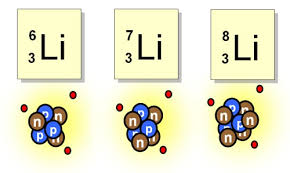
How many neutrons does the isotope of lithium have?
a)
8
b)
3
c)
4
d)
5
24.
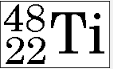
How many protons does this isotope of titanium have?
a)
48
b)
22
c)
26
d)
70
25.
In a correctly written symbol what would be located in the "A" position?
a)
number of neutrons
b)
atomic number
c)
number of electrons 
d)
mass number
26.
What quantities vary between isotopes of an element?
a)
protons, electrons, and atomic mass
b)
protons, electrons, and atomic number
c)
neutrons and electrons
d)
neutrons and atomic mass
27.
which atom has  4 neutrons?
a)
Li-6
b)
Li-7
c)
Li-8
d)
they have the same # of neutrons
28.
How many neutrons in C-14?
a)
6
b)
7
c)
14
d)
8
29.
Isotopes are atoms of the same element with different #’s of __________ & therefore different __________.
a)
n0 ;  atomic #’s
b)
p+ ; atomic #’s
c)
e- ; atomic masses
d)
n0 ; atomic masses
30.
How many neutrons does the isotope below have?     89 36Kr
a)
53
b)
36
c)
89
d)
125
31.
If X is the symbol for an element, which of the following two symbols represent    isotopes of the same element?     I. 7735X  II. 7733X  III. 8137X  IV. 8135 X
a)
I and II
b)
III and IV
c)
I and IV
d)
I and III
32.
How many neutrons does an atom of the isotope Neon-22 have?
a)
12
b)
10
c)
22
d)
20
33.
Four isotopes of lead include lead-204, lead-206, lead-207, and lead-208.  The average atomic mass of lead is 207.2.  Which isotope of lead is likely to be the most abundant.
a)
204
b)
206
c)
207
d)
208
34.
An atom is electrically neutral when
a)
protons and neutrons are the same
b)
protons and electrons are the same
c)
neutrons and electrons are the same
d)
neutrons balance the protons and electrons
35.
Two isotopes of carbon are carbon-12 and carbon-14.  These isotopes differ from one another by two protons.
a)
true
b)
false
36.
If the number of electrons in an atom changes you make a(n) __________________.
a)
ion
b)
isotope
c)
new element
d)
isomer
37.
Ions are: 
a)
atoms with a positive or negative charge
b)
atoms with no charge
c)
atoms with ONLY a positive charge
d)
atoms with ONLY a negative charge
38.
How many electrons are in an atom that has an atomic number of 34, an atomic mass of 74 and a charge of -2?
a)
34
b)
36
c)
2
d)
40
39.
An atom becomes _________ when it gains electrons.
a)
Positive
b)
Negative
c)
Neutral
d)
Invinsible
40.
An atom becomes _______ when it loses electrons.
a)
Positive
b)
Negative
c)
Neutral
d)
Invinsible
41.
Cations are...
a)
Positive
b)
Negative
c)
Neutral
d)
Purring
42.
Anions are...
a)
Positive
b)
Negative
c)
Neutral
d)
Crying
43.

An atom with 2 protons, 3 neutrons, and 4 electrons has a charge of ____.

a)

+2

b)

-2

c)

+3

d)

0

44.

How many protons, neutrons, and electrons?

a)

proton = 6, neutron = 4, electron = 1

b)

proton = 4, neutron = 4, electron = 5

c)

proton = 1, neutron = 6, electron = 10

d)

proton = 4, neutron = 2, electron = 3

45.
An atom becomes _________ when it gains electrons.
a)
Positive
b)
Negative
c)
Neutral
d)
Invinsible
46.
An atom becomes _______ when it loses electrons.
a)
Positive
b)
Negative
c)
Neutral
d)
Invinsible
47.
Cations are...
a)
Positive
b)
Negative
c)
Neutral
d)
Purring
48.
Anions are...
a)
Positive
b)
Negative
c)
Neutral
d)
Crying
49.

What is the name of this ion?

a)

oxide

b)

oxygen

50.

Why are ions formed?

a)

To make our lives difficult

b)

Because atoms want to be stable with 8 valence electrons

c)

Because atoms have the same number of protons and electrons

d)

Because atoms gained neutrons

51.

An atom with 2 protons, 3 neutrons, and 4 electrons has a charge of ____.

a)

+2

b)

-2

c)

+3

d)

0

52.

How many protons, neutrons, and electrons?

a)

proton = 6, neutron = 4, electron = 1

b)

proton = 4, neutron = 4, electron = 5

c)

proton = 1, neutron = 6, electron = 10

d)

proton = 4, neutron = 2, electron = 3

53.

A Bromine ion gains 1 electron, which of the following is the correct symbol for a Bromine ion?

a)

Br-1

b)

Br+1

c)

Br+7

d)

Br-7

54.
What is the charge of an atom that has lost one electron?
a)
-1
b)
-2
c)
+1
d)
+2