
 Worksheets
Chemical reactions
Total questions: 89
Worksheet time: 52mins
The type of chemical reaction where A + B --> AB
decomposition
synthesis
precipitation
combustion
The type of chemical reaction where AB --> A + B
decomposition
synthesis
corrosion
precipitation
The type of chemical reaction where AX + BY --> AY + BX and either AY or BX is a precipitate
precipitation
corrosion
combustion
decomposition
A solution where a solute is dissolved in water
solvent
aqueous
hydrated
cation
An ionic compound dissolves in water to form
positive anions and negative cations
positive cations and negative anions
Magnesium sulphate will dissolve in water to form
positive magnesium ions and negative sulphate ions
positive sulphate ions and negative magnesium ions
positive chloride ions and negative sodium ions
positive sodium ions and negative chloride ions
The name of the solid that forms when two aqueous solutions are mixed
solvent
solute
precipitate
insolible
Name this compound Ca3(PO4)2
calcium sulphate
calcium carbonate
calcium phosphate
calcium ionate
Name this compound Na2CO3
sodium sulphate
sodium nitrate
sodium carbonate
sodium phosphate
Sodium carbonate has how many sodium atoms?
1
2
3
4
How many carbonate ions are in aluminium carbonate: Al2(CO3)3
1
2
3
4
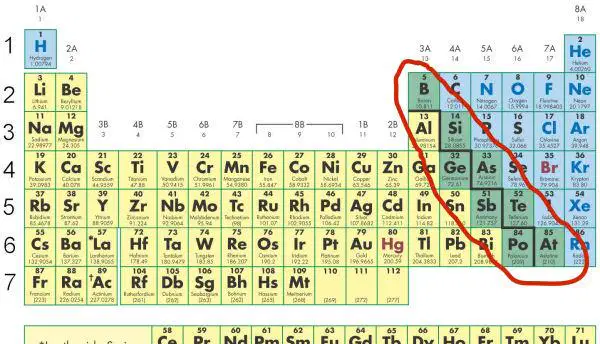
The name for elements circled in the periodic table shown
metals
nonmetals
metalloids
transition metas
The atom found in group 4 period 5
Pb
Fe
Sn
K
The number of protons in W
10
85
124
74
The type of reaction when water is split into hydrogen and oxygen by electricity
synthesis
decomposition
double displacement
precipitation
the type of reaction when sodium and chlorine react to form sodium chloride
synthesis
decomposition
precipitation
corrosion
An ionic compound is made up of
positive cations and negative anions
positive anions and negative cations
All metals want to __________ outer electrons in chemical reactions with nonmetals
donate
accept
All nonmetals want to __________ outer electrons when reacting with metals
donate
accept
The chemical formula for lithium sulphate
Li2SO4
Li4SO4
Li2(SO4)3
Li(SO4)2
The chemical formula for beryllium phosphate
Be2(PO4)3
BePO4
Be3(PO4)2
Be(PO4)3
The chemical formula for magnesium fluoride
MgF
Mg2F
MgF2
Mg2F3
The chemical formula for aluminium oxide
Al3O2
AlO2
AlO
Al2O3
This type of reaction releases more energy than it absorbs
exothermic
endothermic
the chemical formula for aluminium sulphate
Al2SO4
AlSO4
Al2(SO4)3
Al3(SO4)4
The name of Ca3N2
calcium nitrate
calcium nitride
calcium phosphate
calcium sulphate
The name of Ca(NO3)2
calcium nitride
calcium nitrate
calcium phosphate
calcium sulphate
When a metal reacts with an acid, the products are a salt and
carbon dioxide gas
hydrogen gas
oxygen gas
water
The chemical formula for hydrochloric acid
H2Cl
HCl
HCl2
H3Cl2
When an acid reacts with a carbonate the products are salt, water and
hydrogen gas
carbon dioxide gas
oxygen gas
carbon
When an acid reacts with a carbonate it is an example of a
precipitation reaction
neutralisation reaction
combination reaction
synthesis reaction
When an acid reacts with a base, the products are salt and
water
hydrogen gas
carbon dioxide gas
oxygen gas
A salt is made up of
metal and non-metal ions
metal ions
nonmetal ions
hydrogen atoms
Acids dissociate in water to produce
hydrogen ions
hydroxide ions
salts
oxygen
Bases dissociate in water to produce
hydrogen ions
hydroxide ions
salts
hydrogen gas
Acids have a pH
less than 7
greater than 7
equal to 7
Bases have a pH
less than 7
equal to 7
greater than 7
neutral
These types of acids completely dissociate in water
strong
weak
concentrated
dilute
A solution which has a lot of solute dissolved in a small amount of water
dilute
concentrated
strong
weak
A solution in which no more solute will dissolve
soluble
saturated
solvented
dilute
A solution with a small amount of solute dissolved in a large volume of solvent
concentrated
dilute
strong
weak
Hydrochloric acid completely dissociates in water to form H+1 ions and Cl-1 ions, therefore it is a __________ acid
strong
weak
concentrated
dilute
Vingear dissociates partially to form some hydrogen ions, but not all the hydrogen dissociates in solution. Therefore vinegar is a
weak acid
strong acid
dilute acid
concentrated acid
Copper carbonate when heated breaks down to form copper oxide and carbon dioxide. This is an example of a ___________ reaction
synthesis
combination
decomposition
combustion
copper (II) phosphate has the chemical formula
CuPO4
Cu3(PO4)2
Cu2PO4
Cu3(PO4)3
which of these are exothermic?
electrolysis of water
combustion
decomposition of copper carbonate
photosynthesis
Which of these is endothermic?
thermal decomposition of calcium carbonate
combustion
respiration
burning fossil fuels
This type of reaction releases energy
exothermic
endothermic
This type of reaction takes in more energy than it releases
exothermic
endothermic
The thermal decomposition of copper carbonate produces
copper oxide and water
copper oxide and carbon
copper oxide and carbon dioxide
copper oxide
To test for the presence of carbon dioxide gas you should
bubble the gas through limewater
do the pop test
check for a colour change
test for a precipitate being formed
To test for hydrogen gas being produced you should
do the pop test
bubble the gas through limewater
sniff the gas
check for a colour change
When copper carbonate undergoes thermal decomposition, the products are
copper oxide and water
copper oxide
copper oxide and carbon dioxide
copper oxide and hydrogen gas
A solution of sodium chloride contains
positive sodium ions and negative chloride ions
positive chloride ions and negative sodium ions
When an acid reacts with a metal carbonate, the products are
salt, water and carbon dioxide
salt and water
carbon dioxide gas
salt
When an acid reacts with a base, the products are
salt and carbon dioxide
salt and water
salt
carbon dioxide
When aluminium carbonate dissolves in water it produces
positive carbonate ions and negative chloride ions
positive aluminium ions and negative carbonate ions
positive carbonate ions and negative aluminium ions
positive anions and negative cations
The decomposition of zinc (II) carbonate would produce
zinc oxide and water
zinc oxide and oxygen
zinc oxide and carbon dioxide gas
zinc oxide and salt
The decomposition of CaCO3 will produce
CaO + CO2
Ca2O + O2
CaO2 + CO2
Ca + H2O
When a solution of silver (I) nitrate is mixed with a solution of sodium chloride, the products are
AgCl + NaNO3
AgCl + Na2NO3
AgCl + H2O
AgCl + NaN

From the table, which one of the following would be a precipitate in a reaction between barium nitrate and sodium sulphate?
silver chloride
lead sulphate
barium sulphate
calcium sulphate
The atoms in a chemical reaction are
destroyed to form the products
created to form the products
rearranged to form the products
created and destroyed in the process of forming the products
Which of these exists naturally as a diatomic molecule
magnesium
silver
hydrogen
argon
When calcium carbonate reacts with hydrochloric acid, the products are
CaCl2 + H2O +CO2
CaCl2 + CO2
CaCl2 + H2O
CaCl2 + O2
When an acid reacts with a carbonate, the products are
salt + water
salt + water + carbon dioxide gas
salt + carbon dioxide gas
salt + hydrogen gas
Sulfuric acid (hydrogen sulphate) has the chemical formula
HSO4
H2SO4
H4SO4
H3SO4
The other name for sulfuric acid is
monohydrogen sulphate
hydrogen sulphate
dihydrogen sulphate
dihydrogen sulfide
Hydrogen chloride is also called
sulfuric acid
phosphoric acid
nitric acid
hydrochloric acid
Hydrochloric acid has the chemical formula
H2Cl3
HCl2
H2Cl
HCl
Phosphoric acid (trihydrogen phosphate) has the chemical formula
H2(PO4)3
HPO4
H3PO4
H2PO4
Phosphoric acid is also called
dihydrogen phosphate
trihydrogen phosphate
monohydrogen phosphate
trihydrogen phosphide
Nitric acid (hydrogen nitrate) has the chemical formula
H3NO2
HNO3
H2NO3
H3NO2
The corrosion of iron is also called
(a)
The solid formed when two aqueous solutions mix
(a)
In a chemical reaction, the atoms are
(a)
A substance has a pH of 3 therefore it is
(a)
A soluble base
(a)
NaOH, KOH, Mg(OH)2 are all
(a)
For iron to rust you need
water and oxygen
oxygen only
water only
salt and water
Iron + Oxygen + water -->
iron nitrate
iron hydroxide
iron dioxide
iron sulphate
These speed up a chemical reaction without being used up
(a)
When you crush a reactant to powder, this increases the
(a)
Increasing the surface area increases the
(a)
Increasing the temperature
increases the reaction rate
decreases the rate of reaction
changes the products
changes the reatants
Increasing the temperature causes more (a) between reactant molecules
Increasing the pressure causes more (a) between the reactant molecules
Acid + Base -->
(a)
Acid + Metal-->
(a)
copper carbonate when heated breaks down to form (a) + carbon dioxide

