
 Worksheets
blood vessels
Total questions: 51
Worksheet time: 1hrs 25mins
Arteries: --- from heart
• Capillaries: where ---- happens
• Veins: --- heart
• Anastomosis (pl: anastomoses): -- of
blood vessels
(a)
Anastomoses types
--: circle of Willis, (artery connected to another artery) protective mechanism
– Arteriovenous: skips
-- (aka: shunt)
– Venous: connection of ----, very common
(a)
what is A ?
(write letter where the vocab word is written)
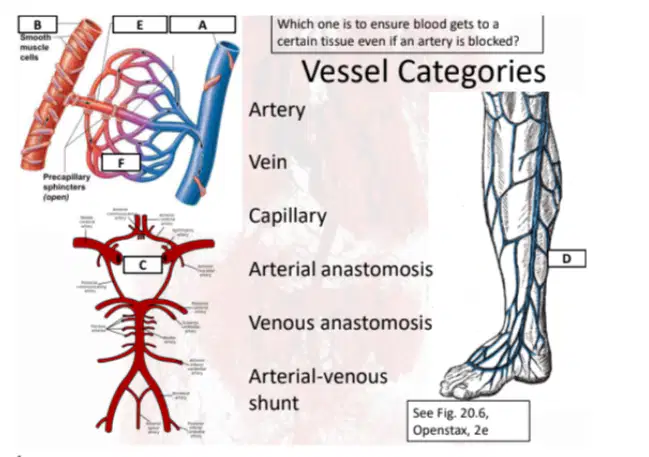
what is B
(write letter where the vocab word is written)
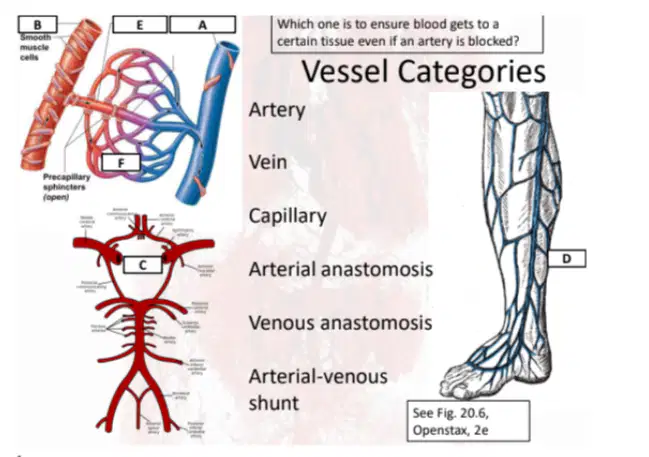
what is C
(write letter where the vocab word is written)
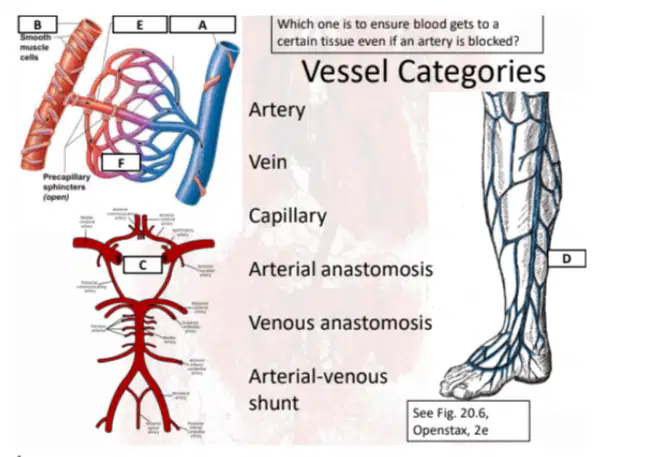
what is d (write letter where the vocab word is written)
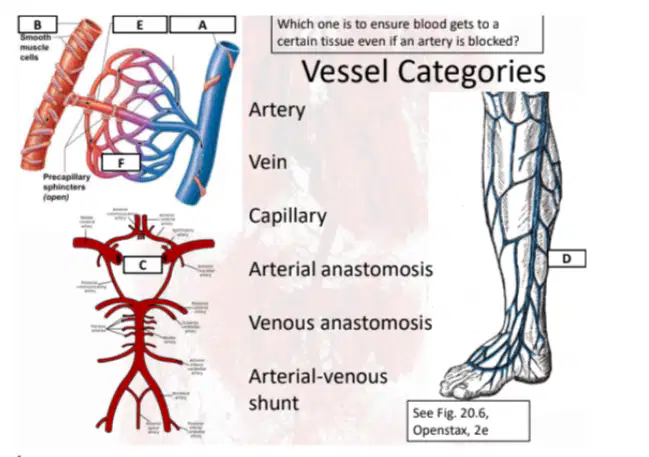
what is e (write letter where the vocab word is written)
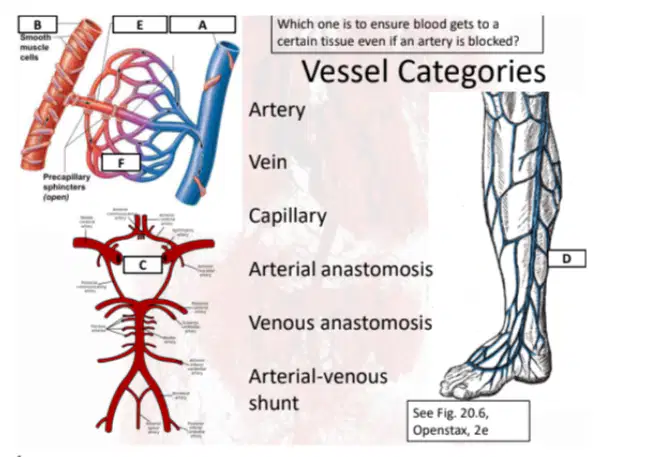
what is f (write letter where the vocab word is written)
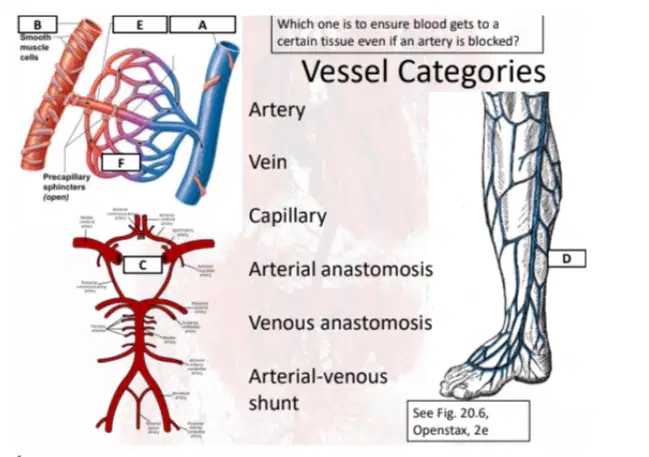
Which vessel is to ensure blood gets to a
certain tissue even if an artery is blocked?
(a)
Wall Structure
• Tunica -- (aka adventitia)
– --- layer, protective
– Connective tissue, connects to tissue supplied
(a)
Tunica ---
– Middle layer, change size of vessel
– Smooth muscle, circularly arranged
• -- leads to → vasoconstriction → decreased flow
• Relaxation → -- → increased flow
(a)
Tunica --- (aka: interna)
– Inner layer, smooth for blood flow, maintain vessel
health
– One continuous layer through all vessels and chambers
– --- cells, with basement membrane
• Clinical application: endothelial dysfunction (non-obstructive coronary artery disease in which there are no heart artery blockages, but the large blood vessels on the heart's surface constrict (narrow) instead of dilating (opening).
(a)
what is a? (Write in box provided)
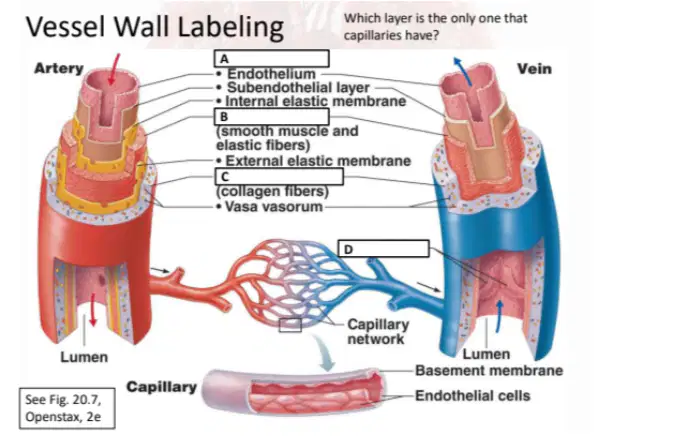
what is B (Write in box provided)
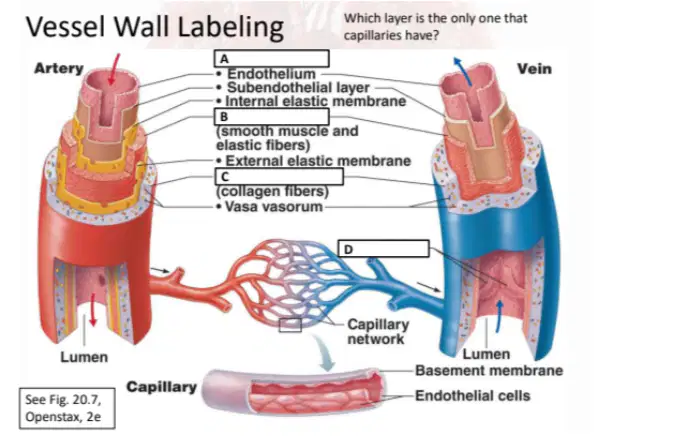
what is c (Write in box provided)
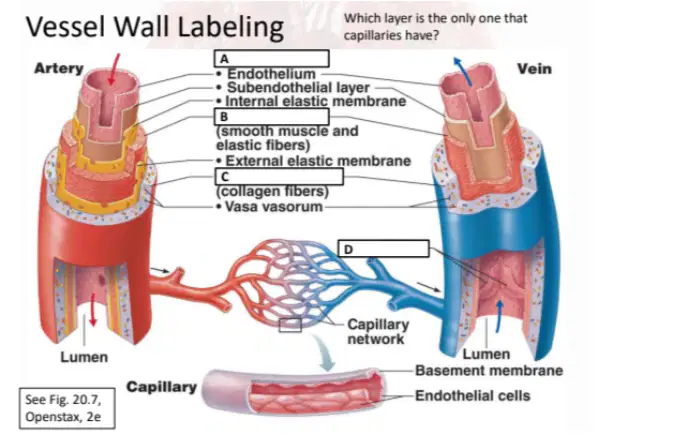
what is d (Write in box provided)
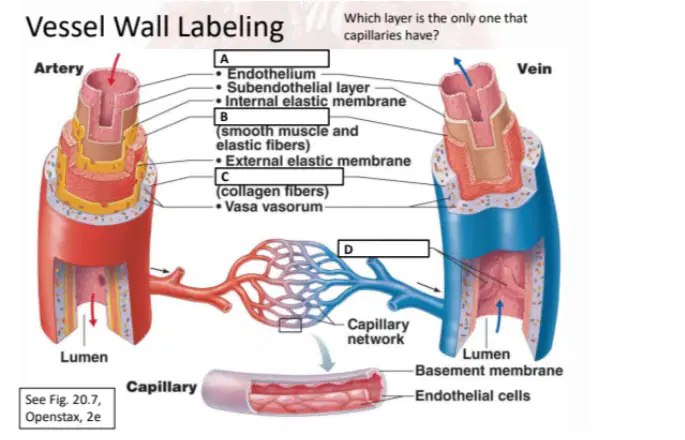
where is all the blood mostly in the body? (type of veins)
(a)
Arterial System
• -- as they move away from heart
• Tunica media is the --- layer
– Function: support against high BP, change size
• Both elastic and contractile:
– Passive stretch via heart → bounce back to pump
blood → keeps up speed
– SNS activity increases → constriction -- BP
– SNS activity decreases → --- lowering BP
(a)
--- Arteries (conducting arteries):
– Function: get a lot of blood somewhere fast
– Examples: Aorta and major branches, pulmonary
trunk
– Layers:
• Externa = thin, not very connected
• Media = --, mainly elastic portion to withstand -- pressure
• Intima = relatively --, need support to hold artery
together
(a)
• -- Arteries (distributing arteries)
– Function: deliver blood to various locations
– Examples: most of the named arteries in lab
– Layers:
• Externa: ---, connects to many tissues
• Media: very thick lots of vasodilation and --
• Intima: contains --- to provide strength
(a)
---:
– Smallest lumen
– Function: regulate blood flow to --, most blood
pressure regulation occurs here.
– All layers are --: single smooth muscle layer
(a)
WHERE DOES MOST BLOOD REGULATION OCCUR
(a)
what is A (write in box provided)

what is B (write in box provided)
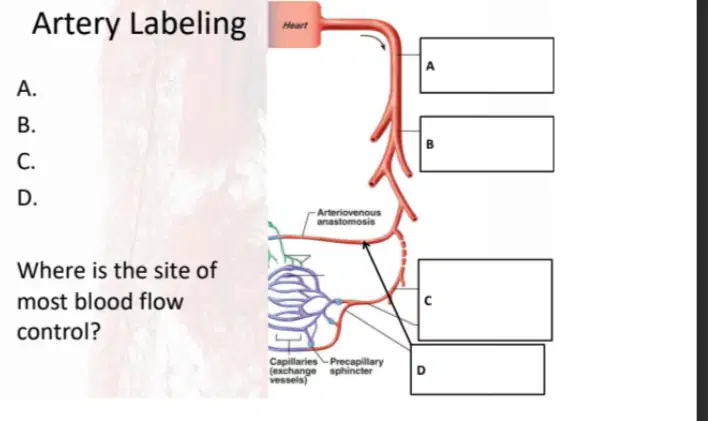
what is c (write in box provided)
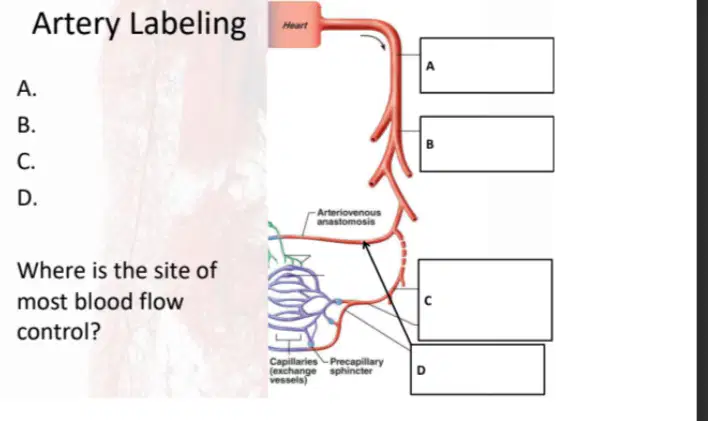
what is d (write in box provided)
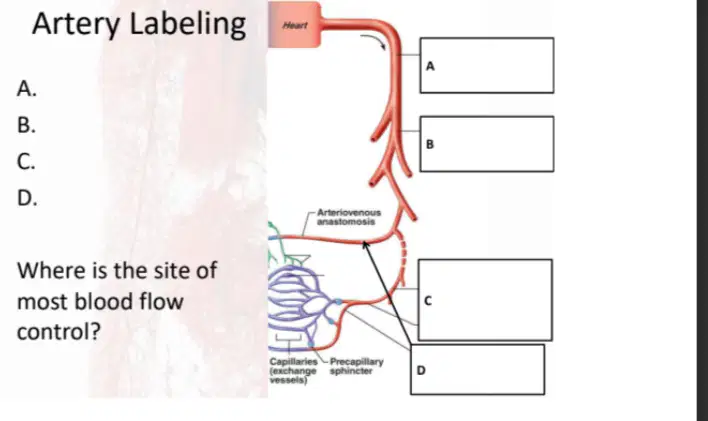
where is the site of most blood flow/pressure control?
(a)
is also known as a shunt or an arterial venous anastomosis
(a)
Capillary System
• Location: between venules and ---
• Function: -- between blood and tissues
• Structure: endothelium wall only
(a)
Metarterioles: --- capillaries, arteriovenous
anastomosis
(a)
-- capillaries: 10-100/blood vessels, --- lumen diameter
(Red blood cells single file)
(a)
–Pre-capillary sphincters:
• Opens → blood in capillary bed for --
• Closed → blood goes through --, skips exchange
(a)
Capillary Types • ---
made of Endothelial cells make a continuous wall some
diffusion, no leakage
– Where: CNS, blood-brain barrier, skin, muscle
– Function: -- and --
(a)
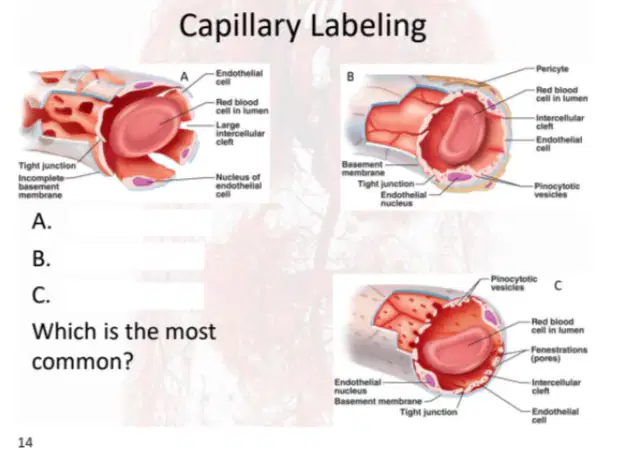
-- capillaries
have -- in endothelial cells → diffusion and permeability to
certain substances
– Where/functions (active -- and --):
• ---: filter blood
• Endocrine glands: secrete --
• Intestines: -- nutrients
(a)
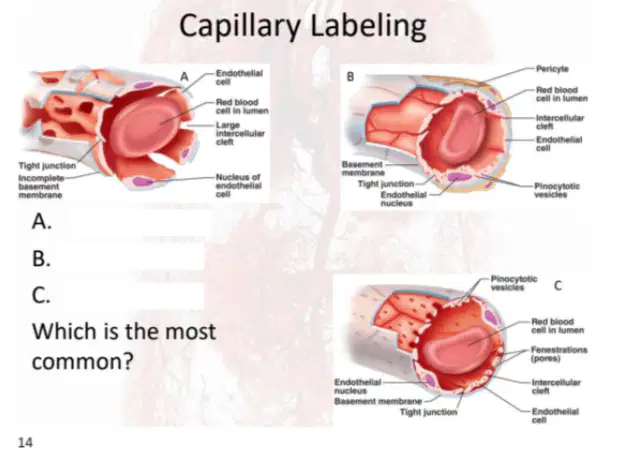
Sinusoidal/Sinusoids:
– -- between endothelial cells and -- creating a high
permeability for larger substances (proteins and cells)
– Where: Bone marrow, --, spleen
– Function: slow blood cells to modify them, put -- blood
cells and proteins into circulation
(a)
what is a
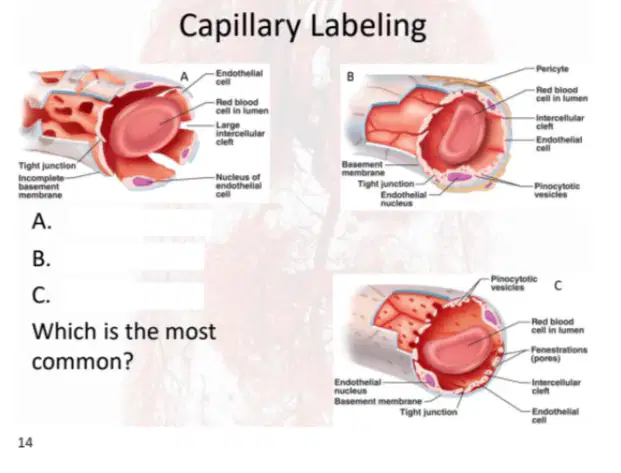
what is B
what is c
which capillary is the most common
(a)
Venous System
Increase in size as they
move --- the heart Function:
–Bring blood back to heart
Allow -- of blood,
always more blood in veins
than arteries
• Can mobilize pool by
-- and muscle pump
(a)
when you mobilize a blood pool for exercise you are bringing blood back to the general circulation increasing -- (increasing SV)
(a)
Muscle ---:
– Muscles smash veins when
they contract → push blood
back -- heart
– Why doesn’t blood go back?
--
(a)
Vein Wall Structure
• Layers are --- than corresponding arteries
• Thickest layer: tunica ---
– Gives support via collagen fibers
(a)
Tunica intima:
– Forms --, mostly in -- veins
• Fight against gravity
(a)
smallest veins
(a)
Venous ---: highly specialized flattened veins,
very thin walls
– Examples: coronary sinus and dural venous sinus
(a)
varicose veins incompetent --- stretch out veins
• Causes: Prolonged positions
– Pregnancy
– Obesity
– Genetics
• Can be very painful
(a)
where does diffusion occur
(a)
Where does the most blood pressure control occur?
(a)
Where is most of the blood found at any given point?
(a)
Which is the most abundant?
(a)

