
 Worksheets
Seaweeds and Plants
Total questions: 132
Worksheet time: 4hrs 30mins

the stem-like portion of seaweeds
thallus
blade
stipe
pneumatocyst
holdfast
the root-like portion of the seaweed
thallus
pneumatocyst
stipe
holdfast
blades
pneomatocysts
root-like structure of seaweeds
leaf-like structure of seaweeds
stem-like structure of seaweeds
gas-filled bladders that sometimes keep their blades close to the sea surface
How are seaweed classified or sorted in to groups?
By their pigment
By their length
By the water they are found in
By their toxins
Which products contains seaweed?
cosmetics
dairy products - icecream, processed cheeses, yogurts
fertilizers
toothpaste, shampoos, etc.
All of these
green pigment
fucoxanthin
chlorophyll
carotenoids
phycoblins
brown pigment
fucoxanthin
chlorophyll
carotenoids
phycoblins
red pigment
fucoxanthin
chlorophyll
carotenoids
phycoblins

What Kingdom do seaweeds (multicellular algae) belong?
Plantae
Protista
Animalia
Fungi
What do seaweeds such as giant kelp provide beyond being a food source (primary producer)?
they protect coral reefs
they take salt out of the water
they create a habitat for many organisms
What does chlorophyta mean?
green plant
brown plant
red plant
What accessory pigment makes brown algae usually "yellowish-brown" and allows them to absorb the green wavelength of light in coastal waters?
chlorophyll
fucoxanthin
phycobilins
What accessory pigments do red algae have that make them red/purple?
chlorophyll
fucoxanthin
phycobilins
This part of a seaweed anchors it to the bottom by attaching to rocks.
Thallus
Stipe
Pneumatocysts
Holdfast
These are the gas-filled bladders that help seaweeds float to the surface so that they can get more sunlight.
Blades
Pneumatocysts
Stipe
Holdfast

pneomatocysts
root-like structure of seaweeds
leaf-like structure of seaweeds
stem-like structure of seaweeds
gas-filled bladders that sometimes keep their blades close to the sea surface

stipe
blade
holdfast
pneumatocyst
red pigment
fucoxanthin
chlorophyll
carotenoids
phycoblins
The main types of chlorophyll are
a
b
c
d
The stem-like structures of seaweed
thallus
blades
holdfast
stipes
Green seaweeds store excess energy as
starch
cellulose
chlorophyll
calcium carbonate
What do algae lack that true plants have?
chlorophyll
eukaryotic cells
stem, roots, leaves
just leaves
What are the stems of kelp called?
blades
stipes
holdfast
stem
Which group of macroalgae has the greatest number of marine species?
red
green
brown
blue-green
What is the largest type of seaweed?
sargassum
kelp
sea lettuce
nori
What are the leaflike structures of the seaweed called?
thallus
stipe
leaf
blade
What type of seaweed floats in massive mats and form large brown patches?
kelp
rockweed
sargassum
Padina
What are the three types of algae?
Green, Blue-green, yellow
Brown, yellow, red
brown, yellow, green
green, brown, red
Mangroves cannot survive_______.
freezes
high salinity
hot temperatures
wind
Flowering plants are called __________.
gymnosperms
cycads
angiosperms
algae
Seaweeds are angiosperms.
True
False
What is the dominate salt marsh grass?
kelp
cordgrass
sargassum
eelgrass
What type of roots do mangroves have?
exposed
tap
prop
adventitious
Salt marsh plants, are salt-tolerant, which term below describes this?
halophobic
halophilic
hydrophilic
hydrophobic
Which algae is found most often in fresh water?
red
green
brown
yellow
The rootlike structures on algae are called______.
holdfasts
stipes
hyphae
fibers
Which group of macroalgae has the greatest number of marine species?
red
green
brown
blue-green
Why are plants and algae important to the marine environment?
they are photosynthetic
they are the basis of the marine food chain
they anchor the coast
the stem-like portion of then of seaweeds
thallus
blade
stipe
pneumatocyst
holdfast
the root-like portion of the seaweed
thallus
pneumatocyst
stipe
holdfast
blades
The formal name for seaweed; multicellular algae
seagrass
thallaus
macroalgae
microalgae

body of seaweed
stipe
macroalgae
thallus
blade
Why is phytoplankton/seaweed/kelp important to humans?
food
byproducts are used in food
skeltons are fossil fuel - oil and gas
process CO2 and create O2
All of the above

A is the __.
thallus
holdfast
bladder/pneumatocyst
blade
stipe
E is the __.
thallus
holdfast
bladder/pneumatocyst
blade
stipe


pneumatocyst

Which is true of prokaryotic and eukaryotic cells?
Prokaryotic cells are larger than eukaryotic cells.
Eukaryotic cells do not have nuclei, and prokaryotic cells do have nuclei.
Prokaryotic cells lack membrane-bound organelles, and eukaryotic cells contain membrane-bound organelles.
Eukaryotic cells are simpler than prokaryotic cells.
Provides support and height to the leaf-like structures of the seaweed.
Blade
Holdfast
Pneumatocyst / bulb / gas bladder
Stipe
Attaches the seaweed to a rocky surface
Blade
Holdfast
Bulb / gas bladder
Stipe
Primary photosynthetic structure of the seaweed (where the photosynthesis takes place)
Blade
Holdfast
Bulb / Gas Bladder Pneumatocyst
Stipe
Allows the leaf-structures of the seaweed to float
Blade
Holdfast
Bulb / Gas Bladder / Pneumatocyst
Stipe
Which group of algae contains the larges species of seaweed, including kelp and sargasso?
red algae
green algae
purple algae
brown algae
Which group of algae contains mostly freshwater species and is most similar to land plants?
red algae
green algae
purple algae
brown algae
Why must kelp live in deep, calm waters?
nutrients are more abundant in deep, calm waters than in warm, turbid waters
the photosynthetic pigments of kelp are more efficient in the depths than in the shallows
rocky terrain, the preferred substrate of kelp, is only found in deep, calm waters
the holdfasts are less likely to be ripped off the rocks in calm waters than in turbid waters

What is B pointing to?
Blade
Holdfast
Pneumatocyst / Gas Bladder / Bulb
Stipe
What is C pointing to?
Blade
Holdfast
Gas Bladder / Bulb / Pneumatocyst
Stipe
What is D pointing to?
Blade
Holdfast
Bulb / Gas Bladder / Pneumatocyst
Stipe
Some species of kelp are used in ice cream.
True
False
Sea otters often wrap themselves in kelp while sleeping
True
False
This term refers to organisms that can tolerate salty conditions.
Thermophyte
Halophyte
oxyophyte
saltophyte
Mangroves can only be found in ___________ regions
Polar
Temperate
desert
tropical
Seagrasses form seagrass meadows which provide ________ to many organisms
food
habitat
oxygen
pollution
What Kingdom do seaweeds (multicellular algae) belong?
Plantae
Protista
Animalia
Fungi
What do seaweeds such as giant kelp provide beyond being a food source (primary producer)?
they protect coral reefs
they take salt out of the water
they create a habitat for many organisms
What does chlorophyta mean?
green plant
brown plant
red plant
What accessory pigment makes brown algae usually "yellowish-brown" and allows them to absorb the green wavelength of light in coastal waters?
chlorophyll
fucoxanthin
phycobilins
This part of a seaweed anchors it to the bottom by attaching to rocks.
Thallus
Stipe
Pneumatocysts
Holdfast
The formal name for seaweed; multicellular algae
seagrass
thallaus
macroalgae
microalgae
Which type of algae has red pigment?
Chlorophyta
Phaeophyta
Rhodophyta
Merophyta
Which type of Algae has green pigments?
Chlorophyta
Phaeophyta
Rhodophyta
Merophyta
Whyich type of algae has brown/yellow pigments?
Chlorophyta
Phaeophyta
Rhodophyta
Merophyta
A is the __.
thallus
holdfast
bladder/pneumatocyst
blade
stipe
E is the __.
thallus
holdfast
bladder/pneumatocyst
blade
stipe
Why is seaweed NOT considered a true plant?
Does photosynthesis
No Veins in the Leaves or Stems
Forms the base of many food chains
Has roots
Salt marsh plants have these that help with the excess salt
Roots
Flowers
Salt glands
Holdfast
The formal name for seaweed; multicellular algae
seagrass
thallaus
macroalgae
microalgae
Why is phytoplankton/seaweed/kelp important to humans?
food
byproducts are used in food
skeltons are fossil fuel - oil and gas
process CO2 and create O2
All of the above
Which products contains seaweed?
cosmetics
dairy products - icecream, processed cheeses, yogurts
fertilizers
toothpaste, shampoos, etc.
All of these
Red Mangrove is a/an...
Brown Algae
Red Algae
Green Algae
Flowering Plant
Marine microbes that photosynthesize and provide energy to the food web are called:
photospores
primary producers
endospores
bateriophages
Prokaryotes do not have
DNA
cell walls
membrane bound organelles
ribosomes
Flowering plants have
true leaves
transport tissue (xylem and phloem)
roots
all answers are correct
Seagrasses are important because:
they provide habitat for many animals
they can protect coral reefs from sediment
they are nurseries for juvenile fish
all answers are correct
Cordgrasses can survive in salt marshes because
they have glands to excrete excess salt
they have thick roots
they can chemosynthesis sulfides in the sediment
Mangroves trees produce
broad-shaped seedlings to drift away on currents
pencil-shaped seedlings to stick in the mud
parachute-seedlings to drift on coastal winds
Marine vascular flowering plants include all of the following except:
Kelps
Seagrasses
Mangroves
Surf grass
Cord grass
Marine microbes that photosynthesize and provide energy to the food web are called:
photospores
primary producers
endospores
bateriophages
The only TRUELY marine plants are...
Seagrasses
Cordgrasses
Mangroves
Turtlegrasses

Which of the following is a threat to marine plants?
Dredging
Prop Scars
Coastal Development
All of these are correct

Seagrasses grow totally under water
True
False
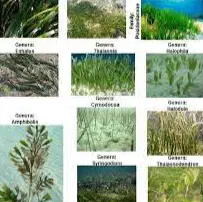
All of the following are types of common seagrasses EXCEPT:
Snake grass
Turtle grass
Eelgrass
Manatee grass
Paddle grass

Which is the most widely distributed seagrasses?
Surf grass
Turtle grass
Eelgrass
Manatee grass
Paddle grass
What type of plant is a seagrass?
Algae
Moss
Angiosperm
Gymnosperm
Seagrasses are adapted to thrive in environments with:
Extremely low salinity
Fluctuating salinity levels
Hyper-saline conditions
Freshwater conditions
Seagrasses are considered indicator species for:
Coral bleaching
Water quality
Soil erosion
Air pollution
Seagrass meadows are important for fisheries as they provide:
Protection against storms
Nursery areas for juvenile fish
Food for large predators
Breeding grounds for crustaceans
Seagrasses are threatened by human activities such as dredging and coastal construction. What is the term for this type of threat?
Habitat fragmentation
Invasive species
Habitat destruction
Pollution
The specialized root system of seagrasses is adapted to:
Filter pollutants
Anchor the plants
Store nutrients
Absorb oxygen from the air
Which of the following is not one of the 3 main groups of seaweed?
Yellow
Brown
Red
Green
Why are pneumatocysts helpful for seaweeds?
Attach to ocean surfaces
Absorbs nutrients from the water
Allows seaweed to float so it can get more sunlight
Provides food to other marine organisms
What part of sea grasses help stabilize the plant and prevent erosion?
Stems
Roots
Leaves
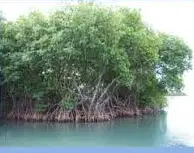
What is a way that plants have adapted to live in salt water?
Salt Glands
Waxy Coverings
Succulent Leaves and Stems
All of these are correct
How do marsh grasses adapt to their environment?
Marsh grasses adapt to their environment by having short, rigid stems, deep root systems, and salt intolerance.
Marsh grasses adapt to their environment by growing in dry, arid conditions, having thick leaves, and high water requirements.
Marsh grasses adapt to their environment by being unable to tolerate changes in salinity, having long taproots, and growing in deep water.
Marsh grasses adapt to their environment by having long, flexible stems, shallow root systems, and salt tolerance.
Why are mangroves important in coastal ecosystems?
Mangroves provide habitat, protect coastlines, filter pollutants, and maintain water quality.
Mangroves have no impact on coastal ecosystems
Mangroves decrease biodiversity in coastal ecosystems
Mangroves contribute to coastal erosion
What are some characteristics of sea grasses?
Sea grasses are not flowering plants.
Sea grasses do not grow in marine environments.
Sea grasses are flowering plants that grow in marine environments and provide habitat and food for marine species.
Sea grasses do not provide habitat and food for marine species.
What are some threats to sea grasses?
drought, hurricanes, erosion
deforestation, invasive species, ocean acidification
tourism, sedimentation, algal blooms
pollution, coastal development, climate change, overfishing
Which of the following is not a characteristic of sea grasses? A) They are flowering plants B) They can tolerate high salinity C) They have extensive root systems D) They are not affected by pollution
C
D
B
A
True or False: Mangroves act as natural buffers against storms and erosion.
False
Mangroves actually worsen storms and erosion
Mangroves have no effect on storms and erosion
True
Which adaptation allows marsh grasses to survive in waterlogged environments? A) Long roots B) Thick waxy leaves C) Ability to filter salt D) Ability to photosynthesize underwater
B) Thin delicate leaves
C) Inability to filter salt
D) Inability to photosynthesize underwater
A) Long roots
True or False: Mangroves provide important nursery habitats for many marine species.
Mangroves are harmful to marine species
True
False
Mangroves have no impact on marine species
What is the primary function of the root system in mangroves?
To absorb nutrients from the soil
To provide support to the tree
To filter salt from the water
All of the above
Which of the following is a characteristic of marsh grasses? A) They have a high tolerance for salt B) They have a low tolerance for salt C) They prefer dry, arid conditions D) They have a high tolerance for drought
A
B
C
D
True or False: Sea grasses are important for maintaining biodiversity in marine ecosystems.
True
False
Sea grasses have no impact on biodiversity
Sea grasses decrease biodiversity
Which of the following is not part of the harsh environments mangroves endure
High salt
Hard ground
Low oxygen
Varying Tides

What are these specialized roots?
phragmities
prop roots
onion roots
rhizomes

What is the general name for mangrove seeds?
prop roots
lenticles
propagules
seedlings
warm shallow waters; muddy sediment on seafloor, nutrient rich. Trees provide shelter & nursery for many marine organisms (fish, crabs, oysters, etc)
Mangrove Forest
Coral Reef
Open Ocean
Rocky Shore

Which of the following is not a significant limiting factor for seaweed?
sunlight
oxygen
place to anchor
nutrients
Which of the following is a vascular plant.
sea grass
seaweed
algae
moss
Which of the following is true about seaweed?
They are not plants
They are unicellular algae
They can vary greatly in size
They generate 5% or less of the oceans carbohydrates
Which of the following is true about sea grasses?
Their roots help them absorb nutrients
The don't have leaves or stems
They are nonvascular
They are also called seaweed
How are seaweeds classified?
Size
Photosynthetic accessory pigments
Habitat
Salinity tolerance
Which of the following products is seaweed NOT used in?
plastic
ice cream
soaps
ink
What type of producers can survive near hydrothermal vents?
extremophiles
sea grasses
diatoms
all bacteria
Which of the following are large, flowering plants that grow partially submerged in low, muddy tropical/subtropical coastal areas.
Phytoplankton
Seaweeds
Sea grasses
Mangroves
Flowering plants have
true leaves
transport tissue (xylem and phloem)
roots
all answers are correct

