wayground logo

Free Printable Worksheets

Font size

S
M
L
XL
Worksheets

GDI - Shutter Stock - 2/23/24

Total questions: 110

Worksheet time: 3hrs 34mins

Name
Class
Date
1.
External Ear
a)
A branch of the auditory nerve responsible for transmitting auditory info from the cochlea to the brain.
b)
The auricle, external auditory canal, & tympanic membrane (eardrum)
c)
The chamber between the eardrum and cochlea containing three tiny bones (hammer, anvil, and stirrup) that concentrate the vibrations of the eardrum on the cochlea's oval window.
d)
anvil; middle of the three auditory ossicles of the middle ear
e)
The eardrum. A structure that separates the outer ear from the middle ear and vibrates in response to sound waves.
2.
Auricle
a)
The innermost part of the ear, containing the cochlea, semicircular canals, and vestibule.
b)
anvil; middle of the three auditory ossicles of the middle ear
c)
The chamber between the eardrum and cochlea containing three tiny bones (hammer, anvil, and stirrup) that concentrate the vibrations of the eardrum on the cochlea's oval window.
d)
A bony cavity within the temporal bone that contains organs and nerves associated with the vestibular system
e)
The external portion of the ear, also known as the pinna.
3.
Ear Canal
a)
The external portion of the ear, also known as the pinna.
b)
A narrow region leading from the outside of the human ear to the eardrum.
c)
anvil; middle of the three auditory ossicles of the middle ear
d)
The eardrum. A structure that separates the outer ear from the middle ear and vibrates in response to sound waves.
e)
A nerve that conducts impulses related to maintaining balance to the brain.
4.
Middle Ear
a)
stirrup; last of the three auditory ossicles of the middle ear
b)
A nerve that conducts impulses related to maintaining balance to the brain.
c)
The chamber between the eardrum and cochlea containing three tiny bones (hammer, anvil, and stirrup) that concentrate the vibrations of the eardrum on the cochlea's oval window.
d)
A narrow tube between the middle ear and the throat that serves to equalize pressure on both sides of the eardrum.
e)
The external portion of the ear, also known as the pinna.
5.
Tympanic Membrane
a)
The eardrum. A structure that separates the outer ear from the middle ear and vibrates in response to sound waves.
b)
The innermost part of the ear, containing the cochlea, semicircular canals, and vestibule.
c)
A bony cavity within the temporal bone that contains organs and nerves associated with the vestibular system
d)
hammer; first of the three auditory ossicles of the middle ear
e)
A narrow tube between the middle ear and the throat that serves to equalize pressure on both sides of the eardrum.
6.
Tympanic Cavity
a)
anvil; middle of the three auditory ossicles of the middle ear
b)
The innermost part of the ear, containing the cochlea, semicircular canals, and vestibule.
c)
A bony cavity within the temporal bone that contains organs and nerves associated with the vestibular system
d)
An air filled space in temporal bone (middle part of ear)
e)
A narrow tube between the middle ear and the throat that serves to equalize pressure on both sides of the eardrum.
7.
Malleus
a)
hammer; first of the three auditory ossicles of the middle ear
b)
The auricle, external auditory canal, & tympanic membrane (eardrum)
c)
A bony cavity within the temporal bone that contains organs and nerves associated with the vestibular system
d)
A branch of the auditory nerve responsible for transmitting auditory info from the cochlea to the brain.
e)
A nerve that conducts impulses related to maintaining balance to the brain.
8.
Incus
a)
anvil; middle of the three auditory ossicles of the middle ear
b)
The external portion of the ear, also known as the pinna.
c)
A narrow region leading from the outside of the human ear to the eardrum.
d)
The innermost part of the ear, containing the cochlea, semicircular canals, and vestibule.
e)
The auricle, external auditory canal, & tympanic membrane (eardrum)
9.
Stapes
a)
A bony cavity within the temporal bone that contains organs and nerves associated with the vestibular system
b)
hammer; first of the three auditory ossicles of the middle ear
c)
The external portion of the ear, also known as the pinna.
d)
stirrup; last of the three auditory ossicles of the middle ear
e)
A narrow region leading from the outside of the human ear to the eardrum.
10.
Inner ear
a)
A membrane-covered opening in the inner wall of the middle ear that compensates for changes in cochlear pressure.
b)
The external portion of the ear, also known as the pinna.
c)
stirrup; last of the three auditory ossicles of the middle ear
d)
The innermost part of the ear, containing the cochlea, semicircular canals, and vestibule.
e)
anvil; middle of the three auditory ossicles of the middle ear
11.
Vestibule
a)
A narrow tube between the middle ear and the throat that serves to equalize pressure on both sides of the eardrum.
b)
The auricle, external auditory canal, & tympanic membrane (eardrum)
c)
A bony cavity within the temporal bone that contains organs and nerves associated with the vestibular system
d)
hammer; first of the three auditory ossicles of the middle ear
e)
A nerve that conducts impulses related to maintaining balance to the brain.
12.
Vestibular nerve
a)
The eardrum. A structure that separates the outer ear from the middle ear and vibrates in response to sound waves.
b)
A coiled, bony, fluid-filled tube in the inner ear through which sound waves trigger nerve impulses.
c)
A nerve that conducts impulses related to maintaining balance to the brain.
d)
anvil; middle of the three auditory ossicles of the middle ear
e)
The external portion of the ear, also known as the pinna.
13.
Cochlear nerve
a)
hammer; first of the three auditory ossicles of the middle ear
b)
The auricle, external auditory canal, & tympanic membrane (eardrum)
c)
An air filled space in temporal bone (middle part of ear)
d)
The chamber between the eardrum and cochlea containing three tiny bones (hammer, anvil, and stirrup) that concentrate the vibrations of the eardrum on the cochlea's oval window.
e)
A branch of the auditory nerve responsible for transmitting auditory info from the cochlea to the brain.
14.
Round window
a)
hammer; first of the three auditory ossicles of the middle ear
b)
A membrane-covered opening in the inner wall of the middle ear that compensates for changes in cochlear pressure.
c)
anvil; middle of the three auditory ossicles of the middle ear
d)
A coiled, bony, fluid-filled tube in the inner ear through which sound waves trigger nerve impulses.
e)
The eardrum. A structure that separates the outer ear from the middle ear and vibrates in response to sound waves.
15.
Cochlea
a)
hammer; first of the three auditory ossicles of the middle ear
b)
The eardrum. A structure that separates the outer ear from the middle ear and vibrates in response to sound waves.
c)
The innermost part of the ear, containing the cochlea, semicircular canals, and vestibule.
d)
A bony cavity within the temporal bone that contains organs and nerves associated with the vestibular system
e)
A coiled, bony, fluid-filled tube in the inner ear through which sound waves trigger nerve impulses.
16.
Eustachian tube
a)
stirrup; last of the three auditory ossicles of the middle ear
b)
The eardrum. A structure that separates the outer ear from the middle ear and vibrates in response to sound waves.
c)
A nerve that conducts impulses related to maintaining balance to the brain.
d)
A narrow tube between the middle ear and the throat that serves to equalize pressure on both sides of the eardrum.
e)
A coiled, bony, fluid-filled tube in the inner ear through which sound waves trigger nerve impulses.
17.
acceleration
a)
The resistance force that one surface or object encounters when moving over another.
b)
Change in velocity divided by the time it takes for the change to occur.
c)
A force of attraction between objects that is due to their masses.
d)
A situation in which two objects in close contact exchange energy and momentum.
e)
A luminous spheroid of plasma, ball of hot gas, held together by self-gravity.
18.
collision
a)
A planet outside of our Solar System.
b)
A situation in which two objects in close contact exchange energy and momentum.
c)
A measure of the amount of matter in an object.
d)
An object that orbits a star, is large enough to have become rounded by its own gravity, and has cleared the area of its orbit.
e)
Change in velocity divided by the time it takes for the change to occur.
19.
displacement
a)
A luminous spheroid of plasma, ball of hot gas, held together by self-gravity.
b)
Distance and direction of an object's change in position from the starting point.
c)
A planet outside of our Solar System.
d)
A force of attraction between objects that is due to their masses.
e)
A situation in which two objects in close contact exchange energy and momentum.
20.
force
a)
The resistance force that one surface or object encounters when moving over another.
b)
A push or a pull exerted on an object in order to change the motion of the object.
c)
A force of attraction between objects that is due to their masses.
d)
A situation in which two objects in close contact exchange energy and momentum.
e)
Change in velocity divided by the time it takes for the change to occur.
21.
friction
a)
The resistance force that one surface or object encounters when moving over another.
b)
Distance and direction of an object's change in position from the starting point.
c)
An object that orbits a star, is large enough to have become rounded by its own gravity, and has cleared the area of its orbit.
d)
Change in velocity divided by the time it takes for the change to occur.
e)
A measure of the amount of matter in an object.
22.
Star
a)
A luminous spheroid of plasma, ball of hot gas, held together by self-gravity.
b)
A planet outside of our Solar System.
c)
An object that orbits a star, is large enough to have become rounded by its own gravity, and has cleared the area of its orbit.
d)
A measure of the amount of matter in an object.
e)
Change in velocity divided by the time it takes for the change to occur.
23.
Planet
a)
A force of attraction between objects that is due to their masses.
b)
A luminous spheroid of plasma, ball of hot gas, held together by self-gravity.
c)
A situation in which two objects in close contact exchange energy and momentum.
d)
A measure of the amount of matter in an object.
e)
An object that orbits a star, is large enough to have become rounded by its own gravity, and has cleared the area of its orbit.
24.
Exoplanet
a)
Change in velocity divided by the time it takes for the change to occur.
b)
A planet outside of our Solar System.
c)
A situation in which two objects in close contact exchange energy and momentum.
d)
A measure of the amount of matter in an object.
e)
A force of attraction between objects that is due to their masses.
25.
Gravity
a)
An object that orbits a star, is large enough to have become rounded by its own gravity, and has cleared the area of its orbit.
b)
A force of attraction between objects that is due to their masses.
c)
A push or a pull exerted on an object in order to change the motion of the object.
d)
Change in velocity divided by the time it takes for the change to occur.
e)
A luminous spheroid of plasma, ball of hot gas, held together by self-gravity.
26.
Mass
a)
An object that orbits a star, is large enough to have become rounded by its own gravity, and has cleared the area of its orbit.
b)
A luminous spheroid of plasma, ball of hot gas, held together by self-gravity.
c)
A measure of the amount of matter in an object.
d)
The resistance force that one surface or object encounters when moving over another.
e)
A force of attraction between objects that is due to their masses.
27.
Median
a)
The middle score in a distribution; half the scores are above it and half are below it
b)
The context in time and place in which the action of a story occurs.
c)
A function that represents the distribution of variables as a symmetrical bell-shaped graph.
d)
The main idea, message, or moral that a story conveys to its readers.
e)
An object, character, or event whose only reason for existing is to advance the story.
28.
Standard Deviation
a)
The person(s), animal(s), being(s), creature(s), or object(s)/thing(s) that is presented as a person, in a story.
b)
A computed measure of how much scores vary around the mean score
c)
The main idea, message, or moral that a story conveys to its readers.
d)
The difference between the lowest and highest values.
e)
The middle score in a distribution; half the scores are above it and half are below it
29.
Distribution
a)
The possible values for a variable and how often they occur.
b)
The person(s), animal(s), being(s), creature(s), or object(s)/thing(s) that is presented as a person, in a story.
c)
The sequence of events that make up a story, whether it's told, written, filmed, or sung.
d)
The sticking out part of a puzzle piece, which fits into the blanks (holes) of adjoining pieces. Sometimes called loops or knobs.
e)
An object, character, or event whose only reason for existing is to advance the story.
30.
Range
a)
The main idea, message, or moral that a story conveys to its readers.
b)
The difference between the lowest and highest values.
c)
A function that represents the distribution of variables as a symmetrical bell-shaped graph.
d)
The possible values for a variable and how often they occur.
e)
Pieces that might technically fit together, but aren't the right match.
31.
Normal Distribution
a)
A function that represents the distribution of variables as a symmetrical bell-shaped graph.
b)
The context in time and place in which the action of a story occurs.
c)
A computed measure of how much scores vary around the mean score
d)
An object, character, or event whose only reason for existing is to advance the story.
e)
The possible values for a variable and how often they occur.
32.
Anchoring
a)
Pieces that might technically fit together, but aren't the right match.
b)
The context in time and place in which the action of a story occurs.
c)
A piece that lets you connect a large center area to one of the edges. Then you know you're really on your way.
d)
The difference between the lowest and highest values.
e)
Connector that is a hole in the puzzle piece, also known as the blanks and tabs.
33.
Frenemies
a)
Pieces that might technically fit together, but aren't the right match.
b)
An object, character, or event whose only reason for existing is to advance the story.
c)
The difference between the lowest and highest values.
d)
The sticking out part of a puzzle piece, which fits into the blanks (holes) of adjoining pieces. Sometimes called loops or knobs.
e)
The possible values for a variable and how often they occur.
34.
Innies/Outies
a)
Pieces that might technically fit together, but aren't the right match.
b)
A piece that lets you connect a large center area to one of the edges. Then you know you're really on your way.
c)
The sequence of events that make up a story, whether it's told, written, filmed, or sung.
d)
A computed measure of how much scores vary around the mean score
e)
Connector that is a hole in the puzzle piece, also known as the blanks and tabs.
35.
Tabs
a)
The difference between the lowest and highest values.
b)
An individual puzzle piece that has been cut into the shape of an object, such as a bird or flower. The shape may or may not refer to the image featured on the piece.
c)
A function that represents the distribution of variables as a symmetrical bell-shaped graph.
d)
The sticking out part of a puzzle piece, which fits into the blanks (holes) of adjoining pieces. Sometimes called loops or knobs.
e)
The possible values for a variable and how often they occur.
36.
Whimsy Piece
a)
An object, character, or event whose only reason for existing is to advance the story.
b)
The difference between the lowest and highest values.
c)
The sequence of events that make up a story, whether it's told, written, filmed, or sung.
d)
Connector that is a hole in the puzzle piece, also known as the blanks and tabs.
e)
An individual puzzle piece that has been cut into the shape of an object, such as a bird or flower. The shape may or may not refer to the image featured on the piece.
37.
Setting
a)
A piece that lets you connect a large center area to one of the edges. Then you know you're really on your way.
b)
The context in time and place in which the action of a story occurs.
c)
An individual puzzle piece that has been cut into the shape of an object, such as a bird or flower. The shape may or may not refer to the image featured on the piece.
d)
Pieces that might technically fit together, but aren't the right match.
e)
A computed measure of how much scores vary around the mean score
38.
Plot
a)
The sequence of events that make up a story, whether it's told, written, filmed, or sung.
b)
The middle score in a distribution; half the scores are above it and half are below it
c)
The sticking out part of a puzzle piece, which fits into the blanks (holes) of adjoining pieces. Sometimes called loops or knobs.
d)
The context in time and place in which the action of a story occurs.
e)
Connector that is a hole in the puzzle piece, also known as the blanks and tabs.
39.
Theme
a)
The main idea, message, or moral that a story conveys to its readers.
b)
The difference between the lowest and highest values.
c)
The possible values for a variable and how often they occur.
d)
The context in time and place in which the action of a story occurs.
e)
The sticking out part of a puzzle piece, which fits into the blanks (holes) of adjoining pieces. Sometimes called loops or knobs.
40.
Plot Device
a)
An object, character, or event whose only reason for existing is to advance the story.
b)
The sequence of events that make up a story, whether it's told, written, filmed, or sung.
c)
The middle score in a distribution; half the scores are above it and half are below it
d)
Connector that is a hole in the puzzle piece, also known as the blanks and tabs.
e)
The person(s), animal(s), being(s), creature(s), or object(s)/thing(s) that is presented as a person, in a story.
41.
Character(s)
a)
A function that represents the distribution of variables as a symmetrical bell-shaped graph.
b)
A piece that lets you connect a large center area to one of the edges. Then you know you're really on your way.
c)
The possible values for a variable and how often they occur.
d)
Connector that is a hole in the puzzle piece, also known as the blanks and tabs.
e)
The person(s), animal(s), being(s), creature(s), or object(s)/thing(s) that is presented as a person, in a story.
42.
How does this image show a control in motion?
a)
Stop Motion
b)
Motion Blur
c)
Panning
d)
No Idea
43.

Without using a protractor, find the measure of X.

a)

45 degrees

b)

28 degrees

c)

32 degrees

d)

118 degrees

44.

What is the reading?

a)

.305

b)

.295

c)

.330

d)

.405

45.

The steps to backup a database in Microsoft SQL include? (Choose three.)

a)

Connect to the database in object explorer

b)

Export the database to mySQL format

c)

Expand the databases and select the database to back up

d)

Right click, choose Tasks, then Back Up

46.

When creating users for an instance of Microsoft SQL server, the type of user can be? (Choose two.)

a)

A domain user account

b)

A local user account

c)

No account is needed

d)

The root user account

47.

Guten Morgen

a)

Hello

b)

Good Morning

c)

Good Bye

d)

See you

48.

What types of sugars are used to make the hard candy?

a)

Powdered sugar and honey

b)

Corn syrup and standard table sugar

c)

Brown sugar and molasses

d)

Fructose and glucose

49.

A sports store near Big Bear Lake
is having a 20% off sale on all water skis. 
What will the sale price be for water ski’s that regularly sell for $200?

a)

$220.00

b)

$190.00

c)

$180.00

d)

$160.00

e)

$170.00

50.

Mr. Canton is buying a new suit from Macy's. It says the tie costs $100.00 but there is a sign above it that says 25% off. How much will the tie cost?

a)

$75

b)

$25

c)

$125

d)

$100

e)

$50

51.

What is 13% of 600?

a)

78

b)

90

c)

102

52.

What is 15% of 300?

a)

75

b)

90

c)

45

d)

30

e)

60

53.

What is 22% of 250?

a)

45

b)

50

c)

55

d)

60

54.

What is 58% of 250?

a)

140

b)

145

55.

What is 12% of 500?

a)

42

b)

48

c)

54

d)

60

56.

What is 9% of 500?

a)

27

b)

36

c)

45

d)

54

57.

What is 43% of 300?

a)

127

b)

129

c)

131

58.

What is 28% of 200?

a)

48

b)

52

c)

54

d)

56

59.

What is 58% of 300?

a)

174

b)

172

c)

168

60.

5 x (6-3) =

a)

19

b)

27

c)

15

d)

23

61.
4 + 2 x 7
a)
42
b)
14
c)
18
d)
56
62.
20 - 5 x 2
a)
30
b)
10
c)
50
63.

How long is the paper clip?

a)

3 cm

b)

4cm

c)

5cm

d)

4in

e)

3in

64.

Addition


5+8=

(a)  

65.

Addition


7+1=

(a)  

66.

Match the following

a)

A push or pull

1.

Force

b)

When two or more forces act on an object at the same time, the forces combine to form....

2.

Net Force

c)

Forces on an object that are equal in size and opposite in direction.

3.

Balanced Force

d)

The tendency of an object to resist any change in motion.

4.

Inertia

67.

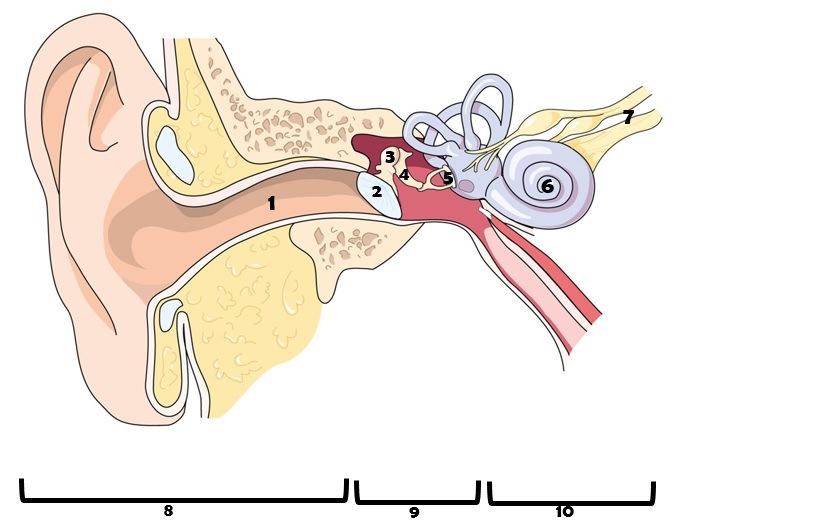
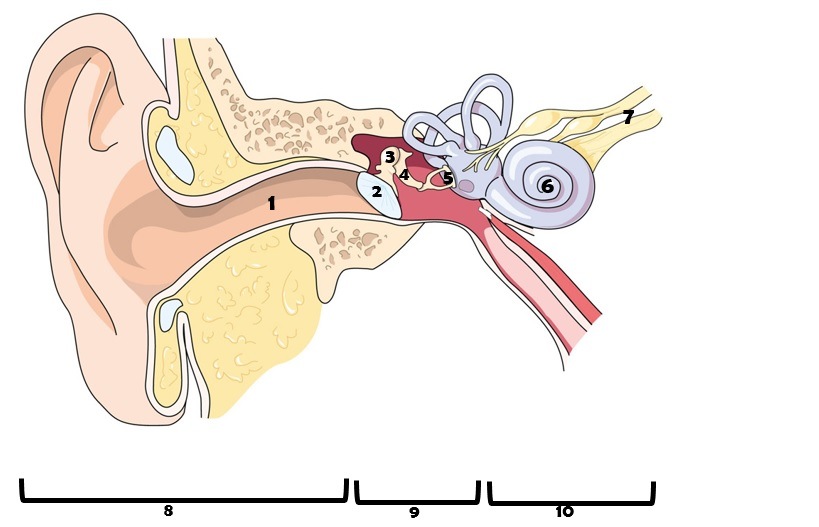
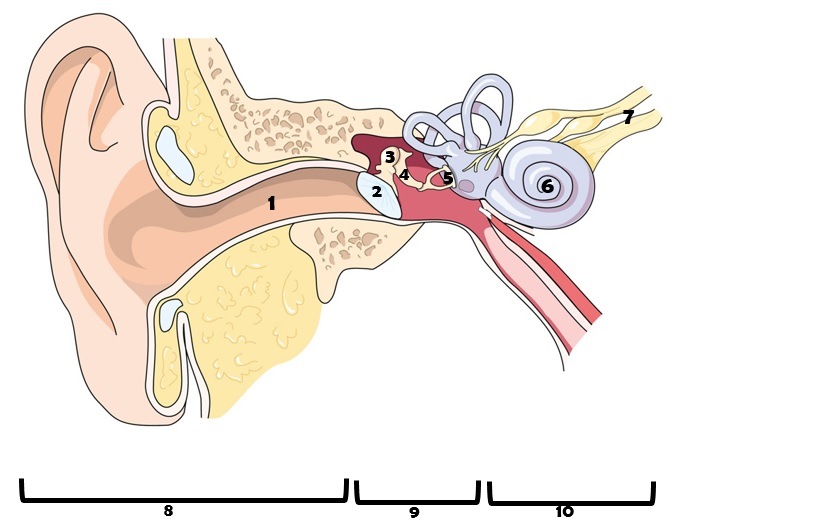
Which number is the labeled as the stirrup in the diagram?

a)

3

b)

4

c)

5

d)

6

e)

7

68.

Identify the part of the ear labeled as 1 in the diagram.

a)

auditory nerve

b)

ear canal

c)

eardrum

d)

hammer

69.

Which number is labeled for the hammer?

a)

1

b)

2

c)

3

d)

4

e)

5

70.

What does the Auditory nerve do?

a)

Carries the message to the brain

b)

Carries the message to the Semi-Circular canal

c)

Send the message to the Eustachian tube

d)

Pulls sound waves into the ear

71.

Match the following

a)

sound wave

1.

longitudinal wave that can only travel through matter

b)

compression

2.

when particles in a wave are packed closely together

c)

rarefaction

3.

when particles in a wave are spread apart

d)

pitch

4.

the perception of how high or low a sound seems

e)

echo

5.

when a sound wave is reflected

72.

What Logo Is This?

a)

KFC

b)

Gucci

c)

Doritos

d)

Justice

73.

What Logo Is This?

a)

McDonald's

b)

Krispy Kreme

c)

Walmart

d)

Disney

74.

Who is this?

a)

Mario

b)

Luigi

c)

Toad

d)

Princess Toadstool

e)

Bowser

75.

Who Is This?

a)

Mario

b)

Luigi

c)

Toad

d)

Princess Toadstool

e)

Bowser

76.

Calculate the Net Force

a)

0 N

b)

7 N Right

c)

28 N Right

d)

I don't know

77.
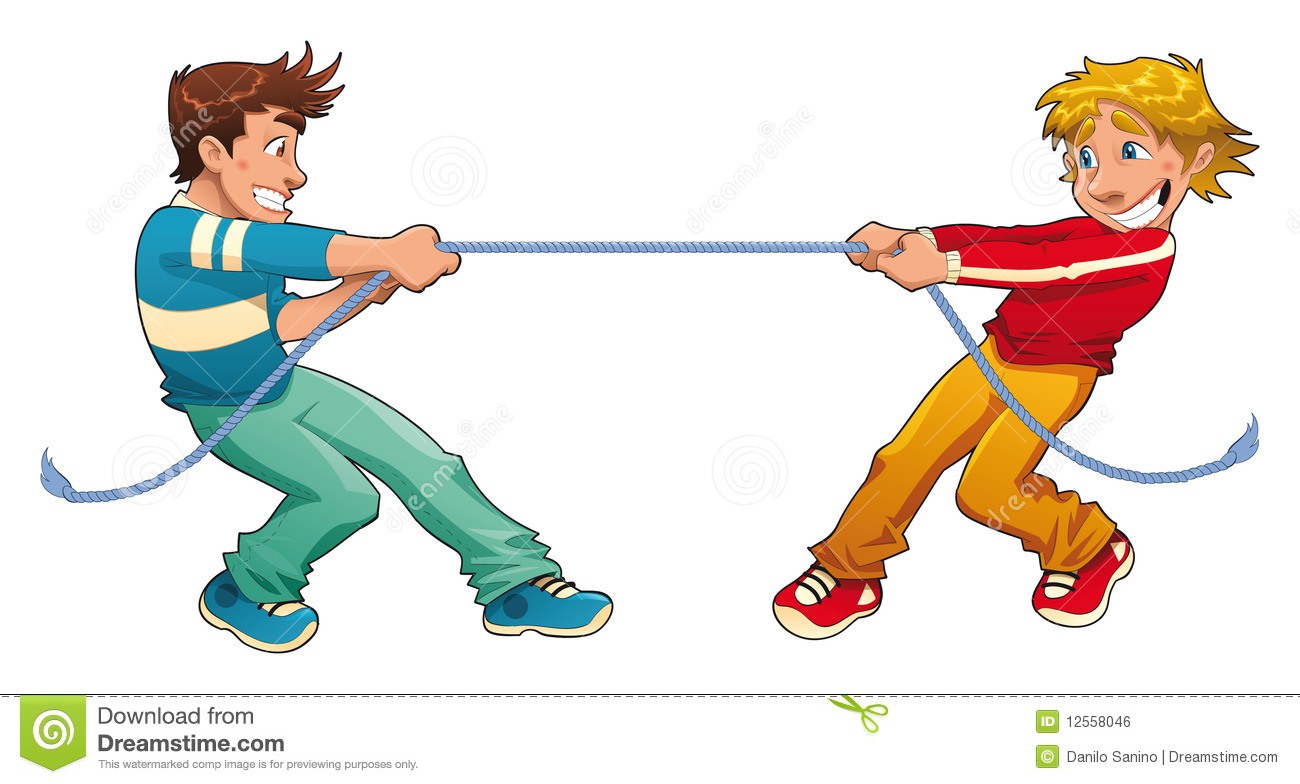
If these boys are pulling with the same amount of force.  What will happen?
a)
The boy in blue will win.
b)
They will not move at all.
c)
The boy in red will win.
d)
Both will fall down.
78.

Characters, objects, sounds, and visual elements that can be used in a game

a)

Game Design Document

b)

Animations

c)

Assets

d)

Sprites

79.

Which below shows a wraparound game?

a)
b)
c)
d)
80.

17 + 2 x 5 = ?

(a)  

81.

Solve for x

6 (x-1) = 6

a)

x = 2

b)

x = -2

c)

x = 7

d)

x = -7

82.

Which of the following represents balanced forces? 

a)

7N -> ->7N

b)

11 N -> <- 11 N

c)

8 N <- -> 4 N

d)

6N <- <-6N

83.

Calculate the Net Force:

16 N <- -> 5 N

a)

12 N to the Left

b)

11 N to the left

c)

21 N to the right

d)

17 N to the right

84.

Calculate the Net Force

a)

0 N

b)

7 N Right

c)

28 N Right

d)

I don't know

85.
a)

Enchiladas

b)

Burritos

c)

Tacos

d)

Churros

86.
a)

Pan dulce

b)

Los Cookies

c)

El donuto

d)

Cucarachas

87.

Which Austrian body builder came to America and became a famous actor and Governor of California

a)

J. R. Oppenheimer

b)

Arnold Schwarzenegger

c)

Albert Einstein

d)

Leonardo DiCaprio

88.
How does this image show a control in motion?
a)
Stop Motion
b)
Motion Blur
c)
Panning
d)
No Idea
89.

Who is this guy?

a)

Mr. Capps

b)

Mr. Yancey

c)

Mr. Bunyea

d)

Dr. de Hart

e)

Mr. Canton

90.

825 - 498

a)

473

b)

327

c)

477

d)

487

91.

56,234 + 1,000

a)

66,234

b)

57,234

c)

56,235

d)

56,334

92.

9+1=

(a)  

93.

Count on to find the total value.

a)

b)

c)

d)

94.

Count on to find the total value.

a)

b)

15¢

c)

25¢

d)

35¢

95.

Count on to find the total value.

a)

71¢

b)

80¢

c)

d)

50¢

e)

75¢

96.
a)
dime
b)
nickel
c)
penny
d)
quarter
97.

What is the value?

a)

b)

50¢

c)

10¢

d)

25¢

e)

55¢

98.
a)
10 cents
b)
5 cents
c)
1 cent
d)
25 cents
99.
What is the total amount?
a)
$0.50
b)
$1.00
c)
$0.10
d)
$0.30
100.

Which coin is a dime?

a)
b)
c)
d)
101.

5-3=

a)

5

b)

3

c)

2

d)

8

102.

14 - 2 =

a)

10

b)

16

c)

8

d)

12

103.

18 - 9 =

a)

10

b)

9

c)

8

d)

7

104.

12 - 6 =

a)

6

b)

12

c)

0

d)

8

105.
2 x 9 ÷ 3
a)
5
b)
7
c)
8
d)
6
106.

13 - 2 x 4 =

a)

4

b)

24

c)

5

d)

44

107.

30 - 7 x 4

a)
2
b)
92
c)
7
d)
84
108.
2 x 9 ÷ 3
a)
5
b)
7
c)
8
d)
6
109.

78+82=?

a)

639

b)

160

c)

32

d)

45

110.

1000+1999=?

a)

838

b)

4638

c)

2937

d)

2999