
 Worksheets
SGAMS Diesel Technology Quiz
Total questions: 44
Worksheet time: 22mins
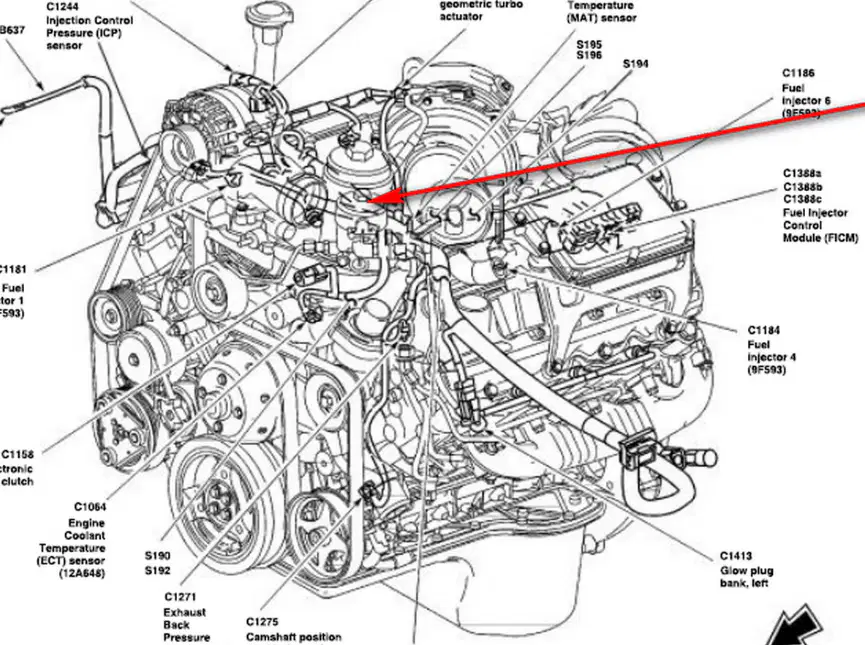
What is the component labeled as C1275 on the diagram of the 6.0L Diesel engine, LH side?
Turbocharger
Fuel Injector 6
Camshaft position sensor
Electronic fan clutch
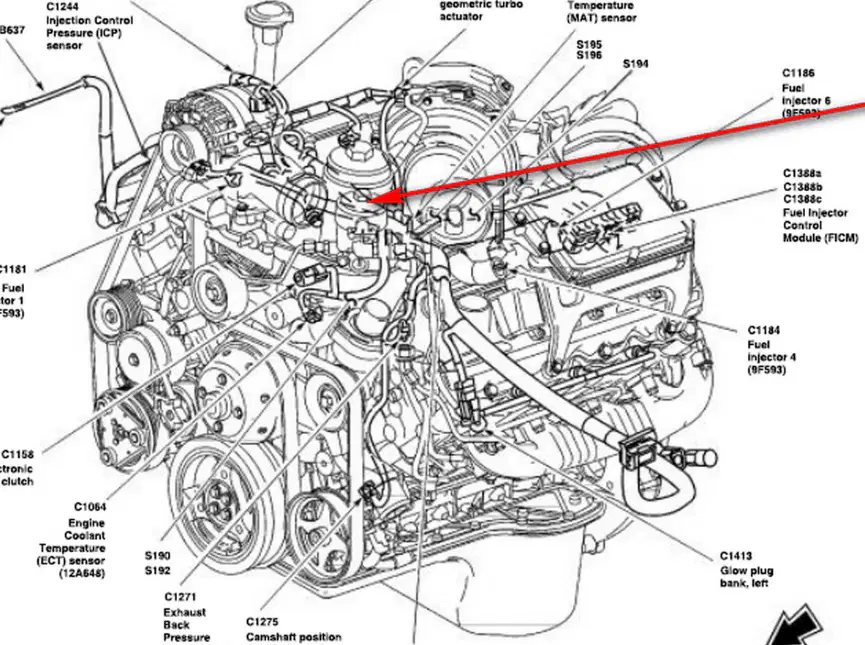
Where is the Battery located in the diagram of the 6.0L Diesel engine?
Top left
Top right
Bottom left
Bottom right
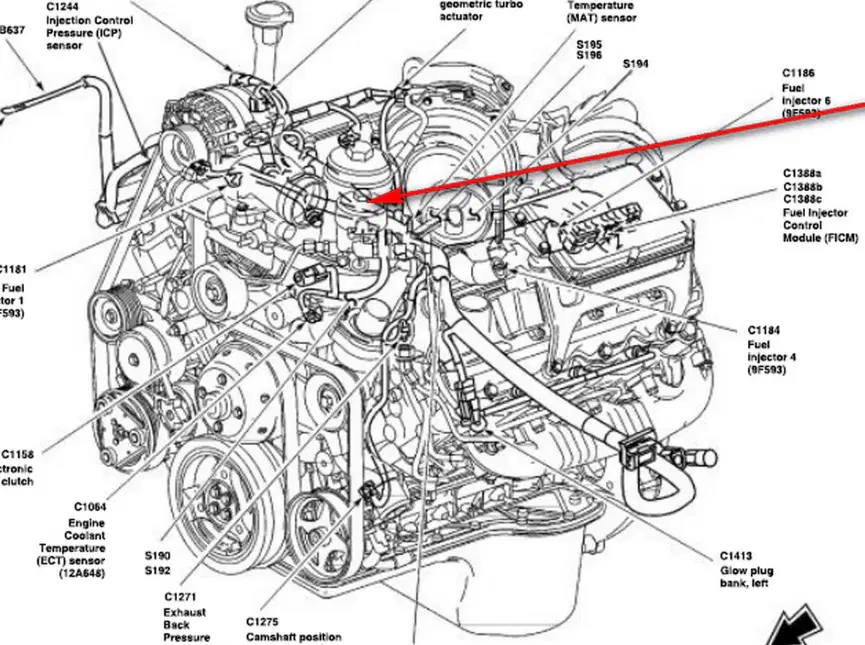
What does the label C1186 refer to in the diagram of the 6.0L Diesel engine?
Electronic fan clutch
Fuel Injector 6
Camshaft position sensor
Glow plug bank, left
Who is Diesel named after?
A) A type of engine
B) A brand of fuel
C) Rudolf Diesel, a German engineer/inventor
D) A scientific principle
What was the original fuel for the engine invented by Diesel?
A) Crude Oil
B) Gasoline
C) Peanut oil
D) Biofuel
What is modern diesel fuel derived from?
A) Natural Gas
B) Crude Oil
C) Coal
D) Biomass
How is diesel fuel refined compared to gasoline?
A) More refined
B) Less refined
C) Equally refined
D) Not refined at all
What law is part of the working principle of a diesel engine?
A) Newton's First Law
B) Boyle's Law
C) Charles's Law
D) Bernoulli's Principle
What does the formula PV = k represent?
A) Pressure = Volume x Temperature
B) Pressure x Volume = Temperature
C) Pressure x Volume = constant
D) Pressure + Volume = constant
What type of ignition do diesel engines use?
A) Combustion ignition
B) Spark ignition
C) Compression ignition
D) Electric ignition
Why don't diesel engines have spark plugs?
A) They use compression to ignite fuel
B) They operate on electricity
C) They use a different type of fuel
D) They have a different engine design
At what temperature does diesel fuel have its flash point?
A) 45°F
B) 125°F
C) 100°F
D) 150°F
What is the flash point of gasoline?
A) 45°F
B) 125°F
C) 100°F
D) 150°F
What is one of the advantages of diesel engines over gasoline engines?
Diesel engines require more frequent oil changes
Diesel engines have a shorter lifespan
Diesel engines get better fuel mileage
Diesel engines have less torque
Which of the following is a disadvantage of diesel engines?
They are less expensive to maintain
They break down less frequently
They are harder to find
They have a lower towing capacity
What is a common illegal modification mentioned that pollutes the environment in diesel engines?
Using biofuels
Increasing fuel mileage
Increasing torque
Illegal but common modifications
How often do diesel engines typically require oil changes compared to gasoline engines?
More often and it's less expensive
Less often and it's more expensive
More often and it's more expensive
Less often and it's less expensive
What happens when a diesel engine breaks according to the text?
It breaks small and is cheap to repair
It breaks big and is expensive to repair
It never breaks
It breaks big but is cheap to repair
What is the primary function of a Catalytic Converter?
To cool the exhaust gases before they are released into the atmosphere.
To oxidize CO (Carbon Monoxide) into CO2 (Carbon Dioxide).
To control the fuel injectors in a vehicle.
To reduce the temperature inside the engine.
What does EGR stand for?
Engine Gas Recirculation
Exhaust Gas Recirculation
Emission Gas Regulation
Energy Gas Reuse
Since what year must all diesel road vehicles have EGR systems in place?
1992
2002
2010
2015
What is the purpose of the Fuel Injection Control Module (FICM)?
To lower the amount of nitrogen oxide emitted from the engine.
To convert harmful gases into less harmful substances.
To control the fuel injectors, telling each one when to spray fuel into the cylinder.
To recirculate exhaust gases back into the cylinder.
What is DEF in the context of diesel vehicles?
Diesel Engine Fluid
Diesel Exhaust Fluid
Diesel Emission Filter
Diesel Energy Fuel
What year did it become mandatory for all diesel road vehicles to have DEF systems?
1992
2002
2010
2015
What does SCR stand for?
Systematic Catalytic Reduction
Selective Catalytic Reduction
Sustained Combustion Reversal
Synthetic Carbon Recycle
What are the end products after the SCR system processes harmful NOx (Nitric Oxide) gases?
CO (Carbon Monoxide) and H2O (Water Vapor)
CO2 (Carbon Dioxide) and O2 (Oxygen)
N2 (Nitrogen) and CO2 (Carbon Dioxide)
N2 (Nitrogen), CO2 (Carbon Dioxide), and H2O (Water Vapor)
As of September 2019, what is the legal status of deleting emissions systems from any road vehicle in the United States?
Legal in some states
Illegal in all 50 states
Legal with special permission
Legal if done by a professional
What is a potential advantage of deleting emissions systems mentioned in the text?
Increases fuel efficiency
Reduces engine noise
Improves vehicle aesthetics
Decreases vehicle weight
According to the text, what can happen if deleting emissions systems is not done by a professional?
It can improve engine performance
It can enhance fuel economy
It can lead to a massive engine failure
It can make the vehicle more environmentally friendly
What is LEGAL according to the EPA's latest ruling mentioned in the text?
Tuning an engine's emissions
Deleting emissions control systems
Tuning an engine's performance
Ignoring legally-required equipment
What does a performance tune modify according to the text?
The color of the exhaust smoke
The car's exterior design
Horsepower, RPM's, and shift points
The type of fuel used by the engine
What is the correct sequence of strokes for a Four Stroke Diesel Engine?
Intake, Compression, Power, Exhaust
Compression, Intake, Exhaust, Power
Power, Intake, Compression, Exhaust
Exhaust, Power, Compression, Intake
How many cylinders do most diesel engines have?
2 or 3
4 or 6
8 or more
10 or 12
What is one of the advantages of diesel engines over gasoline engines?
Diesel engines require more frequent oil changes
Diesel engines have a shorter lifespan
Diesel engines offer better fuel economy
Diesel fuel is easier to find
Which of the following is a disadvantage of diesel engines?
They have decreased torque
They are less expensive to maintain
They can use biofuels without modifications
They are more expensive due to taxes
What happens during the Compression Stroke of a diesel engine?
The exhaust is pushed out of the cylinder.
The air and fuel mixture is ignited.
The piston forces down, generating horsepower.
The mixture is compressed quickly, raising the temperature.
What does a spark plug use to ignite the fuel in an engine?
Heat
Electricity
Gas
Pressure
What is the function of glow plugs in an engine?
They cool down the air in the cylinder.
They compress the air in the cylinder.
They heat up the air in the cylinder.
They filter the air in the cylinder.
Which analogy is used to describe the function of a spark plug?
Space Heater
Gas Stove
Taser
Light Bulb
Which analogy is used to describe how a glow plug works?
Taser
Gas Stove
Space Heater
Refrigerator
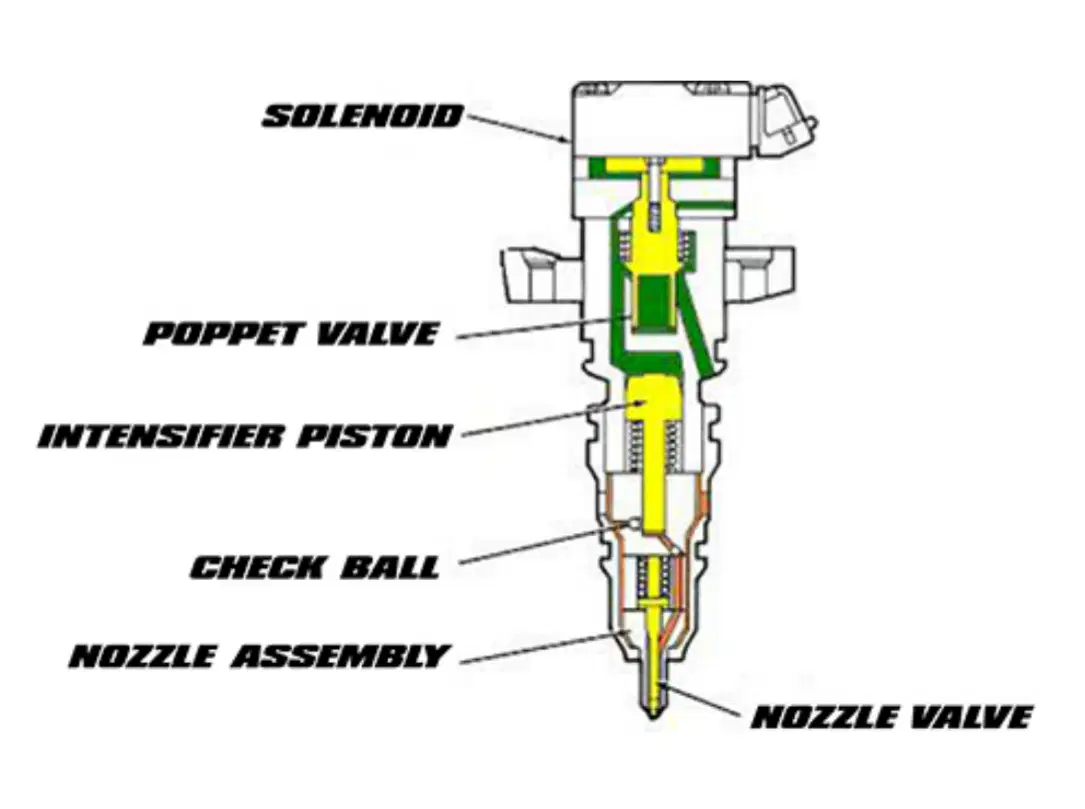
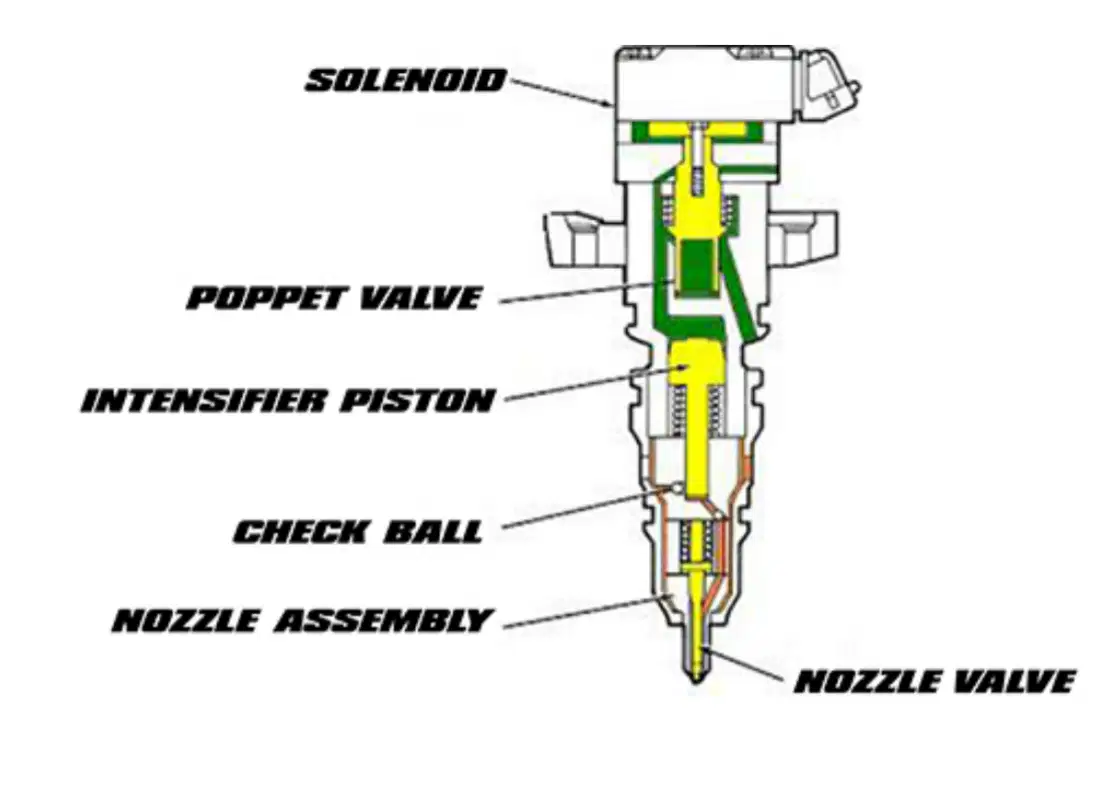
What component is located at the top of the diagram?
Intensifier Piston
Poppet Valve
Solenoid
Nozzle Assembly
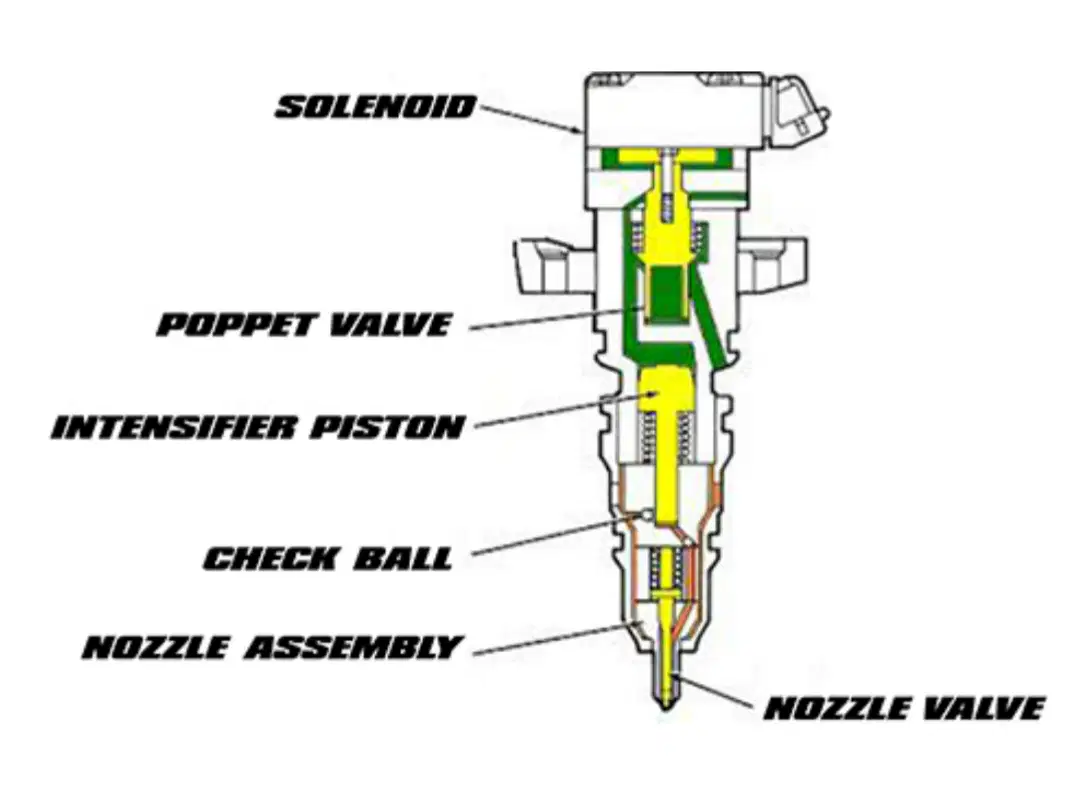
Which part is directly below the Solenoid in the diagram?
Check Ball
Poppet Valve
Nozzle Valve
Intensifier Piston
Identify the part labeled at the bottom of the diagram.
Solenoid
Intensifier Piston
Nozzle Assembly
Nozzle Valve
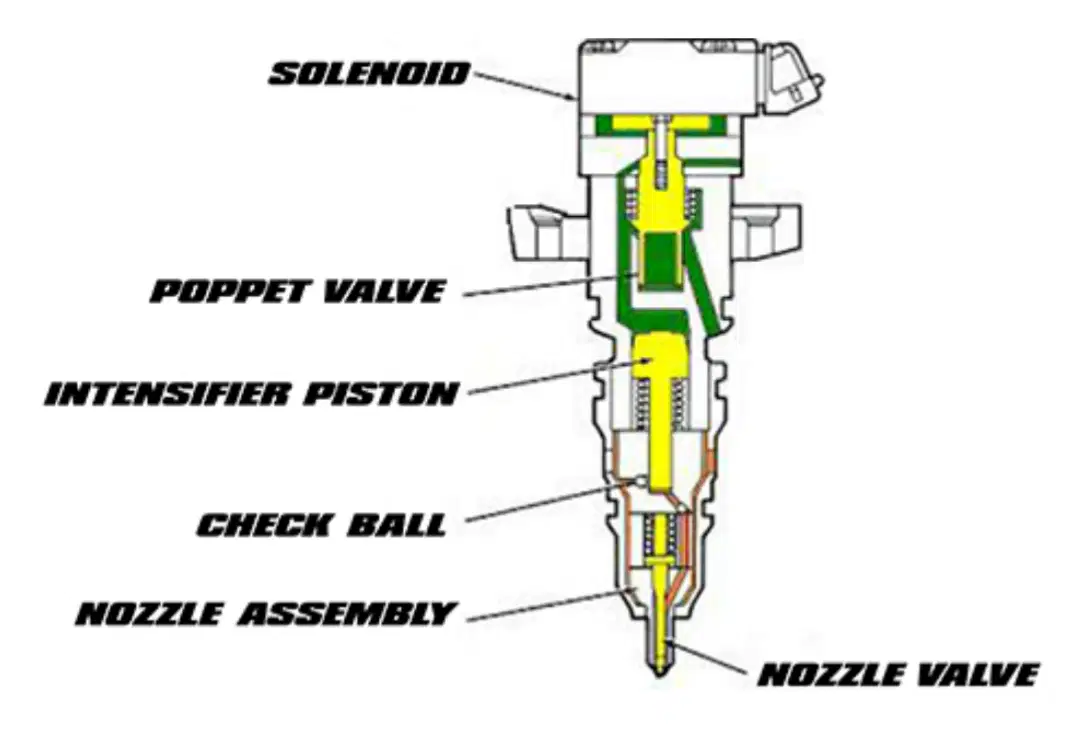
What is the name of the part located between the Poppet Valve and the Nozzle Assembly in the diagram?
Solenoid
Check Ball
Intensifier Piston
Nozzle Valve

