
 Worksheets
Plate Tectonics
Total questions: 78
Worksheet time: 2hrs 39mins
(a) was proposed by (b) and suggested that the (c) are in constant motion.
The earth's plates, rigid slabs of rock, "float" on the ___ .
asthenosphere
lithosphere
mantle
granitic rock
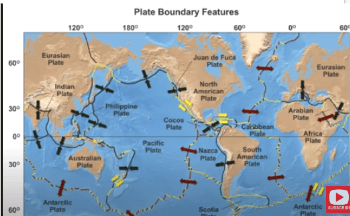
The earth's outer shell is divided into slabs of rock called ______ .
continental plates
crustal plates
trench plates
tectonic plates
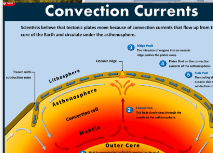
What is a driving force behind the movement of the plates?

Place each label in the correct category.
older
granite
less dense
younger
basltic
recycles
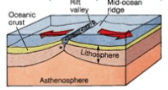
divergent
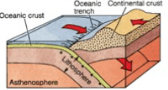
convergent
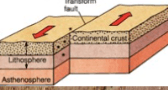
transform
At which plate boundary is new crust formed?
divergent
convergent
continental
transform
What types of landforms are formed at convergent boundaries?
(Select all that apply)
volcanoes
new crust
trenches
mountains
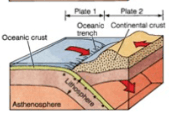
What is the WHOLE AREA called where the oceanic crust goes beneath the continental crust?
subtraction zone
section zone
secondary zone
subduction zone
Drag the labels to the correct the locations on the diagram.
convergent boundary
Mid-ocean Ridge
subduction
trench
divergent boundary

The majority of the world's earthquakes and volcanoes occur along the _ .
(a)

Who is the scientist who proposed Continental Drift Theory?

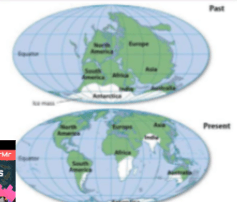
Alfred Wegener named his single supercontinent ____________, which means "all Earth" in ancient Greek.
Pandora
Gandowandaland
Pangea
Percia
The Theory of Pangea
The Theory of Moving Continents
The Theory of Continental Drift
The Theory of Techtonic Plates


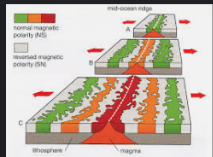
A long chain of undersea mountains
mid ocean ridge
sea floor spreading
oceanic plates


What type of boundary is shown in the diagram?
Divergent
Convergent
Slide/Transform

What type of boundary is shown in the diagram?
Divergent
Convergent
Transform
A mid-ocean RIDGE is located at the boundary of two tectonic plates. Which diagram correctly models the relative plate motion on each side of a mid ocean ridge?


The San Andreas fault is a transform fault. The map below shows a student's approximation of where the fault line crosses through the United States. Students were asked to make maps predicting which way land would most likely move over thousands of years.


The image shows a plate boundary. Arrows have been added to indicate the movement of the plates.What plate boundary feature is also shown?
A ridge formed by an inactive convergent boundary
A valley forming at an active divergent boundary
A fault forming at an active transform boundary
A volcano formed by an active transform boundary

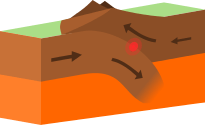
The diagram shows a model of the movement of two tectonic plates. When the plates collide, on plate often moves below the other plate. The rising magma that can result from this type of plate movement may produce-
fossil layers
volcanic islands
deep-sea sediment
seafloor spreading


The model below shows two continental plates. What type of plate boundary is this
Transform boundary
Divergent boundary
Subduction boundary
Convergent boundary

Which student correctly identified the geologic process that formed the Himalayan mountains?
1
2
3
4

What kind of landform is created when a continent starts to get torn apart?
Volcanic Island
Deep Sea Trench
Mid-ocean Ridge
Rift Valley
Mountains

The diagram below shows a cross-section of rock layers. What most likely caused the crack indicated by the arrow in the diagram?
erosion
volcanic eruptions
earthquake activity
glacier movement
What is the motion of Earth's plates like?
fast and in stages
slow and in stages
fast and constant
slow and constant
Which of the following states a fact?
Earthquakes aren't dangerous.
Earthquakes are easy to predict.
Volcanoes are less damaging than earthquakes.
The Earth is constantly changing.


Earthquakes are usually a sign of
volcanic activity
tornadoes
rainstorms
mountains

What is the definition of dormant?
sleeping and could erupt
extinct and won't erupt
active and dangerous
What is a large ocean wave that results from an underwater earthquakes, landslide, or volcanic eruption?
Tsunami
Rip Tide
Low Tide
High Tide
What causes an earthquake?
Earth's plates sliding past each other.
Earth's plates pushing against each other.
Earth's plates pulling away from each other,
An instrument that detects and measures earthquakes is a
seismogram
focus map
seismometer
Select ALL that apply:
What are some things that comes out of a volcano at it erupts?
Ash
Lava
Rocks
Gasses
Which scale is used to measure the intensity of an earthquake?
Richter Scale
Mach Scale
pH Scale
Decible Scale
What is the beginning point of an earthquake?
Epicenter
Focus
Lithosphere
Tsunami

What is the name of number 1?
Main vent
Magma chamber
Side vent
Ash cloud
What is the name of number 6?
Main vent
Magma chamber
Side vent
Ash cloud
What is the name of number 2?
Main vent
Magma chamber
Side vent
Ash cloud
What type of rock is formed when magma cools?
Igneous
Sedimentary
Metamorphic
The point on the earth’s surface directly above the origin of the earthquake.
Epicenter
Focus
Foreshock
Caldera
A tool used to measure and record earthquake activity
laser beams
Richter scale
seismograph
tiltmeter
Where do most earthquakes and volcanoes happen?
mid-ocean ridges
plate boundaries
in the mantle
rift valley
Earthquakes generally occur at plate boundaries, where
stress on rocks is greatest
the most rock is found
stress on rocks is low
magnetic pull is greatest
Which of the following is TRUE of earthquake prediction?
it is unreliable
it is impossible
scientists do not attempt it
it is not important
The composition of magma determines its ______.
viscosity
color
darkness
Once molten rock reaches the surface of the earth, the name changes to?
silica
magma
lava
rock
Which of the following is an opening through which molten rock and gas leave a volcano is?
pipe
crater
magma chamber
vent
Beneath a volcano, magma collects in a:
magma chamber
vent
magma pocket
hole
In a pyroclastic flow a volcanic eruption consists of:
ash
lava
cinders
ash, cinders, volcanic bombs, and gases
A "dead" volcano is called?
active
extinct
dormant


Rank the seismic waves in order of appearance when an earthquake first occurs as measured by a seismograph.
S waves, P waves, then surface waves
P waves, S waves, then surface waves
S and P waves at the same time, then surface waves
Surface waves, then S and P waves at the same time

According to the picture above which shows the secondary waves?
A
B
C

According to the image above which letter shows primary waves?
A
B
C

According to the picture, which letter represents surface waves?
A
B
C
What is a primary earthquake wave that travels through the body of the earth; so named because it is the first wave to reach a seismograph station during an earthquake.
P wave
surface wave
S wave
body wave
A wave generated by earthquake vibrations is called?
seismogram
surface wave
seismic wave
seismology
A wave that travels on or near the surface of the Earth?
surface wave
P wave
body wave
S wave

