
Font size
 Worksheets
Unit 8 Review
Total questions: 77
Worksheet time: 49mins
What does "Renaissance" mean?
Reconvert
Rebirth
Re-examine
Review

Who painted the Mona Lisa?
Michelangelo
Donatello
Jan Van Eyck
Leonardo da Vinci
Where did the Renaissance begin?
England
Norway
Italy
Spain
Who is considered the father of humanism?
Erasmus
Sir Thomas More
Petrarch
Machiavelli
What were the two most famous works by Michelangelo?
The Last Supper
David
The Sistine Chapel
The Wedding
What were the two most famous works by Michelangelo?
The Last Supper
David
The Sistine Chapel
The Wedding
Who were the main Patron class family in Italy? (First mafia family)
Barrone
Medici
da Vinci
Marietta
What was the first book to be printed on a printing press?
Utopia
Hamlet
The Bible
The Vedas
What event killed 30 million people, or a third of Europe's population, during the late Middle Ages?
The Black Death
Hundred Years War
A Tsunami
The Renaissance
What is the dominant theory on how the Black Death spread?
Cats
Birds
Bad air
Bites from fleas off rats
Who wrote "The Prince?"
Erasmus
Albrect Durher
Shakespeare
Machiavelli
Which of the following statements describes the type of government which existed in Florence during the Renaissance?
It was a small Italian town ruled by the king of Italy in Rome.
It was completely under the control of the Catholic Church.
It was a city-state ruled by the wealthy Medici family.
It was the capital of Italy and had a large bureaucracy.
What was Niccolò Machiavelli's main argument in his work The Prince?
A ruler should do whatever is necessary to maintain power.
A ruler should follow all of the teachings of the Catholic Church.
A ruler should make his subjects as happy as possible.
A ruler should strive to maintain equality and fairness.
• Nicolaus Copernicus
• Galileo Galilei
• Tycho Brahe
• Johannes Kepler
All of the above were famous Renaissance
philosophers.
priests.
artists.
scientists.
During the Renaissance, a new intellectual movement known as humanism evolved. What was the significance of the humanist movement?
Humanists felt formal education was impractical and unnecessary; therefore, many schools were closed.
Humanists spread the teachings of Eastern philosophers such as Confucius throughout Europe.
Humanists were very interested in religious studies and sought to increase the influence of the Church.
Humanists were inspired by classical texts and emphasized the dignity and worth of the individual.

During the Renaissance, there was a revival of interst in
perspective
humanism
Greek and Roman Civilizations
individual achievement

The artistic technique developed during the Renaissance that made paintings appear 3D.
Linear Perspective
Technicolor Artistry
Cross Hatch Shading
Illusion of 2D

What is one way European society changed thanks to the printing press?
People quit the feudal system to find work else where
People began reading books in their vernacular
Literacy declined during the Renaissance
People began writing scripts for movies
Why was the Printing press so important during the Renaissance?
It helped spread his ideas of Humanists
People began printing newspapers in America
People began writing mean articles about Kings
The bible was only printed in Latin

What economic change occurred during the Renaissance that allowed for the flourishing of the art?
Introduction of paper money
People began to Barter again
The Governments of Europe paid to educate Artists
Growth of a wealthy Merchant Class that became patrons the Arts

Why did the Renaissance begin in Italy?
Italians were better Catholics
Italy had better means of transportation
Italy sat in the middle of the Silk Road
Extreme wealth that Italians made from trade
The trade of goods and ideas between Europe and the Americas in 1400s and 1500s was known as
Mercantilism
Capitalism
Columbian Exchange
The Slave Trade
European explorers came to America for all the following reasons. Select all that apply.
Gold
Goods
God
Glory
Fill in the blank: Columbus sailed the ocean blue...
in 1792
in 1852
in 1492
in 2002
What was the primary reason that European explorers had for wanting to explore new land?
They were searching for an all-water route to Asia to acquire silks and spices.
They wanted to practice their navigating skills.
They wanted to spread their religion to Asia.
They wanted to spread their ideas about government with the Native Americans.
How were the Spanish conquistadors able to conquer the New World?
They prayed for the Native Americans.
They became friends and traded goods with the Native Americans.
They used advanced weapons to take control of the Native Americans.
They paid the Native Americans gold to work building colonies for them.
The Middle Passage was_______________?
The exchange of goods, ideas, and diseases from the New World to Europe.
The transport of African slaves to the Americas by boat across the Atlantic ocean.
Trading goods among three countries.
The transfer of cash crops to the Americas.
What was the 1494 agreement between Portugal and Spain, that moved the Line of Demarcation further west into South America?
The Reformation
Treaty of Versailles
Treaty of Paris
Treaty of Tordesillas
A Portugese sailor who was the first European to sail around southern Africa, Cape of Good Hope, to the Indian Ocean.
Vasco de Gama
Cortes
Columbus
Magellan
What was the name of the period when the Roman Catholic Church was questioned?
Middle Ages
Renaissance
Reformation
All of the Above


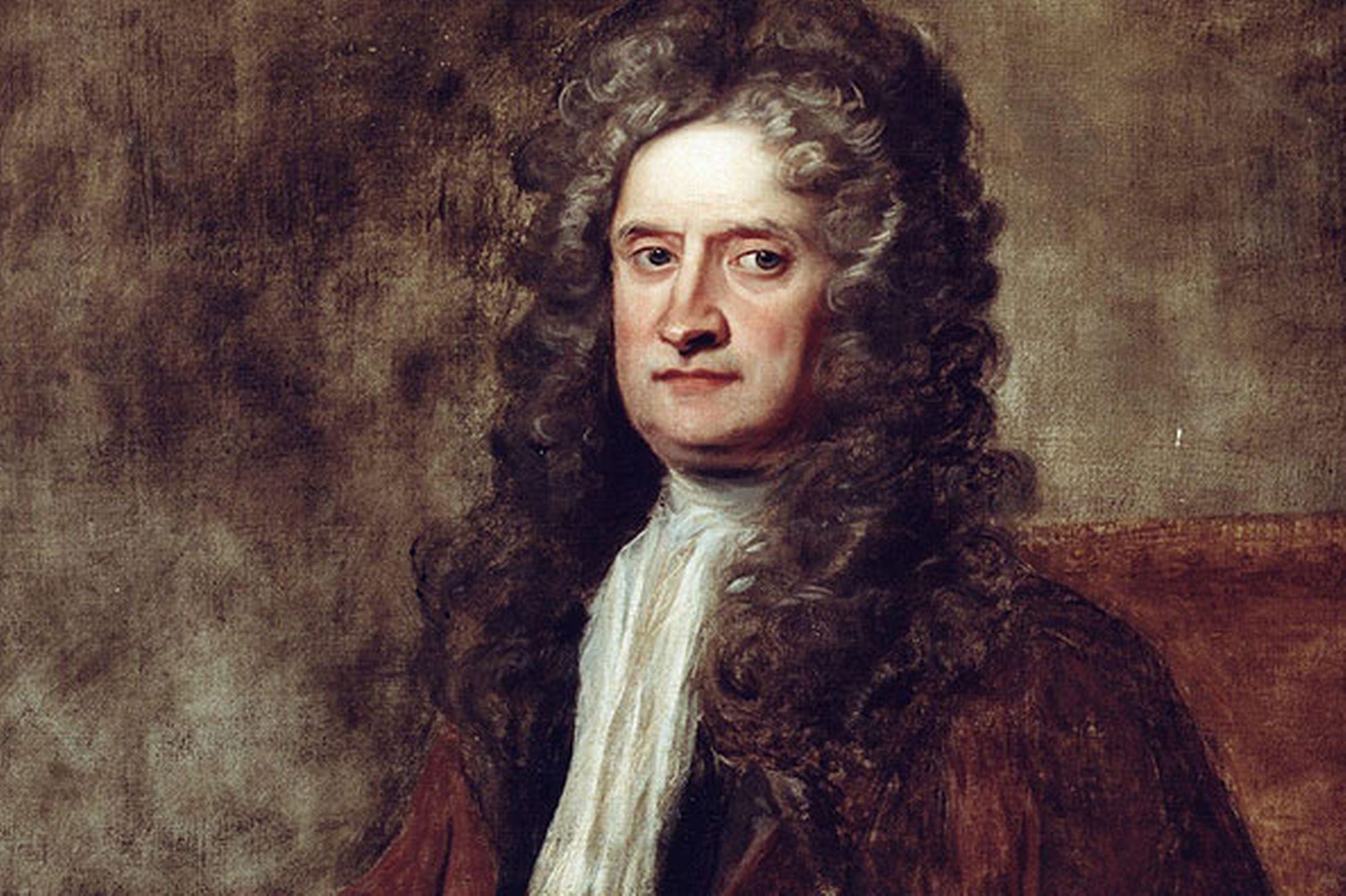
The power of the human mind to think and understand in a logical way
reason
philosophies
natural rights
contract
A right, such as life and liberty, that a person is born wth
divine right
philosophes
natural rights
contract
An agreement between rulers and the people to cooperate for mutual social benefits in pursuit of a better society
divine right
free enterprise
laissez-faire
social contract
Separation of Powers
Separating the ruler from the military.
Dividing powers equally among organizations
Dividing powers equally among three people
Dividing powers equally among three branches of government.
A person(s) who had unlimited authority and almost no legal limit.
A Monk
Absolute Monarch
A Philosophe
A Salon Manager
Enlightenment thinker who viewed humanity in a negative way and believed people were naturally wicked.
John Locke
Mary Wollstonecraft
Thomas Hobbes
Enlightenment thinker who believed in the natural rights of "Life, Liberty, and the right to Property".
Montesquieu
John Locke
Rousseau
Enlightenment thinker who was a pioneer for women's rights and education.
Mary Wollstonecraft
Voltaire
Thomas Hobbes
fought for freedom of speech and opposed religious intolerance and corruption in government
John Locke
Thomas Hobbes
Montesquieu
Rousseau
Voltaire
Social Contract. People are born good but corrupted by society. Limited and freely elected government
John Locke
Thomas Hobbes
Montesquieu
Rousseau
Voltaire
Belief that authority comes from reason and not God
Enlightenment
Constitution
Absolutism
Philosophers
Who argued for freedom of speech and religion?
Thomas Jefferson
John Locke
Voltaire
Descartes

Hobbes believed that humans are naturally-
good
outgoing
cruel and selfish
forgiving
The intellectuals of the Enlightenment were called-
Sophists
Philosophes
Heretics
Enlightened Ones
Believed in Predestination
Martin Luther
John Calvin
Henry VIII
Elizebeth I
Who dismissed the authority of the Pope and started the Anglican Church?
Queen Elizabeth
Martin Luther
John Calvin
Henry VIII
Which religion did Henry VIII establish?
Church of Spain
Lutheranism
Church of England
Anabaptists
How did peasants react to the reformation
burned the town
Killed 100,000 people
Embraced it
Revolted


