
 Worksheets
Cells Introduction Review
Total questions: 67
Worksheet time: 1hrs 8mins
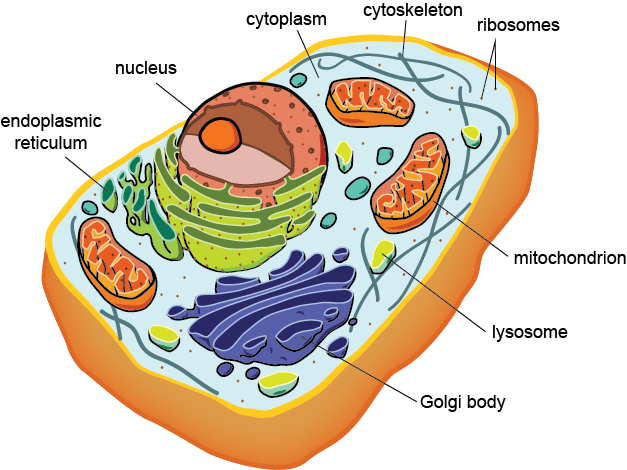

The organelle that is the control center of the cell and contains nearly all of the cell’s DNA:
Ribosome
Centriole
Nucleus
Rough Endoplasmic Reticulum

The organelle that modifies, sorts, and packages proteins and other materials from the ER for storage in the cell or release from the cell:
Endoplasmic Reticulum
Golgi Apparatus
Vacuoles and Vesicles
Ribosome

The organelle that captures the energy from sunlight and converts it into chemical energy stored in food during photosynthesis:
Chloroplast
Mitochondrion
Cell Wall
Nucleus

The organelle that converts the chemical energy stored in food molecules into compounds that are more convenient for the cell to use:
Cell Wall
Cell Membrane
Mitochondrion
Centrioles
Which of the following structures is ALWAYS found in both eukaryotic and prokaryotic cells?
nucleus
mitochondria
ribosomes
cell wall
Which of the following is only found in EUKARYOTIC cells?
nucleus
DNA
cell membrane
ribosomes
PROKARYOTIC cells do NOT have
membrane bound organelles
cell membrane
DNA
ribosomes

Identify this type of cell.
animal
plant
protist
bacteria

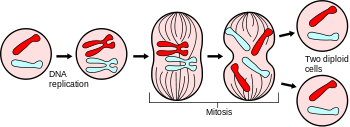
When cells are damaged, new cells are created by cell a process called cell division. How does the cell theory support this fact?
It states that all cells have a nucleus which divides.
It states that all living things are made up of one or more cells.
It states that cells come from previously existing cells.
It states that the basic units of structure and function are cells.

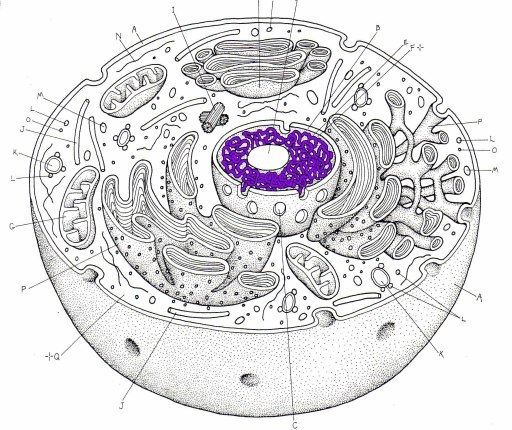

Which of these organelles only function is to produce proteins needed by the cell?
ribosomes
golgi apparatus
mitochondria
nucleus
What is a network of membranes that processes substances and proteins and then moves them to the golgi apparatus?
ribosomes
nucleus
endoplasmic reticulum
chloroplast
This is a then flexible barrier that surrounds a cell and controls which substances pass into and out of a cell.
cytoplasm
cell membrane
endoplasmic reticulum
cell wall
What is the outermost layer of an animal cell?
cell wall
cell membrane
cytoplasm
chloroplast
Which organelle receives proteins from the endoplasmic reticulum, it then packages them and distributes them to other parts of the cell?
mitochondria
chlorophyll
golgi apparatus
nucleus
What is found in only plant cells and surrounds the cell to hold in all of its organelles and protect the cell?
nucleus
cytoplasm
cell wall
cell membrane
Which organelle is found only in plant cells and converts sunlight to energy to form food for plant cells?
cytoplasm
nucleus
mitochondria
chloroplast
Without this invention cell theory would not exist.
glasses
computers
microscopes
lenses
Cells come from______.
other preexisting cells
cytoplasm
organelles
prokaryotes
The cell theory states that_________
cells come from cells
all organisms are made of cells
cells are the basic unit of structure and function for life
all of the above
________ is the scientist who saw small chambers when looking at cork, and named them “cells”.
Newton
Hooke
Carson
Manning
The size of an organism is determined -
by the size of the cells that make up the organism.
by the number of cells that the organism has.
A multicellular organism is made of
one cell
multiple cells
unicellular cells
there is no such thing as a "multicellular" organism
Regardless of type, all cells
have a cell membrane
have cytoplasm
can duplicate themselves by undergoing cell division
all of the above
Cell 2 had a cell membrane and Cell 1 did not.
Cell 1 had a cell wall and Cell 2 did not.
Cell 2 had a chloroplast and Cell 1 did not.
Cell 1 had a nucleus and Cell 2 did not.
This cell has DNA.
Prokaryotic
Eukaryotic
Both
This cell can be a protist, fungi, plant, or animal cell.
Prokaryotic
Eukaryotic
Both
This cell has circular DNA floating in the cytoplasm.
Prokaryotic
Eukaryotic
Both
This cell has linear DNA found in the nucleus.
Prokaryotic
Eukaryotic
Both

I decide what goes in and out of the cell. I am fluid like and found in BOTH plant and animal cells. I am a...
Cell Wall
Cell Membrane
Cytoplasm
Golgi Apparatus

I am the "brain" of the cell or the "control center" for everything happening within the cell. I am a...
Golgi Body/Apparatus
Nucleus
Ribosome
Lysosome

I like to be thought of as the "storage bubble" for both plant and animal cells. I am a...
Cell Membrane
Cytoskeleton
Vacuole
Endoplasmic Reticulum

Photosynthesis takes place within me. I am a...
Mitochondria
Cell Wall
Chlorine
Chloroplast

I provide plant cells their rigid shape. I am the...
Cytoskeleton
Cell Membrane
Cell Wall

Which is NOT part of the Cell Theory
New cells are produced from existing cells
All living things are composed of cells
Only eukaryotic cells have a nucleus
Cells are the basic unit of structure & function in living things

What cell part is NOT found in all cells?
Chloroplasts
Cell Membrane
Cytoplasm
Nucleus
This cell part is in ALL cells. It is the gel-like substance that provides cell shape.
Chloroplasts
Cell membrane
Cytoplasm
Nucleus
Plants perform photosynthesis through this organelle. It captures energy from the sun and uses it to produce food for the cell.
Cytoplasm
Chloroplasts
Cell Wall
Nucleus
What shape are most plant cells?
round
rectangular
What shape are most animal cells?
round
rectangular

What type of cell is pictured above?
Plant Cell
Animal Cell

What type of cell is pictured above?
Plant Cell
Animal Cell


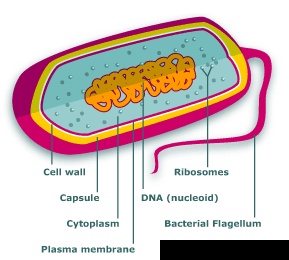


What part of a cell is "C" in the diagram?
cell membrane
nucleus
cytoplasm

What type of cell is in the picture and why?
A Plant cell because it has a large central vacuole and chloroplasts.
An Animal cell because it has a large central vacuole and chloroplasts.
A Plant cell because it has a many small vacuoles and mitochondria.
An Animal cell because it has many small vacuoles and no cell wall.

What type of cell is in the picture and why?
A Plant cell because it has a large central vacuole and chloroplasts.
An Animal cell because it has a large central vacuole and chloroplasts.
A Plant cell because it has a many small vacuoles and mitochondria.
An Animal cell because it has many small vacuoles and no cell wall.

Name the structure labeled "G" in the diagram.
Cell Membrane
Cell Wall
Pellicle Membrane
Micronucleus

