
 Worksheets
Microbiology ch 9 growth
Total questions: 56
Worksheet time: 28mins
What does the bacterial cell cycle involve?
The formation of new cells through the replication of RNA
The formation of new cells without the replication of DNA
The formation of new cells through the replication of DNA and partitioning of cellular components into two daughter cells
The formation of new cells through the exchange of DNA with other cells
How do prokaryotes reproduce?
Sexually
Through spore formation
Through budding
Asexually
What is the typical structure of bacterial chromosomes?
They have multiple linear chromosomes
They have a single circular chromosome
They have a single linear chromosome
They have multiple circular chromosomes
What is the most common mechanism of cell replication in bacteria?
Mitosis
Meiosis
Binary fission
Budding
What does the cell do before dividing?
It decreases its number of cellular components.
It detaches from the inner cell membrane.
It grows and increases its number of cellular components.
It replicates its DNA.
Where does the replication of DNA start in bacterial cells?
At the terminus
At the origin of replication
At the cell wall
At the nuclear membrane
How does replication proceed after it starts?
In the same direction until the origin is reached again.
In random directions along the chromosome.
In opposite directions along the chromosome until the terminus is reached.
It stops immediately after it starts.
What is the first step in binary fission in bacteria?
Formation of division septum
Cell elongation
DNA replication
Cell separation
During binary fission in bacteria, what forms in the center of the cell?
A new nucleus
A division septum
A cell membrane
A spindle fiber
What do the two daughter cells receive after a binary fission event?
A copy of the original cell membrane
A copy of the original ribosomes
A copy of the original chromosome
A copy of the original cytoplasm
What do FtsZ proteins assemble to form during binary fission?
A Y ring
A Z ring
A cleavage furrow
A septum
Where is the Z ring anchored in the process of binary fission?
To the nucleus
To the cell wall
To the plasma membrane
To the cytoplasm
What is the role of the Z ring in binary fission?
It duplicates the DNA.
It synthesizes new proteins.
It pinches the cell envelope.
It expands the cell size.
What is the result of the Z ring pinching the cell envelope in binary fission?
Fusion of two cells
Creation of a single larger cell
Separation of the cytoplasm of the new cells
Destruction of the cell membrane
What is the generation time in eukaryotic organisms?
The time it takes for the population to double through one round of binary fission.
The time between the same points of the life cycle in two successive generations.
The time it takes for a single organism to reach maturity.
The time it takes for an organism to reproduce asexually.
In prokaryotes, what is the generation time also known as?
Replication time
Maturation time
Doubling time
Division time
How quickly can Escherichia coli double under optimal growth conditions in the laboratory?
Between 15 and 20 hours
In as little as 20 minutes
In exactly 30 minutes
In 14 days
How many cells will there be in the fourth generation if each division doubles the number of cells?
8
12
16
32
What does each division of a cell result in?
One new cell
Two new cells
Three new cells
Four new cells
What is a growth curve?
A method to measure the size of cells
A graph modeling the number of cells in a culture over time
A type of bacteria
A statistical model for population growth
What is known as a batch culture?
A culture where nutrients are continuously added
A culture where waste is continuously removed
A culture where no nutrients are added and most waste is not removed
A culture that cannot be reproduced
How is culture density defined?
The size of cells per unit volume
The number of cells per unit weight
The number of cells per unit volume
The speed of cell growth per unit time
Do infections of the body always follow the growth curve?
Yes, in all cases
No, but correlations can exist depending on the site and type of infection
Yes, but only in closed environments
No, infections are not related to the growth curve
What is the first phase of the bacterial growth curve where there is no increase in the number of living bacterial cells?
Log phase
Stationary phase
Lag phase
Death phase
During which phase of the bacterial growth curve does the number of living bacterial cells increase exponentially?
Log phase
Stationary phase
Lag phase
Death phase
What is the phase called where the plateau in the number of living bacterial cells occurs due to the rate of cell division and death being roughly equal?
Log phase
Stationary phase
Lag phase
Death phase
Which phase of the bacterial growth curve is characterized by an exponential decrease in the number of living bacterial cells?
Log phase
Stationary phase
Lag phase
Death phase
Where does the growth curve pattern of a bacterial culture take place according to the text?
In an open environment
In a closed environment
In a semi-closed environment
Outside of a laboratory setting
What is NOT added or removed from a bacterial culture in a closed environment as mentioned in the text?
Nutrients and waste
Oxygen and carbon dioxide
Antibiotics and proteins
Enzymes and water
Why is it advantageous to maintain cells in the logarithmic phase of growth?
To slow down the growth rate
To maintain genetic stability
To increase the growth rate
To ensure rapid nutrient depletion
What is the purpose of a chemostat in sustaining microbial growth?
To sterilize the culture
To maintain a continuous culture with nutrients supplied at a steady rate
To introduce new strains of bacteria
To periodically remove all cells from the culture
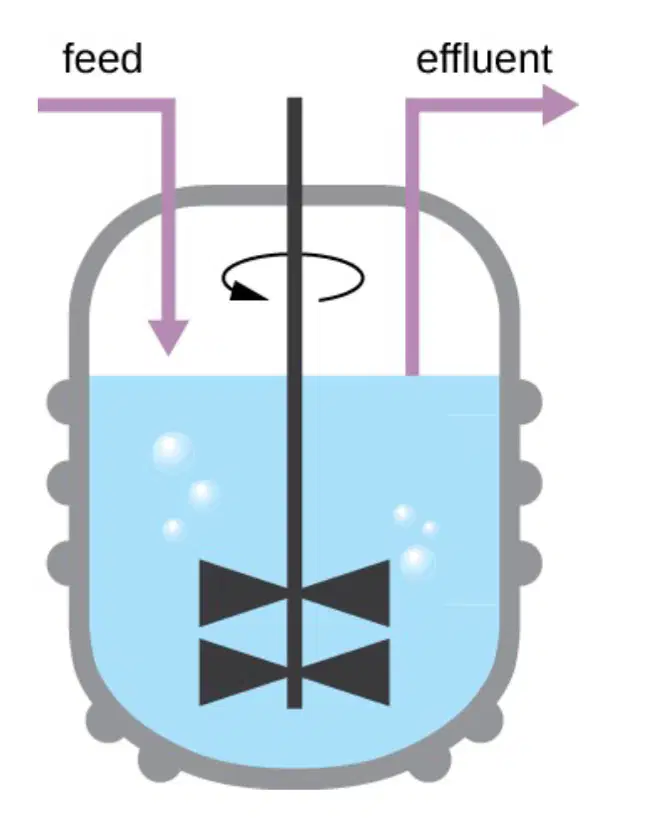
What is the purpose of a chemostat as described in Figure 9.7?
To maintain a culture in the stationary phase of growth
To maintain a culture in the logarithmic phase of growth
To prevent the growth of aerobic bacteria
To increase the concentration of toxic wastes and dead cells
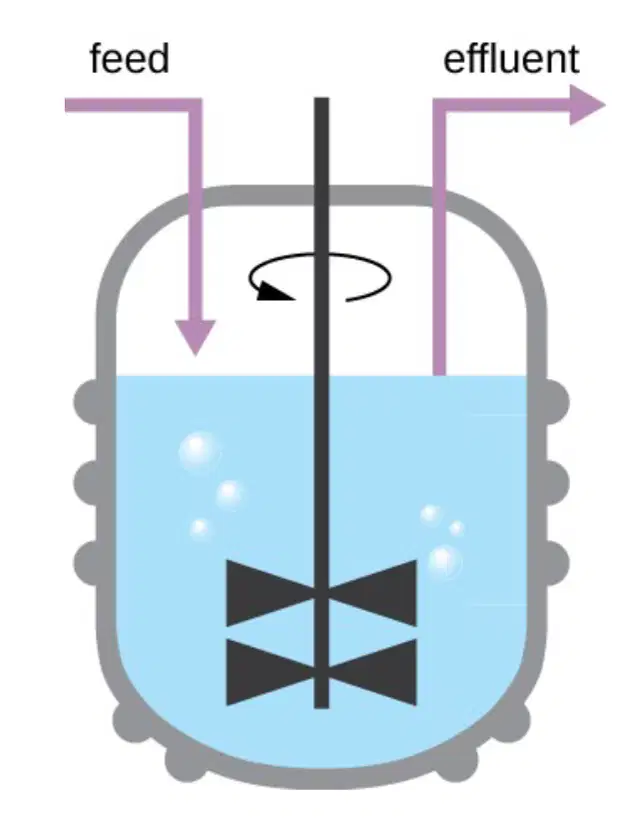
What does the effluent in a chemostat do?
Adds nutrients to the culture
Removes toxic wastes and dead cells from the culture
Provides suitable oxygen levels for anaerobic bacteria
Stops the growth of bacteria
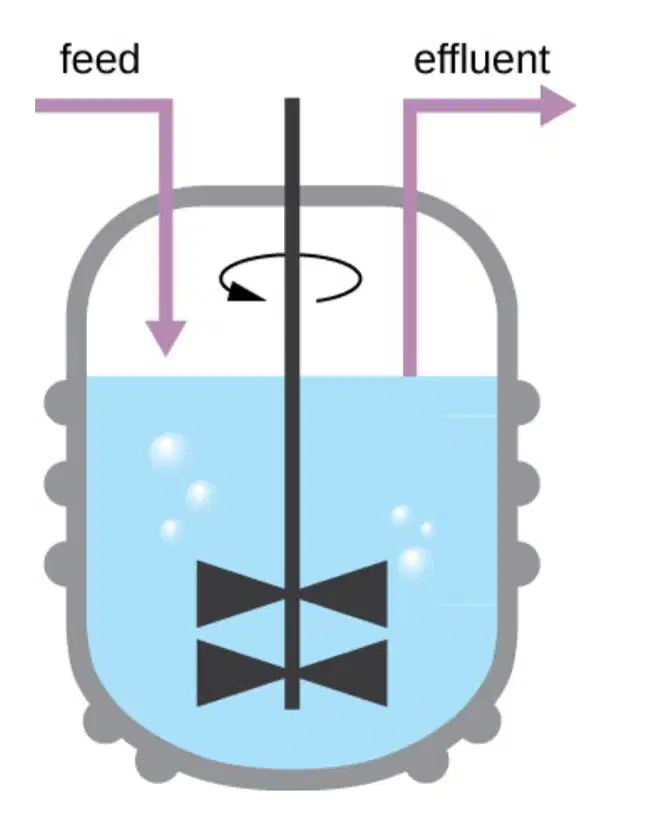
How is the growth of aerobic bacteria sustained in a chemostat?
By preventing the addition of nutrients
By maintaining suitable oxygen levels
By keeping the culture in the stationary phase
By allowing the accumulation of toxic wastes
What is the purpose of performing bacterial counts by microbiologists?
To identify the type of bacteria in a sample
To estimate the number of bacterial cells in a sample
To determine the size of bacterial cells
To discover new species of bacteria
What does the number of bacteria in a clinical sample indicate?
The age of the bacterial culture
The temperature at which bacteria grow best
The extent of an infection
The antibiotic resistance of the bacteria
Which of the following is a direct method used to measure bacterial cell number?
Estimating the weight of the bacterial culture
Measuring the turbidity of the bacterial culture
Counting the cells
Analyzing the genetic material of the bacteria
What do indirect methods of measuring bacterial growth depend on?
The measurement of cell presence or activity without counting individual cells
The direct visualization of bacteria under a microscope
The counting of bacterial colonies on an agar plate
The measurement of the nutrient consumption by bacteria
What does direct cell count refer to?
Estimating the number of cells based on weight
Counting the cells in a liquid culture or colonies on a plate
Calculating the size of cells in a sample
Measuring the volume of a liquid culture
What is the purpose of counting live, or viable, cells in a sample?
To determine the nutritional value of the sample
To assess the effectiveness of preservation methods
To assess the extent of an infection, effectiveness of antimicrobial compounds and medication, or contamination of food and water
To calculate the expiration date of the sample
What does direct microscopic cell count involve?
Estimating the number of cells using a mathematical model.
Transferring a known volume of a culture to a calibrated slide and counting the cells under a light microscope.
Using a chemical dye to visualize the cells on a culture plate.
Counting the number of cells that grow in a culture dish after incubation.
What is the name of the calibrated slide used in direct cell count?
Petroff-Hausser chamber
Ehrlich-Hausser chamber
Neubauer chamber
Fuchs-Rosenthal chamber
What is the purpose of a Petroff-Hausser chamber?
To measure the volume of a sample
To count the bacterial cells in a measured volume of a sample
To magnify bacterial cells for better visualization
To stain bacterial cells for identification
What is etched on the slide of a Petroff-Hausser chamber to facilitate precision in counting?
A magnifying lens
A grid
A chemical reagent
A barcode
What is an advantage of using a Petroff-Hausser chamber for direct cell count?
Requires complex equipment
Time-consuming
Inexpensive
Less accurate
What is a disadvantage of using a Petroff-Hausser chamber for direct cell count?
It is difficult to use
It is very expensive
Does not work well with dilute cultures
It is very slow
What do newly developed fluorescence staining techniques allow scientists to distinguish between?
Different species of bacteria
Viable and dead bacteria
Types of bacterial infections
The age of bacterial cells
How do primary and secondary viability stains differ?
In their color under a microscope
In their ability to cross the cytoplasmic membrane
In their ability to bind to nucleic acids
In their cost and availability
What color do live cells fluoresce when stained with primary and secondary stains?
Red
Blue
Green
Yellow
Under what condition can a cell be stained red by the secondary stain?
When the cell is alive and well
When the cell's cytoplasmic membrane is considerably damaged
When the cell has not absorbed any primary stain
When the cell is of a specific bacterial species
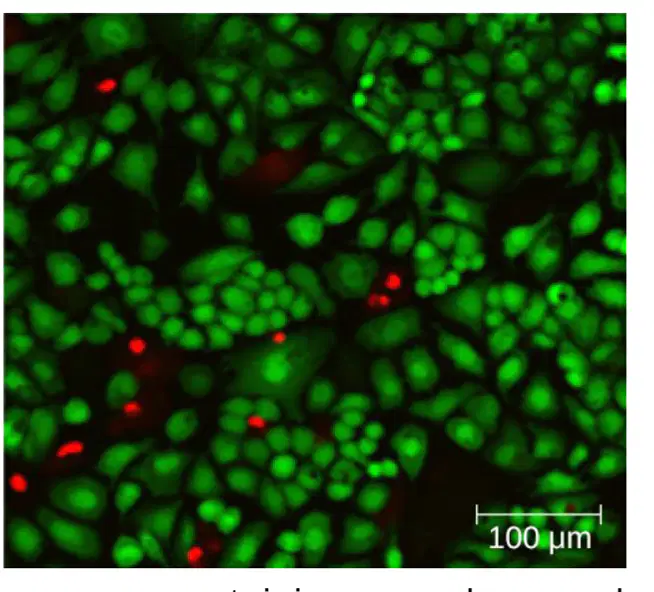
What is the purpose of fluorescence staining as shown in Figure 9.9?
To measure the size of bacterial cells
To differentiate between viable and dead bacterial cells
To identify the species of bacteria
To count the total number of cells in a sample
What device is used in the Direct Cell Count method to detect and count the changes in electrical resistance?
Microscope
Spectrophotometer
Coulter counter
Centrifuge
What is immersed in an electrolyte solution during the Direct Cell Count method?
A glass rod
A plastic tube
A glass tube with a small opening
A metal wire
What is a limitation of the Direct Cell Count method?
It cannot count cells rapidly.
It is not accurate.
It cannot differentiate between live and dead cells.
It requires a very large sample volume.
What is the function of a Coulter counter?
It measures the volume of cells.
It counts the number of cells.
It identifies the type of cells.
It measures the temperature of the cell solution.
How does a Coulter counter measure cell count?
By detecting changes in light absorption.
By measuring changes in resistance in an electrolyte solution.
By counting the number of cells under a microscope.
By using a chemical reaction to indicate cell presence.

