
Font size
 Worksheets
GTEP IN SCIENCE 5
Total questions: 110
Worksheet time: 52mins
What are clouds made of?
a. air
b. water
c. wood
d. metal
Could you breathe on the moon?
a. It depends.
b. No, there is no air. You could, if you have a spacesuit.
c. Yes, we can breathe on the moon.
d. I don't know the answer.
I use my sense of _______ to see the banana's color?
hearing
smell
sight
touch
What is the biggest planet in our Solar System?
Mars
Jupiter
Pluto
Earth
What do caterpillars turn into?
bird
butterfly
snake
monkey
I use my sense of _________ to feel the pillow's softness.
touch
smeall
hearing
taste
It takes up space and mass. What is this?
Matter
Property
Container
Energy
A fish uses its gills to _______?
To fly like a bird.
To eat other animals.
To walk and run.
To breath under water.
A turtle's body has a shell for _________?
For them to be protected.
For them to fall asleep.
For them to see.
For them to fly.
Which part of the plant, makes food for the plant?
Fruit
Roots
Leaves
Bee
Plants need water for it to be alive. Asides from water, what else do the roots take from the soil?
Chlorophyll
Green leaves
Dirt
Nutrients
________ lets you see things around you. It can come from natural or artificial light.
Candle
Flashlight
Light
Cellphone
It is the solid part of the earth. It is made up of soil and rocks, it is the ground where you can walk, run and play.
Water
Space
Air
Land
What is the shape of the Earth?
Oblong
Spherical
Circle
Triangle
Which of the following animals, does not live in the water?
Shark
Jellyfish
Camel
Whale
_______ is like a mountain, but has an opening on its top. What kind of landform is this?
Mountain
Hill
Volcano
Valley
It is the largest body of water
Lake
Ocean
Pond
Sea
What is the closest planet to the sun?
Earth
Mercury
Mars
Pluto
What is the name of our galaxy? The galaxy that we are in.
Jupiter's Galaxy
Earth's Atmosphere
Andromeda Galaxy
Milky Way Galaxy
What is the other name of mars?
The blue planet.
The red planet.
The morning and evening star.
The swift planet.
The Sun is made primarily of which element(s)?
Hydrogen
Helium
Uranium
Iron
Light is:
A particle
A wave
Both a particle and a wave
Neither a particle nor a wave
Human beings are classified as:
Echinoderms
Reptiles
Fungi
Mammals
Which part of the electromagnetic spectrum can humans see with their eyes?
Ultraviolet
Infrared
Gamma rays
Visible light
Who invented gravity?
Isaac Newton
Galileo
Stephen Hawking
Nobody. Gravity’s always been here.
Which is the longest length/distance?
Parsec
Light year
Kilometer
Ångstrom
Storm clouds are typically:
Cirrus
Cumulonimbus
Nimbus
Stratus
Which Law states that an object in motion tends to stay in motion unless acted upon by an outside force?
Newton's First Law
Newton's Second Law
Newton's Third Law
Cole's Law
Which of the following are types of rocks?
Sedimentary
Igneous
Metamorphic
Punk
Which of the following best describes cells?
The larger the living thing, the larger its cells.
All living things have the same number of cells.
Cells are the building blocks of life.
There is only one kind of cell.


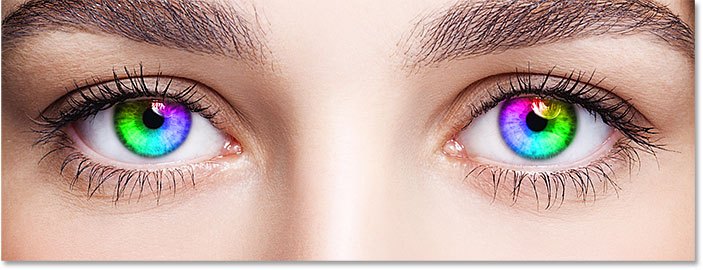
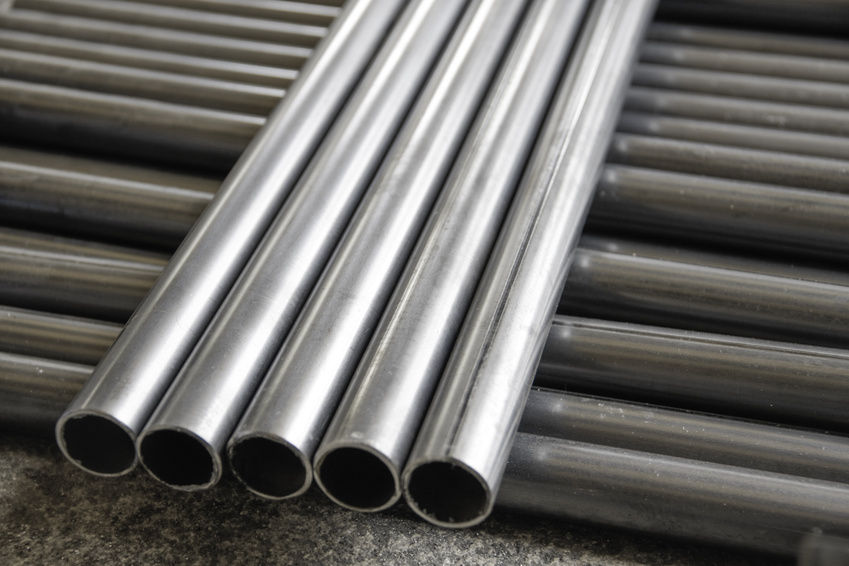


Who is credited with the discovery of Electricity?
Benjamin Franklin
Thomas Edison
Sir Isaac Newton
Which of the following objects is a conductor of electricity?
Wooden Toothpick
Penny
Plastic Spoon
What are the poles of a magnet called?
Top and Bottom
East and West
North and South
What materials are attracted to magnets?
Wood
Aluminum
Iron
Which of the following would NOT be considered a fossil?
Petrified Wood
Meteorite
Dinosaur Scat
What do we call molten rock when it is inside the earth?
Magma
Lava
Volcano
Which of the following has a larger gravitational pull?
Earth
Mars
Jupiter
What is the sun?
Star
Planet
Asteroid
What is in your stomach that helps continue the digestion of your food?
Mucus
Saliva
Stomach Acid
Which of the following is NOT a good source of protein?
Peanuts
Fish
Carrots
What substance or chemical is in your mouth to help soften food and begin carbohydrate digestion?
Saliva
Water
Blood
Which was once a planet, but is now renamed a dwarf planet?
Earth
Pluto
Moon
Which of the following planets is not a rocky planet?
Jupiter
Venus
Mars
About how long does it take for the moon to orbit the Earth?
1 day
1 month
1 year
Where does the light on the moon come from?
Earth
Sun
From itself
Which of the following objects is a conductor of electricity?
Wooden Toothpick
Penny
Plastic Spoon
What substance or chemical is in your mouth to help soften food and begin carbohydrate digestion?
Saliva
Water
Blood
Which was once a planet, but is now renamed a dwarf planet?
Earth
Pluto
Moon


Which long bone do you see in the figure?
humerus
femur
collarbone
rib
Which organ does pump blood in all the body?
liver
brain
heart
stomach
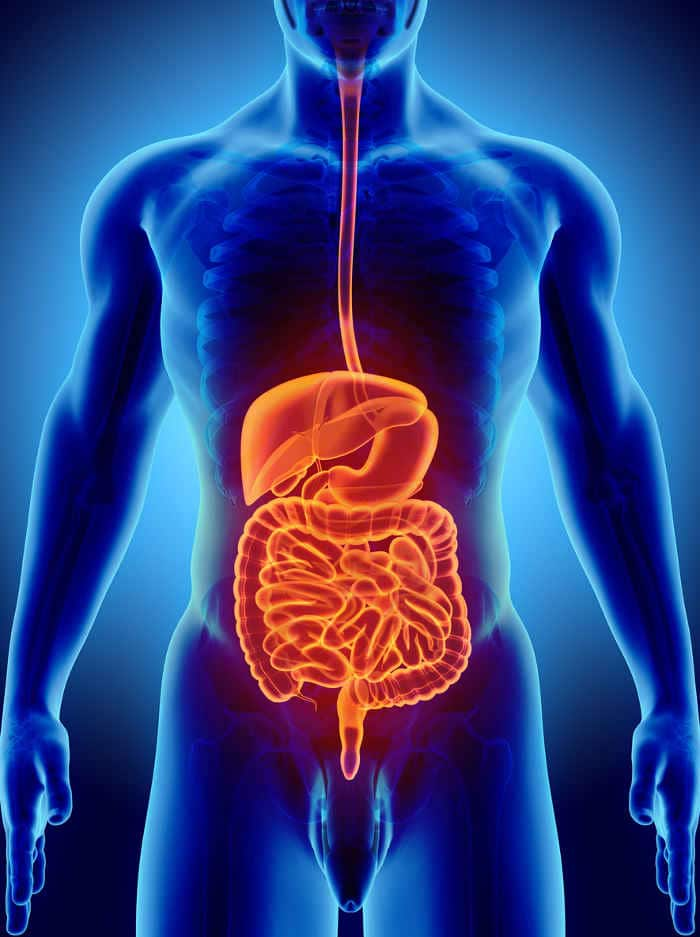
Which human system do you see in the image?
digestive system
respiratory system
circulatory system
nervous system


A scientist who studies mosses is a
bryologist.
zoologist.
paleontologist.
An entomologist is a scientist who studies
morphology.
insects.
birds.
A scientist who studies weather
precipitation
meteorologist
evaporation
A scientist who studies insects is a(n)
hematologist.
entomologist.
herpetologist.
A scientist who studies fish is a(n)
ichthyologist.
herpetologist.
ornithologist.
The scientist who first discovered electrons was .
Ernest Rutherford
Joseph John “J. J.” Thomson
Democritus
Scientists who measure earthquakes are called
seismometers.
seismologists.
seismic scientists.
Who is the first scientist to use a refracting telescope?
Galileo Galilei
Isaac Newton
Johannes Keppler
What type of scientist who reads a seismogram?
seismolographist.
geologist.
seismologist.
Who was the first scientist to propose the theory of continental drift?
Alfred Lothar Wegener
Glomar
Arthur Holmes
Who was the Russian scientist who developed ideas that related to the modern Periodic Table?
Dmitri Ivanovich Mendeleev
Aristotle
Alexander II
What is the name of the scientist who developed the continental drift theory?
Alfred Lothar Wegener
Albert Einstein
Nicolaus Copernicus
Who was the first scientist to use a microscope to observe and identify cells?
Anton van Leeuwenhoek
Carolus Linnaeus
Robert Hooke
What do you call a scientist who studies fossils?
Evolutionist
Paleontologist
Zoologists
The English mathematician and scientist who formulated the law of universal gravitation was
Galileo Galilei
Isaac Newton
Henry Cavendish
Which thing should scientists NOT do?
question other scientists
ignore other scientists
discuss their data with other scientists
Though there are a few scientists who have been given credit for disproving the idea of spontaneous generation, one notable person is the scientist named .
Rudolf Ludwig Carl Virchow
Gregor Johann Mendel
Louis Pasteur
A scientist who studies stars, planets, and other objects in the sky is called a(n) .
starsologer
astronomer
astrologist
Thomas Edison, headed a team of scientists called the Edison Pioneers, who invented the .
magnet
electricity
light bulb
I am the scientist who stated that all cells come from existing cells. Who am I?
Gregor Mendel
Demitri Mendeleev
Rudolf Virchow
One of the first scientists to classify organisms, who placed them into the two groups of plants and animals?
Robert Harding Whittaker
Greek Aristoteles
Carolus Linnaeus
Alfred Wegener was a scientist.
Dutch
German
Russian
Scientists all over the world use the metric system as the standard system of measurement (SI). Why is it important for scientists to use a common system of measurement?
It allows scientists to repeat experiments, compare data, and communicate results.
It helps scientists create data charts and graphs from observations.
It encourages scientists to use lab safety while doing scientific investigations.
When scientists classify organisms, they
arrange them in orderly groups.
give them many common names.
decide whether they are useful.
The IPCC is an international organization of scientists that study
astronomy.
climate change.
stem cells.
Who is the scientist invented the Periodic Table?
Albert Einstein
Eli Whitney
Dmitri Mendeleev
Which scientist supported the geocentric theory?
Nicolaus Copernicus
Edwin Powell Hubble
Claudius Ptolemy
The two scientists responsible for the theory of evolution are
Gregor Johann Mendel and Alfred Russel Wallace
Charles Robert Darwin and Alfred Russel Wallace
Charles Robert Darwin and Gregor Johann Mendel
Scientists use the scale to measure temperature.
Fahrenheit
Celsius
Degree
Which of the following scientists is studying volcanoes?
pseudologist
craniologist
volcanologist
Scientist developed a simplified model of an atom.
Robert Boyle
Niels Bohr
Ernest Rutherford
The Earth Scientist most likely to study storms is a(an)
geologist.
meteorologist.
oceanographer.
What is the basic unit of length a scientist is likely to use?
foot
meter
inch
What have scientists used to map the ocean floor?
submarines
sonar
drilling
The Italian astronomer, Galileo, was the first scientist to do what?
Discover the correct shape of the planets orbits.
Discover gravity and inertia.
Use a telescope to look at objects in the sky.
Which scientist observed cork cells using a microscope?
Robert Hooke
Antonie Philips van Leeuwenhoek
Charles Robert Darwin
What disease did scientists discover is reversible in bears?
diabetes
asthma
ringworm

