
 Worksheets
WH Chapter 11 Review
Total questions: 100
Worksheet time: 3585secs

What countries made up the Central Powers?
Britain, France, Russia, Italy and the United States
Mexico
Australia
Austria-Hungary, Germany, Ottoman Empire

What countries were known as the Allied Powers during WWI?
Britain, France, Russia, and the United States
Mexico, Japan
Australia, Germany, Italy
Austria-Hungary, Germany, Ottoman Empire
What is a stalemate?
A form of warfare in which opposing armies fight each other from trenches dug in the battlefield.
A situation in which no progress can be made or no advancement is possible
an overwhelming victory by one nation over the other
a situation when both sides agree to stop fighting

What is trench warfare?
a form of guerilla warfare
A form of warfare using hand to hand combat
strategy of fighting upon the waters
A form of warfare in which opposing armies fight each other from ditches dug in the battlefield.
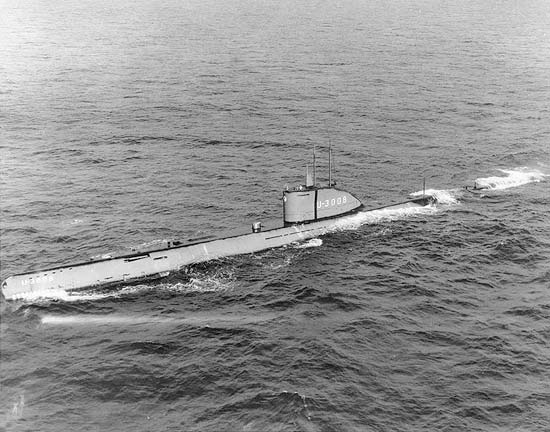
What were U-boats?
German submarines
American submarines
German battleships
Liberty ships

What is an armistice?
Agreement to stop fighting
repayment of war damages
Law passed by Congress in 1917 that required all men from ages 21 to 30 to register for the military draft
a declaration of victory

What was the name of the British steamship that the Germans torpedoed which killed over 100 US citizens?
Lusitania
Prince William
King George
Queen Anne


United States
They became concerned about Russian expansion
They wanted to avoid membership in the League of Nations.
They still did not support going to war.
They were outraged over a possible German-Mexican alliance, & it became the overt act that led us to war.


The movement of African Americans & other minorities to the northern US during the war was the Great _______.
Awakening
Migration
Movement
Exodus
What was at issue in Schenck v US?
Freedom of Speech
Freedom of the Press
Freedom of Religion
Freedom of Assembly

War began in Europe in 1914. What was America's stance in the beginning?
We entered the war with Great Britain!
We entered the war with Germany!
We remained neutral while supplying the Allied Powers.
We remained neutral while supplying the Central Powers.

German u-boats were blowing up Allied ships in the Atlantic, including passenger ships (carrying weapons for the Allies). What was this called?
Battle of Britain
unrestricted battleship warfare
unrestricted submarine warfare
Battle for the Seas

Where was the bulk of World War I fought?
on the seas
in tne trenches
in the mountains
in the air

The nature of trench warfare is that neither side makes great advances. What is this called?
stalemate
checkmate
armistice
laissez-faire

This president won reelection by keeping us out of WWI, but ended up entering the war to "make the world safe for democracy".
Theodore Roosevelt
William Henry Harrison
Franklin Roosevelt
Woodrow Wilson

What year did America enter the war?
1914
1915
1916
1917

What was Woodrow Wilson's plan for peace after WWI?
12 Points
League of Nations
14 Points
Armistice

Which of the following is NOT one of the major ideas of Wilson's 14 Points?
Self-determination
Huge reparations to be paid by Germany
Freedom of the Seas
League of Nations

Which of the following is NOT a reason the Treaty of Versailles failed to make a lasting peace?
German War Guilt Clause with huge reparations
The US Senate did not ratify the Treaty
The American people wanted more money
Cultural differences were ignored when redrawing the map

Nations in the Middle East were divided among Great Britain & France, which word below is the OPPOSITE of what this is?
The Safer Globe Project
The Mandate System
Self-determination
Colonial Empires

Is this a map of Europe BEFORE or AFTER the war?
Before
After

Is this a map of Europe BEFORE or AFTER the war?
Before
After
1917, 1918


How did the American Expeditionary Forces change the course of the war?

What nickname was used to describe a World War I soldier like the one in this photograph?
Hellfighter
Jar Head
Doughboy
GI

Which Tennessean is described by the information in this chart?
Herbert Hoover
George Creel
Alvin York
John J. Pershing

Commander of the AEF who insisted that American soldiers would operate as an independent fighting force and not be integrated into other Allied regiments
Herbert Hoover
George Creel
John J. Pershing
Alvin York
Nickname given to the African American soldiers who fought alongside the French in World War I.
The Harlem Hellfighters
The Croix de Guerre
The Harlem Globetrotters
Iron Men of Europe
What was the ruling in Schenck v. US?
separate but equal is okay
free speech can be limited with "clear and present danger"
right to bear arms could be limited for immigrants
Sedition Act was unconstitutional
Whose job was to encourage American support for WWI?
J. Edgar Hoover
War Propaganda Board
War Industries Board
Committee on Public Information
What roles did women serve in World War 1? Check all that apply.
secretary
telephone operator
front line fighter
nurse
What officially ended World War 1?
Treaty of Versailles
the armistice
Treaty of Paris 1898
North Atlantic Treaty Organization
the belief that the US should stay out of world events
imperialism
isolationism
militarism
nationalism
a secret telegram (in code) sent by Germany as an attempt to form an alliance with Mexico if the US should enter WWI
Zipperman Telegram
Selective Service Act
Zimmerman Telegram
Treaty of Versailles
ended the state of war between Germany and the Allied Powers
Zimmerman Telegram
Treaty of WWI
United States
Treaty of Versailles
A British cruise ship attacked and sunk by a German submarine. Many civilians were killed , including many Americans. This attack was one reason for the US entering WWI.
Lusitania
The Maine
Allied Powers
Central Powers
Austra-Hungary, Germany, Bulgaria, and the Ottoman Empire
alliance
Central Powers
Allied Powers
militarism
An agreement nations make to support and defend each other.
Allied Powers
Central Powers
Treaty of Versailles
alliance
Building up one's military for protection
militarism
imperialism
nationalism
isolationism
the building of empires by expanding a country's territory/land outside its original borders. Adding new lands.
nationalism
militarism
imperialism
isolationism
Having a "strong" sense of PRIDE in one's country.
militarism
nationalism
imperialism
isolationism
required all men in the US between the ages of 21 and 30 to register for military service
Zimmerman Telegram
Treaty of Versailles
Selective Services Act
Allied Powers
An international conflict that primarily involved European nations until the US entered the war in 1917.
World War I
World War II
Spanish-American War
World War III
Great Britain, Russia, France, Italy, Serbia, Belgium, and the United States
Central Powers
alliance
Allied Powers
World War I


Who said, "The world must be made safe for democracy"?
Woodrow Wilson
Ulysses S. Grant
Theodore Roosevelt
Barack Obama


The partial outline below describes what important historical developments?
I. ____________________
A. Growing nationalism in Europe
B. Growing militarism in Europe
C. The creation of secret alliances
The colonization of Africa and Asia
The rise of democracy
The causes of communism
The causes of WWI
Made it illegal to say anything disloyal about the government or war effort.
Sedition Act
Espionage Act
Disloyal Act
First Amendment Act

Citizens buy a war bond to help pay for the war. It’s actually a LOAN to the government. The gov’t pays back the money at a later date with interest.
War Bonds
Mobolize
Allied Powers
Central Powers
All of the following are characteristics of trench warfare EXCEPT:
Large barriers of barbed wire circled each side’s front line and extended into the open area between the opposing trenches – an area called No-man’s land.
Trenches effectively protected soldiers from air raids, tank raids and chemical warfare.
The muddy trenches smelled of rotting bodies, sweat, overflowing latrines and were often infested with rats and lice.
Mustard gas was released into trenches that could cause blindness, painful blisters and lethal damage to the lungs.

Which country best completes the list?
Bulgaria
Germany
Ottoman Empire
United States
Which of the following is the best summary of how the war impacted the United
States?
The United States reverted to isolationism and did not provide leadership
at the end of WWI.
The United States became an international police power and joined the
League of Nations.
The United States became a global superpower and provided a critical
leadership role during WWI.
The United States helped to prepare a peace plan and ensured the U.S.
ratified the Treaty of Versailles.
The passage of what amendment was helped by the patriotic efforts of women during World War I?
the 16th amendment
the 17 amendment
the 18th amendment
the 19th amendment
Who is the leader of Germany during WWI?
Kaiser Wilhelm II
Otto von Bismarck
Adolf Hitler
Johannes Gutenberg

Which country takes the blame of WWI and has to pay reparations (war debt)?
Germany
Austria-Hungary
Russia
Ottoman Empire

Which country leaves WWI in 1917?
Russia
United States
Austria-Hungary
Britain

One cause of U.S. imperialism was
Militarism
Alliances
Spanish Treachery
Desire to gain more land and natural resources
Why did the United States acquire Hawaii?
The US wanted volcanoes
To use the islands as a naval base, and for its sugar
to create a naval base during World War II
to assist Queen Liliuokalani take control of the islands

This cartoon is an example of:
Miitarism
Yellow Journalism
Black Journalism
Alliances

What was a result of headlines like the one above?
World War I begin
The Spanish-American War
The US entered World War I
The Union defeated the Confederacy
What were the two main locations of fighting during the Spanish-American War?
Alaska and Hawaii
Puerto Rico and Guam
Cuba and the Philippines
Spain and the United States
When did the U.S. join WWI?
1914
1917
1918
1920

Identify Great Britain
O
N
P
S

The black circle lies on top of which European country?
Germany
Spain
Great Britain
France

The black circle lies on top of which European country?
Italy
Germany
Russia
Great Britain

The black circle lies on top of which European country?
Spain
Portugal
Russia
Germany

The black circle lies on top of which European country?
France
Belgium
Italy
Russia

The black circle lies on top of which European country?
Great Britain
Germany
Russia
Portugal

